
家具

Search documents
喜临门1月8日获融资买入3366.90万元,融资余额6.64亿元
Xin Lang Zheng Quan· 2026-01-09 01:23
Group 1 - The core viewpoint of the news is that Xilinmen's stock performance and financing activities indicate a high level of investor interest, with significant trading volume and a notable financing balance [1][2] - On January 8, Xilinmen's stock fell by 1.16%, with a trading volume of 329 million yuan, and a net financing purchase of 7.79 million yuan [1] - As of January 8, the total margin balance for Xilinmen was 665 million yuan, which represents 8.84% of its circulating market value, indicating a high financing level compared to the past year [1] Group 2 - For the period from January to September 2025, Xilinmen achieved an operating income of 6.196 billion yuan, reflecting a year-on-year growth of 3.68%, and a net profit attributable to shareholders of 399 million yuan, up by 6.45% [2] - The company has distributed a total of 905 million yuan in dividends since its A-share listing, with 517 million yuan distributed over the past three years [2] - As of September 30, 2025, Xilinmen had 16,000 shareholders, with an average of 23,049 circulating shares per shareholder, a slight decrease of 0.85% from the previous period [2]

4连板美克家居:预计2025年归属于上市公司股东的净利润为负值
Di Yi Cai Jing· 2026-01-08 11:15
Core Viewpoint - The company, Meike Home, has issued a risk warning regarding its stock trading, indicating that it expects negative values for total profit, net profit attributable to shareholders, or net profit excluding non-recurring gains and losses for the fiscal year 2025 [1] Financial Outlook - The company anticipates that its total profit for the year 2025 will be negative [1] - The net profit attributable to shareholders is also expected to be negative for the same period [1] - Additionally, the net profit excluding non-recurring gains and losses is projected to be negative [1]

全国特大镇发展潜力100强!湛江上榜的工业重镇是……
Xin Lang Cai Jing· 2026-01-07 12:05
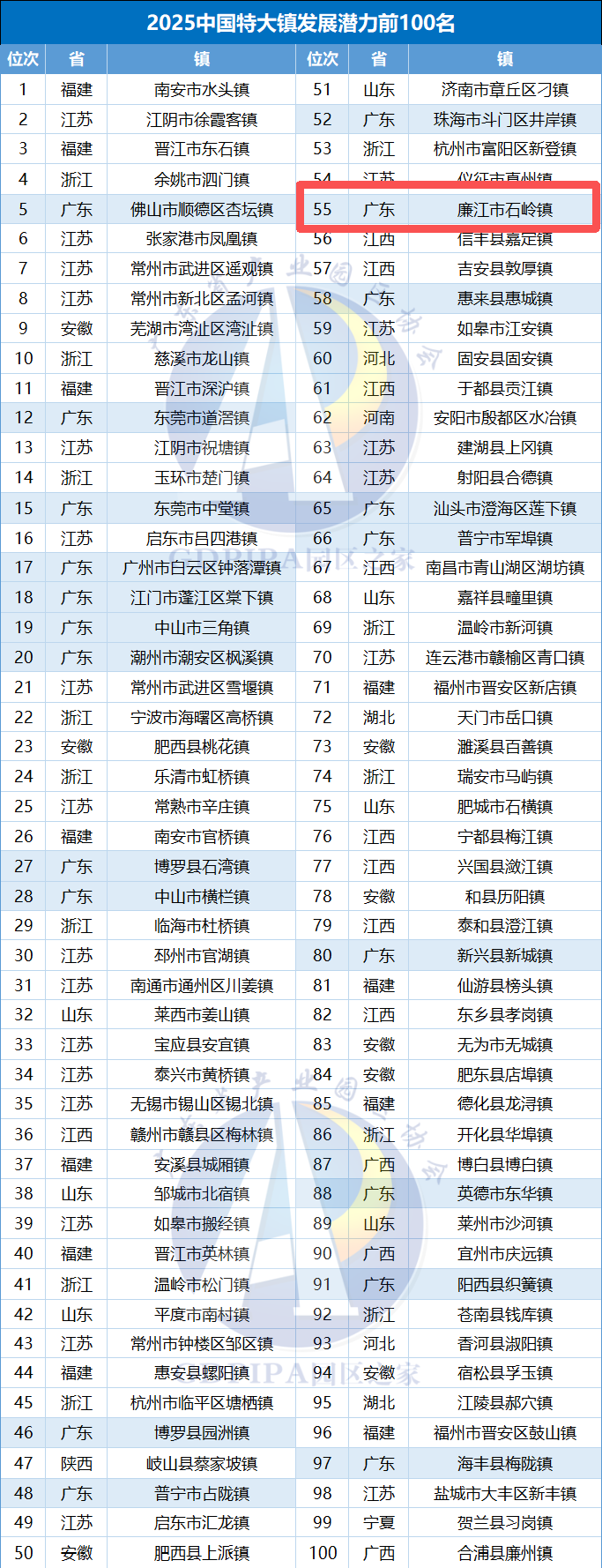
Core Insights - The "China Super Town Research Report 2025" was recently released, highlighting the development potential of super towns in China, with Lianjiang's Shiling Town ranked 55th among the top 100 [1][4]. Group 1: Super Town Rankings - The report lists the top 100 super towns in China for 2025, with Shiling Town in Lianjiang ranked 55th [1][2]. - The top five towns include: 1. Waterhead Town, Nan'an City, Fujian 2. Xuxiake Town, Jiangyin City, Jiangsu 3. Dongshi Town, Jinjiang City, Fujian 4. Simen Town, Yuyao City, Zhejiang 5. Xingtan Town, Shunde District, Foshan City, Guangdong [2]. Group 2: Economic Contribution of Super Towns - As of the end of 2024, there are 701 super towns in China, contributing approximately 6.3% of the national GDP while occupying less than 1% of the country's land area [4]. - The economic output per unit area of these towns is 10.5 times the national average [4]. Group 3: Shiling Town Overview - Shiling Town has a history of over 400 years, established during the Ming Dynasty, and covers an area of 255 square kilometers with a population of nearly 110,000 [6]. - It serves as a transportation hub and goods distribution center in the region, hosting the largest red orange production base, largest pig production base, and largest precious flower breeding base in Lianjiang [8]. - The town's industrial economy is vital, with 21 large-scale industrial enterprises and an annual industrial output value exceeding 2 billion yuan [8].

曲美家居:第五届董事会第二十一次会议决议公告
Zheng Quan Ri Bao· 2026-01-07 11:41
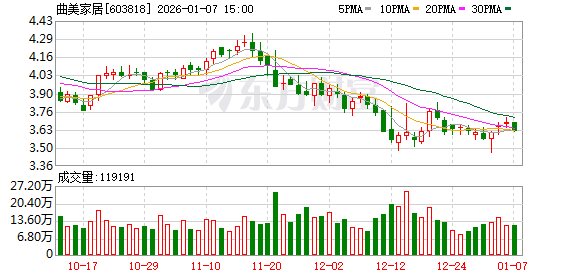
Core Viewpoint - Qu Mei Home announced the approval of a proposal to temporarily use part of its idle raised funds to supplement working capital [2] Group 1 - The fifth board of directors of Qu Mei Home held its 21st meeting to discuss the proposal [2] - The decision reflects the company's strategy to optimize its financial resources and enhance liquidity [2]

美克家居:股价异常波动,前三季营收22.23亿且筹划收购
Xin Lang Cai Jing· 2026-01-07 10:21
Core Viewpoint - The company announced abnormal stock price fluctuations with a cumulative increase of over 20% during three consecutive trading days from January 5 to January 7, 2026 [1] Financial Performance - For the first three quarters of 2025, the company reported revenue of 2.223 billion yuan, a year-on-year decrease of 10.10% [1] - The net profit for the same period was -220 million yuan, indicating a loss [1] Acquisition Plans - The company is planning to issue shares and pay cash to acquire 100% equity of Wande Ling, with fundraising efforts underway [1] - The audit and evaluation processes for the acquisition are not yet completed and require approval from the shareholders' meeting and regulatory authorities, indicating potential risks related to the acquisition and integration [1]
曲美家居:1月7日召开董事会会议
Mei Ri Jing Ji Xin Wen· 2026-01-07 08:22
Group 1 - Company Qu Mei Home announced the convening of its 21st meeting of the 5th board of directors on January 7, 2026, to discuss the proposal for using part of the idle raised funds to temporarily supplement working capital [1] - The meeting was held in both in-person and teleconference formats [1] Group 2 - The Shanghai Composite Index has stabilized at a key position for the first time in ten years, indicating a significant market trend [1] - Goldman Sachs recommends increasing allocation to Chinese stocks, suggesting a positive outlook for the market [1] - Analysts from brokerage firms note that factors such as the appreciation of the Renminbi are accelerating the return of cross-border capital [1]
“国字号”名片,贵阳+1!
Sou Hu Cai Jing· 2026-01-07 07:43
Core Viewpoint - The selection of Daziran Technology Co., Ltd. as a representative of Chinese quality consumer products marks a significant breakthrough for the brand development in Guiyang High-tech Zone and serves as a replicable model for other local enterprises [3]. Group 1: Company Achievements - Daziran Technology Co., Ltd. has been recognized for its commitment to health sleep and eco-friendly home products, focusing on the development, production, and sales of plant fiber elastic materials and products [3][4]. - The company’s "Daziran" brand ecological spine protection mattress has a market share of nearly 60% in the domestic plant fiber mattress sector, with sales reaching nearly 200 cities across China, leading the industry in both production and sales [3][4]. Group 2: Innovation and Standards - The company has established an industrial design center for plant fiber elastic products, mastering core technologies in the production process and developing innovative production techniques that fill a gap in the domestic market for green ecological sleep products [4]. - Daziran Technology Co., Ltd. has led the drafting of the national standard for "soft furniture coconut fiber elastic mattresses," contributing to the reduction of environmental pollution by replacing traditional materials like springs and sponges [4]. Group 3: Recognition and Impact - The company has received multiple honors, including "National Leading Enterprise in Forestry Industry," "National Green Factory," and "Provincial Specialized and Innovative Small Giant Enterprise," showcasing its commitment to quality and innovation [4]. - The inclusion in the Chinese Consumer Name Brand list is a milestone in the company's development history and injects strong momentum into the high-quality development of the consumer goods industry in Guiyang High-tech Zone [4].

八位“喜人”九城联动 舒达“焕新奇妙季”圆满收官
Xin Lang Cai Jing· 2026-01-06 10:14
Core Insights - The collaboration between Serta and eight "Dream Makers" aims to showcase the innovative features of the iComfort smart bed through a nationwide event called "Renewed Wonderful Season" [1][5] - The event spans three months and covers nine cities, allowing thousands of participants to experience the benefits of high-quality relaxation [1][5] Group 1: Event Highlights - The "Renewed Wonderful Season" features interactive experiences where participants engage with the iComfort smart bed's various functions, such as sleep monitoring and relaxation modes [3][5] - Each "Dream Maker" demonstrates unique features, including sleep-inducing functions and personalized sleep reports, enhancing audience engagement [3][5][7] Group 2: Concept and Philosophy - The event combines humor and immersive experiences to redefine bedroom spaces, transforming them into personal energy hubs that support relaxation and creativity [7] - Serta emphasizes that relaxation should be an accessible part of daily life, promoting a lifestyle that integrates smart comfort and quality sleep [5][7] Group 3: Future Outlook - The journey of the iComfort smart bed continues beyond the event, as Serta aims to empower consumers with innovative sleep solutions that enhance overall well-being [9]

喜临门1月6日龙虎榜数据
Zheng Quan Shi Bao Wang· 2026-01-06 09:45
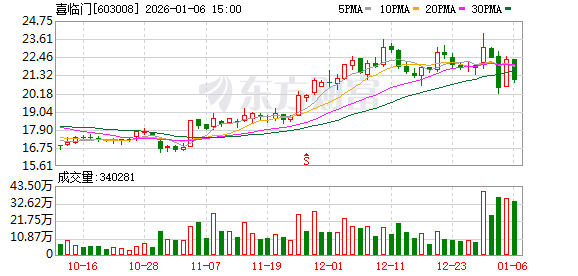
Core Viewpoint - The stock of Xilinmen (603008) experienced a significant decline of 5.96% on the trading day, with a turnover rate of 9.24% and a total transaction amount of 719 million yuan, indicating notable market activity and investor sentiment shifts [2]. Group 1: Stock Performance - The stock's daily decline was attributed to a deviation of -7.45% from its previous closing price, leading to its listing on the exchange's watchlist [2]. - Institutional investors net sold 43.66 million yuan, while the Shanghai-Hong Kong Stock Connect saw a net sell of 15.02 million yuan [2]. - The total net outflow of main funds for the stock was 33.70 million yuan, with large orders contributing to a net outflow of 33.58 million yuan [2]. Group 2: Financing and Revenue Data - As of January 5, the stock's margin trading balance was 654 million yuan, with a financing balance of 654 million yuan and a securities lending balance of 60.74 thousand yuan [3]. - Over the past five days, the financing balance decreased by 43.56 million yuan, representing a decline of 6.25%, while the securities lending balance increased by 21.32 thousand yuan, marking a rise of 54.08% [3]. - For the first three quarters of the year, the company reported a revenue of 6.196 billion yuan, reflecting a year-on-year growth of 3.68%, and a net profit of 399 million yuan, which is a 6.45% increase year-on-year [3].
开局之年看大势丨内需主导 激发超大规模市场潜能
Jing Ji Ri Bao· 2026-01-06 05:33
Group 1 - The core viewpoint emphasizes the importance of expanding domestic demand as a key strategy for economic growth in 2026, highlighting the need for a strong domestic market [1][2] - The article discusses the significant potential of China's consumer market, driven by a population of over 1.4 billion and a growing middle-income group, which lays a solid foundation for domestic demand growth [2][3] - It points out the shift in consumer behavior from goods consumption to a balanced focus on both goods and services, indicating a substantial opportunity in service consumption [2][4] Group 2 - The article outlines the government's plan to enhance supply-demand matching by increasing the supply of quality goods and services, aiming for a high-quality development pattern by 2030 [4][5] - It highlights the role of technology, particularly AI and big data, in capturing consumer demand and driving innovation in product offerings [5][6] - The focus on effective investment is crucial for stimulating domestic demand, with policies aimed at optimizing consumption and investment strategies to create a virtuous cycle [6][7] Group 3 - The article identifies new consumption growth points in areas such as product quality improvement, service expansion, digital upgrades, and green health, which are expected to drive market development [8][9] - It mentions specific sectors projected to become trillion-yuan markets, including elderly products and smart connected vehicles, as well as billion-yuan hotspots like children's products and fitness equipment [9][10] - The overall narrative suggests that as supply and demand achieve a higher level of dynamic balance, China's economy will transition from a "large market" to a "strong market" [10]