Oil

Search documents
摩根士丹利:中国经济-稳定的核心价格掩盖了潜在压力
摩根· 2025-06-10 02:16
Investment Rating - The report does not explicitly state an investment rating for the industry Core Insights - Core CPI showed a modest improvement, with a year-on-year increase of 0.1 percentage points to 0.6% and a month-on-month improvement to 1.2% SAAR, indicating a recovery since the policy pivot in September 2024 [2] - PPI deflation pressures continue, with a month-on-month decline of 0.4% for three consecutive months, leading to a year-on-year decrease of 3.3% [3] - Weak energy prices have significantly impacted both headline CPI and PPI over the past three months, while core prices remain resilient due to targeted policies [6] Summary by Sections Consumer Price Index (CPI) - In May 2025, the CPI year-on-year was -0.1%, with food prices down by 0.4% and non-food prices stable at 0.0% [5] - Core CPI (excluding food and energy) was at 0.6%, reflecting a slight increase from previous months [5] Producer Price Index (PPI) - The PPI year-on-year was reported at -3.3%, with notable declines in producer goods (-4.0%) and mining and quarrying (-11.9%) [5] - Durable goods prices turned positive month-on-month, driven by the automotive sector, although this may not fully reflect recent price cuts [3][5] Key Drivers - The resilience in core prices is attributed to targeted policies such as the consumer goods trade-in program, while a supply-demand imbalance persists [6] - The renewed competition in the automotive sector may not have been adequately captured in the current readings, indicating potential volatility in future reports [6]
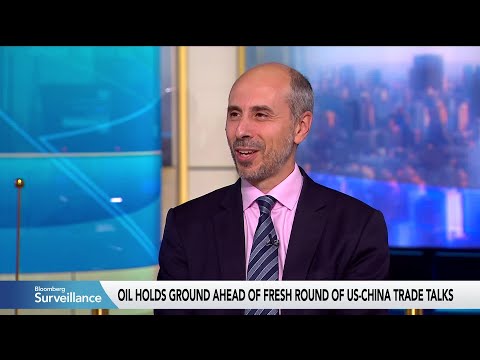
BofA’s Blanch Sees ‘Long and Shallow’ Oil Price War
Bloomberg Television· 2025-06-09 04:24
Good morning. Let's start with Opec+, because I think that's been the main event for the crude market over the last several months. What's policy now and what's the strategy behind it.So you can make the case that Opec+ is trying three three things at once, rates trying to increase market share. I think it's more of a Saudi thing. You could argue there is a discipline element to what Saudi's doing because it's really driven by Saudi Arabia and the surfeit of it is is well, why now.Clearly, lower oil prices ...

2 Top High-Yield Dividend Stocks You Can Confidently Buy and Hold Until at Least 2030
The Motley Fool· 2025-06-08 19:37
Core Viewpoint - Investing in high-yielding dividend stocks like ExxonMobil and Kinder Morgan offers potential for passive income while also presenting growth opportunities through significant capital investments and predictable cash flows [1][2][15] ExxonMobil - ExxonMobil has a strong track record of increasing its dividend for 42 consecutive years, leading the oil industry and achieving a milestone only 4% of S&P 500 companies have reached [4] - The company plans to invest $140 billion in major projects and its Permian Basin development program through 2030, expecting returns of over 30% on these investments [5] - This investment strategy could yield an additional $20 billion in earnings and $30 billion in cash flow by 2030, assuming oil prices average around $60 per barrel, translating to a 10% compound annual growth rate for earnings and an 8% growth rate for cash flow [6] - ExxonMobil estimates it could generate $165 billion in surplus cash through 2030, which would allow for increased shareholder distributions, including a planned $20 billion stock repurchase in 2026 [7][8] Kinder Morgan - Kinder Morgan has extended its dividend growth streak to eight consecutive years, with a current yield of over 4%, and expects to continue this growth for at least the next five years [9] - The company benefits from highly contracted and predictable cash flows, with only 5% exposed to commodity prices and 69% secured through take-or-pay agreements or hedging contracts [10] - Kinder Morgan has $8.8 billion in commercially secured expansion projects, a $5.8 billion increase from the previous year, including $8 billion in natural gas-related expansions expected to generate steady cash flow through 2030 [11] - The company recently acquired a natural gas gathering and processing system for $640 million, which will immediately enhance cash flow, and it has the financial flexibility to pursue further growth opportunities [12] - Kinder Morgan is actively exploring additional projects to supply gas to LNG export terminals and the power sector, anticipating increased demand driven by factors such as AI data centers [13][14] Growth Visibility - Both ExxonMobil and Kinder Morgan exhibit strong growth visibility through 2030, making them attractive options for investors seeking to buy and hold high-yielding dividend stocks [15]



摩根大通 稀土思考,精炼利润将保持强劲
摩根大通· 2025-06-06 07:35
Investment Rating - The report maintains an Underweight (UW) rating on Lynas Rare Earths and a Neutral (N) rating on MP Materials [2][9]. Core Insights - The rare earths industry is facing significant supply chain disruptions due to China's export restrictions on key heavies like Terbium and Dysprosium, which are critical for electric vehicles and advanced technologies [9]. - Despite potential trade negotiations between the US and China, the damage to the supply chain may be lasting, prompting a shift towards developing non-Chinese sources of rare earths [9]. - The oil sector is expected to see strong refining margins, with a projected surplus of 2.6 million barrels per day (mbd) in Q4 2025, leading to a price floor for Brent crude between $55-60 and WTI between $50-55 [3][15]. Rare Earths Sector Summary - China controls approximately 70% of rare earth production, 85% of processing capacity, and 99% of heavies production, which has led to a scramble for alternative sources among automakers [9]. - Lynas Rare Earths and MP Materials are identified as key beneficiaries of the push for ex-China supply, with Lynas having over 85% exposure to NdPr, which is not currently restricted [9]. - The report expresses caution regarding the sustainability of the current rally in rare earth prices and the timing of commercial production volumes from alternative sources [9]. Oil Sector Summary - The report highlights five conditions necessary for crude prices to decline, with only two expected to materialize: a surge in OECD inventories and a flattening crude curve [15]. - Refining margins are anticipated to remain strong due to limited new capacity coming online, influenced by China's export restrictions and closures of US/EU plants [3][15]. - The report suggests that product stocks are expected to build, but low starting levels should support prices and margins [15].
Should You Invest $1,000 in ExxonMobil Today?
The Motley Fool· 2025-06-06 07:01
Core Insights - ExxonMobil is the largest international oil company with a market cap of approximately $450 billion, leading in earnings, cash flow, and returns [1][2] - The company's ability to maintain its leadership is crucial for future shareholder value growth [2] Performance Metrics - In Q1, ExxonMobil produced $7.7 billion in earnings and $13 billion in cash flow from operations, outperforming all peers [4] - The company has achieved cumulative structural cost savings of $12.7 billion since 2019, with a target of $18 billion by 2030, surpassing its competitors [6] Financial Health - ExxonMobil has a net debt-to-capital ratio of 7%, significantly lower than the S&P 500 average of around 20% [7] - The company returned $9.1 billion to investors in Q1, including $4.8 billion in share repurchases, and has increased its dividend for 42 consecutive years [8] Future Growth Plans - By 2030, ExxonMobil aims for an additional $20 billion in annual earnings and $30 billion in cash flow, with a projected compound annual growth rate of 10% for earnings and 8% for cash flow [9][10] - The company plans to invest about $140 billion in capital projects, including $30 billion in lower carbon investments, expecting over 30% returns on these investments [11] Cash Generation and Shareholder Returns - ExxonMobil anticipates generating $165 billion in surplus cash from its investments, allowing for continued dividend growth and share repurchase programs of $20 billion each in the next two years [12] - The company's strategy aims to lower its breakeven level, enhancing its resilience against lower oil prices [13] Investment Potential - ExxonMobil is positioned as a strong investment opportunity with a projected 10% compound annual earnings growth and a nearly 4% dividend yield, making it attractive for lower-risk investments in the oil sector [14]

沙特希望OPEC+实施更多超大规模的石油增产,从而获得市场份额。WTI原油日内跌幅达1.5%,报62.45美元/桶。布伦特原油日内跌幅达1.5%,报64.63美元/桶。
news flash· 2025-06-04 15:24
沙特希望OPEC+实施更多超大规模的石油增产,从而获得市场份额。 WTI原油日内跌幅达1.5%,报 62.45美元/桶。布伦特原油日内跌幅达1.5%,报64.63美元/桶。 ...
Who Will Win Guyana's Oil? Chevron and ExxonMobil Face Off
ZACKS· 2025-05-26 13:21
Core Viewpoint - A significant corporate conflict is occurring between Chevron and ExxonMobil over the Stabroek Block in Guyana, with Chevron's $53 billion acquisition of Hess Corporation facing opposition from ExxonMobil due to claims of a contractual right of first refusal [1][2] Group 1: Chevron's Position - Chevron's acquisition of Hess is crucial as its oil and gas reserves have decreased to 9.8 billion barrels, the lowest in over a decade, making the addition of Hess's stake vital for improving its reserve replacement ratio [3] - The transaction has received approval from Chevron's shareholders and U.S. regulators, but its success now hinges on the arbitration ruling regarding the joint operating agreement [4] - Chevron has proactively purchased approximately 5% of Hess's outstanding shares in anticipation of a favorable arbitration outcome, with over $10 billion in Hess stock acquired by merger-arbitrage funds [4] Group 2: ExxonMobil's Position - ExxonMobil perceives Hess's potential sale to Chevron as a threat to its control over the Guyana project and a disruption of a long-standing partnership [5] - The CEO of ExxonMobil emphasizes the importance of upholding its rights under the operating agreement, citing the early development risks taken by the company [5] - The legal dispute has strained the previously cordial relationship between the CEOs of ExxonMobil and Chevron, with the outcome expected to influence future interpretations of pre-emption rights in corporate acquisitions [6] Group 3: Industry Implications - The arbitration ruling, expected by the end of Q3, could set a precedent for how pre-emption rights are applied in high-value energy ventures, impacting strategic decisions across the oil and energy sector for years to come [6][7] - Regardless of the arbitration outcome, the case will have lasting effects on the competitive dynamics within the oil industry, determining whether Chevron secures a critical growth engine or Exxon consolidates its control [7]



Vista Energy: My Preferred Oil Stock Due To Key Competitive Advantages Against Big Oil
Seeking Alpha· 2025-05-24 07:59
Group 1 - The article emphasizes the strategy of investing in large oil companies, referred to as Supermajors, for safety and predictability, highlighting their reliable dividend payments [1] - There is a focus on identifying undervalued stocks with a balance of risk and reward, suggesting that the best investment ideas are often straightforward and contrarian [1]

Statkraft to sell Enerfín Colombia to Ecopetrol
Globenewswire· 2025-05-21 06:00
Core Points - Statkraft has signed an agreement to sell its Colombian renewables portfolio, Enerfín Colombia, to Ecopetrol, the national oil company of Colombia [1] - The transaction includes staff, eight projects under development, and the 130 MW Portón del Sol solar plant, which was the first utility-scale solar plant in Colombia [1] - The sale is expected to be completed in the third quarter of 2025, pending regulatory approvals [2] - Barbara Flesche, Executive Vice President for Europe, expressed satisfaction with the divestment, highlighting the skilled team and attractive portfolio built by Enerfín in Colombia [3] - Statkraft acquired its Colombian renewables portfolio as part of the Enerfín transaction in May 2024, which significantly strengthened its position in Spain and Brazil [4] - The acquisition added a portfolio of 1.5 GW of wind and solar power projects in operation and under construction, along with a pipeline of projects under development [4] - Statkraft's strategy focuses on growth and building scale in selected markets in the Nordics, Europe, and South America [4]