
铁路运输

Search documents
法媒:法铁“尊享车厢”禁止儿童乘坐引争议
Huan Qiu Shi Bao· 2026-01-26 22:48
Group 1 - The French National Railway Company (SNCF) has launched a "premium carriage" service that prohibits children under 12, sparking controversy and criticism from the government and the public [1][2] - A recent poll indicated that 54% of the French population opposes SNCF's policy, with government officials expressing concern that the message conveyed is harmful to societal values regarding children [1] - SNCF modified its service description under public pressure but still maintains that the premium carriages are only for passengers aged 12 and above, stating that these seats occupy only 8% of the train on weekdays [1] Group 2 - The French government spokesperson highlighted the contradiction of promoting childbirth while simultaneously suggesting that children are unwelcome in certain public spaces, emphasizing the potential societal implications of such a message [2] - France is experiencing a declining birth rate, with projections indicating that by 2025, the number of newborns will drop to 645,000, leading to a situation where deaths may outnumber births for the first time [2] - In response to the demographic crisis, President Macron has called for initiatives to encourage population growth, indicating the government's awareness of the long-term implications of declining birth rates [2]
调图后单日最高开行415列 广深港高铁开行密度跃居全国第一
Yang Shi Wang· 2026-01-26 22:30
Core Viewpoint - The new train operation schedule implemented on January 26 enhances both passenger and freight transport capabilities by optimizing the transportation structure and utilizing newly opened railway lines [1] Group 1: Train Operation Enhancements - The new schedule increases the frequency of trains on the Guangzhou-Shenzhen-Hong Kong Express Rail Link, making it the highest in terms of train density and station stops in the country [1][5] - The "Gao 386" train departed from Hong Kong West Kowloon Station, marking the start of the new schedule [1] Group 2: Expanded Connectivity - The new schedule adds three stations—Nanjing South, Wuxi East, and Hefei South—filling the gap for direct high-speed rail connections between key cities in the Yangtze River Delta and Hong Kong [3] - A total of 16 new direct stations have been added from Hong Kong West Kowloon, increasing the total to 110 stations [3] Group 3: Increased Capacity and Service Improvements - The maximum number of trains operating daily has reached 415, with an average of one train every two minutes during peak hours, significantly increasing operational capacity [5] - The enhancements are timely for the upcoming Spring Festival, providing substantial support to alleviate passenger flow pressure between the Guangdong-Hong Kong-Macau Greater Bay Area and the mainland [5] Group 4: Cross-Border Passenger Services - The average expected daily cross-border passenger flow for the period from February 2 to 8 is projected to reach 14,000 people [7] - Shenzhen Railway is promoting a "Four Connections" service to ensure seamless communication for cross-border travelers during ticket purchasing, waiting, and transfer processes [7]

国铁沈阳局实施新列车运行图
Xin Lang Cai Jing· 2026-01-26 22:08
Core Viewpoint - The new train operation schedule implemented by the Shenyang Railway Bureau enhances both passenger and freight transport capacity and efficiency, supporting high-quality economic and social development [1]. Group 1: Train Operation Enhancements - The new schedule increases the number of scheduled passenger trains to 1,088, an increase of 12 trains, and freight trains to 2,439, an increase of 4 trains, resulting in improved transport capacity [1]. - The Shenyang-Baihe High-Speed Railway will see an increase in train frequency, with 2.5 pairs of regular trains and 4 pairs of peak trains added, bringing the total to 34.5 pairs, which supports the development of the ice and snow tourism economy [1]. Group 2: Efficiency Improvements - The new schedule optimizes long-distance train operations, adding 3 pairs of benchmark trains from Dalian North to Harbin West, ensuring a balanced distribution of services throughout the day [1]. - Travel times for certain passenger trains, such as the T302/3 and T304/1 from Shenyang to Urumqi, have been compressed, enhancing the travel experience for passengers [1]. - A new benchmark train from Changchun to Shanghai will operate in 9 hours and 22 minutes, reducing travel time by 2 hours and 15 minutes compared to the previous schedule, with fewer stops at major stations [2].
【他山之石】“码上”有回应 赋能“零距离”
Xin Lang Cai Jing· 2026-01-26 21:05
(来源:工人日报) 本报讯 (记者姜雨晴 通讯员牛树进)"以前提建议不知道找哪个部门,现在扫二维码提交,马上就有了 答复。这不,才3天时间,存车棚的充电桩全部增设了三孔插座。"近日,在太原机务段,刚刚退勤准备 骑电动车回家的火车司机王师傅,对着班组宣传橱窗内的"连心卡"二维码竖起大拇指。 这枚张贴在段区公众场所、嵌入太原机务段微信公众号的二维码,只需"扫码、输入、提交"简单的三 步,就搭建起连通干群的"连心桥",让一件件难题在高效响应中得以解决。 "意见箱挂在墙上,总觉得隔着一层。手机一扫,就像直接敲开了领导的门。"今年元旦假期结束后,青 年职工小李通过扫二维码建议在HXN5B型机车操纵台下方扳钮开关处安装防误触亚克力板。不到两周 时间,这一技术改造成果就落地实施了。 据悉,这是该段自2024年10月"连心卡"职工信息服务平台上线以来,累计收到、回应的第1452条职工反 馈信息。小小的"连心卡"二维码背后,是一套精心设计的响应机制。该段坚持有问必答,成立专班、建 立机制,分类收集意见建议,让职工话有处说、理有人评、诉有渠道。 数字化工具打破了沟通壁垒,更让职工感受到温暖。职工们纷纷点赞:"以前怕提意见被'特殊 ...
“神探”班组的安全经
Xin Lang Cai Jing· 2026-01-26 21:05
(来源:工人日报) 去年春运期间,郭永怀和工友丁萍发现一台和谐型机车牵引电机轴承检测波形异常,但故障波形图谱里 没有参照数据,他立即向段数据分析中心上传数据信息,经赵雪莲和张洁两位数据分析员的仔细研判, 提出解体检查方案。专检钳工郭建明说:"一打开轴承盖就看到深深裂痕,离根部200多毫米的部位,没 有高超的探伤技能和精准的数据分析,很难发现这个裂损故障。"郭永怀他们发现的这个故障,为全国 铁路机务系统防范机车源头质量安全隐患提供了借鉴。 "冬天,机车走行部零部件如果发生裂损现象,探伤仪器上显示的故障波纹会重复出现点状痕迹,只要 抓住它就能把隐性故障揪出来。"1月9日10时23分,在中国铁路兰州局集团有限公司迎水桥机务段银川 整备车间休室里,探伤工李兴国和蒋学才沉浸在手机课堂中,"鹰眼神探"郭永怀的实践经验分享,让他 俩如醉如痴。 如何让班组职工和机车整备场的专检钳工们熟练掌握发现裂损故障的技能,高效防范机车"带病"上线运 行,郭永怀思考了很久。他把十多年来收集的机车零部件裂损资料编成作业指导手册,与机车质量数据 分析员合作配上故障波形图片和说明,并主动创办了手机课堂,帮助大家提升专业技能。 铁路机务部门的探伤 ...
【聚焦·与冰雪赛跑】120分钟,21座隧道,打冰35处
Xin Lang Cai Jing· 2026-01-26 21:05
Core Viewpoint - The article highlights the efforts of a team working in extreme cold conditions to remove ice from railway tunnels, ensuring safety and uninterrupted train operations during winter. Group 1: Operations and Safety Measures - The team, led by Li Hongbing, is focused on identifying and addressing ice accumulation in key tunnels to prevent disruptions in train services [1] - The operation involves using an 8-meter ice-breaking rod to safely remove ice pillars that pose a risk to the contact network [1][5] - A total of 35 ice removal tasks were completed across 21 tunnels within 120 minutes, demonstrating efficiency in operations despite harsh weather conditions [5] Group 2: Working Conditions - The team faced severe cold, with temperatures dropping to -12°C, making the working environment challenging [1] - Workers employed various techniques to keep warm, including taking breaks in the vehicle and using hand-warming methods [2][3] - Despite the cold, the team successfully managed to complete their tasks, showcasing their resilience and commitment to safety [5]
阳宗站今起正式开办客运业务!至昆明南站只需10分钟
Xin Lang Cai Jing· 2026-01-26 21:05
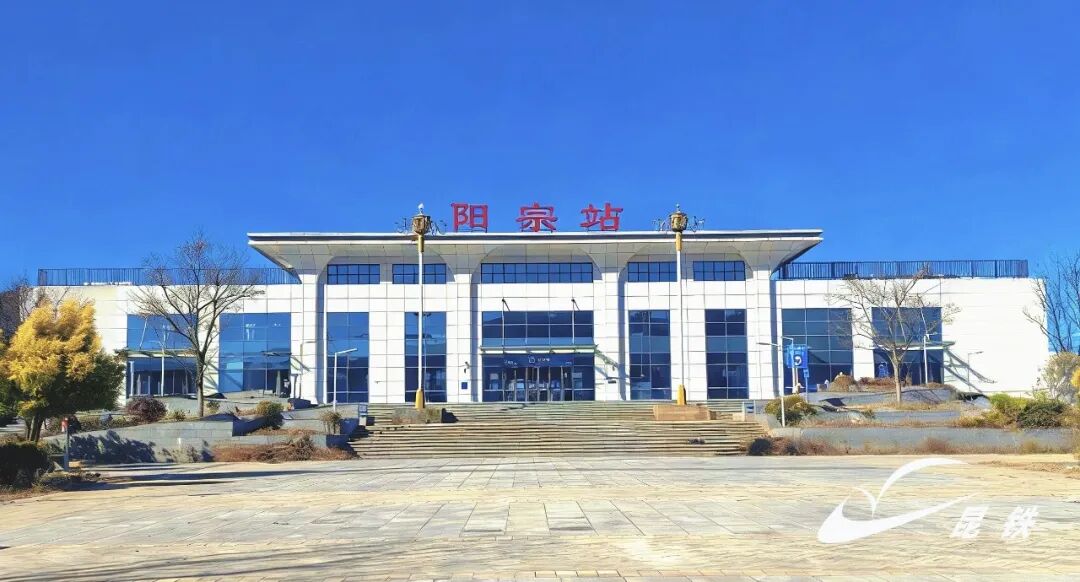
Core Viewpoint - The Yangzong Station officially commenced passenger operations on January 26, 2023, enhancing transportation connectivity in Yunnan Province and promoting local economic development and tourism [1][3]. Group 1: Station Operations - Yangzong Station will initially operate 6 train services daily, covering morning, afternoon, and evening travel periods [1]. - The station is strategically located approximately 20 kilometers from the Yangzong Lake National Tourist Resort, facilitating access to major tourist attractions [3]. Group 2: Infrastructure and Facilities - The station features a total building area of about 2,500 square meters, incorporating traditional Yi ethnic design elements [3]. - Modern facilities include a column-free waiting hall, intelligent security systems, and facial recognition gates, aimed at providing efficient travel experiences for passengers [3]. Group 3: Travel Times and Connectivity - Travel time from Yangzong to Kunming South Station is as short as 10 minutes, with connections to Kunming Station taking about 35 minutes, and to Honghe Station approximately 1.5 hours [3]. - A dedicated bus service has been established to connect the station with the Yangzong Lake tourist area, enhancing the last-mile connectivity for travelers [3]. Group 4: Ticket Sales and Seasonal Impact - Ticket sales for Yangzong Station commenced on January 24, 2023, through the 12306 website, mobile app, and station windows [3]. - The station's opening is timely as it coincides with the Spring Festival travel season, expected to boost local economic activities and tourism [3].
新建城际铁路设计速度一般为每小时120至200公里
Xin Lang Cai Jing· 2026-01-26 21:05
Core Viewpoint - The National Development and Reform Commission (NDRC) has issued guidelines to promote the healthy and sustainable development of intercity railways, emphasizing the need for a reasonable, efficient, and economically viable intercity rail network to support high-quality urban integration. Group 1: Intercity Railway Development - Intercity railways serve as a key passenger transport method between major cities within urban clusters, with the backbone network in four major urban clusters nearing a total length of 1,800 kilometers, achieving operational efficiency and enabling 1 to 2-hour connectivity between major cities [1][2] - New intercity railways are required to have a minimum bidirectional passenger flow density of 15 million trips per year, with design speeds generally ranging from 120 to 200 kilometers per hour [1] Group 2: Operational Management - The guidelines emphasize comprehensive management throughout the planning, construction, and operation of intercity railways, highlighting three operational priorities: utilizing existing resources, promoting diverse operational entities, and focusing on passenger needs [2] - The NDRC encourages local governments to collaborate with railway companies to maximize the use of existing railway capacity for intercity services and supports various operational models tailored to local conditions [2]
国家发展改革委表示 支持多措并举提高既有城际铁路客流效益
Zhong Guo Zheng Quan Bao· 2026-01-26 20:55
Core Viewpoint - The National Development and Reform Commission (NDRC) has issued guidelines to promote the healthy and sustainable development of intercity railways, emphasizing the need for appropriate infrastructure development to support high-quality urban integration [1] Group 1: Policy Guidelines - The guidelines encourage local governments to collaborate with railway companies to utilize existing railway capacity for intercity train services, enhancing the intercity passenger transport function [1][5] - New intercity railways should be built with a minimum bidirectional passenger flow density of 15 million trips per year, and projects with insufficient demand should be paused [3] - The design speed for new intercity railways is generally set between 120-200 km/h, with a focus on cost-effective and efficient construction standards [3] Group 2: Infrastructure Development - The intercity railway backbone networks in major urban clusters such as Beijing-Tianjin-Hebei, Yangtze River Delta, Guangdong-Hong Kong-Macau Greater Bay Area, and Chengdu-Chongqing Economic Circle are rapidly forming, with a total length nearing 1,800 kilometers [2] - The guidelines aim to achieve seamless integration of intercity railways with mainline railways, urban rail transit, and suburban railways, enhancing service quality through a multi-layered transport network [3] Group 3: Financial and Operational Management - The NDRC emphasizes the importance of financial responsibility, requiring that new intercity railway projects have a minimum capital contribution of 50% and prohibiting excessive debt financing [4] - The guidelines encourage the participation of social capital in eligible projects and the exploration of suitable financial products and services for intercity railways [4] - A focus on diversified transportation entities is highlighted, allowing for various operational models and ensuring fair collaboration between railway companies and local governments [5]
支持多措并举提高既有城际铁路客流效益
Zhong Guo Zheng Quan Bao· 2026-01-26 20:54
Core Viewpoint - The National Development and Reform Commission (NDRC) has issued guidelines for the sustainable development of intercity railways, emphasizing the need for a balanced approach to infrastructure development and promoting high-quality integration of urban clusters [1] Group 1: Policy Guidelines - The guidelines encourage collaboration between local governments and railway companies to utilize existing railway capacity for intercity services, enhancing passenger transport functionality [1][2] - New intercity railway projects should have a minimum bidirectional passenger flow density of 15 million trips per year, with projects in areas failing to meet 50% of expected passenger flow after five years being paused [2] - New intercity railways are generally to be constructed at ground level, with design speeds typically between 120-200 km/h, focusing on cost-effective and location-appropriate technical standards [2] Group 2: Integration and Service Quality - The guidelines aim for seamless integration of intercity railways with mainline railways, suburban railways, and urban transit systems, promoting a multi-layered transport network [2][3] - Emphasis is placed on improving service quality through unified ticketing systems, payment compatibility, and shared information among different transport modes [4] Group 3: Regulatory and Financial Framework - The NDRC mandates that the National Railway Administration oversee industry regulation, while local governments are responsible for quality and safety in construction [3] - New intercity railway projects must have at least 50% of their capital funded by local governments, with restrictions on debt financing to mitigate financial risks [3] - The guidelines encourage private sector participation in financing suitable projects and the exploration of financial products tailored for intercity railways [3]