城际铁路运输服务

Search documents
国家发展改革委表示:支持多措并举提高既有城际铁路客流效益
Zhong Guo Zheng Quan Bao· 2026-01-27 00:13
Core Viewpoint - The National Development and Reform Commission (NDRC) has issued guidelines to promote the healthy and sustainable development of intercity railways, emphasizing the need for a reasonable layout and efficient operation to support high-quality urban integration [1] Group 1: Policy Guidelines - The guidelines encourage local governments to collaborate with railway companies to utilize existing railway capacity for intercity train services, enhancing the passenger transport function of existing railways [1][2] - New intercity railways should have a minimum bidirectional passenger flow density of 15 million trips per year, and projects with insufficient passenger density after five years of operation will be paused [2][3] - The design speed for new intercity railways is generally set between 120-200 km/h, with a focus on cost control and efficient use of resources [2][3] Group 2: Integration and Management - The guidelines emphasize seamless integration of intercity railways with mainline railways, suburban railways, and urban transit systems, promoting a multi-layered transportation network [3][4] - The NDRC mandates that the National Railway Administration oversee industry regulation and that local governments ensure quality and safety in construction and operation [3] - There is encouragement for social capital participation in eligible projects, with a capital contribution requirement of at least 50% for new intercity railway projects [3][4] Group 3: Operational Strategies - The guidelines promote the use of existing resources and encourage local governments to enhance the efficiency of current intercity rail services [4] - A diverse range of operational models is supported, allowing for both delegated and self-operated services by qualified rail companies [4] - The focus is on a people-centered approach, aiming to optimize ticketing and station processes while ensuring compatibility across different transport systems [4]
国家发展改革委:支持多措并举提高既有城际铁路客流效益
Zhong Guo Zheng Quan Bao· 2026-01-26 23:25
Core Viewpoint - The National Development and Reform Commission (NDRC) has issued guidelines to promote the healthy and sustainable development of intercity railways, emphasizing the need for a balanced approach to infrastructure construction and the integration of urban clusters for high-quality development [1][2]. Group 1: Guidelines and Standards - The guidelines establish standards for intercity railway planning and construction, advocating for a demand-driven approach with a minimum dual-direction passenger flow density of 15 million passengers per year for new intercity railways [3]. - New intercity railways should primarily be constructed at ground level, with design speeds generally between 120-200 km/h, and strict control over project costs [3]. Group 2: Regulatory and Financial Framework - The NDRC emphasizes the importance of regulatory oversight, requiring the National Railway Administration to enforce industry supervision and local governments to ensure quality and safety in construction [4]. - New intercity railway projects must have a minimum capital contribution of 50%, and regions where existing railways have not achieved cash flow balance after 10 years will also halt new projects to mitigate debt risks [4]. Group 3: Operational Management and Collaboration - The guidelines highlight the importance of utilizing existing resources by encouraging local governments and railway companies to collaborate in enhancing intercity passenger services [5]. - There is a push for diversified operational models, allowing for both delegated and self-operated services, and establishing transparent mechanisms for cross-line operations to protect stakeholder interests [5]. - The focus is on a people-centered approach, aiming for efficient and convenient travel experiences, including the integration of ticketing systems across different transport modes [5].
国家发展改革委表示 支持多措并举提高既有城际铁路客流效益
Zhong Guo Zheng Quan Bao· 2026-01-26 20:55
Core Viewpoint - The National Development and Reform Commission (NDRC) has issued guidelines to promote the healthy and sustainable development of intercity railways, emphasizing the need for appropriate infrastructure development to support high-quality urban integration [1] Group 1: Policy Guidelines - The guidelines encourage local governments to collaborate with railway companies to utilize existing railway capacity for intercity train services, enhancing the intercity passenger transport function [1][5] - New intercity railways should be built with a minimum bidirectional passenger flow density of 15 million trips per year, and projects with insufficient demand should be paused [3] - The design speed for new intercity railways is generally set between 120-200 km/h, with a focus on cost-effective and efficient construction standards [3] Group 2: Infrastructure Development - The intercity railway backbone networks in major urban clusters such as Beijing-Tianjin-Hebei, Yangtze River Delta, Guangdong-Hong Kong-Macau Greater Bay Area, and Chengdu-Chongqing Economic Circle are rapidly forming, with a total length nearing 1,800 kilometers [2] - The guidelines aim to achieve seamless integration of intercity railways with mainline railways, urban rail transit, and suburban railways, enhancing service quality through a multi-layered transport network [3] Group 3: Financial and Operational Management - The NDRC emphasizes the importance of financial responsibility, requiring that new intercity railway projects have a minimum capital contribution of 50% and prohibiting excessive debt financing [4] - The guidelines encourage the participation of social capital in eligible projects and the exploration of suitable financial products and services for intercity railways [4] - A focus on diversified transportation entities is highlighted, allowing for various operational models and ensuring fair collaboration between railway companies and local governments [5]
支持多措并举提高既有城际铁路客流效益
Zhong Guo Zheng Quan Bao· 2026-01-26 20:54
Core Viewpoint - The National Development and Reform Commission (NDRC) has issued guidelines for the sustainable development of intercity railways, emphasizing the need for a balanced approach to infrastructure development and promoting high-quality integration of urban clusters [1] Group 1: Policy Guidelines - The guidelines encourage collaboration between local governments and railway companies to utilize existing railway capacity for intercity services, enhancing passenger transport functionality [1][2] - New intercity railway projects should have a minimum bidirectional passenger flow density of 15 million trips per year, with projects in areas failing to meet 50% of expected passenger flow after five years being paused [2] - New intercity railways are generally to be constructed at ground level, with design speeds typically between 120-200 km/h, focusing on cost-effective and location-appropriate technical standards [2] Group 2: Integration and Service Quality - The guidelines aim for seamless integration of intercity railways with mainline railways, suburban railways, and urban transit systems, promoting a multi-layered transport network [2][3] - Emphasis is placed on improving service quality through unified ticketing systems, payment compatibility, and shared information among different transport modes [4] Group 3: Regulatory and Financial Framework - The NDRC mandates that the National Railway Administration oversee industry regulation, while local governments are responsible for quality and safety in construction [3] - New intercity railway projects must have at least 50% of their capital funded by local governments, with restrictions on debt financing to mitigate financial risks [3] - The guidelines encourage private sector participation in financing suitable projects and the exploration of financial products tailored for intercity railways [3]
推进城际铁路健康可持续发展
Ren Min Ri Bao· 2026-01-25 23:26
Core Viewpoint - The National Development and Reform Commission (NDRC) has issued guidelines to promote the healthy and sustainable development of intercity railways, marking the first official document addressing this sector in China [1] Group 1: Policy Guidance - The guidelines emphasize the importance of intercity railways as a key transportation mode within urban agglomerations, facilitating 1 to 2-hour travel between major cities, thereby enhancing regional coordination and urban capacity [1] - The document outlines five key clarifications regarding the planning and construction of intercity railways, including functional positioning, standard conditions, implementation procedures, regulatory requirements, and management systems [2][3] Group 2: Functional Positioning - Intercity railways are defined as the primary passenger transport mode between key cities in urban clusters, focusing on meeting the demand for short to medium-distance travel for commuting, leisure, and business [2] - The guidelines prohibit the construction of high-speed railways or urban transit systems under the guise of intercity railways, ensuring a clear functional distinction [1] Group 3: Standards and Conditions - New intercity railways must achieve a minimum bidirectional passenger flow of 15 million trips per year, with projects in areas failing to meet 50% of this target after five years being paused [2] - The design speed for new intercity railways is set between 120-200 km/h, with a focus on cost control and efficient land use [2] Group 4: Implementation and Regulation - The planning and construction of intercity railways will be coordinated by provincial development and reform, transportation, and natural resources departments, requiring approval from the NDRC [2] - The guidelines mandate that local governments ensure a minimum capital contribution of 50% for new projects and prohibit debt financing, with projects failing to achieve cash flow balance after ten years being halted [2] Group 5: Management System - A national coordination mechanism will be established, involving multiple government departments to oversee the entire process of intercity railway development, from planning to operation [3] - The guidelines highlight a focus on utilizing existing resources, diversifying transport operators, and prioritizing a people-centered approach in operations [3]
国家发展改革委:推进城际铁路健康可持续发展
Xin Lang Cai Jing· 2026-01-25 13:03
Core Viewpoint - The National Development and Reform Commission (NDRC) has issued the "Opinions on Promoting the Healthy and Sustainable Development of Intercity Railways," marking the first official document focused on intercity railways, aimed at enhancing policy guidance and support for higher quality and sustainable development [1] Group 1: Policy and Planning - The document emphasizes comprehensive management throughout the planning, construction, and operation of intercity railways [1] - Intercity railways are identified as a key passenger transport mode between major cities within urban clusters, with significant progress in the planning and construction of intercity railways in key regions [1] - The backbone network of intercity railways in the four major urban clusters (Beijing-Tianjin-Hebei, Yangtze River Delta, Guangdong-Hong Kong-Macau Greater Bay Area, Chengdu-Chongqing Economic Circle) is nearing 1,800 kilometers, facilitating 1 to 2-hour connectivity between major cities [1] Group 2: Functional Positioning - The "Opinions" specify that intercity railways will primarily connect central cities within urban clusters and large and medium-sized cities with a resident population of over 500,000, focusing on high-density, flexible transport modes to meet short to medium-distance travel needs [2] - Priority is given to the planning and construction of intercity railways in economically active and densely populated urban clusters [2] - New intercity railways are required to have a minimum bidirectional passenger flow density of 15 million trips per year, with design speeds typically ranging from 120 to 200 kilometers per hour [2]
国家首次针对城际铁路出台文件,国家发改委新闻发言人答记者问
Yang Shi Wang· 2026-01-25 08:52
Core Viewpoint - The National Development and Reform Commission (NDRC) has issued the "Opinions on Promoting the Healthy and Sustainable Development of Intercity Railways," marking the first official document focused on intercity railways, aimed at enhancing policy guidance and support for higher quality and sustainable development in this sector [1][2]. Group 1: Background and Importance - Intercity railways are a crucial transportation mode within urban agglomerations, significantly supporting regional strategies and new urbanization efforts. The development of intercity railways has led to the formation of a backbone network nearing 1,800 kilometers, facilitating 1 to 2-hour travel between major cities [1][2]. - The document aligns with major decisions from the 20th National Congress, emphasizing the need for independent operations in monopolistic sectors and market-oriented reforms in competitive areas, thereby guiding future intercity railway development [2]. Group 2: Key Guidelines - **Function Positioning**: Intercity railways are designated as the primary passenger transport mode between key cities in urban clusters, focusing on short to medium-distance travel needs. The document prohibits the use of intercity railway projects to disguise the construction of high-speed rail or urban transit systems [3]. - **Standards and Conditions**: New intercity railways must have a minimum dual-direction passenger flow of 15 million trips per year. Projects with insufficient passenger density after five years of operation will be halted. New railways should generally be at-grade with design speeds between 120-200 km/h [3][4]. - **Implementation Procedures**: Planning for intercity railways will be coordinated by provincial departments, requiring pre-feasibility studies before approval. Significant changes in construction plans must follow established adjustment procedures [4]. - **Regulatory Requirements**: The National Railway Administration will oversee industry supervision, ensuring local governments are accountable for quality and safety. New projects must have at least 50% capital funding from local governments, and projects failing to achieve cash flow balance after ten years will be suspended [4]. - **Management System**: A national coordination mechanism will be established, with responsibilities shared among various departments to ensure effective planning, design, construction, and operation of intercity railways [4]. Group 3: Operational Guidelines - **Resource Utilization**: The document encourages leveraging existing railway capacity to enhance intercity passenger services, promoting collaboration between local governments and railway companies [5]. - **Diverse Operation Models**: It supports various operational models, including delegated and self-operated services, ensuring fair negotiations between railway companies and local governments [5]. - **People-Centric Approach**: The focus is on optimizing operational management to meet public travel needs, improving ticketing and station processes, and ensuring interoperability between different transport systems [5][6].
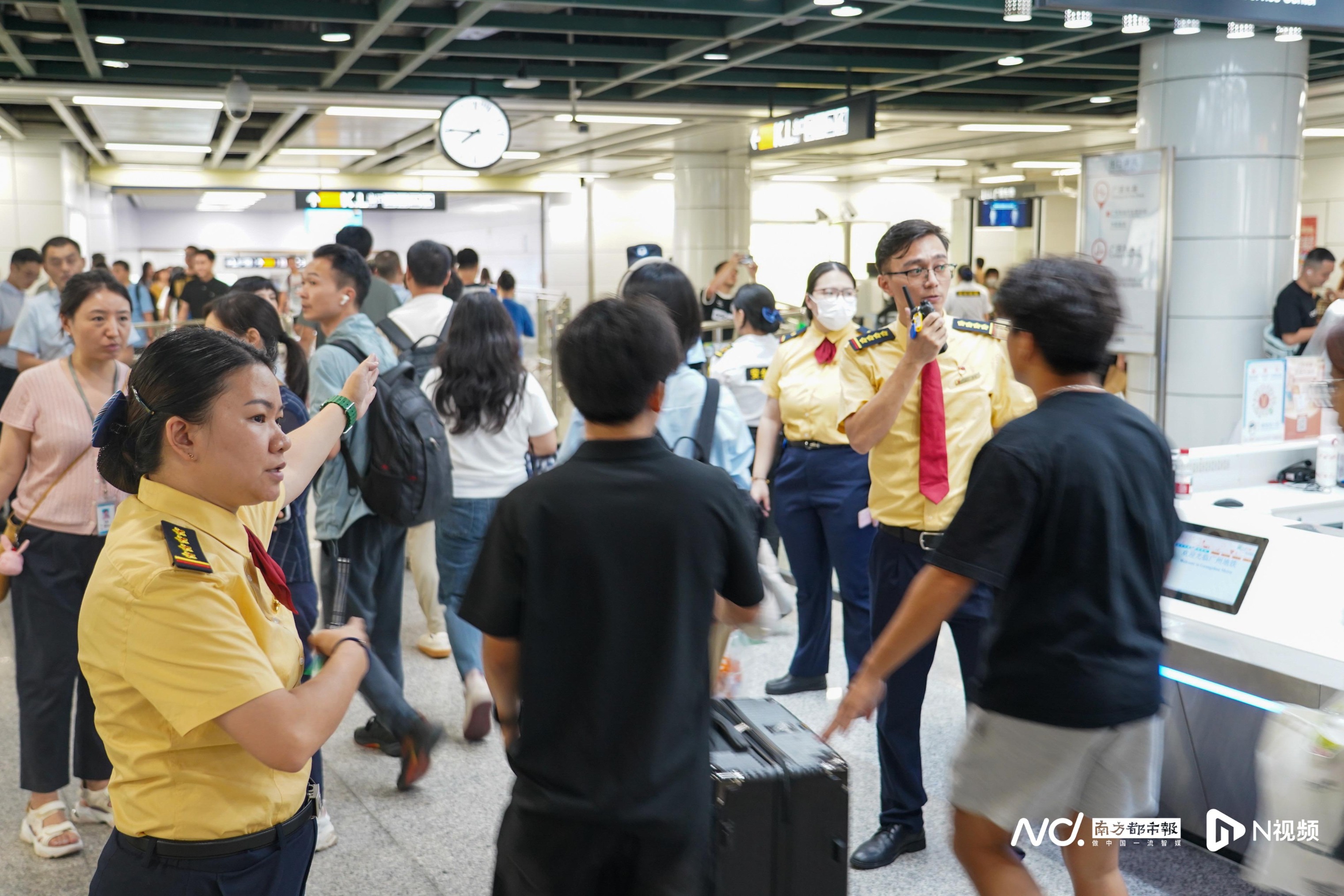
返程高峰广州地铁延迟收车 城际加开列车
Nan Fang Du Shi Bao· 2025-10-07 01:04
Summary of Key Points Core Viewpoint - The Guangzhou Metro anticipates an increase in passenger flow due to the Mid-Autumn Festival and the return journey of travelers, leading to extended service hours and enhanced capacity on intercity railways starting from October 5 [1]. Group 1: Passenger Flow Statistics - From October 1 to 5, the average daily passenger volume for the metro network was 8.215 million, totaling 41.073 million passengers [2]. - On National Day, the passenger volume reached 9.53 million [2]. - The highest average daily passenger volume for a single line was 1.457 million for Line 3, followed by 1.016 million for Line 2, and 779,000 for Line 8 [2]. - The top three stations by average daily passenger volume were Sports West Road (357,000), Jiahe Wanggang (286,000), and Park Front (257,000) [2]. Group 2: Service Enhancements - From October 6 to 8, several metro lines will extend service hours: Lines 1, 3 (including North Line), 5, and 12 will extend by 1 hour, while Lines 2 and 7 will extend by 2 hours [2]. - The last train from Guangzhou South Station will depart at 1:30 AM the following day [2]. - During the period from 12:30 AM to 1:30 AM, express trains will operate on Lines 2 and 7, with limited stops [2]. Group 3: Intercity Railway Adjustments - To accommodate the peak return flow during the "Double Festival," the Guangdong Intercity Railway will add 6 peak trains on October 7 and 8, enhancing service capacity [4]. - The intercity railway will operate additional routes between Foshan West and Huizhou North, as well as Foshan West and Dongguan West, with 3 standby trains available [4]. - The ticketing system supports multiple payment methods, allowing for flexible travel without prior booking [4]. Group 4: Safety and Operational Guidelines - With the increase in capacity, train schedules may be adjusted, and passengers are advised to check display screens for updates [5]. - Safety measures are in place to manage passenger flow, including capacity limits on trains and guidance for orderly boarding [5].
“站霸”易主,谁超越了体育西?节前一天广州地铁客流破千万
Nan Fang Du Shi Bao· 2025-10-01 15:23
Core Insights - On September 30, the total passenger volume of the Guangzhou Metro reached 11.681 million, marking an 8.4% increase compared to the same period last year [1] - The opening of new metro lines has shifted passenger flow patterns, with Jiahe Wanggang Station surpassing the previously busiest station, Sports West Station [1] - The Guangdong intercity railway also saw a record high of 241,700 passengers, a 16% increase year-on-year [1][6] Metro Operations - On September 30, over 10,000 train services were operated, with the maximum number of trains on the network reaching 625 [2] - Key metro lines extended their operating hours by one hour to accommodate holiday travel, with significant passenger volumes on Line 3 (1.998 million), Line 2 (1.335 million), and Line 5 (1.097 million) [2] - The top three stations by passenger volume were Jiahe Wanggang (434,000), Sports West Road (424,000), and Zhujiang New Town (266,000) [2] Intercity Railway Performance - The Guangdong intercity railway achieved a new peak with 241,700 passengers, including 38,000 from newly opened lines [6] - The busiest stations on the intercity railway included Xiping West (20,493), Panyu Station (20,080), and Songshan Lake North Station (18,243) [6] - A total of 439 train services were operated, including 33 additional trains to manage the increased passenger flow [6] Convenience Services - New convenience supermarkets have been introduced in several metro stations, offering a range of services including grocery shopping, laundry, and charging stations [7] - The initiative aims to enhance the overall travel experience by integrating shopping and services into the metro environment [7]