天然气

Search documents
中石油天然气销售河南公司举办企业开放日活动
Huan Qiu Wang· 2025-10-20 08:20
四大特色展区成为活动现场的"人气焦点"。其中,客户服务区通过实例演示,直观呈现了智能缴费系统 与24小时应急响应机制的高效便捷;场站运营区以图文展板结合实物模型的形式,系统讲解了天然气场 站安全管理全流程;燃气设备区重点推介了新型检漏仪、智能报警装置等安全产品,并同步向公众普及 燃气安全使用知识;非气业务区则展示了公司在循环经济、产业链协同方面的探索成果,生动诠释了绿 色发展理念。 面向未来,河南公司将以此次活动为契机,进一步强化责任担当,持续提升能源保供能力与绿色发展水 平,为美丽河南建设贡献更多石油力量。 近日,中国石油天然气销售河南公司(以下简称"河南公司")举行以"助力美丽中国建设,点靓人民美 好生活"为主题的企业开放日活动,展示河南公司在天然气保供、管网建设、安全运营及服务提升领域 的实践成果。 河南公司相关负责人表示,公司始终坚守"奉献能源、绿色发展" 宗旨,持续强化天然气保供能力建 设,全力保障群众"清凉度夏、温暖过冬"。对于未来发展,河南公司将进一步深化政企协同,积极构建 天然气产业命运共同体,为河南经济社会高质量发展筑牢能源根基。 随后,杞县昆仑公司现场介绍了企业创新成果,创新成果已应用完成 ...

今年9月天然气产量同比增长9.4%
Zhong Guo Jing Ji Wang· 2025-10-20 07:55
中国经济网北京10月20日讯(记者王婉莹) 国家统计局今日发布2025年9月份能源生产情况。9月份, 规模以上工业原煤生产降幅收窄,原油、天然气生产增速加快,电力生产平稳增长。其中,规上工业天 然气产量同比增长9.4%,增速比8月份加快3.5个百分点。 ...
申万公用环保周报:风电核电增值税返还政策调整,进口LNG综合价格创四年新低-20251020
Shenwan Hongyuan Securities· 2025-10-20 07:12
Investment Rating - The report maintains a positive outlook on the power and gas sectors, highlighting potential investment opportunities in renewable energy and gas companies [3][12]. Core Insights - The report emphasizes the recent adjustments in value-added tax policies for wind and nuclear power, which may impact profitability in the short to medium term [10][11]. - It notes the significant drop in LNG import prices, reaching a four-year low, which could benefit gas companies and consumers [13][29]. - The report suggests that the competitive bidding results for electricity prices in Xinjiang and Gansu indicate varying strategies among renewable energy operators, which could lead to improved profit margins [9][12]. Summary by Sections 1. Power Sector - Xinjiang's competitive bidding results show a mechanism electricity price of 0.252 CNY/kWh for wind power, close to the upper limit, while Gansu's price is 0.1954 CNY/kWh, near the lower limit [5][9]. - The adjustment of the value-added tax policy for onshore wind power, effective November 1, 2025, will eliminate the 50% refund policy, while offshore wind will retain it until the end of 2027 [10][11]. - Recommendations include focusing on companies like Guodian Power, Sichuan Investment Energy, and China Nuclear Power due to their stable growth prospects [12]. 2. Gas Sector - The report highlights a slight decline in global gas prices, with the US Henry Hub price at $2.82/mmBtu, down 2.90% week-on-week, and LNG import prices in China dropping to 2852 CNY/ton, the lowest since mid-2021 [13][29]. - It suggests that the cost reduction in upstream resources and the recovery of the macro economy will benefit Hong Kong gas companies like Kunlun Energy and New Hope Energy [31]. - The report anticipates that the LNG prices may stabilize as demand increases with the onset of colder weather [29][31]. 3. Weekly Market Review - The public utility, power, gas, and environmental protection sectors outperformed the CSI 300 index during the week of October 13-17, 2025 [35]. - The report notes that the power equipment sector lagged behind the index, indicating potential investment opportunities in other sectors [35]. 4. Company and Industry Dynamics - The report discusses the upcoming competitive bidding for renewable energy projects in Anhui, with a bidding range set between 0.2 CNY/kWh and 0.3844 CNY/kWh [41][42]. - It highlights the performance of major companies, such as China General Nuclear Power and Longyuan Power, which reported varying results in their electricity generation [43][44].




欧盟国家接近达成协议 拟2027年底前禁止进口俄罗斯天然气
智通财经网· 2025-10-20 06:56
欧洲一直面临美国压力,要求其加快切断与俄罗斯的能源联系,并购买更多美国液化天然气。一份关于 欧美贸易的联合声明承诺,未来三年双方将达成7500亿美元的能源交易。 智通财经APP获悉,欧盟各国的能源部长们旨在就2027年底前禁运所有俄罗斯天然气供应的计划达成共 同立场,此举意味着该联盟寻求彻底终结对莫斯科的能源依赖。 各国官员周一在卢森堡举行会议,就该项立法进一步磋商以明确立场。该法律首先将于6月中旬起禁止 根据现有短期合同进口俄罗斯天然气,但对匈牙利和斯洛伐克等内陆国家予以豁免。18个月后,将进一 步禁止长期合约。 自2022年俄罗斯总统普京入侵乌克兰后,欧盟一直推行双管齐下的战略,以最终摆脱对俄罗斯化石燃料 的依赖。除名为"RepowerEU"的禁令外,欧盟委员会还提议在年底前禁止进口俄罗斯液化天然气。各国 领导人很可能在本周晚些时候的布鲁塞尔会议上讨论此事。 欧盟约15%的液化天然气供应来自俄罗斯,使该国成为欧洲第二大液化天然气供应国,仅次于美国,每 月进口额在5亿至7亿欧元之间。 周一各部长有待解决的禁令问题大多涉及技术细节,包括如何对进口天然气实施进入欧盟的预授权。部 长们还将讨论乌克兰能源状况及欧盟 ...
蓝焰控股股价涨5.12%,恒生前海基金旗下1只基金重仓,持有49.99万股浮盈赚取18.5万元
Xin Lang Cai Jing· 2025-10-20 06:47
Group 1 - The core viewpoint of the news is the performance and financial metrics of Shanxi Blue Flame Holdings Co., Ltd., which has seen a stock price increase of 5.12% to 7.59 CNY per share, with a total market capitalization of 7.343 billion CNY [1] - The company specializes in coal mine gas management and coalbed methane exploration, with 96.44% of its revenue coming from coalbed gas sales [1] - The company was established on December 22, 1998, and went public on June 22, 2000, indicating a long-standing presence in the market [1] Group 2 - From the perspective of fund holdings, the Hengsheng Qianhai Fund has a significant position in Blue Flame Holdings, with its Hengsheng Qianhai Xingtai Mixed A fund holding 499,900 shares, representing 1.7% of the fund's net value [2] - The fund has a total size of 151 million CNY and has achieved a year-to-date return of 3.61% [2] - The fund manager, Hu Qicong, has been in position for over 6 years, with the best fund return during his tenure being 72.35% [2]

国家统计局:9月规上工业太阳能发电增长21.1%
Guo Jia Tong Ji Ju· 2025-10-20 05:58
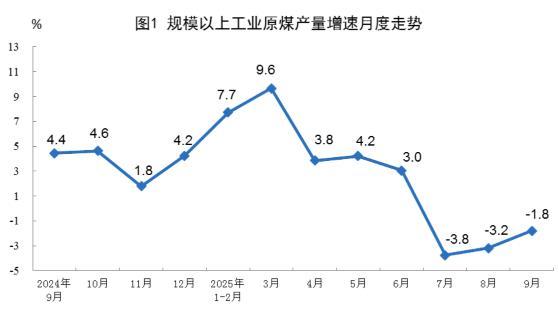
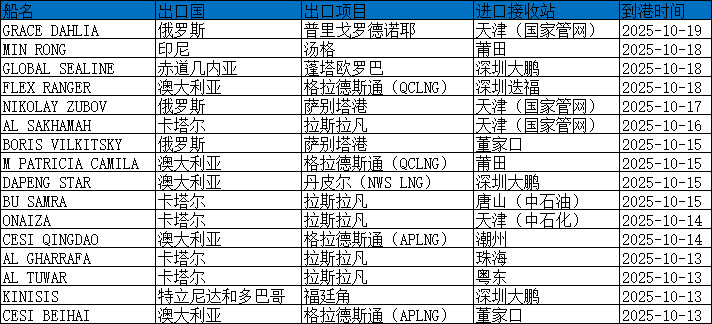
Group 1: Production of Coal, Oil, and Natural Gas - In September, the production of raw coal in large-scale industries was 410 million tons, a year-on-year decrease of 1.8%, with the decline narrowing by 1.4 percentage points compared to August; the average daily output was 13.72 million tons [2] - From January to September, the total raw coal production reached 3.57 billion tons, showing a year-on-year increase of 2.0% [2] - The production of crude oil in September was 17.77 million tons, reflecting a year-on-year growth of 4.1%, with an acceleration of 1.7 percentage points compared to August; the average daily output was 592,000 tons [2] - For the first nine months, the total crude oil production was 162.63 million tons, up by 1.7% year-on-year [3] - The crude oil processing volume in September was 62.69 million tons, a year-on-year increase of 6.8%, with an average daily processing of 2.09 million tons [4] - From January to September, the total crude oil processing volume was 550.81 million tons, increasing by 3.7% year-on-year [5] - Natural gas production in September reached 21.2 billion cubic meters, with a year-on-year growth of 9.4%, accelerating by 3.5 percentage points compared to August; the average daily output was 710 million cubic meters [5] - For the first nine months, the total natural gas production was 194.9 billion cubic meters, reflecting a year-on-year increase of 6.4% [6] Group 2: Electricity Production - The electricity production in large-scale industries in September was 826.2 billion kilowatt-hours, a year-on-year increase of 1.5%; the average daily generation was 27.54 billion kilowatt-hours [7] - From January to September, the total electricity production was 7,255.7 billion kilowatt-hours, showing a year-on-year growth of 1.6% [7] - In September, the production of thermal power decreased by 5.4% year-on-year, while hydropower increased by 31.9%, nuclear power growth slowed to 1.6%, wind power decreased by 7.6%, and solar power increased by 21.1%, with the latter accelerating by 5.2 percentage points compared to August [7]

埃尼、马国油拟启动天然气合资项目
Zhong Guo Hua Gong Bao· 2025-10-20 04:42
Core Viewpoint - Eni Group is accelerating its expansion plans in Southeast Asia, aiming to launch a significant natural gas joint venture with Petronas by 2026, which could reshape the regional energy supply landscape and optimize energy production in both countries [1] Group 1: Joint Venture and Strategic Goals - The two state-owned energy giants announced plans to consolidate their upstream assets in Malaysia and Indonesia, with the new company expected to achieve a full-load production capacity of 500,000 barrels of oil equivalent per day [1] - The joint venture will hold approximately 3 billion barrels of oil equivalent in reserves and possess about 10 billion barrels of oil equivalent in exploration potential, highlighting its scale and long-term strategic value for Southeast Asia [1] Group 2: Impact on Energy Security and Employment - Petronas President Mohammad Taufik stated that this collaboration will "unlock new opportunities" and enhance energy security in Southeast Asia [1] - Eni Group's CEO Claudio Descalzi referred to the initiative as a "transformation benchmark," aiming to create jobs and new infrastructure in Malaysia and Indonesia through asset integration, expertise, and financing capabilities [1] Group 3: Future Operations and LNG Strategy - Eni Group's Chief Operating Officer for Global Natural Resources, Guido Brusco, confirmed that the project will commence operations next year upon receiving regulatory approval [1] - This project aligns with Eni's strategic goal to expand its liquefied natural gas (LNG) business, with natural gas expected to account for 60% of Eni's total hydrocarbon production by 2030 [1]

统计局:9月规上工业原煤生产降幅收窄 原油、天然气生产增速加快 电力生产稳增
Guo Jia Tong Ji Ju· 2025-10-20 03:33
9月份,规模以上工业(以下简称规上工业)原煤生产降幅收窄,原油、天然气生产增速加快,电力生产平稳增长。 一、原煤、原油和天然气生产及相关情况 原煤生产降幅收窄。9月份,规上工业原煤产量4.1亿吨,同比下降1.8%,降幅比8月份收窄1.4个百分点;日均产量1372万吨。 1—9月份,规上工业原煤产量35.7亿吨,同比增长2.0%。 原油生产增速加快。9月份,规上工业原油产量1777万吨,同比增长4.1%,增速比8月份加快1.7个百分点;日均产量59.2万吨。 1—9月份,规上工业原油产量16263万吨,同比增长1.7%。 原油加工较快增长。9月份,规上工业原油加工量6269万吨,同比增长6.8%;日均加工209.0万吨。 1—9月份,规上工业原油加工量55081万吨,同比增长3.7%。 规上工业电力生产平稳增长。9月份,规上工业发电量8262亿千瓦时,同比增长1.5%;日均发电275.4亿千瓦时。1—9月份,规上工业发电量72557亿千瓦 时,同比增长1.6%。 分品种看,9月份,规上工业火电、风电由增转降,水电由降转增,核电增速放缓,太阳能发电增速加快。其中,规上工业火电同比下降5.4%,8月份为增 长1.7 ...

E-Gas系统:10月13日-10月19日当周中国LNG进口量约125万吨
Xin Hua Cai Jing· 2025-10-20 03:21
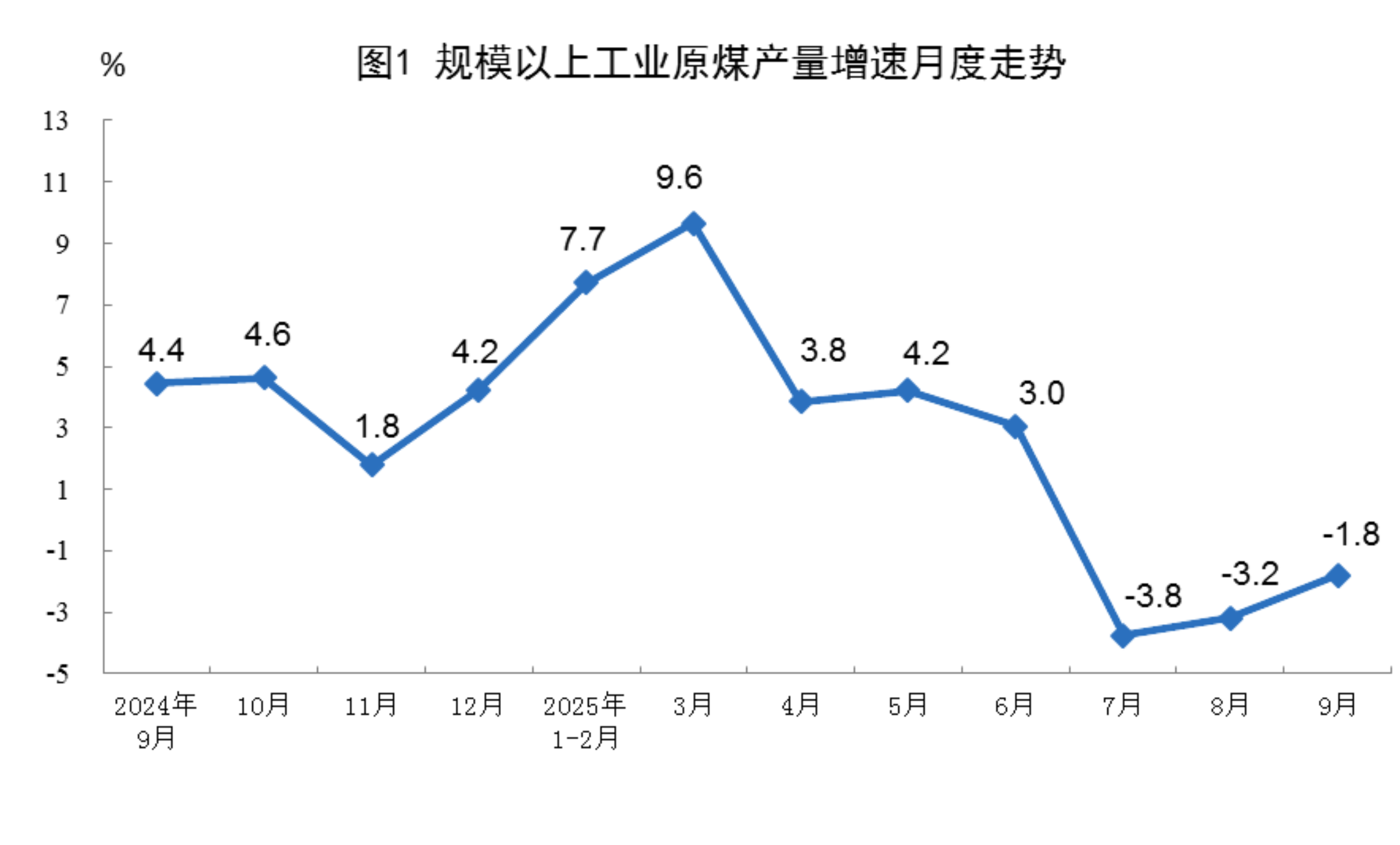
Core Insights - During the week of October 13 to October 19, China imported approximately 1.25 million tons of LNG, significantly up from the previous week's 740,000 tons, indicating a strong increase in LNG imports [1][3]. Import Analysis - A total of 16 LNG vessels were imported during the specified week, with Qatar being the largest supplier, providing 5 vessels and approximately 450,000 tons, accounting for 36% of the total imports [3]. - The South China region received 9 vessels, while the Bohai Rim region received 7 vessels. Tianjin's receiving station had the highest volume, with 3 vessels totaling around 230,000 tons [3]. Future Projections - For the upcoming week of October 20 to October 26, it is predicted that China will import 10 LNG vessels, with an estimated volume of 610,000 tons [3][5].
国家统计局公布2025年9月份能源生产情况
Zhong Guo Xin Wen Wang· 2025-10-20 02:59
据国家统计局网站消息,9月份,规模以上工业(以下简称规上工业)原煤生产降幅收窄, 原油、天然气生产增速加快,电力生产平稳增长。 1—9月份,规上工业原煤产量35.7亿吨,同比增长2.0%。 一、原煤、原油和天然气生产及相关情况 原煤生产降幅收窄。9月份,规上工业原煤产量4.1亿吨,同比下降1.8%,降幅比8月份 收窄1.4个百分点;日均产量1372万吨。 原油生产增速加快。9月份,规上工业原油产量1777万吨,同比增长4.1%,增速比8月份 加快1.7个百分点;日均产量59.2万吨。 1—9月份,规上工业原油产量16263万吨,同比增长1.7%。 原油加工较快增长。9月份,规上工业原油加工量6269万吨,同比增长6.8%;日均加工 209.0万吨。 1—9月份,规上工业原油加工量55081万吨,同比增长3.7%。 天然气生产增速加快。9月份,规上工业天然气产量212亿立方米,同比增长9.4%,增速 比8月份加快3.5个百分点;日均产量7.1亿立方米。 1—9月份,规上工业天然气产量1949亿立方米,同比增长6.4%。 二、电力生产情况 规上工业电力生产平稳增长。9月份,规上工业发电量8262亿千瓦时,同比增长 ...