LNG(液化天然气)

Search documents
特朗普,突发重大威胁!
券商中国· 2026-04-03 03:55
Group 1 - The article discusses President Trump's recent threats against Iran, indicating that the U.S. military will target bridges and power plants in Iran, emphasizing the urgency for the Iranian leadership to act [1][2] - Despite ongoing military actions by the U.S. and Israel for five weeks, approximately half of Iran's missile launchers remain intact, and Iran possesses thousands of suicide drones, complicating the military situation [2] - The U.S. Army, the largest branch of the military with around 450,000 active personnel, has deployed troops to the Middle East for air defense, with the 82nd Airborne Division soldiers arriving for potential ground operations in Iran [3] Group 2 - Brent crude oil prices surged to $141.36 per barrel, the highest since the 2008 financial crisis, driven by supply constraints following Iran's blockade of the Strait of Hormuz [4] - The current high spot prices reflect extreme tightness in physical supply, with the Brent crude futures market not fully capturing the impact of the blockade, according to Chevron's CEO [5] - Reports indicate that approximately 4 million barrels of oil have flowed out of the Strait of Hormuz, marking the largest single-day outflow since the onset of the Gulf War, although this is still a fraction of the normal daily flow [5]


高盛宏观交易员警告:各国央行错失了稳定市场的机会,"能源正在驱动一切"
华尔街见闻· 2026-03-22 04:18
Core Viewpoint - The attack by Iran on Qatar's Ras Laffan LNG facility has significantly impacted global LNG supply, leading to a projected supply disruption of approximately 4-5% over the next 3-5 years, which is about 17% of the future supply. This situation has heightened energy prices, making them a central variable driving macro asset movements, while central banks have adopted a hawkish stance that reinforces the sensitivity of front-end rates to energy prices [1][3][4]. Group 1: Impact of the Attack - The attack on the Ras Laffan LNG facility, which accounts for about 20% of global LNG supply, is expected to result in a production halt lasting 3-5 years, equating to a 4-5% reduction in global LNG supply [3][4]. - The conflict has revealed Iran's strategic intent to leverage energy prices to exert influence on the global economy, indicating potential long-term structural damage to supply [3][4]. - The longer the conflict persists, the wider the distribution of rising energy prices, with recovery to normalcy potentially taking longer even if a resolution is reached [4][5]. Group 2: Central Bank Responses - The collective meetings of the three major central banks failed to stabilize the market, instead reinforcing the market's pricing of energy inflation through hawkish policies [6][9]. - The Bank of England adopted the most hawkish stance, surprising the market by removing dovish language and indicating readiness to tighten policy in response to prolonged shocks [9][10]. - The European Central Bank's communication suggested a higher-than-expected transmission of energy shocks to core inflation, with potential rate hikes ranging from 25 to 150 basis points depending on scenarios [11][10]. Group 3: Economic Outlook and Fiscal Response - The trajectory of economic growth is heavily dependent on the presence of fiscal responses, with limited fiscal space in the UK projected to constrain government support for energy prices [15][16]. - The current market pricing indicates a significant tightening of policies, which could lead to substantial downward growth risks if large-scale fiscal support is not provided [16][17]. - Goldman Sachs maintains that the convexity of energy prices remains upward, with prolonged conflict leading to stronger supply damage and wider price distributions [17].


高盛宏观交易员警告:各国央行错失了稳定市场的机会,"能源正在驱动一切"
美股IPO· 2026-03-22 02:23
Core Viewpoint - The attack by Iran on the world's largest LNG facility is expected to cause a significant supply disruption, with a potential 3-5 year recovery period, impacting global LNG supply by approximately 4-5% [3][4][14] - Central banks, including the Federal Reserve, European Central Bank, and Bank of England, have failed to stabilize the market and have adopted a hawkish stance, linking interest rates closely to energy prices [3][9][13] Group 1: Impact of the Attack - The attack on Qatar's Ras Laffan LNG facility, which accounts for about 20% of global LNG supply, is projected to lead to a supply disruption of around 17% over the next 3-5 years [4][5] - The ongoing conflict is expected to create long-term structural damage to supply, increasing the risk of insufficient gas storage levels in Europe for the upcoming winter [4][5][14] Group 2: Central Banks' Response - The three central banks did not manage to calm the market, and their hawkish responses have intensified the sensitivity of front-end interest rates to energy prices [7][9] - The Bank of England's stance was the most hawkish, removing dovish language and indicating readiness to tighten policy in response to prolonged shocks [9][10] - The European Central Bank's forecasts suggest that energy shocks will have a greater impact on core inflation than previously expected, with potential rate hikes ranging from 25 to 150 basis points depending on scenarios [10][11] Group 3: Economic Outlook - The potential for rapid reopening of the Strait of Hormuz appears very limited, with energy price dynamics continuing to trend upwards [6][14] - The lack of substantial fiscal response could lead to significant downward growth risks, particularly in the UK, where fiscal space is severely constrained [13][14] - The overall tightening of financial conditions is evident, with the UK experiencing the most aggressive tightening, followed by the US [13]
2月份内蒙古能源价格是涨是跌?
Nei Meng Gu Ri Bao· 2026-03-17 10:13
Core Insights - Energy prices in Inner Mongolia have shown stability in February, with coal and coke prices remaining unchanged, while natural gas prices experienced mixed trends [1] Group 1: Coal Prices - The average pithead price of thermal coal in Inner Mongolia for February was 364.27 RMB/ton, remaining flat month-on-month but increasing by 6.89% year-on-year [1] - The average pithead price of eastern lignite was 333.86 RMB/ton, unchanged month-on-month and up by 1.61% year-on-year [1] - The average pithead price of thermal coal in the Ordos region was 417.50 RMB/ton, stable month-on-month and rising by 15.27% year-on-year [1] Group 2: Coke Prices - The average price of coke in Inner Mongolia for February was 1316.75 RMB/ton, with no change month-on-month and a year-on-year increase of 3.70% [1] Group 3: Natural Gas Prices - The average ex-factory price of domestic LNG (liquefied natural gas) in February was 3948.50 RMB/ton, with a month-on-month decrease of 1.06% and a year-on-year decline of 12.76% [1] - The average retail price of LNG was 4393.75 RMB/ton, showing a slight month-on-month increase of 0.21% and a year-on-year decrease of 10.71% [1] - The average retail price of CNG (compressed natural gas) was 3.90 RMB/cubic meter, with a minor month-on-month decrease of 0.19% and a year-on-year decline of 1.75% [1]
国际油价突破100美元,地缘风险或将重塑全球资产定价
第一财经· 2026-03-09 12:52
Core Viewpoint - The article discusses the significant impact of escalating tensions in the Middle East, particularly the U.S.-Iran conflict, on global oil prices and market dynamics, highlighting the potential for long-term geopolitical risks and their implications for energy security and inflation [4][5][6]. Group 1: Market Reactions - On March 9, global markets experienced a downturn, with major indices in Asia and Europe declining, while the oil and gas sector saw gains, particularly in Chinese oil companies [3]. - The oil and gas index rose by 3.87%, with China National Offshore Oil Corporation (CNOOC) hitting a new high of 44.54 CNY per share, closing at 43.36 CNY, a 7.09% increase [3]. Group 2: Geopolitical Impact - The ongoing U.S.-Iran conflict has led to significant disruptions in oil supply, particularly through the Strait of Hormuz, which is crucial for global oil and LNG transportation [6]. - Iraq's oil production has reportedly decreased by 70% due to the inability to export oil through the Strait, and Kuwait has announced production cuts due to "force majeure" [6]. Group 3: Economic Implications - Analysts predict that prolonged disruptions could lead to heightened panic in the oil market, with geopolitical risk premiums potentially reaching extreme levels [6]. - The G7 is discussing the release of strategic oil reserves to mitigate the impact of rising oil prices on the global economy [6]. Group 4: Inflation and Asset Pricing - Rising oil prices are expected to increase both direct and indirect costs, leading to concerns about inflation, as historical data shows a strong correlation between oil prices and inflation rates [8]. - If the conflict persists, the core logic of global asset pricing may shift towards a combination of high geopolitical risk premiums, elevated energy costs, and increased policy uncertainty [9]. Group 5: Sectoral Shifts - The chemical sector is likely to experience price increases due to rising oil prices, with historical trends indicating that nearly 60% of related commodities reached record highs during previous oil price surges [7]. - The coal chemical sector is gaining attention as coal prices rise, with the A-share coal index increasing by 3.18% [7].



中辉能化观点-20260305
Zhong Hui Qi Huo· 2026-03-05 05:37
1. Report Industry Investment Ratings - Crude oil: Cautiously bullish [1] - LPG: Cautiously bullish [1] - L: Bullish [1] - PP: Bullish [1] - PVC: Neutral [1] - PTA: Cautiously bullish [2] - MEG: Rebound [2] - Methanol: Cautiously chase up [2] - Urea: Cautiously bullish [2] - Natural gas: Cautiously bullish [5] - Asphalt: Cautiously bullish [5] - Glass: Neutral [5] - Soda ash: Neutral [5] 2. Core Views of the Report - The short - term geopolitical situation in the Middle East is the main factor affecting the prices of energy and chemical products. The short - term blockage of the Strait of Hormuz has changed the supply - demand expectations of some products, and the prices of some products are expected to be strong in the short term [1][8][14]. - The cost side has a significant impact on product prices. For example, the rise in oil prices has boosted the prices of LPG, asphalt, etc., while the decline in calcium carbide prices has affected the cost support of PVC [1][5]. - The demand side of some products has improved seasonally after the Spring Festival, such as the polyester load of PTA and MEG has increased, and the demand for urea has the expectation of spring fertilization [29][33][40]. 3. Summaries According to Related Catalogs Crude Oil - **Market Review**: Overnight, the outer - disk crude oil fluctuated at a high level. WTI rose slightly by 0.13%, Brent was flat, and the inner - disk SC rose by 10.95% [7]. - **Basic Logic**: Geopolitics dominates short - term oil prices. The military action between the US, Israel and Iran has made the Middle East geopolitical situation tense, and the Strait of Hormuz is temporarily blocked. The core driving force for the rise in oil prices is geopolitical factors. Before the geopolitical situation in the Middle East is settled, oil prices are generally strong. Excluding the blockage of the strait, the supply - demand fundamentals are relatively loose [8]. - **Supply**: The geopolitical uncertainty in the Middle East has increased recently. The crude oil production in Iraq has decreased by about 1.5 million barrels per day due to geopolitical disturbances. If the Strait of Hormuz continues to be congested, production may continue to decline [9]. - **Demand**: The IEA's latest monthly report expects global oil demand to increase by 850,000 barrels per day in 2026, lower than last month's forecast of 930,000 barrels per day [9]. - **Inventory**: As of the week of February 20, US crude oil inventories rose by 16 million barrels to 435.8 million barrels, gasoline inventories decreased by 1 million barrels to 254.8 million barrels, distillate inventories increased by 252,000 barrels to 120.4 million barrels, and the strategic crude oil reserve remained unchanged at 415.2 million barrels [9]. - **Strategy Recommendation**: In the medium - and long - term, geopolitical factors will raise the bottom center of oil prices. After the geopolitical risks are released, the market will return to the supply - demand fundamentals. In the short - term, it will fluctuate and adjust, and the volatility will increase. SC should focus on the range of [680 - 750] [10]. LPG - **Market Review**: On March 4, the PG main contract closed at 5,316 yuan/ton, a month - on - month increase of 5.33%. The spot prices in Shandong, East China, and South China were 4,840 (+220) yuan/ton, 4,708 (+167) yuan/ton, and 5,160 (+180) yuan/ton respectively [13]. - **Basic Logic**: The price movement is mainly anchored to the cost - side oil price. After the military conflict in the Middle East over the weekend, the transportation in the Strait of Hormuz was temporarily blocked, and the short - term trend was strong. The supply and demand both increased, but the inventory was bearish, with both port and factory inventories rising [14]. - **Strategy Recommendation**: In the medium - and long - term, the price will follow the oil price, and the price center is expected to gradually increase. In the short - term, due to the increased short - term uncertainty of the cost - side oil price, the trend is strong. PG should focus on the range of [5200 - 5500] [15]. L - **Market Review**: The L05 closing price (main contract) was 7,355 yuan/ton, a month - on - month increase of 2.2% [17]. - **Basic Logic**: Short - term geopolitical disturbances have changed the supply - demand expectations, and the 5 - 9 month - spread structure has reversed. It is expected that the market will continue to fluctuate strongly. The short - term blockage of the Strait of Hormuz may lead to a reduction in imports. The parking ratio remains at a low level of 9%, and the downstream sentiment has improved [19]. - **Strategy Recommendation**: L should focus on the range of [7100 - 7500] [19]. PP - **Market Review**: The PP05 closing price (main contract) was 7,506 yuan/ton, a month - on - month increase of 3.9% [21]. - **Basic Logic**: The parking ratio has risen to 21%. There are still positive supports on the supply and cost sides, and the term structure has changed to the Back structure. Geopolitical disturbances may cause a shortage of raw materials for MTO and PDH marginal devices, intensifying the upstream maintenance efforts. The upstream is maintaining high - level maintenance, and the planned maintenance volume in March is still large. It is expected that the market will perform strongly in the olefin sector. The sharp rise in propane has rapidly compressed the PDH profit to an extremely low level, and the cost - side support is strong [23]. - **Strategy Recommendation**: PP should focus on the range of [7200 - 7600] [23]. PVC - **Market Review**: The V05 closing price (main contract) was 4,995 yuan/ton, a month - on - month increase of 1.1% [25]. - **Basic Logic**: The decline in calcium carbide prices continues, and the profit of chlor - alkali in Shandong has been quickly repaired. China has little trade with the Middle East in PVC, and the oil - based proportion is relatively low. The market mainly trades based on its own fundamentals. The cost side is mixed, with strong oil and weak coal, and the decline in calcium carbide prices weakens the cost support. There are no new maintenance plans this week, the window period for export rush is short, and it is expected that the high - inventory structure will be difficult to reverse, and the supply - demand drive is weak [27]. - **Strategy Recommendation**: PVC should focus on the range of [4800 - 5200] [27]. PTA - **Market Review**: As of March 2, the TA05 closing price was at a high level in the past three months [29]. - **Basic Logic**: In terms of valuation, the TA05 closing price was at a high level in the past three months, and the basis and processing fees have changed. On the supply side, domestic devices have increased their loads, and some overseas devices have been shut down for maintenance. Downstream demand has improved seasonally after the Spring Festival, and the polyester load has increased. The PX fundamentals are slightly loose, and the supply - demand balance is expected to improve from March to April. There was a slight inventory build - up in February, and the supply - demand is expected to improve from March to April [29]. - **Strategy Recommendation**: Although there is a slight inventory build - up, the expectation is positive. In the short - term, the Iran - US war promotes the strong operation of oil prices (the OPEC+ production increase plan offsets part of the upward space). TA long positions should be held, and buy on significant pullbacks. TA05 should focus on the range of [5520 - 5680] [30]. MEG - **Market Review**: The low valuation of ethylene glycol has been repaired [33]. - **Basic Logic**: On the supply side, domestic device loads have increased, and overseas device maintenance has increased, and the import volume in March is expected to decline. Downstream demand has improved seasonally after the Spring Festival, and the polyester load has increased. The port inventory is high, but the inventory pressure is expected to ease from March to April. The cost side has support from oil prices and stable coal prices [33]. - **Strategy Recommendation**: Part of the long positions should take profits at high levels. EG05 should focus on the range of [3920 - 4100] [34]. Methanol - **Market Review**: The main contract of methanol was at a high level in the past three months [36]. - **Basic Logic**: The Iran - US war has short - term boosted the crude oil price, and the methanol spot price is expected to rise again. The domestic methanol device starts at a high level in the same period, and the overseas device load has slightly increased. The import volume is expected to decline from February to March, and the inventory is expected to be removed more quickly in March. The demand side has an improvement expectation, and the cost has support [36]. - **Strategy Recommendation**: The domestic methanol device starts at a high level, the inventory removal slope slows down, and the port has a slight inventory build - up. The import is expected to decline from February to March, and the inventory is expected to be removed more quickly in March. Pay attention to the MTO profit situation on the demand side and the restart time of the MTO devices of Shenghong and Xingxing. Recently, the geopolitical conflict is expected to ease. MA05 should focus on the range of [2420 - 2550] [38]. Urea - **Market Review**: The main contract of urea closed at 1,847 (+11) yuan/ton, at the 98.2% quantile level in the past three months [41]. - **Basic Logic**: The absolute valuation of urea is not low, and the spot price of small - particle urea in Shandong is strong. The overall start - up load continues to increase. The demand side has a weak reality and strong expectation. The winter - storage demand is weak, the compound fertilizer start - up load is seasonally low, and the industrial demand is weak. However, urea and fertilizer exports are relatively good, and India has launched a new round of urea tenders. The social inventory continues to increase. In the context of "export quota" and "ensuring supply and stabilizing prices", urea has a ceiling and a floor. Overall, the fundamentals of urea are relatively loose, but the market has the expectation of spring fertilization and the possibility of export speculation, and the short - term trend is slightly strong [40]. - **Strategy Recommendation**: The fundamentals of urea are slightly loose. The market is expected to trade on the expectation of spring fertilization and export trading opportunities. The overseas - domestic arbitrage window is open, and there is speculation expectation for exports. However, the geopolitical and military conflict in the Middle East has cooled recently, and the international oil and gas prices have回调. Part of the long positions should be held, and buy out - of - the - money put options. UR05 should focus on the range of [1810 - 1850] [42]. LNG - **Market Review**: On March 3, the NG main contract closed at 3.039 US dollars per million British thermal units, a month - on - month increase of 1.98% [44]. - **Basic Logic**: The core driving force is that due to the Iranian drone attack, two energy facilities of Qatar Energy Company have suspended natural gas production, causing a sharp rise in European gas prices. The supply side has some changes, such as the decrease in US LNG exports in January and the increase in the number of natural gas rigs. The demand side shows a decline in Japan's LNG imports in 2025. The inventory side shows a decrease in US natural gas inventories [45]. - **Strategy Recommendation**: The geopolitical uncertainty in the Middle East has increased, the shipments from the Middle East have decreased, the European gas price has soared, and the US natural gas exports are expected to increase. The absolute price is not high, and there is support on the cost side. The valuation is neutral. Buy on dips. NG should focus on the range of [2.910 - 3.229] [46]. Asphalt - **Market Review**: On March 4, the BU main contract closed at 3,660 yuan/ton, a month - on - month increase of 0.58% [49]. - **Basic Logic**: The short - term geopolitical situation in the Middle East is the main driving factor, and the market is concerned about the transportation situation in the Strait of Hormuz. The short - term trend is strong. The comprehensive profit of asphalt has decreased. The supply side shows an increase in the planned production volume in March. The demand side shows an increase in imports and exports in 2025. The inventory side shows an increase in social inventory [50]. - **Strategy Recommendation**: The geopolitical situation in the Middle East still has great uncertainty. Pay attention to risk prevention and do not chase the rise. BU should focus on the range of [3600 - 3800] [51]. Glass - **Market Review**: The FG05 closing price (main contract) was 1,038 yuan/ton, a month - on - month decrease of 1.5% [53]. - **Basic Logic**: After the Spring Festival, there is a high pressure to remove inventory, and the supply - demand drive is still weak. Be cautious when going long. The current fundamentals maintain a situation of weak supply and demand. The daily melting volume is 148,600 tons. Under weak demand, further reduction in supply is needed to digest the high inventory. Pay attention to the Two Sessions this week and the sustainability of subsequent supply reduction [55]. - **Strategy Recommendation**: FG should focus on the range of [1000 - 1100] [55]. Soda Ash - **Market Review**: The SA05 closing price (main contract) was 1,203 yuan/ton, a month - on - month decrease of 1.2% [57]. - **Basic Logic**: After the Spring Festival, the factory inventory has increased for two consecutive weeks, and there is still high pressure to remove inventory in the future. The upstream start - up rate remains at a neutral level of 87% in the same period. The real - estate demand continues to be weak, and the daily melting volume of photovoltaic + float glass is 236,000 tons, and the demand for heavy soda ash lacks support. Be cautious when chasing up. Pay attention to the Two Sessions this week and the subsequent maintenance plan [59]. - **Strategy Recommendation**: SA should focus on the range of [1150 - 1250] [59].
全球天然气价格趋势解读
2026-03-04 14:17
Summary of Key Points from Conference Call Records Industry Overview - The records primarily discuss the global LNG (Liquefied Natural Gas) market, focusing on the impact of geopolitical tensions, particularly the blockade of the Strait of Hormuz and damage to Qatari facilities, which have led to significant supply disruptions affecting approximately 20% of global LNG supply [1][3][4]. Core Insights and Arguments - **Price Surge**: Following the blockade and facility damage, TTF and JKM prices surged over 50% in a single day, with cumulative increases reaching 100%-150% over two days, marking a return to high levels seen post-Russia-Ukraine conflict [1][3]. - **Future Price Projections**: Current prices reflect expectations of a two-week production halt. If disruptions extend beyond three months, prices could rise to $40 per million British thermal units (MMBtu), potentially exceeding historical highs from the Russia-Ukraine conflict if the blockade persists into winter [1][4][5]. - **Impact on Major Markets**: China and India are the most directly affected, with India sourcing nearly half of its LNG from Qatar. China has a buffer of 87 million tons in long-term contracts but may face a shortfall of approximately 11 million tons if disruptions continue [1][8]. - **European Inventory Levels**: European inventories are at a five-year low, but the risk is manageable due to the end of the heating season. The market dynamics have shifted towards competition for gas between Asia and Europe, leading to increased prices rather than outright supply shortages [1][5]. Additional Important Content - **Geopolitical Timeline**: The timeline of events includes the U.S. and Israeli airstrikes on Iran on February 28, leading to the blockade announcement by Iran, which significantly impacted LNG prices and supply chains [3][4]. - **Shipping and Transportation Costs**: Post-blockade, LNG shipping volumes dropped to zero, with freight rates increasing to 5-6 times pre-conflict levels, raising landed costs by over 15% [1][8]. - **Long-term Supply Outlook**: The LNG supply is expected to transition from "extremely loose" to "structurally extremely tight" before the release of 15 million tons of new capacity in the U.S. in the second half of 2026 [2][16]. - **Market Dynamics**: The current situation has led to a significant divergence between spot and long-term contract prices, with the latter potentially benefiting from increased margins due to the current supply crisis [11][14]. - **Strategic Adjustments**: China may adjust its procurement strategy to increase reliance on non-Middle Eastern resources and potentially increase imports from the U.S. to mitigate supply gaps [12][13]. Conclusion - The geopolitical tensions surrounding LNG supply have created a volatile market environment, with significant implications for pricing, supply chain dynamics, and strategic procurement decisions across major consuming nations. The situation remains fluid, with ongoing monitoring of geopolitical developments and their impact on global LNG markets being crucial for future investment strategies.
霍尔木兹海峡关闭会如何影响国内外天然气价格
2026-03-04 14:17
Summary of Key Points from Conference Call Records Industry Overview - The records discuss the impact of the closure of the Strait of Hormuz on global natural gas prices, particularly focusing on Qatar's LNG exports and their significance to Asia, including China, India, and Pakistan, which are projected to import approximately 30%, 46%, and 98% of their LNG from Qatar by 2025 respectively [1][2]. Core Insights and Arguments - The disruption in the Strait of Hormuz is characterized as a "transient" contraction, with a daily reduction of approximately 300 million cubic meters, comparable to the scale of the Russia-Ukraine conflict but with a more rapid escalation, leading to a quick rise in JKM and TTF prices [1]. - Long-term contracts are typically linked to oil prices with a lag of 3-6 months; if the conflict persists beyond two months, the new U.S. production capacity may not fully compensate for the shortfall, indicating further upward potential for global gas prices [1]. - Domestic pricing strategies for pipeline gas contracts in 2026 have been paused due to supply uncertainties, with significant upward risks and uncertainties in future price levels [1]. - If the conflict extends, domestic supply entities may need to enter the spot market to fill gaps, particularly affecting downstream enterprises in coastal provinces like Guangdong and Fujian, which will face increased import costs [1]. - The demand for natural gas for power generation in the U.S. is driven by AI computing needs, coupled with accelerated export project FIDs, while supply elasticity remains weak, indicating a trend of upward risk for Henry Hub prices [1]. Additional Important Content - Qatar's LNG export volume is projected to be around 82.4 million tons in 2025, with approximately 72% directed to the Asia-Pacific region, making China the largest single importer [2]. - The pricing mechanism for Qatar's long-term contracts is influenced by oil price fluctuations, with a notable lag in price transmission, particularly for contracts linked to Brent crude [4]. - The potential price impact of the conflict is assessed based on its duration; if it lasts less than a month, the market may not immediately shift to spot purchases, while a duration exceeding two months could lead to significant price increases for both JKM and TTF [5][6]. - The comparison between the current situation and the Russia-Ukraine conflict highlights differences in the scale, pace, and transmission pathways of supply disruptions, with the current situation being more immediate and severe [7]. - If the Strait of Hormuz reopens and Qatar's supply returns to pre-conflict levels, prices may revert to more reasonable ranges, but the speed of this reversion will depend on the market's reassessment of geopolitical risks [7]. - The expansion of Qatar's North Field is planned for Q3 2026, but the ongoing geopolitical uncertainties may affect the pace of this expansion [8]. - The potential for domestic price increases due to rising overseas spot prices is significant, especially for coastal provinces where gas costs are a major part of production expenses [8]. - The annual contract pricing for pipeline gas in 2026 is uncertain due to the ongoing conflict, with previous proposals on hold as assessments of supply and cost impacts are conducted [9]. - Various strategies for stabilizing supply and prices include increasing domestic production, negotiating with pipeline gas suppliers, and utilizing LNG imports [10][11]. - The global natural gas supply-demand landscape is expected to improve post-2026, with new projects from Qatar and the U.S. contributing to increased supply, although geopolitical tensions may lead to a reassessment of resource allocation [11][12]. Conclusion - The records provide a comprehensive overview of the current state of the natural gas market, highlighting the significant impact of geopolitical events on supply and pricing dynamics, particularly in relation to Qatar's LNG exports and the broader implications for global energy markets.
尾盘突然大涨!001331 易主重要进展
Zhong Guo Ji Jin Bao· 2026-02-27 11:44
Core Viewpoint - Victory Energy is set to be acquired by Qiteng Robotics, with the transaction approved by the State Administration for Market Regulation, marking a significant shift in ownership and potential strategic direction for the company [5][7]. Group 1: Acquisition Details - Qiteng Robotics plans to acquire up to 44.99% of Victory Energy's shares through a combination of agreement transfer and partial tender offer, with an investment exceeding 1.6 billion yuan [7]. - The acquisition has received unconditional approval from the State Administration for Market Regulation, with the case being concluded on February 11, 2026 [5][6]. - The acquisition process is ongoing, with efforts to complete the transfer of shares and compliance confirmations with relevant authorities [7]. Group 2: Company Performance - Victory Energy's 2025 profit forecast indicates a net profit attributable to shareholders of between 15 million and 19.5 million yuan, a significant improvement from a loss of approximately 16.89 million yuan in the previous year [8]. - The company expects a net profit excluding non-recurring gains and losses to be between -21.5 million and -15.5 million yuan, compared to a loss of about 17.95 million yuan in the prior year [8]. - The LNG market in 2025 is characterized by a loose supply-demand balance, with low gas prices and increased competition impacting profit margins for Victory Energy [9].
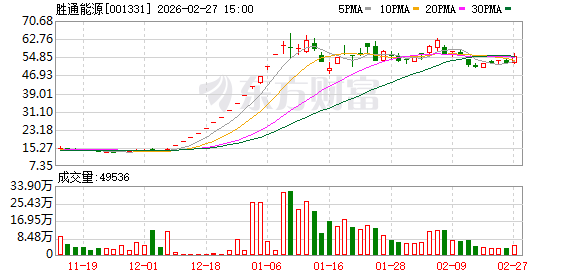
胜通能源拟易主七腾机器人,获国家市场监督管理总局批准
Zhong Guo Ji Jin Bao· 2026-02-27 11:17
Group 1 - The core point of the article is that Shengtong Energy is set to be acquired by Qiteng Robotics, with the approval from the State Administration for Market Regulation [2][4] - On February 27, Shengtong Energy's stock price surged to 55.17 yuan per share, marking a 5.47% increase and a total market capitalization of 15.57 billion yuan [2][3] - Qiteng Robotics plans to acquire up to 44.99% of Shengtong Energy's shares for over 1.6 billion yuan through a combination of agreement transfer and partial tender offer [4][6] Group 2 - Shengtong Energy's main business includes the procurement, transportation, and sales of LNG (liquefied natural gas) as well as crude oil transportation services [6] - In its earnings forecast for 2025, Shengtong Energy expects a net profit attributable to shareholders of 15 million to 19.5 million yuan, while the net profit after deducting non-recurring gains and losses is projected to be between -21.5 million and -15.5 million yuan [7][9] - The company reported that the international natural gas market is experiencing a loose supply-demand balance, leading to price and profit pressure due to intensified competition [9]