Apparel

Search documents
What Analyst Projections for Key Metrics Reveal About Oxford Industries (OXM) Q2 Earnings
ZACKS· 2025-09-05 14:16
Group 1 - Analysts project that Oxford Industries (OXM) will announce quarterly earnings of $1.21 per share, a decline of 56.3% year over year [1] - Revenues are expected to reach $407.65 million, declining 2.9% from the same quarter last year [1] - The consensus EPS estimate for the quarter has remained unchanged over the past 30 days, indicating a reassessment by covering analysts [1] Group 2 - The combined assessment suggests 'Net Sales- Emerging Brands' will likely reach $33.95 million, indicating a change of +3.2% year over year [4] - 'Net Sales- Lilly Pulitzer' is estimated to reach $98.15 million, reflecting a change of +7% year over year [4] - 'Net Sales- Tommy Bahama' is projected at $229.15 million, indicating a change of -6.5% from the prior-year quarter [4] Group 3 - 'Net Sales- Johnny Was' is predicted to reach $46.55 million, suggesting a change of -7.5% year over year [5] - Shares of Oxford Industries have demonstrated returns of +10% over the past month, outperforming the Zacks S&P 500 composite's +2.8% change [5] - With a Zacks Rank 3 (Hold), OXM is expected to mirror the overall market performance in the near future [5]

Ermenegildo Zegna(ZGN) - 2025 Q2 - Earnings Call Presentation
2025-09-05 12:00
Financial Performance - Consolidated revenues reached €928 million, a decrease compared to €960 million in H1 2024, with a -2% organic growth[8] - Gross profit was €626 million with a 675% margin, compared to €637 million and 664% margin in H1 2024[7, 10] - Adjusted EBIT was €69 million with a 74% margin, down from €81 million and 84% margin in H1 2024[7, 17] - Profit reached €479 million, a +53% increase compared to H1 2024, with the profit margin rising to 52% from 33%[7, 19] Segment Performance - ZEGNA segment revenues were €660 million, with an Adjusted EBIT of €94 million and a margin of 143%, up from €85 million and 128% in H1 2024[15] - THOM BROWNE segment revenues were €129 million, with an Adjusted EBIT of €4 million and a margin of 35%, significantly lower than the 121% margin in H1 2024[15] - TOM FORD FASHION segment revenues were €153 million, with a negative Adjusted EBIT of €19 million, compared to negative €12 million in H1 2024[15] Channel and Geographic Performance - Direct-to-Consumer (DTC) channel accounted for 82% of total branded products revenues in H1 2025, up from 76% in H1 2024[11] - Total Direct to Consumer revenues reached €698035 thousand, a 42% increase compared to €669599 thousand in H1 2024[46] - Greater China Region revenues decreased by 162% to €223101 thousand, compared to €266324 thousand in H1 2024[48] Capital and Cash Flow - Capital expenditure (Capex) in H1 2025 was €54 million, compared to €60 million in H1 2024[24] - Trade working capital was €442 million as of June 30, 2025, down from €476 million as of June 30, 2024[24] - Free Cash Flow was negative €23109 thousand[76]

Stock Market Today: S&P 500 Futures Gain, Dow Tumbles Ahead Of Crucial Payrolls Report—Broadcom, DocuSign, Lululemon In Focus
Benzinga· 2025-09-05 09:44
Market Overview - U.S. stock futures showed mixed performance following positive moves on Thursday, with major indices fluctuating [1][2] - Investors are anticipating a weak non-farm payrolls report, with expectations of only 75,000 new jobs in August [1][7] Economic Indicators - The 10-year Treasury bond yield is at 4.16%, while the two-year bond yield is at 3.59% [2] - The CME Group's FedWatch tool indicates a 99.4% probability of the Federal Reserve cutting interest rates in the upcoming meeting on September 17 [2][8] - The ADP National Employment Report showed only 54,000 jobs added in August, significantly lower than July's 106,000 and below the 65,000 median forecast [4] - Initial jobless claims rose by 8,000 to 237,000, exceeding expectations of 230,000 [4] Sector Performance - Most sectors in the S&P 500 closed positively, with industrials, communication services, and consumer discretionary stocks leading gains [3] - Utilities stocks, however, ended lower, diverging from the overall market trend [3] Company-Specific News - Broadcom Inc. (AVGO) shares rose 9.34% after reporting third-quarter revenue of $15.95 billion, surpassing estimates of $15.83 billion [12] - DocuSign Inc. (DOCU) saw an 8.45% increase following better-than-expected second-quarter results and an upward revision of its FY26 sales guidance [12] - Lululemon Athletica Inc. (LULU) dropped 17.41% after mixed second-quarter results and a lowered full-year outlook, now expecting revenue between $10.85 billion and $11 billion [12] - Guidewire Software Inc. (GWRE) climbed 12.91% after surpassing $1 billion in annual recurring revenue [12] Analyst Insights - Analysts are closely monitoring the August employment report as it will influence the Federal Open Market Committee's interest rate decision [7][9] - Market sentiment is leaning towards a rate cut, with over 90% probability priced in, despite mixed economic signals [8][9] - Wells Fargo's report indicates a slowing U.S. economy, with concerns over government deficit funding impacting market strategies [9][10]



美股异动丨Lululemon盘前大跌超17%,Q2营收不及预期,连续第二次下调全年业绩指引
Ge Long Hui· 2025-09-05 09:30
Core Viewpoint - Lululemon's stock dropped over 17% pre-market following the release of its Q2 earnings report, which showed mixed results and lowered guidance for the year [1] Financial Performance - Revenue for Q2 increased by 7% year-over-year to $2.53 billion, slightly below the expected $2.54 billion [1] - Net profit decreased by 5% year-over-year to $371 million, with earnings per share at $3.10, surpassing the market expectation of $2.88 [1] - Gross margin declined by 1.1 percentage points to 58.5% [1] - Same-store sales growth was 1%, falling short of the expected 2.2%, with a 4% decline in same-store sales in the Americas [1] Guidance and Market Reactions - Lululemon anticipates that tariffs will reduce its annual profit by $240 million and has lowered its full-year earnings guidance to a range of $12.77 to $12.97 per share, significantly below the market expectation of $14.45 [1] - Revenue guidance for the year is now projected to be between $10.85 billion and $11 billion, also below the expected $11.18 billion [1] - Following the earnings report, Barclays reduced its target price for Lululemon from $209 to $180, while Piper Sandler lowered its target price from $200 to $165 [1]
Lululemon盘前大跌超17%,业绩低于预期
2 1 Shi Ji Jing Ji Bao Dao· 2025-09-05 09:19
Group 1 - Lululemon reported Q2 FY2025 global net revenue of $2.5 billion, a 7% year-over-year increase, with international business net revenue growing by 22% [1][3] - Gross profit increased by 5% to $1.5 billion, while gross margin decreased by 110 basis points to 58.5%; diluted earnings per share were $3.10, down from $3.15 in the same period last year [1][3] - The company's performance fell short of market expectations, leading to a more than 17% drop in stock price in pre-market trading on September 5 [1][3] Group 2 - The primary reason for the underperformance was the continued pressure on Lululemon's core business in North America, with comparable store sales in the Americas declining by 4% [3] - CEO Calvin McDonald acknowledged that the performance in the U.S. market and certain products did not meet expectations, while the China market showed strong growth with a 25% year-over-year increase in net revenue [3] - CFO Meghan Frank indicated that the company is facing industry challenges, including tariff increases, and has adjusted its full-year revenue forecast to between $10.85 billion and $11 billion, down from a previous estimate of $11.15 billion to $11.3 billion [3]

Lululemon盘前大跌超17%,业绩低于预期
21世纪经济报道· 2025-09-05 09:12
Core Viewpoint - Lululemon's Q2 FY2025 performance fell short of market expectations, leading to a significant drop in stock price by over 17% following the earnings report [1][3]. Financial Performance - Global net revenue for Q2 increased by 7% year-over-year to $2.5 billion, with international business net revenue growing by 22% [1]. - Gross profit rose by 5% year-over-year to $1.5 billion, while gross margin decreased by 110 basis points to 58.5% [1]. - Diluted earnings per share were $3.10, down from $3.15 in the same period last year [1]. Market Challenges - The primary reason for the underperformance was the continued pressure on Lululemon's core business in North America, with comparable store sales in the Americas declining by 4% [3]. - CEO Calvin McDonald acknowledged that the performance in the U.S. market and certain product lines did not meet expectations [3]. Regional Performance - The China market played a crucial role, with net revenue in mainland China increasing by 25% year-over-year, making it Lululemon's second-largest market globally [3]. - The company opened five new stores in mainland China during the quarter [3]. Future Outlook - CFO Meghan Frank indicated plans to open approximately 15 new stores in the Americas in FY2025, with nearly half located in Mexico [3]. - The company is adjusting its expectations due to industry challenges, including tariff increases, and has lowered its full-year revenue forecast to between $10.85 billion and $11 billion, down from a previous estimate of $11.15 billion to $11.3 billion [3].

X @The Economist
The Economist· 2025-09-05 06:40
Lululemon Athletica, a brand famous for flogging leggings for over $100 apiece, has long been in vogue among investors as well as fashionistas. But the industry is famously fickle https://t.co/7YW5cTgsZk ...
Lululemon is feeling the squeeze, and its CEO says the brand's gotten predictable
Business Insider· 2025-09-05 06:35
Core Insights - Lululemon has acknowledged a decline in customer engagement due to predictable product offerings and stale styles, particularly in lounge and social categories [1] - The company reported a 7% year-over-year increase in net revenue for Q2, reaching $2.5 billion, but profits fell by 5.6% to $370 million, slightly missing revenue expectations [1] - CEO Calvin McDonald highlighted that consumers are spending less on apparel and are more selective, impacting overall sales [2] Financial Performance - Net revenue for the second quarter grew to $2.5 billion, a 7% increase year-over-year [1] - Profit for the same period decreased by 5.6% to $370 million [1] - Full-year profit guidance was reduced due to expected tariff impacts amounting to $240 million [2] Market Reaction - Lululemon's shares dropped over 15% in after-hours trading and have declined more than 46% year-to-date [3] - Analysts have compared Lululemon to mass-market brands like Gap, suggesting this shift could negatively affect its business model [3] Consumer Trends - The company is facing challenges as consumers are spending less on performance activewear and are seeking truly new styles [2] - Analysts noted an excessive number of sales promotions, with over 1,000 items on sale in the brand's digital store, indicating struggles with inventory sell-through [7][8] Strategic Plans - Lululemon plans to increase the proportion of new styles in its offerings from 23% to approximately 35% by next spring [9] - The company aims to refresh iconic items and accelerate the launch of new products [9] - McDonald expressed confidence in the brand's loyal customer base and the path forward to meet customer expectations [10]
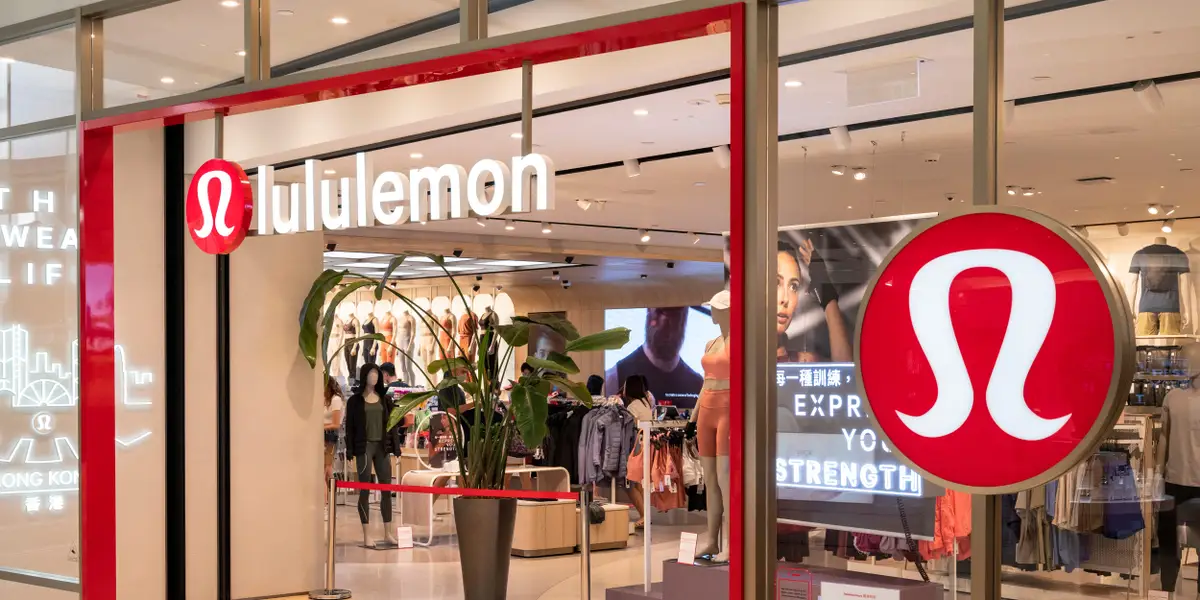
lululemon2025财年第二季度净营收同比增长7%
Cai Jing Wang· 2025-09-05 04:41
Core Insights - Lululemon's Q2 2025 global net revenue increased by 7% year-over-year to $2.5 billion, while gross profit rose by 5% to $1.5 billion [1] - The company experienced a decline in gross margin by 110 basis points to 58.5%, and operating income decreased by 3% to $523.8 million, with operating margin down by 210 basis points to 20.7% [1] - International business net revenue grew by 22%, and net revenue from mainland China increased by 25% [1] - Lululemon revised its full-year revenue guidance for 2025, now expecting net revenue between $10.85 billion and $11 billion, reflecting a growth of approximately 2% to 4% [1] - The CFO highlighted that Q2 earnings per share exceeded expectations, but overall revenue fell short due to U.S. market performance and industry challenges, including tariff increases [1] - The company plans to open about 15 new stores in the Americas in 2025, with nearly half located in Mexico, and will focus on expanding in China for new store openings [1]
盘后暴跌15%!Lululemon下调全年业绩预期,二季度EPS超预期35/64
美股IPO· 2025-09-05 04:26
Core Viewpoint - Lululemon's Q2 earnings report shows a mixed performance with a significant downward revision of future revenue guidance, raising concerns about the company's growth prospects and brand positioning in a competitive market [1][3][4]. Financial Performance - Q2 earnings per share were $3.10, exceeding the expected $2.87, but revenue of $2.53 billion fell slightly short of the $2.54 billion forecast [5][6]. - Same-store sales growth was only 1%, significantly below the anticipated 3.7% [5][6]. Earnings Guidance Downgrade - The company has lowered its full-year revenue guidance from $11.15-$11.3 billion to $10.85-$11 billion, indicating a decline in expected annual growth from double digits to 2-4% [6][8]. - EPS guidance was also reduced from $14.58-$14.78 to $12.77-$12.97, diverging from Wall Street's expectation of $14.45 [6]. Impact of Tariffs - Tariffs are projected to reduce gross profit by $240 million in 2025 and operating profit by $240 million in 2026, with an additional $320 million impact in 2026 [7][16]. - Approximately 40% of products are manufactured in Vietnam, exposing the company to new tariff policies [17][18]. Regional Performance Disparities - North America, a core market, experienced a 4% decline in same-store sales, while China saw a robust 17% growth, and other international markets grew by 12% [8][9]. Brand Challenges - The brand's premium positioning is threatened by the rise of "alternative culture," with lower-priced competitors like Costco and Amazon offering similar products at significantly reduced prices [9][12]. - The company faces challenges in maintaining brand exclusivity as consumer preferences shift towards more affordable options [14][15]. Financial Health - Despite the challenges, Lululemon maintains a strong financial position with $1.33 billion in cash and a debt-to-equity ratio of 39.8% [20][22]. - The company generated $2.03 billion in operating cash flow and $1.18 billion in free cash flow, providing a buffer against economic downturns [23]. - Inventory has increased by 15% year-over-year, attributed to strategic stocking before tariff implementation, while profitability metrics remain strong with a return on equity (ROE) of 42.5% and a gross margin of 58.5% [24].