
传感器

Search documents
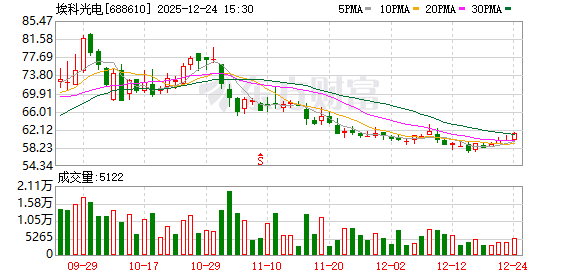
埃科光电:公司在业务发展时始终关注产品在上下游产业链的延伸
Zheng Quan Ri Bao· 2025-12-24 12:09
(文章来源:证券日报) 证券日报网12月24日讯 ,埃科光电在接受投资者提问时表示,公司在业务发展时,始终关注产品在上 下游产业链的延伸,为行业需求提供国产高端传感解决方案,而不仅局限于相机产品的开发。 ...


奥迪威(920491)获头部智驾系统集成商定点 车规级智能传感器项目预计金额1.76亿元
Xin Lang Cai Jing· 2025-12-24 11:30
Core Viewpoint - Guangdong Audiwei Sensor Technology Co., Ltd. has received a project confirmation from a leading intelligent driving system integrator to supply automotive-grade intelligent sensors, with an estimated contract value of RMB 176 million (excluding tax) over a lifecycle of approximately three years starting from December 2026 [1][2]. Group 1: Project Details - The project involves supplying automotive-grade intelligent sensors to a top-tier overseas smart automotive supply chain company, although the client's name is undisclosed due to confidentiality agreements [1]. - The expected total contract amount is RMB 176 million (excluding tax), with production set to begin in December 2026 and a project lifecycle of three years [1]. - This collaboration is seen as a recognition of Audiwei's R&D capabilities, product quality control, and supply chain assurance [1]. Group 2: Business Impact - The project is anticipated to positively impact the company's future annual revenue and profitability, enhancing brand recognition and core competitiveness in overseas markets [2]. - The company emphasizes that the project will help increase its market share in intelligent sensors and strengthen its industry influence in the smart automotive sensor segment [1][2]. - The actual procurement quantity remains uncertain as the project amount is based on client forecasts, and the final transaction amount will depend on actual orders [2].
理工光科:已通过AS9100D航空航天质量管理体系认证,并积极开发相关产品
Ge Long Hui· 2025-12-24 08:03
Core Viewpoint - The company emphasizes high reliability and strong environmental adaptability in the design and validation phases of its sensor products, aligning with the stringent standards required in the aerospace sector [1] Group 1 - The company's core technical indicators meet the high standards required for critical components in the aerospace field [1] - The company has obtained AS9100D certification for its aerospace quality management system [1] - The company is actively developing related products for the aerospace industry [1]

理工光科(300557.SZ):已通过AS9100D航空航天质量管理体系认证,并积极开发相关产品
Ge Long Hui· 2025-12-24 07:56
格隆汇12月24日丨理工光科(300557.SZ)在互动平台表示,公司传感产品在设计与验证阶段均以高可靠 性、强环境适应性为核心导向,核心技术指标符合航空航天领域对关键部件的高标准要求。目前公司已 通过AS9100D航空航天质量管理体系认证,并积极开发相关产品。 ...
我省出台指南推动传感器行业智改数转网联
Xin Hua Ri Bao· 2025-12-22 22:03
Core Insights - The article discusses the implementation guide for the sensor industry in Jiangsu Province, aimed at facilitating digital transformation and providing diagnostic services for enterprises [1] Group 1: Industry Overview - The sensor industry is a crucial component of the Internet of Things (IoT) perception layer, encompassing areas such as IoT chips, module terminals, and transmission standards [1] - The transformation towards intelligent and digital networking in the sensor industry is described as a systematic and holistic change process [1] Group 2: Implementation Guidelines - The guide categorizes recommendations for large, medium, and small enterprises in enhancing their capabilities for intelligent and digital transformation [1] - Large enterprises are advised to prioritize full-process automation, flexible manufacturing, industrial big data analysis, and supply chain collaboration, with a focus on 5G and industrial internet security [1] - Small and medium-sized enterprises are encouraged to optimize key processes, focusing on quality inspection, data collection, equipment interconnectivity, and flexible manufacturing to achieve cost-effective digital upgrades [1] Group 3: Goals and Timeline - The guide sets a target for the sensor industry to complete intelligent transformation for large-scale industrial enterprises by the end of 2027, with comprehensive digital transformation for small and medium enterprises [1]
安培龙:积极关注并持续加大机器人力控传感器领域的布局
Zheng Quan Ri Bao Zhi Sheng· 2025-12-22 12:44
Core Viewpoint - The company has recently launched a new series of six-dimensional force sensors based on MEMS silicon strain gauges and glass micro-fusion technology, aimed at showcasing its latest technological advancements and product direction in the six-dimensional force sensor field [1] Group 1: Product Development - The new six-dimensional force sensor products were introduced on the company's official website [1] - The launch is intended to inform the market and customers about the company's advancements in technology [1] Group 2: Market Engagement - The company is actively focusing on expanding its presence in the robotics force control sensor sector [1] - Ongoing technical integration and product validation work is being conducted with several domestic clients [1]


森霸传感:公司将进一步加强市场开拓及研发投入
Zheng Quan Ri Bao Wang· 2025-12-22 10:49
Core Viewpoint - Senba Sensor (300701) is committed to enhancing market development and R&D investment to provide downstream customers with a wider range of sensor products that better meet market demands [1] Group 1 - The company plans to strengthen market expansion efforts [1] - The company aims to increase R&D investment [1] - The focus is on delivering more diverse and market-aligned sensor products to customers [1]

【IPO前哨】中学教师携传感器闯港股,奥迪威竞争压力凸显
Sou Hu Cai Jing· 2025-12-19 11:29
Core Viewpoint - The article discusses the journey of Aodiwei, a sensor company, as it aims to enter the Hong Kong stock market, highlighting both its achievements and the challenges it faces in a competitive industry [2][12]. Company Overview - Aodiwei, led by Zhang Shuguang, has transitioned from traditional actuators to smart sensors, establishing a significant market presence [3][5]. - Zhang Shuguang holds a 15.39% stake in the company, making him the largest single shareholder, while his wife holds 1.80% [3]. Market Position - In 2024, Aodiwei ranked second in China's smart home sensor market with a market share of only 0.1%, and third globally in automotive ultrasonic sensors with an 11.3% market share [5]. - The company has expanded its international presence, with over 40% of its revenue coming from markets outside mainland China by mid-2025 [7]. Financial Performance - Aodiwei's revenue for the first three quarters of 2025 reached 502 million RMB, a 12.31% increase year-on-year, while net profit grew by 5.9% to approximately 71 million RMB [9][8]. - The company has maintained steady growth, but its net profit growth has lagged behind revenue growth [8]. Challenges - Aodiwei faces pressure on its gross margin, which has declined from 25.5% in 2022 to 22.1% in the first half of 2025, primarily due to increased competition in the automotive parts supply chain [10]. - The company's overall capacity utilization was only 53.9% in the first half of 2025, with actuator utilization dropping to 36.1%, raising concerns about structural imbalances in production capacity [11]. Industry Outlook - The global sensor and actuator market is expected to grow at a compound annual growth rate of approximately 4.8% and 6.2% from 2024 to 2029, reaching about 703.6 billion USD and 1.2 trillion RMB, respectively [8]. - The article emphasizes the need for Aodiwei to convert its technological advantages into sustainable profitability while balancing capacity expansion with market demand [12].

敏芯股份:公司致力于成为一家MEMS技术平台型公司
Zheng Quan Ri Bao Wang· 2025-12-18 07:44
Core Viewpoint - The company aims to establish itself as a MEMS technology platform company, demonstrating balanced revenue growth across multiple product lines, moving beyond a single product focus [1] Group 1: Company Development - The company has successfully opened up second and third product growth areas, validating its positioning as a platform company based on MEMS technology [1] - The company plans to complete its product layout over a 2-3 year period, focusing on high signal-to-noise ratio sensors across various physical quantities [1] Group 2: Product Strategy - The planned product layout includes acoustic, pressure, inertial, magnetic, and optical sensors to meet the demands of emerging applications in consumer electronics, robotics, automotive, and AI products [1]

森霸传感(300701.SZ):公司暂无为可控核聚变装置提供传感技术支持
Ge Long Hui· 2025-12-18 07:31
Group 1 - The company, Senba Sensor (300701.SZ), stated on the investor interaction platform that it currently does not provide sensor technology support for controllable nuclear fusion devices [1]