Quantum Computing

Search documents
Is Rigetti's Growth Model Too Dependent on Government Deals?
ZACKS· 2025-07-03 16:50
Core Insights - Rigetti Computing (RGTI) heavily relies on U.S. government contracts to fund and validate its quantum technologies, including a $1.5 million contract with the Air Force Research Lab and a $3.9 million contract with DARPA [1][6] - The company's dependence on public sector revenue raises concerns about scalability and commercial maturity, as government projects often have long procurement cycles and may not lead to high-margin contracts [2][6] - Rigetti's stock has decreased by 14.3% year-to-date, contrasting with the industry's growth of 14.7%, and it trades at a high price-to-book ratio of 18.12, indicating weak value metrics [5][8] Government Contracts and Partnerships - Rigetti has secured multiple government contracts, including a multi-year project with the Department of Energy's Superconducting Quantum Materials and Systems Center, which reinforces its status as a trusted partner in early-stage quantum research [1] - The company delivered its 84-qubit Ankaa-1 system to the DoE's Quantum Systems Accelerator, showcasing its technological capabilities [1] Comparison with Peers - IonQ has also received significant government support, including a $13.4 million contract, while successfully converting private sector pilots into active engagements, indicating a more balanced revenue stream [3] - D-Wave collaborates with various agencies and has launched pilot projects in enterprise applications, positioning itself for broader revenue flexibility compared to Rigetti [4] Financial Performance and Estimates - The Zacks Consensus Estimate for Rigetti's 2025 earnings suggests an 86.1% rise from the previous year, although the company still faces challenges in achieving commercial uptake [9][10] - Current estimates indicate negative earnings per share for the upcoming quarters, with a year-over-year growth estimate of 14.29% for the current quarter [10]



What's Next For Rigetti Stock?
Forbes· 2025-07-03 15:50
Core Insights - Rigetti Computing (NASDAQ: RGTI) has seen a significant stock price increase of 15% on July 2, contributing to a nearly 70% rise over the past four months, following Cantor Fitzgerald's initiation of coverage with an Overweight rating and a $15 price target, indicating a potential further increase of about 19% from current prices [2][3] Company Overview - Rigetti specializes in quantum computing, developing superconducting quantum processors and offering cloud-based Quantum Computing as a Service (QCaaS) [4] - The company is advancing its technology with the Ankaa-3, an 84-qubit system, and aims to transition to multi-chip modules, targeting machines with over 100 qubits and the 336-Qubit Lyra by 2026 [4] Financial Performance - Despite technological advancements, Rigetti is still in the research and development phase, with CEO Subodh Kulkarni stating that commercial demand is expected to be 3–5 years away, and widespread adoption could take up to a decade [5] - The company reported a 50% year-over-year revenue decline in Q1 2025, with revenue at $1.5 million and operating losses of $21.6 million [6] Competitive Landscape - Rigetti's end-to-end approach provides flexibility in chip design and cloud access, enhancing its competitive position against rivals like IBM, IonQ, and Google [7] - The partnership with Quanta is expected to bolster commercialization potential, although competition is intensifying with advancements from Google's Willow chip and Amazon's Quantum Embark program [7] Investment Considerations - Rigetti is well-funded with over $575 million in cash, supported by a $350 million equity capital raise and a $250 million partnership with Quanta, and has no debt [6] - The company's valuation is notably high, trading at 478 times the expected sales for 2025, indicating a speculative investment environment [6][8]

D-Wave Quantum Rallies on Capital Raise: More Upside Ahead for QBTS?
ZACKS· 2025-07-03 13:36
Core Insights - D-Wave Quantum Inc. is experiencing significant financial growth, with a 509% year-over-year increase in revenues in Q1 2025, primarily due to a $12.6 million sale of a quantum system to Germany's Julich Supercomputing Center [2][9] - The company has achieved a GAAP gross margin of 92.5% and reduced its adjusted EBITDA loss by 53% year-over-year, indicating improved operational efficiency [3][9] - D-Wave completed a $400 million equity offering at a 149% premium, increasing its cash reserves to approximately $815 million, which provides strategic flexibility for expansion and R&D [4][9] Financial Performance - D-Wave's revenue model is evolving towards a hybrid mix of high-value system sales and recurring subscription-based Quantum Computing-as-a-Service [2] - The company reported its lowest net loss since going public, showcasing meaningful operating leverage as revenues increased [3] Market Position and Growth Strategy - D-Wave's stock has surged 152% over the past three months, outperforming the broader industry and sector [5] - The company is positioned with the strongest balance sheet among publicly traded quantum computing firms, allowing for strategic acquisitions and expansion of cloud services [4] Competitive Landscape - Rivals like Rigetti Computing and IonQ are also pursuing growth strategies, with Rigetti raising $350 million for hardware expansion and IonQ acquiring companies to enhance its quantum capabilities [8][10] - D-Wave's average target price indicates further growth potential, as it is currently trading 8% below the average price target set by analysts [11]


X @TechCrunch
TechCrunch· 2025-07-03 13:05
Israeli quantum startup Qedma just raised $26 million, with IBM joining in | TechCrunch https://t.co/bTKACQROrR ...
Is D-Wave Quantum Stock a Buy Now?
The Motley Fool· 2025-07-03 11:20
Core Viewpoint - D-Wave Quantum, an early player in the quantum computing sector, has experienced significant stock volatility and is attempting to expand beyond its niche market with new technologies and partnerships [2][4][6]. Company Overview - D-Wave Quantum went public via a SPAC merger on August 22, 2022, starting at $10 but dropping to a low of $0.41 by May 12, 2023, due to dilution, losses, and high valuations [2]. - As of now, D-Wave's stock trades around $14, representing a substantial recovery for those who invested at its lowest point [4]. - The company specializes in quantum annealing tools that optimize business processes, aiming to compete with traditional cloud-based analytics firms [6][7]. Financial Performance - In 2024, D-Wave reported $8.8 million in revenue with a net loss of $143.9 million [9]. - Analysts project revenue to nearly triple to $24.4 million in 2025, with a reduced net loss of $72.9 million, driven by the new 4,400-qubit Advantage2 processor [10]. - Expected revenue growth includes a 56% increase to $38.1 million in 2026 and nearly doubling to $74.1 million in 2027, although the company is not expected to break even soon [12]. Product Development and Market Position - D-Wave's Advantage2 processor can solve complex problems significantly faster and more efficiently than its predecessor [10]. - The LaunchPad platform for Leap aims to attract new enterprise customers and enhance recurring subscription revenues [11]. - The company plans to integrate more quantum AI tools to appeal to the growing AI market [11]. Competitive Landscape - D-Wave faces competition from universal gate-based processors from companies like IBM, Google, Rigetti, and IonQ, which may limit its market share if it cannot keep pace [14]. - The company has increased its share count by 184% since the SPAC merger, primarily due to secondary offerings and stock-based compensation, leading to ongoing dilution [13]. Insider Activity - Recent insider selling has raised concerns, with insiders selling more than three times as many shares as they bought in the past three months, indicating potential skepticism about future growth [15]. Investment Considerations - D-Wave's current valuation appears high relative to its near-term growth prospects, making it a speculative investment in the long-term quantum computing market [16].

“美国占一半,中国分四成,欧洲...”
Guan Cha Zhe Wang· 2025-07-03 03:25
Core Viewpoint - Europe is at risk of falling behind in the quantum technology race, similar to its experience in artificial intelligence, as it struggles to convert research into market opportunities and attract significant investment compared to the US and China [1][2][4]. Investment Landscape - The EU has only attracted 5% of global private quantum technology funding, while the US and China have secured over 50% and 40% respectively [1]. - The EU has committed €11 billion to quantum technology, but there is a need for better resource integration to enhance impact [5]. Commercialization Challenges - Europe leads in scientific publications in quantum technology but ranks third in patent applications, trailing behind the US and China [1]. - Companies in Europe face difficulties in scaling due to a lack of sufficient support and venture capital [4][5]. Strategic Initiatives - The EU's strategy includes launching two major challenges between 2025 and 2027, focusing on quantum computing and quantum navigation systems [7]. - The EU plans to support innovation-oriented procurement to help companies commercialize technology, although specific implementation details are lacking [7]. Regulatory Environment - There is a debate on whether Europe will allow the quantum industry to develop freely, given the sensitivity of quantum technology related to national security [2]. - Industry leaders caution against premature regulation, referencing the EU's previous regulatory approach to artificial intelligence as a potential misstep [7].

Why Quantum Computing Stock Skyrocketed Today
The Motley Fool· 2025-07-02 22:14
After substantial sell-offs in yesterday's trading, tech stocks bounded back today as macroeconomic indicators pointed in a generally bullish direction. While ADP's private-sector employment report that there was a net decline of 33,000 jobs in June fell far short of the average economist estimate's call for the addition of 110,000 jobs in the period, the weaker-than-anticipated numbers help support the case that the Federal Reserve will issue an interest rate cut this month. A rate cut could be a powerful ...


Why Rigetti Computing Stock Lit Up Today
The Motley Fool· 2025-07-02 21:06
Core Viewpoint - Rigetti Computing's stock is viewed as a speculative gamble rather than a solid investment opportunity, despite a recent price surge following coverage initiation by Cantor Fitzgerald with an outperform rating and a $15 price target, suggesting a potential 20% increase over the next year [1][4]. Group 1: Company Overview - Rigetti Computing is a small player in the quantum computing sector, competing with major companies like Alphabet, IBM, Intel, and Microsoft [3]. - The company currently generates only $9 million in annual revenue and has no profits, leading to a market capitalization of $3.6 billion [4]. Group 2: Market Position and Valuation - Rigetti's stock has a very high price-to-sales ratio of 273, indicating a steep valuation compared to its near-term revenue or earnings forecasts [4]. - Analysts express skepticism about Rigetti achieving profitability, with estimates suggesting it may not occur before 2030 [4]. Group 3: Industry Context - Quantum computing is still in its early stages, but it is considered a highly coveted technical milestone with significant economic implications [3]. - The advancements made by larger companies in the quantum computing field may indirectly benefit Rigetti [3].
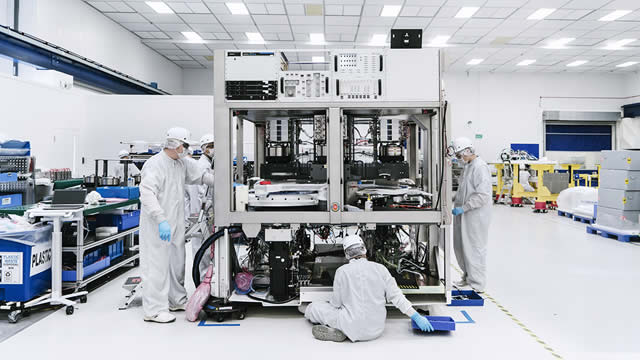
Quantum Computing's Dark Horse Rigetti Stands At The Edge Of Greatness
Benzinga· 2025-07-02 18:53
Core Viewpoint - Rigetti Computing has experienced a significant stock price increase of over 1,000% in the past year, attracting attention from Wall Street, particularly after Cantor Fitzgerald analyst Troy Jensen initiated coverage with an Overweight rating and a $15 price target [1][2]. Group 1: Market Position and Competitors - Rigetti is competing with major technology firms such as Alphabet Inc, IBM, Intel, and Microsoft, but the presence of these industry leaders is expected to facilitate advancements in quantum capabilities, benefiting Rigetti [3]. - The analyst highlighted that superconducting technology has received the most investment among the primary technologies capable of achieving quantum status [2]. Group 2: Strategic Partnerships - Rigetti's partnership with Quanta Computer is seen as a strategic move to accelerate the development and commercialization of superconducting quantum computing, with both companies committing to invest at least $250 million over five years [4]. - Quanta's investment of $35 million in Rigetti through a stock purchase in April is part of this collaboration, allowing Rigetti to focus on quantum technology while Quanta handles packaging and manufacturing [5]. Group 3: Financial Projections and Market Potential - Jensen projects that Rigetti could capture 15% of the quantum hardware, software, and services market by 2035, translating to a revenue present value of $477 million at a 10% discount rate [6]. - The analyst anticipates second-quarter revenue of $1.8 million and an EPS of $(0.06) for Rigetti [6]. - Despite a 22% year-to-date correction in Rigetti's stock price, this is viewed as an opportunity for investors to accumulate shares [6]. Group 4: Recent Stock Performance - Rigetti's stock price was reported at $12.52, reflecting a 10.4% increase as of the latest check [7].
Cash-Rich IonQ To Capture 20% Of Quantum Market By 2035
Benzinga· 2025-07-02 17:56
Core Viewpoint - The quantum computing sector is gaining significant investor interest due to its long-term economic potential, leading to inflated stock valuations that exceed justifiable near-term revenue or earnings [1] Company Overview - IonQ, Inc. is recognized as a leader in the quantum computing field, with an Overweight rating initiated by Cantor Fitzgerald analyst Troy Jensen and a price target of $45 [1] Technology and Innovation - IonQ employs a trapped-ion approach that allows for room-temperature operations and strong performance, utilizing a scalable modular architecture that supports quantum networking [2] - The company aims to scale from 36 physical qubits in its Forte Enterprise system to 10,000 qubits on a single chip by 2027, and to 20,000 qubits by connecting two chips in 2028, supported by acquisitions like Lightsynq and Oxford Ionics [3] Financial Position - IonQ ended Q1 2025 with nearly $700 million in cash after a $373 million equity raise, positioning the company for aggressive product innovation, international growth, and strategic acquisitions [4] - The company has experienced a share price increase of approximately 511% over the past year and 3% year-to-date, indicating strong market performance [4] Market Potential - Jensen estimates that IonQ could capture 20% of the quantum computing market by 2035, translating to a present value of $636 million [5] - IonQ is strategically positioned at the intersection of quantum computing and networking, bolstered by acquisitions such as ID Quantique and Lightsynq [5] Growth and Partnerships - The company is advancing along a defined technical roadmap aimed at scalable commercial use, supported by a solid revenue momentum and a strong patent base [6] - IonQ's expanding partnerships with enterprises, government entities, and global partners further solidify its leadership in the emerging quantum sector [6] Stock Performance - IonQ shares have seen a recent increase of 5.29%, trading at $42.22 [6]