Artificial Intelligence

Search documents
AI, Robotaxis, and Robotics: Why Elon Musk and Tesla Are Set to Join "Magnificent Seven" Peers on a Massive Spending Spree
Yahoo Finance· 2026-02-09 17:30
Group 1: Capital Expenditures and Investment Plans - Alphabet plans to invest between $175 billion and $185 billion in 2026, reflecting the growth in artificial intelligence (AI) investments [1] - Tesla's capital expenditures (capex) are projected to exceed $20 billion in 2026, a significant increase from $8.5 billion in 2025 [2] - Tesla is focusing on key projects, including the construction of six factories and expanding its AI compute infrastructure [3][4] Group 2: Financial Performance and Future Funding - Tesla's auto sales dropped by 11% in Q4 2025, leading to an 11% decline in overall operating income [5] - The company generated positive free cash flow of $6.2 billion in 2025 and has $44 billion in cash and investments, providing a solid financial foundation for future investments [6] - Tesla is exploring funding options, including potential debt financing, and has a market cap of $1.2 trillion, allowing for equity capital raises with minimal dilution if necessary [7]

Where Will CoreWeave (CRWV) Stock Be in 1 Year?
Yahoo Finance· 2026-02-09 17:23
Core观点 - CoreWeave, a cloud-based AI infrastructure provider, has seen its stock price increase significantly from $40 to nearly $100 since going public in March 2023, driven by its strategic pivot from Ethereum mining to AI services [1] 分组1: 公司背景与发展 - CoreWeave transitioned from an Ethereum mining company to an AI infrastructure provider after the 2018 cryptocurrency crash, repurposing its GPUs for AI tasks [2] - The company invested $100 million in Nvidia's H100 data center GPUs in 2022 to support its expansion into AI services [2] - CoreWeave expanded its data center operations from three at the end of 2022 to 33 across the U.S. and Europe [4] 分组2: 财务表现与预期 - CoreWeave's revenue surged from $16 million in 2022 to an expected $1.9 billion in 2024, with projections of $5.1 billion in 2025 [5] - Analysts forecast that revenue could nearly quadruple to $19.5 billion from 2025 to 2027, with profitability anticipated by 2027, driven by deals with major AI companies [6] 分组3: 市场估值与挑战 - CoreWeave currently has a market cap of $46.9 billion, trading at less than four times this year's sales [7] - Approximately 70% of CoreWeave's revenue is generated from Microsoft, indicating a reliance on a single client [8] - The company may need to take on more debt and issue additional shares to fund its aggressive expansion strategy [8] - A failed acquisition attempt of Core Scientific for $9 billion suggests potential future dilutive acquisitions [8] 分组4: 未来展望 - If CoreWeave meets analysts' expectations and trades at five times sales, its market cap could exceed $98 billion by early 2027, representing a significant potential gain [9]



Top China Tech Plays in the US That Could Boost Returns in 2026
ZACKS· 2026-02-09 16:56
Core Insights - Chinese technology stocks are gaining strategic momentum as the U.S.-China trade détente provides operational stability, with tariff rates stabilized at 31% and rare earth export controls suspended for another year, creating investment opportunities in 2026 [2][9] Semiconductor Sector - China's semiconductor consolidation accelerated with SMIC's $5.8 billion acquisition of SMIC Jingcheng and Hua Hong Semiconductor's acquisition of 97.5% of Shanghai Huali Microelectronics for $1.2 billion, consolidating domestic capacity at mature process nodes where Chinese foundries command over 25% of global capacity [4] Electric Vehicle Sector - BYD's January sales fell 30% year over year to 210,051 vehicles, the lowest since February 2024, while battery-electric passenger car sales dropped 33.6% to 83,249 units due to policy shifts; however, export momentum remained strong with a 51.4% increase to 100,482 vehicles [5] Artificial Intelligence Sector - Chinese AI advancements accelerated with multiple flagship releases, including Alibaba's Qwen3-Max-Thinking and Moonshot AI's Kimi K2.5, positioning Chinese companies competitively in the global AI landscape [6] Humanoid Robotics Sector - China holds 90% of global humanoid robot sales, with over 140 companies producing at scale; Morgan Stanley forecasts a 133% surge in sales to 28,000 units in 2026, with the domestic market reaching $1.4 billion [7] Other Strategic Sectors - COMAC targets 50 C919 units annually, the defense budget reached $249 billion with a 7.2% increase, and the medical device market approached $172.9 billion with over 33,000 enterprises [8] Company-Specific Insights - Agora is positioned for growth in conversational AI infrastructure, with strategic partnerships expanding its market beyond traditional communication [10] - Kingsoft Cloud is experiencing triple-digit growth in its intelligent computing cloud business, with gross billings reaching RMB782 million in Q3 2025 [11] - Tencent's growth is bolstered by AI integration and international cloud expansion, with significant revenue growth in marketing and gaming [12] - XPeng's strategic transformation includes the launch of the 2026 P7+ flagship and localized supply chain teams, enhancing operational efficiency and market reach [13]


Factbox-Mega IPOs loom as Wall Street anticipates breakout year for listings
Yahoo Finance· 2026-02-09 16:25
Feb 9 (Reuters) - Pent-up demand for new listings and a strong pipeline of high-profile private companies such as Elon Musk's SpaceX is setting the stage for what could be a breakout year for the U.S. initial public offering market. Goldman Sachs predicted last week that proceeds from U.S. IPOs could vault to a record $160 billion in 2026, should the marquee names go public this year. Market participants are also optimistic on a bigger year for billion-dollar-plus IPOs, underpinned by a strong pipel ...
腾讯研究院AI速递 20260210
腾讯研究院· 2026-02-09 16:03
https://mp.weixin.qq.com/s/vPp0aFcc1QJZ2l0D4qFH8A 二、小红书内测AI视频剪辑应用OpenStoryline,对话驱动 生成式AI 一、 实 测 神秘模型Pony Alpha,Opus级智能 , 架构师思维 1. Pony Alpha在OpenRouter走红,无发布会无论文,却凭超强编程能力引发开发者圈热议,有人连续编程3小时做 出可玩的Pokemon Ruby; 2. 实测表现惊艳,能从零复刻《星露谷物语》,自主完成需求分析、架构设计到功能实现全流程,展现出系统级工程 理解与长时间推理能力; 3. 模型身世成谜,有人猜测是Anthropic Sonnet 5、DeepSeek-V4或智谱GLM-5,若为国内厂商作品,意味着国 产模型在高阶编程领域已进入新阶段。 1. 小红书正在研发AI视频剪辑应用OpenStoryline,采用"非线性编辑+对话驱动"模式,用户上传图片通过自然语言 即可完成视频剪辑; 2. 技术上采用DeepSeek和Qwen 3开源模型,结合小红书自有的dots.lm文本大模型和FireRedASR音频模型实现生 态适配; 3. 小红书近 ...

Shenzhen Zeroth AI Technology Co., Ltd.(H0407) - Application Proof (1st submission)
2026-02-09 16:00
The Stock Exchange of Hong Kong Limited and the Securities and Futures Commission take no responsibility for the contents of this Application Proof, make no representation as to its accuracy or completeness and expressly disclaim any liability whatsoever for any loss howsoever arising from or in reliance upon the whole or any part of the contents of this Application Proof. Application Proof of Shenzhen Zeroth AI Technology Co., Ltd.* 深圳第零智能科技股份有限公司 (the "Company") (a joint stock company incorporated in the ...
Shenzhen Zeroth AI Technology Co., Ltd.(H0407) - OC Announcement - Appointment
2026-02-09 16:00
WARNING The publication of this announcement is required by The Stock Exchange of Hong Kong Limited (the "Stock Exchange") and the Securities and Futures Commission (the "Commission") solely for the purpose of providing information to the public in Hong Kong. By viewing this announcement, you acknowledge, accept and agree with the Company, its sole sponsor, sponsor-overall coordinator, advisers or members of the underwriting syndicate that: – 1 – (a) the publication of this announcement on the Stock Exchang ...
深圳第零智能科技股份有限公司(H0407) - 申请版本(第一次呈交)
2026-02-09 16:00
香港聯合交易所有限公司與證券及期貨事務監察委員會對本申請版本的內容概不負責,對其準確性或完整 性亦不發表任何聲明,並明確表示概不就因本申請版本全部或任何部分內容而產生或因倚賴該等內容而引 致的任何損失承擔任何責任。 Shenzhen Zeroth AI Technology Co., Ltd.* 深圳第零智能科技股份有限公司 (「本公司」) (於中華人民共和國註冊成立的股份有限公司) 的申請版本 警告 本申請版本乃根據香港聯合交易所有限公司(「聯交所」)及證券及期貨事務監察委員會(「證監會」)的 要求而刊發,僅用作提供資料予香港公眾人士。 本申請版本為草擬本,其內所載資料並不完整,亦可能會作出重大變動。 閣下閱覽本文件,即代 表 閣下知悉、接納並向本公司、其獨家保薦人、整體協調人、顧問或承銷團成員表示同意: 倘於適當時候向香港公眾人士提出要約或邀請,有意投資者務請僅依據呈交香港公司註冊處處長註冊 的本公司招股章程作出投資決定;招股章程的文本將於發售期內向公眾人士提供。 * 僅供識別 (a) 本文件僅為向香港公眾人士提供有關本公司的資料,概無任何其他目的。投資者不應根據本文件 所載資料作出任何投資決定; (b) ...
EXL granted 10 new patents in the last year for AI solutions
Globenewswire· 2026-02-09 15:53
Core Insights - EXL has been granted 10 new U.S. patents in the past year, enhancing its capabilities in data and AI solutions across various industries including insurance, healthcare, retail, utilities, and financial services [1][2] - The innovations focus on making data AI-ready, automating workflows, and improving customer engagement, thereby strengthening EXL's position as a leader in the data and AI sector [1][2] Patent Innovations - EXLdata.ai, launched in October 2025, is an agentic AI-native suite designed to unify complex data ecosystems and accelerate enterprise-wide adoption [2] - EXLerate.ai integrates EXL and third-party AI agents into business operations, with patented solutions for multimodal data ingestion, knowledge graph creation, and unstructured data extraction [3][4] - Key patents include: - U.S. Patent No. 12,260,342 for multimodal table extraction and semantic search [3] - U.S. Patent No. 12,481,215 for advanced knowledge retrieval techniques [3] - U.S. Patent No. 12,253,832 for context-based entity recognition [3] - U.S. Patent No. 12,468,696 for enhancing regulatory reporting accuracy and transparency [4] AI and Data Solutions - EXL Transaction Insights™ utilizes AI to assess personal financial risk by mining deep consumer financial insights [3] - EXL Cognitive Image Analytics™ reduces network traffic for event predictions based on cognitive image analysis [4] - The EXL Insurance LLM™ is the first industry-specific large language model aimed at improving claim adjudication outcomes, achieving 20-30% higher accuracy in claims and underwriting tasks compared to general-purpose models [4][5] Company Overview - EXL is a global data and AI company founded in 1999, headquartered in New York, with approximately 63,000 employees across six continents [6] - The company focuses on transforming business models and driving better outcomes through data and AI solutions in various sectors including insurance, healthcare, and financial services [6]


清华系创企拿下国内视频生成领域最大单笔融资!技术领跑,商业落地双提速
Sou Hu Cai Jing· 2026-02-09 15:40
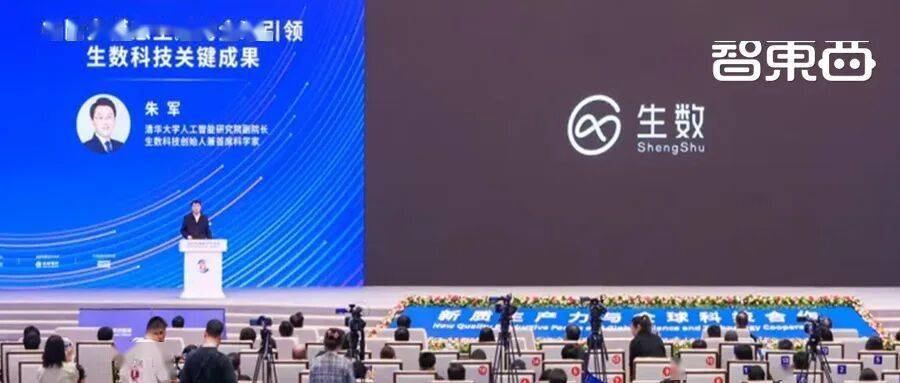
Group 1 - The core point of the article is that Beijing-based multimodal generation technology startup, Shengshu Technology, has completed over 600 million RMB in Series A+ financing, setting a new record in the domestic video generation sector, surpassing the previous record of 430 million RMB held by Aishi Technology [1] Group 2 - Shengshu Technology was founded in March 2023 and is recognized as a "Tsinghua system" enterprise, with co-founders having strong ties to Tsinghua University, including the vice president of the university's AI research institute [3] - The company is one of the earliest teams to research multimodal generation algorithms, having proposed the U-ViT architecture in September 2022, three months before OpenAI's DiT architecture [3] - In 2024, Shengshu Technology launched the Vidu model for video generation, with the latest Vidu Q3 model released on January 30, 2026, ranking first in China and second globally in authoritative benchmark tests, only behind xAI's Grok [3] Group 3 - The financing announcement revealed that Shengshu Technology achieved over 10 times growth in users and revenue by 2025, with its business covering over 200 countries and regions globally [4] - The company has a clear commercialization path and a broad customer ecosystem, serving major players in the film industry, including Sony Pictures, Tencent Animation, and iQIYI, as well as giants in the internet and hardware sectors like ByteDance and Samsung [4] - Strategic partnerships include deep collaborations with companies like Zhipu AI, leveraging a MaaS platform, and previous investments from Baidu, Huawei, and Ant Group [4] Group 4 - Shengshu Technology aims to go beyond content generation, with co-founder Zhu Jun emphasizing the ultimate goal of building a "world model" that understands real physical laws to support machine decision-making [7] - The company's "reference life video" technology addresses complex multi-agent consistency challenges in commercial videos, laying the groundwork for advanced applications [7] - The record-breaking financing not only confirms market recognition of Shengshu Technology's technical path and commercial capabilities but also marks a new phase for Chinese video generation AI startups, transitioning from technology catch-up to competing alongside global giants [7]