Robotics

Search documents
青山湖畔展开机器人智能制造大角逐
Mei Ri Shang Bao· 2025-12-11 22:23
当天的活动现场,青山湖科技城还重磅发布了具身智能产业街区以及六大科创平台的签约。 青山湖具身智能产业街区以"具身智能"技术为核心,重点聚焦机器人、低空经济等具身智能应用方向, 沿青山湖科技城大园路两侧集聚布局,打造集具身智能装备科技研发、本体制造、训练测试、场景示 范、商业应用"五位一体"的开放式产业街区,吸引优质人才和项目集聚。 六大具身智能平台,将从技术支撑、产业服务、场景落地等多维度精准赋能青山湖本地产业链。其中, 青山湖具身智能数据采集与实训中心、检测中心将弥补产业短板,为企业提供数据建模与检测认证支 持,助力技术突破与产品提升;机器人5S体验中心则连接研发与市场,促进产业展示与渠道拓展。天 目创芯引力谷具身智能制造基地、青山湖机器人谷,将进一步增强产业承载能力,吸引上下游企业集 聚,加速构建具身智能产业生态闭环。 商报讯(记者张玎通讯员叶蕾)昨天,第十四届中国创新创业大赛机器人智能制造专业赛总决赛,在杭州 临安青山湖科技城举行。据了解,大赛自2025年9月启动以来,面向全国广泛征集项目,共收到228个优 质项目报名,涵盖机器人、智能制造、高端装备、人工智能等前沿科技领域。大赛先后在武汉、西安、 北京 ...

X @TechCrunch
TechCrunch· 2025-12-11 22:07
1X struck a deal to send its ‘home’ humanoids to factories and warehouses https://t.co/oHdQ1eJJ86 ...
Beyond Hype: The “Super Cycle” Convergence of AI and Robotics
Etftrends· 2025-12-11 17:14
Core Insights - The global economy is entering a supercycle characterized by the integration of AI and robotics, marking a significant evolution in the industry [1] Technological Advancements - The robotics sector is transitioning from rigid automation to embodied AI, driven by advancements in Sim-to-Real training and tactile dexterity [3] - Companies like NVIDIA are leveraging virtual environments to train robots, significantly reducing development costs and enhancing their ability to handle delicate objects [4] Industry Applications - The shift towards embodied AI is already impacting sectors such as industrial logistics and mobility, with companies like Symbotic enabling warehouse robots to navigate dynamically [5] - In mobility, innovators like Joby Aviation are transforming long commutes into short flights, while Tesla aims to convert vehicles into income-generating assets through autonomous driving [5] Labor Market Dynamics - Automation is positioned as a solution to global labor shortages and an aging population, rather than a means to displace workers [6] Investment Strategies - VettaFi's ROBO Global strategies, including the ROBO Global Artificial Intelligence ETF and the ROBO Global Robotics and Automation Index ETF, are supported by expert advisors from leading institutions [7]


Duke Robotics Advances Market Expansion Strategy for IC Drone Technology in Central Asia Following the Expansion of the Abraham Accords
Globenewswire· 2025-12-11 13:30
Core Insights - Duke Robotics is actively pursuing business development to expand its Insulator Cleaning Drone technology into Central Asian markets, encouraged by Kazakhstan's recent inclusion in the Abraham Accords, which enhances cooperation opportunities with Israel [1][2][3] Group 1: Company Overview - Duke Robotics Corp. specializes in advanced robotics technology and autonomous drone solutions for both civilian and defense sectors, with its Insulator Cleaning Drone being a pioneering system for cleaning high-voltage electric utility insulators [4] - The company has established a collaboration with Elbit Systems Land Ltd. to market the Bird of Prey weapons drone system, designed for non-line-of-sight engagements [4] Group 2: Market Expansion - The strengthening diplomatic ties between Israel and Central Asian nations under the Abraham Accords are creating favorable conditions for introducing Israeli technologies, with Kazakhstan's addition expected to enhance trade and cooperation [2][3] - The Central Asian expansion follows Duke Robotics' ongoing growth strategy in Europe, including recent activities in the Greek market, demonstrating the commercial viability of the IC Drone [3]

Jim Cramer Believes AeroVironment “Remains a Very Compelling Growth Story” Long Term
Yahoo Finance· 2025-12-11 12:56
Core Insights - AeroVironment, Inc. (NASDAQ:AVAV) reported a mixed quarter with management cutting their full-year earnings forecast, but it remains a compelling growth story in the long term [1] Company Overview - AeroVironment develops robotic and autonomous systems, including uncrewed aircraft, counter-UAS tools, precision-strike solutions, and advanced AI and autonomy [1] - The company also provides space, cyber, communications, and intelligence systems for defense and commercial applications [1] Market Commentary - Jim Cramer highlighted AeroVironment's potential during a recent episode, noting the evolving defense budget and the efficiency of drones compared to traditional military aircraft [1] - Cramer expressed optimism about AeroVironment's stock performance, indicating that it has shown resilience and growth despite market fluctuations [1] Investment Perspective - While AeroVironment is recognized for its potential, there are other AI stocks that may offer greater upside potential and less downside risk [1]

欠中国公司25亿,全球机器人霸主:兜里没钱了
3 6 Ke· 2025-12-11 12:21
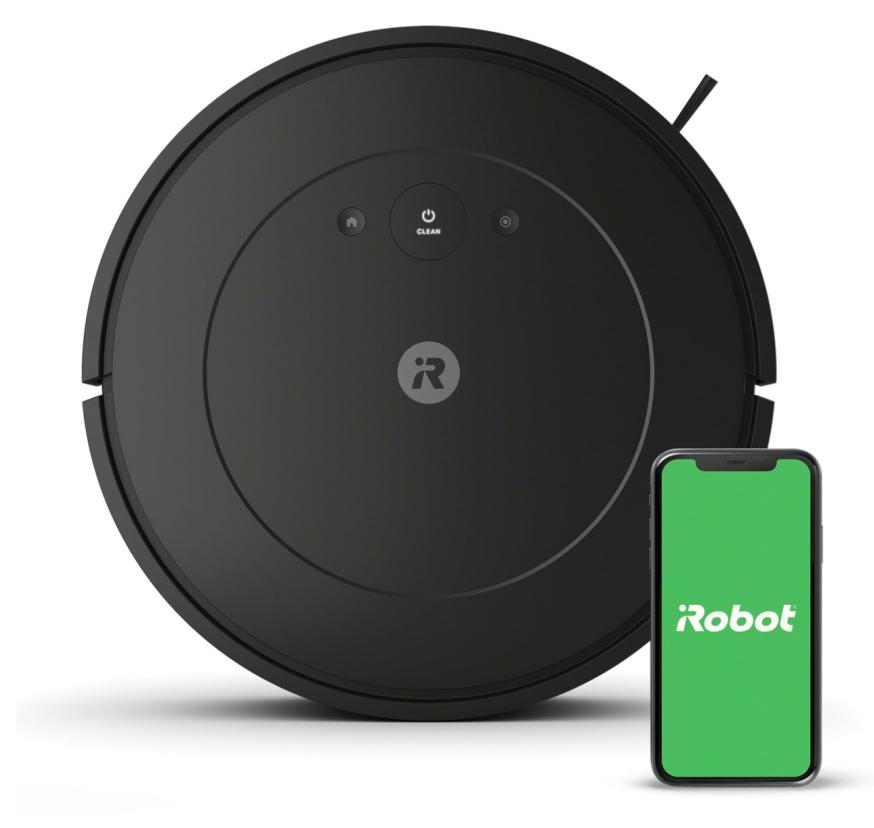
Core Viewpoint - iRobot, a leader in the robotic vacuum industry, is facing severe financial difficulties, with debts exceeding $350 million and cash reserves dwindling to $24.8 million, putting the company on the brink of technical bankruptcy [1][5]. Financial Performance - In Q3 2025, iRobot reported revenues of $146 million, a year-over-year decline of 25%, and a net loss of $17.7 million, marking the 11th consecutive quarter of losses [3]. - The company burned approximately $35 million in cash during the quarter, reducing its cash reserves from $40 million to $24.8 million [4]. - As of the end of Q3, iRobot had total assets of $481 million and total liabilities of $508 million, resulting in negative shareholder equity of $26.8 million, indicating a state of insolvency [5]. Debt Situation - iRobot's largest creditor is Shenzhen Sijuan Robotics, which holds a $190.7 million loan and is owed an additional $161.5 million in overdue payments, with $90.9 million already past due [6]. - The total debt to Shenzhen Sijuan accounts for over 70% of iRobot's total liabilities, giving the creditor significant leverage over the company's financial future [6]. Market Position and Competition - iRobot, once a dominant player with over 50% market share, is now struggling as competitors, particularly Chinese brands, rapidly gain market share [7]. - The global smart robotic vacuum market saw a shipment of approximately 17.424 million units in the first three quarters of 2025, reflecting a nearly 19% year-over-year growth, with Chinese brands leading the charge [10]. Reasons for Decline - iRobot's slow product updates and reliance on outdated technology have hindered its competitiveness, while Chinese brands have adopted advanced technologies like laser radar and AI navigation [13]. - The company has lost significant market share in China, particularly during the pandemic, where its online market share fell to single digits [14]. - iRobot's business model has not adapted to include software and subscription services, relying primarily on one-time hardware sales [15]. - Increased supply chain and cost pressures have further impacted iRobot's profitability and product development capabilities [16]. Rise of Chinese Brands - Chinese manufacturers benefit from a complete and agile supply chain, allowing for faster product iterations and lower costs, making their offerings more attractive to consumers [17]. - Chinese brands can update their products more frequently and offer them at prices 20%-30% lower than their foreign counterparts, enhancing their market appeal [20]. Future Opportunities - The next growth opportunity lies in the broader family service robot market, which is expected to grow from approximately $1.015 billion in 2023 to about $4.885 billion by 2032, with a compound annual growth rate of around 19.1% [24]. - Family service robots are evolving beyond cleaning tasks to include cooking assistance, daily security, and caregiving support, exemplified by products like Ecovacs' Deebot X1 Omni [24].
云迹(02670.HK)领投设立合营公司 拓展智能机器人服务场景
Ge Long Hui· 2025-12-11 12:03
Core Viewpoint - The establishment of a joint venture by the company aims to leverage its leading position in the robot intelligence business within the hotel sector to further expand its applications in innovative scenarios [1] Group 1: Joint Venture Details - The company signed a joint venture agreement on December 11, 2025, with several partners, contributing a total of RMB 10 million, with the company investing RMB 7.6 million [1] - The joint venture will become a non-wholly owned subsidiary of the company [1] Group 2: Strategic Focus - The joint venture will focus on the synergy between robot hardware and intelligent technology, developing robot intelligence solutions for innovative scenarios [1] - The company aims to accelerate the commercialization of related technologies and products by leveraging its existing technological accumulation, customer resources, and market network [1] Group 3: Business Growth and Innovation - The company will continue to strengthen its core business represented by robot hardware and intelligent applications, supporting overall performance growth and financial stability [1] - The board believes that the joint venture will enhance the application innovation and business expansion of robot intelligence technology, further increasing synergy with existing operations and expanding market opportunities [1]
60亿,成华产业振兴基金(二期)落地
FOFWEEKLY· 2025-12-11 10:00
Group 1 - The Chenghua Industrial Revitalization Fund (Phase II) has successfully completed its registration with a total fund size of 6 billion yuan and a duration of 10 years [1] - The fund is managed by Chenghua Science and Technology Investment Company, a state-owned enterprise, with contributions from several local companies [1] - The investment focus includes key industries such as artificial intelligence, electronic information, smart energy, and cultural innovation, targeting specific sectors like robotics, smart devices, digital communication, RF microwave, and low-altitude economy [1] Group 2 - The fund aims to strengthen the real economy in Chenghua District and develop new productive forces, injecting continuous capital into the construction of a modern industrial system [1]

效率提升25%,灵巧操作数采困境被「臂-手共享自主框架」解决
机器之心· 2025-12-11 10:00
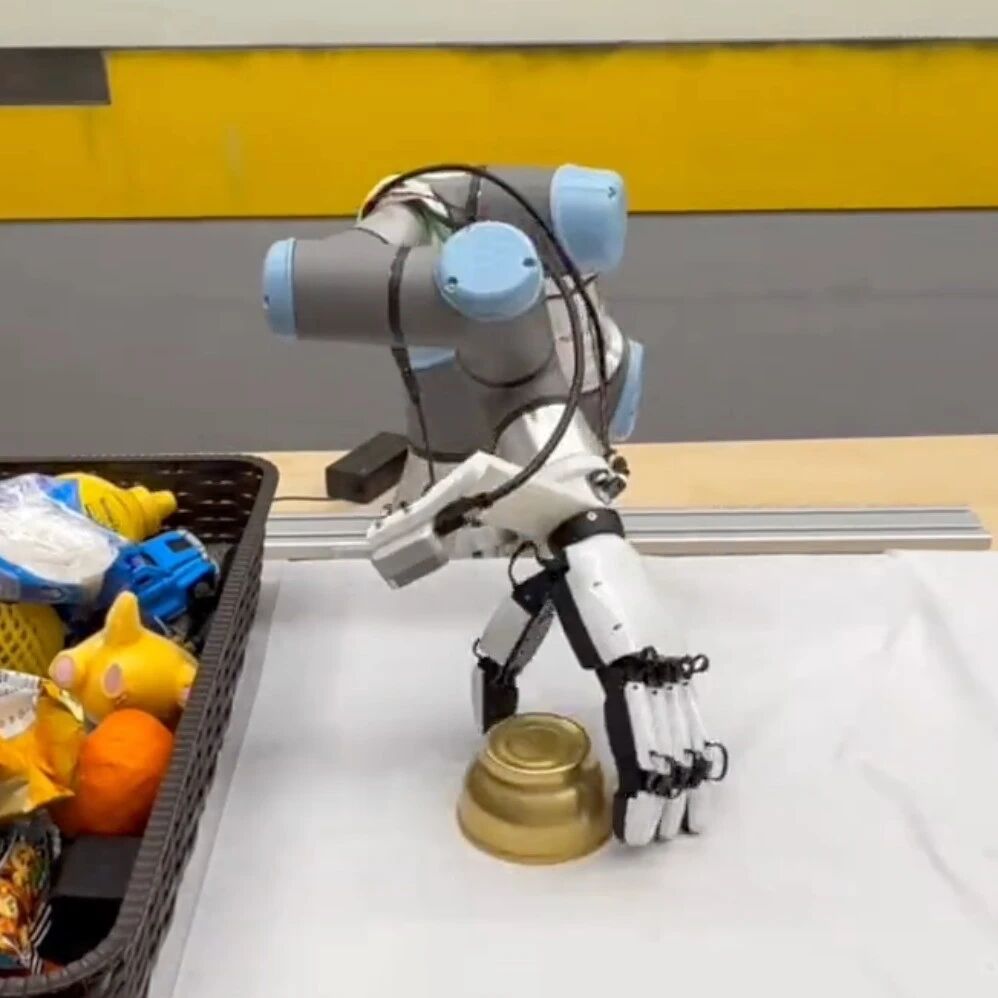
Core Insights - The article discusses the significant advancements in achieving dexterous manipulation capabilities in robotics through the Vision-Language-Action (VLA) model, addressing the critical challenge of high-quality data acquisition for training these models [2][6]. Group 1: Key Contributions - The research introduces a Shared Autonomy framework that effectively divides control responsibilities between human operators and autonomous AI systems, significantly reducing cognitive load and data collection costs [2][12][15]. - The DexGrasp-VLA strategy is highlighted as a foundational element of the Shared Autonomy framework, integrating multimodal inputs including tactile feedback, which enhances the robot's ability to adaptively grasp objects [9][20]. - The study establishes a complete technical system composed of four core modules, achieving a closed-loop from data collection to policy optimization [5][8]. Group 2: Data Collection and Efficiency - The Shared Autonomy framework has improved the efficiency of high-quality data collection by 25%, allowing for more data to be collected per hour and compressing the development-deployment cycle to under one day [33]. - The framework has demonstrated a near-industrial standard performance with approximately 90% success rate in grasping over 50 different objects, facilitating the transition of dexterous manipulation technology from concept validation to practical deployment [33]. Group 3: Mechanisms and Enhancements - The Arm-Hand Feature Enhancement module is designed to model and integrate the kinematic differences between the arm and hand, resulting in more natural and robust coordination of macro and micro actions [16][19]. - The Corrective Human-in-the-Loop mechanism allows the robot to learn from failures by incorporating human demonstrations of correct actions, continuously improving the strategy and generalizing to edge cases [20][34]. Group 4: Future Directions - Future research directions include expanding the framework to more complex tasks such as object reorientation and precise placement, as well as exploring intelligent fusion mechanisms to address challenges in tactile feedback [36]. - The potential for autonomous error recognition and recovery through reinforcement learning is also discussed, aiming for a smooth transition from human-robot collaboration to full autonomy [36].
高测股份:人形机器人减速器配合北美客户研发中
3 6 Ke· 2025-12-11 07:57
Core Viewpoint - The company is rapidly expanding its presence in the humanoid robot sector through the development of planetary roller screw grinding equipment, composite metal tendon ropes, and reducer business [1] Group 1: Business Development - The reducer business is currently focused on customized development in collaboration with North American clients, showing promising progress [1] - Products related to the reducer that are being developed in partnership with clients are still in the very early stages, indicating potential uncertainty risks [1]