
流媒体

Search documents
世界第二富豪也告御状
Xin Lang Cai Jing· 2025-12-10 10:11
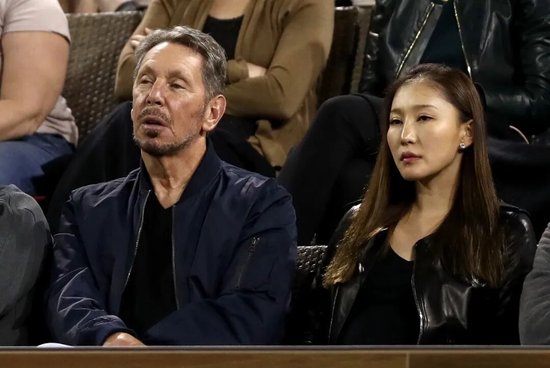
Core Viewpoint - The article discusses the potential acquisition of Warner Bros. Discovery by Netflix and the subsequent counteroffer from Paramount Skydance, led by Larry Ellison's son, David Ellison, highlighting the competitive dynamics and implications for market competition and content ownership in the streaming industry [3][22][30]. Group 1: Acquisition Details - Netflix announced an $82.7 billion acquisition of Warner Bros. Discovery's core assets, including HBO and HBO Max, with a stock and cash component of $72 billion and assumption of $10.7 billion in debt [3][22]. - Paramount Skydance made a counteroffer of $108.4 billion in cash, proposing $30 per share for Warner Bros. Discovery's entire asset package, which includes additional channels like CNN [22][23]. Group 2: Market Competition and Antitrust Concerns - The merger would result in Netflix and HBO Max controlling 33% of the U.S. streaming market, raising antitrust concerns as it exceeds the 30% threshold set by U.S. regulatory guidelines [6][24][25]. - The acquisition of Warner Bros. would consolidate significant content assets, including popular franchises like Harry Potter and Game of Thrones, which are crucial for attracting subscribers and maintaining competitive advantage [6][25]. Group 3: Strategic Implications for Paramount Skydance - Paramount Skydance aims to enhance its market position by acquiring Warner Bros. Discovery, as its current streaming service, Paramount+, holds less than 10% market share [9][27]. - The acquisition would allow Paramount Skydance to surpass 20% market share, positioning it competitively alongside Netflix and Amazon Prime Video, while also enriching its content library [27][30]. Group 4: Background on Larry Ellison and Industry Dynamics - Larry Ellison, founder of Oracle, has been a significant player in the tech industry and has leveraged his influence to impact media acquisitions, including his involvement in the Paramount Skydance bid [10][28]. - The article notes a trend of Silicon Valley companies entering Hollywood, with previous acquisitions like MGM by Amazon, indicating a shift in the media landscape towards tech-driven content strategies [18][34].

流媒体巨头出手好莱坞百年老店,奈飞拿下华纳兄弟为何反对声众多? | 声动早咖啡
声动活泼· 2025-12-10 09:03
Core Viewpoint - The article discusses Netflix's acquisition of Warner Bros. Discovery's assets for a record $72 billion, highlighting the potential impact on the entertainment industry and the challenges the deal may face from regulatory bodies and competitors [4][6][10]. Group 1: Acquisition Details - Netflix announced the acquisition of Warner Bros. Discovery's film production division, HBO, and HBO Max, with the deal expected to close in Q3 of next year [4]. - The merger will result in a combined user base of approximately 450 million, and Netflix will gain access to iconic IPs such as "Batman," "Harry Potter," and "Game of Thrones" [4]. - The acquisition price of $72 billion is unprecedented for Netflix, which previously had not exceeded $700 million in acquisitions [10]. Group 2: Competitive Landscape - Paramount Global was initially a more prominent bidder for Warner Bros., raising its offer and seeking funding from Middle Eastern sovereign wealth funds [5]. - Other competitors included Apple, Amazon, and Comcast, with internal skepticism at Netflix regarding their chances of winning the bid [5]. - Following the announcement, Netflix's stock fell by 3.5%, with a cumulative decline of about 17% since the acquisition news broke [5]. Group 3: Regulatory Challenges - The acquisition faces scrutiny from U.S. lawmakers and European regulators, with concerns about market dominance and cultural impacts [6]. - The U.S. Department of Justice's antitrust division will review the deal, with the outcome dependent on how the media market is defined [6][7]. - Notable industry figures, including director James Cameron and actress Jane Fonda, have expressed opposition to the merger, citing potential job losses and reduced diversity in storytelling [6]. Group 4: Financial Implications - To finance the acquisition, Netflix plans to seek nearly $60 billion in loans, raising concerns about financial risk due to the scale of the investment [10][11]. - The deal will require Netflix to shift from a streaming service to a full-fledged entertainment company, taking on significant production and marketing costs [11]. - If the acquisition fails, Netflix would owe Warner Bros. a termination fee of $5.8 billion [12]. Group 5: Strategic Rationale - Analysts suggest that the acquisition is a defensive move for Netflix to maintain its competitive position against potential threats from Paramount and others [12]. - Warner Bros. chose Netflix for the acquisition because it aligned with their plan to split into two companies, focusing on streaming and film production [13].

苹果前COO威廉姆斯火速就业 已被提名为迪士尼董事
Feng Huang Wang· 2025-12-09 23:02
Core Viewpoint - Jeff Williams, former COO of Apple, has been nominated to join Disney's board of directors shortly after his retirement from Apple [1] Group 1: Company Developments - Jeff Williams officially retired from Apple last month and had previously handed over the COO position to Sabih Khan earlier this year [1] - Disney has extended an invitation to Williams, and shareholders will vote on his election as an independent director at the upcoming annual meeting, typically held in late March or early April [1] - If elected, Disney's board will expand to 11 members [1] Group 2: Industry Context - Bob Iger, CEO of Disney, previously served on Apple's board but left in 2019 following the launch of Apple TV+, coinciding with Disney's preparations for its own streaming service, Disney+ [1]


叫板奈飞 派拉蒙要全现金敌意收购华纳
Xin Hua Wang· 2025-12-09 14:15
Core Viewpoint - Paramount Global has launched a hostile takeover bid for Warner Bros. Discovery, offering $108.4 billion in cash to acquire all shares, claiming that Netflix's proposal is inferior [1][5]. Group 1: Acquisition Proposals - Paramount's offer is a cash bid of $30 per share, aiming to acquire all of Warner Bros.' assets, including CNN [2]. - Netflix's acquisition agreement includes a mix of cash and stock, priced at $27.75 per share, focusing on Warner Bros.' television, film production, and streaming businesses, while spinning off cable operations [4]. - Paramount's proposal is positioned as more beneficial for Warner Bros. shareholders, with an additional $17.6 billion in cash compared to Netflix's offer [5]. Group 2: Regulatory and Political Factors - President Trump has indicated he will intervene in the regulatory approval process for Netflix's acquisition, citing concerns over market control [9]. - Paramount's bid is seen as potentially facing less regulatory scrutiny, as it has proposed measures to mitigate foreign investment committee reviews [6][11]. - The involvement of Trump and his administration may add political dimensions to the acquisition process, influencing shareholder perceptions and regulatory outcomes [9][10]. Group 3: Market Reactions and Implications - Warner Bros. has stated it will carefully evaluate Paramount's proposal but does not intend to alter its agreement with Netflix [8]. - Analysts suggest that while Paramount's cash offer may be more attractive, the high debt associated with the acquisition could pose challenges for the combined entity [11]. - The deadline for Warner Bros. shareholders to vote on Paramount's offer is set for January 8, with the possibility of an extension [11].


优酷网络故事片最高120%分成,优酷流媒体之争该咋看?
Xin Lang Cai Jing· 2025-12-09 13:35
Core Viewpoint - Youku, a subsidiary of Alibaba's Whale Entertainment Group, announced a new revenue-sharing model for online story films starting January 1, 2026, allowing content providers to receive 100% of membership viewing revenue and an additional 20% incentive through a "new user coefficient," leading to a total revenue share of up to 120% [1][4]. Group 1 - The introduction of the "up to 120% revenue share" policy represents a renegotiation of the revenue structure between platforms and content providers, aiming to reconstruct the ecological incentive mechanism in the long video industry, which is currently facing high investment and low returns [3][6]. - Youku's strategy breaks away from the traditional exclusive copyright monopoly, allowing non-exclusive content to enjoy a 100% base share plus a 20% new user incentive, directly linking content value to user growth [3][6]. - This initiative aligns with the regulatory guidance from the National Radio and Television Administration regarding the new medium-length content format of "online story films" and seeks to carve out a differentiated path in a competitive landscape dominated by iQIYI and Tencent Video [3][6]. Group 2 - The new revenue-sharing model addresses structural contradictions in the streaming media market, where platforms have relied on exclusive copyrights, leading to inflated content procurement costs and deteriorating ROI, while smaller producers struggle with weak bargaining power and long payment cycles [7]. - By adopting a "de-exclusive + effect-oriented" dual approach, Youku aims to reduce its content procurement risks and enhance creator engagement, with the "new user coefficient" dynamically adjusted based on 90-day membership conversion effectiveness [7]. - If successful, this model could enhance Youku's content diversity and user engagement, potentially triggering a chain reaction in the industry, compelling other platforms to follow suit with similar revenue-sharing reforms, thus accelerating the transition of the long video industry from "capital burning" to "ecological win-win" [4][7].

【环球财经】叫板奈飞 派拉蒙要全现金敌意收购华纳
Xin Hua She· 2025-12-09 13:03
Core Viewpoint - Paramount Global has launched a hostile takeover bid for Warner Bros. Discovery, offering $108.4 billion in cash to acquire all shares, claiming that Netflix's proposal is inferior [1][4]. Group 1: Acquisition Proposals - Paramount's offer is a cash bid of $30 per share, aiming to acquire all of Warner Bros.' assets, including CNN [2]. - Netflix's acquisition agreement includes a mix of cash and stock, priced at $27.75 per share, focusing on Warner Bros.' television, film production, and streaming businesses, while spinning off the cable business [3]. - Paramount's proposal is positioned as more beneficial for Warner Bros. shareholders, with an additional $17.6 billion in cash compared to Netflix's offer [4]. Group 2: Regulatory and Political Factors - President Trump has indicated he will intervene in the regulatory approval process for Netflix's acquisition, citing concerns over market control [8]. - Paramount's strategy includes leveraging Trump's favorable view of competition and their smaller company size to expedite regulatory approval [4][6]. - The involvement of external financing partners in Paramount's bid raises concerns about potential scrutiny from the U.S. Foreign Investment Committee [5]. Group 3: Market Implications - Both acquisition proposals raise antitrust concerns, as Netflix is the largest streaming operator and Warner Bros. is a major Hollywood player with HBO Max [6]. - The deadline for Warner Bros. shareholders to vote on Paramount's offer is set for January 8, with the possibility of an extension [10]. - Analysts suggest that while Paramount's cash offer may be attractive, the associated high debt could pose challenges for the merged entity [10].
奈飞收购华纳遭Paramount截和?特朗普女婿有参与
凤凰网财经· 2025-12-09 12:52
Paramount私下辩称其每股30美元的报价高于奈飞的出价,尽管实际价值取决于投资者对分拆所得股份的估值。该公司周一表示,其收购华纳兄弟所 有股权的报价相比奈飞的方案,向股东多提供了180亿美元现金。Paramount还强调,其交易更可能获得监管机构的批准,因为奈飞在流媒体电视市 场的份额远超Paramount+。 "我们是在完成未尽的目标,"Ellison对CNBC表示。 来源|国际财闻汇 争夺好莱坞未来的战役再度升级。 Paramount Skydance Corp. 周一对华纳兄弟探索公司发起了敌意收购要约,出价为每股30美元现金。而短短数天前,华纳兄弟刚与奈飞公司达成 出售协议。 Paramount的报价高于奈飞提出的每股27.75美元的现金加股票方案。Paramount的竞购对象为华纳兄弟全部业务,而奈飞仅对其 好莱坞制片厂及流 媒体业务感兴趣。据彭博社报道,Paramount的此次竞标获得了多家融资合作伙伴的支持,包括沙特阿拉伯公共投资基金、卡塔尔投资局,以及美国 总统特朗普女婿贾里德·库什纳旗下公司Affinity Partners。 "华纳兄弟股东理应有机会考虑我们更优的全现金收购整家公司股 ...
金价,跌了!
中国能源报· 2025-12-09 12:51
贵金属方面, 市场已提前消化美联储本月降息25个基点的影响,交易员普遍谨慎看待明年降息前景,部分投资者选择获利了结,国 际金价周一下跌。 截至收盘,纽约商品交易所明年2月交割的黄金期价收于每盎司4217.7美元,跌幅为0.60%。 当地时间周一,投资者等候美联储本周晚些时候将要公布的利率决议,市场交投情绪谨慎。尽管外界预计美联储本月降息25个基 点"板上钉钉",但投资者普遍担忧在降息同时,因关键经济数据缺失,美联储可能就未来货币政策路径走向释放"鹰派"信号,美国三 大股指当天高开低走,最终集体收跌。截至收盘,道指跌0.45%,标普500指数跌0.35%,纳指跌0.14%。受AI数据中心投资热潮 与存储芯片供应短缺影响,周一多数美股热门芯片股上涨,美光科技股价涨超4%;博通股价涨幅近2.8%,微芯科技股价收涨 2.34%。 8日国际油价下跌 原油期货方面, 投资者密切关注俄乌谈判进展,加之国际油价上周五触及三周来高位,部分投资者选择获利了结,导致国际油价周一 下跌。 截至收盘,纽约商品交易所明年1月交货的轻质原油期货价格收于每桶58.88美元,跌幅为2%;明年2月交货的伦敦布伦特原 油期货价格收于每桶62.49 ...

叫板奈飞 派拉蒙要全现金敌意收购华纳
Xin Hua She· 2025-12-09 12:42
Core Points - Paramount Global has launched a hostile takeover bid for Warner Bros. Discovery, offering $108.4 billion in cash to acquire all shares from its shareholders, claiming that its proposal is superior to Netflix's [1][2] - Netflix's acquisition agreement with Warner Bros. includes a cash and stock deal priced at $27.75 per share, focusing on Warner's television, film production, and streaming businesses, while spinning off its cable operations [3][5] - The involvement of political figures, particularly former President Trump, adds complexity to the acquisition process, as he has expressed concerns over Netflix's potential market control [8][9] Paramount's Proposal - Paramount's offer bypasses the Warner Bros. board and proposes a cash payment of $30 per share, targeting all of Warner's assets, including CNN [2][3] - Paramount's CEO, David Ellison, emphasized that cash remains king and their offer exceeds Netflix's by $17.6 billion [3][5] - The proposal has undergone six rounds of bidding, increasing from an initial offer of $19 per share to the current $30 [3] Regulatory Considerations - Warner Bros. board rejected Paramount's bid due to concerns over financing, particularly the involvement of external financing partners, which could trigger scrutiny from the U.S. Foreign Investment Committee [5][9] - Paramount has assured that its financing partners would relinquish management rights post-merger, aiming to mitigate regulatory challenges [5] - Analysts suggest that while Paramount's cash offer is attractive, the high debt involved could pose risks for the merged entity [9] Market Dynamics - Both acquisition proposals raise antitrust concerns, given the significant market shares of Netflix and Warner Bros. in the streaming and media sectors [7][9] - The deadline for Warner Bros. shareholders to vote on Paramount's offer is set for January 8, with the possibility of an extension [9]
【特稿】叫板奈飞 派拉蒙要全现金敌意收购华纳
Xin Hua She· 2025-12-09 09:30
Core Viewpoint - Paramount Global has launched a hostile takeover bid for Warner Bros. Discovery, offering $108.4 billion in cash to acquire all shares, claiming their proposal is superior to Netflix's recent agreement with Warner Bros. [1][2] Group 1: Acquisition Proposals - Paramount's offer is a cash bid of $30 per share, targeting all of Warner Bros.' assets, including CNN and other cable businesses [2] - Netflix's agreement with Warner Bros. includes a mix of cash and stock, priced at $27.75 per share, focusing on Warner Bros.' television, film production, and streaming businesses, while planning to spin off cable operations [2][4] - Paramount's CEO, David Ellison, emphasized that their cash offer exceeds Netflix's by $17.6 billion, asserting that "cash is king" [2] Group 2: Regulatory and Political Factors - President Trump has indicated he will intervene in the regulatory approval process for Netflix's acquisition, citing concerns over market control [5][6] - Paramount's proposal aims to raise doubts among Warner Bros. shareholders regarding the likelihood of Netflix's deal passing antitrust scrutiny [4][6] - The involvement of external financing partners in Paramount's bid has raised concerns about potential regulatory hurdles, although they have stated these partners would not seek management control [3][4] Group 3: Market Implications - Both acquisition proposals could trigger antitrust concerns due to the significant market shares held by Netflix and Warner Bros. in the media industry [4] - The deadline for Warner Bros. shareholders to vote on Paramount's offer is set for January 8, with the possibility of an extension [6] - Analysts suggest that while Paramount's all-cash offer may be more attractive, it carries high debt implications that could affect the merged entity's financial health [6]