Retail

Search documents
BNPL Fintech Affirm Expands Buy Now, Pay Later Reach with Key Partnerships and In-Store Solutions
Crowdfund Insider· 2025-09-17 21:41
Core Insights - Affirm Holdings, Inc. is expanding its "buy now, pay later" (BNPL) offerings across various sectors, including retail, home services, and wellness, reflecting a commitment to consumer-friendly financing [1][9] - The company aims to capture a share of the projected $3.7 trillion U.S. health and wellness market by 2034 through enhanced mobile capabilities and integration with major platforms [2][8] Group 1: BNPL Expansion - Affirm has launched a feature allowing in-store purchases using Apple Pay, enabling U.S. consumers to utilize pay-over-time options at physical checkouts [2][3] - Eligible purchases can be split into biweekly or monthly payments starting at 0% APR, with no late or hidden fees, enhancing consumer flexibility [3][5] - The integration with Apple Pay is expected to bridge the gap between digital and physical retail, making BNPL more accessible for everyday purchases [4][9] Group 2: Partnerships and Industry Impact - Affirm has partnered with ServiceTitan to embed BNPL into the trades industry, allowing homeowners to manage average annual improvement costs of $8,800 through flexible payment plans [5][6] - The collaboration with Vagaro aims to bring flexible payments to beauty, wellness, and fitness businesses, enabling nearly 100,000 U.S. salons and spas to offer personalized payment plans [7][8] - These partnerships are designed to empower contractors and service providers by reducing upfront cost barriers, thereby enhancing customer satisfaction and loyalty [5][6][9]




Calls of the Day: Netflix, Disney, Walmart and AbbVie
Youtube· 2025-09-17 17:48
Group 1: Netflix - Loop Capital upgraded Netflix to a buy rating and raised its price target to 1350, with current trading around 1220 [1] - Netflix is facing competition from Paramount and Warner's streaming assets, but it remains the clear leader in the market [2][3] - The addition of live events by Netflix, such as wrestling and boxing, may pose a threat to Disney Plus, which has a strong library but lacks focus on live events [4] - Netflix is viewed as a "permanent compounder" with reasonable valuation and potential upside [3][6] Group 2: Disney - Disney is considered the clear number two in streaming services, with a focus on transitioning from linear to streaming [4] - Streaming is now profitable for Disney, and earnings expectations are likely to exceed current estimates [5] - Disney's valuation is attractively priced at 18 times earnings, with growth expected from both streaming and theme parks [5][6] Group 3: Walmart - Bank of America increased Walmart's price target to 125, maintaining a buy rating, with Walmart trading just under 106 [7] - Walmart is recognized as a leader in AI and e-commerce, leveraging technology to enhance consumer experience [8] - Walmart is projected to reach a trillion-dollar market cap, reflecting its strong market position [8] Group 4: AbbVie (AVY) - Baronberg upgraded AbbVie to a buy rating, raising its price target to 270 from 170, indicating significant potential for the stock [9] - AbbVie has successfully navigated the expiration of Humira, with strong prospects for Skyrizzy and Renvoke [10] - The stock offers a 3% dividend yield and is trading at 15 times forward earnings, making it an attractive investment despite recent price appreciation [10] Group 5: Healthcare Sector - The healthcare sector has underperformed, with a 6% increase in the S&P compared to top sectors rising nearly 30% [11] - There are opportunities in pharma and biotech, particularly for value investors looking to diversify away from mega-cap tech [12] - Biotech stocks, such as those in the XBI index, have shown strong performance, up 14% in the quarter [13][14]


3 Reasons Growth Investors Will Love Ollie's Bargain Outlet (OLLI)
ZACKS· 2025-09-17 17:46
Core Viewpoint - Investors are increasingly seeking growth stocks that demonstrate above-average growth potential, particularly in the financial sector, to achieve exceptional returns, although identifying such stocks can be challenging due to their inherent risks and volatility [1]. Group 1: Ollie's Bargain Outlet Overview - Ollie's Bargain Outlet (OLLI) is currently highlighted as a recommended growth stock by the Zacks Growth Style Score system, which evaluates a company's growth prospects beyond traditional metrics [2]. - The stock has a favorable Growth Score and a top Zacks Rank, indicating strong potential for performance [2]. Group 2: Earnings Growth - Earnings growth is a critical factor for investors, with double-digit growth being particularly attractive as it signals strong future prospects [3]. - Ollie's Bargain Outlet has a historical EPS growth rate of 5.5%, but projected EPS growth for the current year is expected to be 16%, significantly outperforming the industry average of 4.8% [4]. Group 3: Cash Flow Growth - High cash flow growth is essential for growth-oriented companies, allowing them to fund new projects without relying on external financing [5]. - Ollie's Bargain Outlet's year-over-year cash flow growth stands at 14.3%, well above the industry average of 0.5% [5]. - The company's annualized cash flow growth rate over the past 3-5 years is 10.9%, compared to the industry average of 4.4% [6]. Group 4: Earnings Estimate Revisions - Positive trends in earnings estimate revisions are correlated with stock price movements, making them a valuable metric for investors [7]. - Ollie's Bargain Outlet has seen upward revisions in current-year earnings estimates, with the Zacks Consensus Estimate increasing by 2.1% over the past month [8]. Group 5: Conclusion - Ollie's Bargain Outlet has achieved a Growth Score of B and a Zacks Rank of 2 due to positive earnings estimate revisions, positioning it well for potential outperformance in the growth stock category [10].


Ralph Lauren CEO: We have confidence in the building blocks we've put in place
CNBC Television· 2025-09-17 17:42
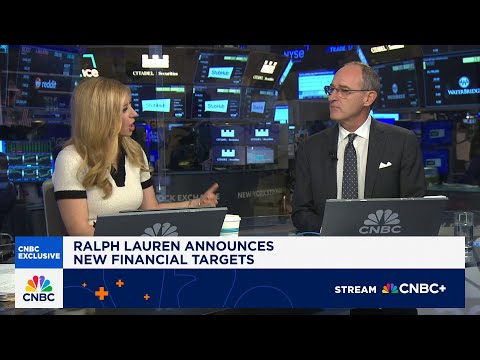
Welcome back. Ralph Lauren reiterating its 2026 outlook and also introducing new three-year targets in an investor day in New York City yesterday. The company expecting revenue to increase at a compounded annual growth rate of mid-s single digits while operating margins set to expand by 100 to 150 basis points. Ralph Lauren also planning to return at least $2 billion to shareholders through dividends and share buybacks. The stocks up more than 30% this year, outpacing the broader retail space. Joining us no ...

30-year mortgage rates hit their lowest level since 2024, ETFs to consider if the Fed cuts rates
Youtube· 2025-09-17 17:18
Market Overview - The Dow Jones Industrial Average is up 280 points, approximately 0.61%, outperforming the S&P 500, which shows little change, while the NASDAQ composite is down about 0.33% [2] - The Russell 2000 index is also in the green, with discussions around potential value unlocking for small caps due to anticipated rate cuts [3] - The 10-year Treasury yield has decreased to 4.02%, marking a low not seen in some time [3] Federal Reserve Insights - The Federal Reserve's interest rate decision is highly anticipated, with expectations of a 25 basis point cut already priced in by the market [5][116] - Investors are closely monitoring Chair Jerome Powell's tone during the press conference, particularly regarding the Fed's outlook on labor and inflation [7][8] - There is speculation about potential dissents among Fed governors regarding the rate cut, especially from the newly confirmed Steven Myron [116][118] Company Developments - StubHub is set to go public after raising $800 million, with plans to enhance its profile and clean up its balance sheet post-IPO [40][41] - Apple is launching its new iPhone lineup, which includes significant design changes and improved battery life, with the standard iPhone 17 starting at $799 [58][63] - FedEx is facing a cautious outlook from analysts ahead of its earnings report, with a downgrade to inline from outperform due to slowing retail sales and industrial production [30] Analyst Calls - Loop Capital upgraded Netflix to buy, raising its price target to $1,350, citing strong engagement and content lineup [31] - Bank of America reiterated its buy rating for Walmart, increasing its price target to $125, highlighting growth opportunities in AI-driven e-commerce [32] Commodities and Economic Outlook - Deutsche Bank has raised its forecast for gold prices to $4,000 for next year, indicating a bullish outlook on the commodity [4] - There are concerns about potential inflation acceleration following rate cuts, although current long-term inflation expectations remain contained [12][25]

Retail Sales Continue to Soar on Robust Demand: 4 Stocks with Upside
ZACKS· 2025-09-17 16:26
Retail Sales Overview - U.S. retail sales rose 0.6% in August to $732 billion, marking the third consecutive monthly gain, and exceeded the consensus estimate of 0.3% [4][10] - Year-over-year, retail sales increased by 5% in August, with July's figures also revised upward to 0.6% [4] - The growth in retail sales was driven by strong demand across various sectors, including autos, clothing, sporting goods, and restaurants [10] Consumer Spending Insights - Despite inflationary pressures and concerns over the economy, consumer demand remains robust, indicating a willingness to spend [2][6] - Sales at auto dealerships increased by 0.5%, while clothing stores saw a rise of 1%, and restaurant sales grew by 0.7% [5][6] Investment Opportunities - Four retail stocks have been identified as having growth potential: Dutch Bros Inc. (BROS), Casey's General Stores, Inc. (CASY), Urban Outfitters, Inc. (URBN), and Wayfair Inc. (W) [2][10] - These stocks have experienced positive earnings estimate revisions in the past 60 days and carry a Zacks Rank of 1 (Strong Buy) or 2 (Buy) [3][10] Company-Specific Highlights - **Dutch Bros Inc.**: Expected earnings growth rate of 38.8% for the next year, with a Zacks Consensus Estimate improvement of 15.3% over the past 60 days [11] - **Casey's General Stores, Inc.**: Expected earnings growth rate of 8.7% for the current year, with a Zacks Consensus Estimate improvement of 1.3% [13] - **Urban Outfitters, Inc.**: Expected earnings growth rate of 8.2% for the current year, with a Zacks Consensus Estimate improvement of 3.4% [15] - **Wayfair Inc.**: Expected earnings growth rate of over 100% for the current year, with a Zacks Consensus Estimate improvement of more than 100% [17]


Wall Street Holds Breath Midday as Fed Rate Cut Looms; Tech Giants Face Headwinds
Stock Market News· 2025-09-17 16:08
Market Overview - The U.S. stock market is showing a cautious and mixed performance as investors await a key interest rate decision from the Federal Reserve [1] - The Dow Jones Industrial Average is up approximately 0.6% to 0.7%, gaining around 252 points, while the S&P 500 is slightly negative, down about 0.1% to 0.13% [2] - The Nasdaq Composite is experiencing a slight downturn, down approximately 0.4% to 0.5%, and the Russell 2000 is up about 1.07% [2] Federal Reserve Interest Rate Decision - The Federal Reserve is expected to announce a 25-basis-point (0.25%) interest rate cut, marking the first reduction of the year [3] - This anticipated cut is seen as a response to a slowdown in the U.S. job market, which is perceived as a greater risk than persistent inflation above the 2% target [3] Economic Data - August housing figures indicate a deceleration in the housing market, with Building Permits at 1,312,000, below the expected 1.37 million, representing a 3.7% year-over-year decrease [5] - Housing Starts also missed forecasts at 1,307,000 against an anticipated 1.37 million, marking an 8.5% year-over-year decline [5] Corporate Earnings and Stock Movements - General Mills, Inc. (GIS) reported fiscal Q1 earnings that surpassed analyst expectations [6] - Nvidia Corp. (NVDA) shares are down approximately 1.2% due to reports of a halt in AI chip purchases by Chinese tech companies [7] - Eli Lilly and Company (LLY) was downgraded to "hold" with a price target of $830 due to a perceived plateau in the obesity market [7] - Kroger Co. (KR) received an upgrade to "buy" with a price target of $75 [7] - Workday, Inc. (WDAY) shares surged around 8% in premarket trading after Elliott Investment Management disclosed a stake of over $2 billion [7] Broader Market Performance - The S&P 500 saw strong Q2 2025 earnings, with 81% of companies beating estimates, although buybacks declined by 20.1% from Q1 2025, totaling $234.6 billion [8] - Q3 expenditures are anticipated to rebound, with the market focused on the Federal Reserve's decision impacting trading in the latter half of the day [8] Sector-Specific Developments - Lyft, Inc. (LYFT) shares soared following an expanded partnership with Google's Waymo for robotaxi services [11] - Oracle Corporation (ORCL) stock rose by 1.5% amid speculation about TikTok's operational status in the U.S. [11] - Chipotle Mexican Grill, Inc. (CMG) shares increased by 1.9% after approving an additional $500 million for share buybacks [11] - ADTRAN Holdings, Inc. (ADTN) experienced a sharp decline of 15.1% after announcing a $150 million convertible senior notes offering [11] - Dave & Buster's Entertainment, Inc. (PLAY) tumbled by 16.7% after reporting earnings significantly below estimates [11] - Apple Inc. (AAPL) shares are down 5% in 2025, attributed to perceptions of being slow in the AI race [11] - Amazon.com, Inc. (AMZN) stock declined by 1.32% over the past five trading sessions despite beating earnings expectations [11]


Johnson: The Fed has pivoted from inflation to focusing on jobs
Youtube· 2025-09-17 11:56
Group 1 - Chinese internet regulator advises companies against purchasing Nvidia due to its market dominance, potentially impacting Nvidia's stock performance [1] - Nvidia shares are currently trading around $173.50, reflecting a slight decline of approximately 0.75% [3] - A significant technical level for Nvidia is identified at $155, with a breakdown below this level indicating a more serious decline [2] Group 2 - The Federal Reserve is expected to announce a 25 basis point rate cut, with a 96% probability according to CME traders, while a 50 basis point cut is considered unlikely [4][6] - The Fed's recent focus has shifted from inflation to job growth, indicating a broader economic strategy [5] - Market reactions will depend heavily on the commentary from Fed Chair Powell following the rate decision, with potential disappointment if no further cuts are indicated [6][7] Group 3 - Cyclical sectors such as industrials, materials, and financials have underperformed despite expectations of a rate cut, suggesting a complex market dynamic [8] - The financial sector may benefit from a steepening yield curve, which is anticipated with the upcoming rate cut [9] - There is a belief that mid and small-cap stocks will perform well in the wake of Fed rate cuts, with opportunities identified outside of the major tech stocks [11][12] Group 4 - The addition of companies focused on manufacturing to investment portfolios is seen as a bet on increased capital expenditures driven by potential policy changes [10] - The industrial sector is showing signs of improvement, with expectations for a broader market rally beyond just the major tech companies [12][13]
Aditya Birla Fashion and Retail unveils new affordable fashion brand
Yahoo Finance· 2025-09-17 10:57
Core Insights - Indian retailer Aditya Birla Fashion and Retail Limited (ABFRL) has launched a new affordable fashion brand, OWND!, targeting Gen Z consumers and aiming to strengthen its presence in the value fashion sector [1][5] - The brand is positioned to offer trendy and cost-effective fashion options, entering a competitive market alongside Trent's budget apparel chain, Zudio [1][5] Company Strategy - CEO Sangeeta Tanwani emphasized the importance of connecting with young consumers and the brand's strategy to foster brand loyalty [2] - ABFRL plans to transition existing Style Up stores into OWND! outlets and aims to expand its network to 100 stores by the end of the current financial year [3] Market Expansion - The retailer has opened five OWND! stores in key markets, including Ahmedabad, Bengaluru, and Aurangabad, and plans to broaden its reach into metropolitan and mini-metropolitan areas [4][5] - The Style Up brand, which targeted Tier II and Tier III cities, has expanded to 49 locations since its launch in 2019 [4]
Stock Market Today: S&P 500, Nasdaq Futures Dip Ahead Of FOMC Decision On Interest Rates—General Mills, New Fortress, Cracker Barrel In Focus - SPDR S&P 500 (ARCA:SPY)
Benzinga· 2025-09-17 10:03
Economic Indicators - U.S. retail sales rose 0.6% month-over-month in August, exceeding expectations [4] - U.S. industrial production increased by 0.1%, beating forecasts for a decline [4] - The NAHB/Wells Fargo Housing Market Index remained steady at 32 [4] Market Performance - The Dow Jones index closed down 126 points or 0.27% at 45,757.90, while the S&P 500 fell 0.13% to 6,606.76 [5] - Nasdaq Composite declined 0.066% to 22,333.96, and Russell 2000 dropped 0.087% to 2,403.03 [6] Company News - Dave & Buster's Entertainment Inc. reported weaker-than-expected results for its second quarter [4] - General Mills Inc. is expected to report earnings of 81 cents per share on revenue of $4.51 billion [16] - Manchester United PLC is anticipated to report an earnings loss of 6 cents per share on revenue of $225.80 million [16] - Cracker Barrel Old Country Store Inc. is expected to report earnings of 80 cents per share on revenue of $855.29 million [16] - Diversified Energy Company PLC dropped 6.10% after announcing a proposed secondary offering of 5,713,353 ordinary shares [16] - New Fortress Energy Inc. surged 54.40% following a long-term gas supply agreement with the Puerto Rican government [16] - Scisparc Ltd. jumped 154.35% after a court-granted stay in merger proceedings with AutoMax Motors Ltd. [16] - Nio Inc. advanced 3.85% following UBS's upgrade from Neutral to Buy and the shipment of a new model [16] - Workday Inc. climbed 5.58% after announcing the acquisition of AI startup Sana for $1.1 billion [16]