Semiconductors

Search documents
Nvidia stock is stuck in a rut despite AI spending blitz
Yahoo Finance· 2026-02-13 17:39
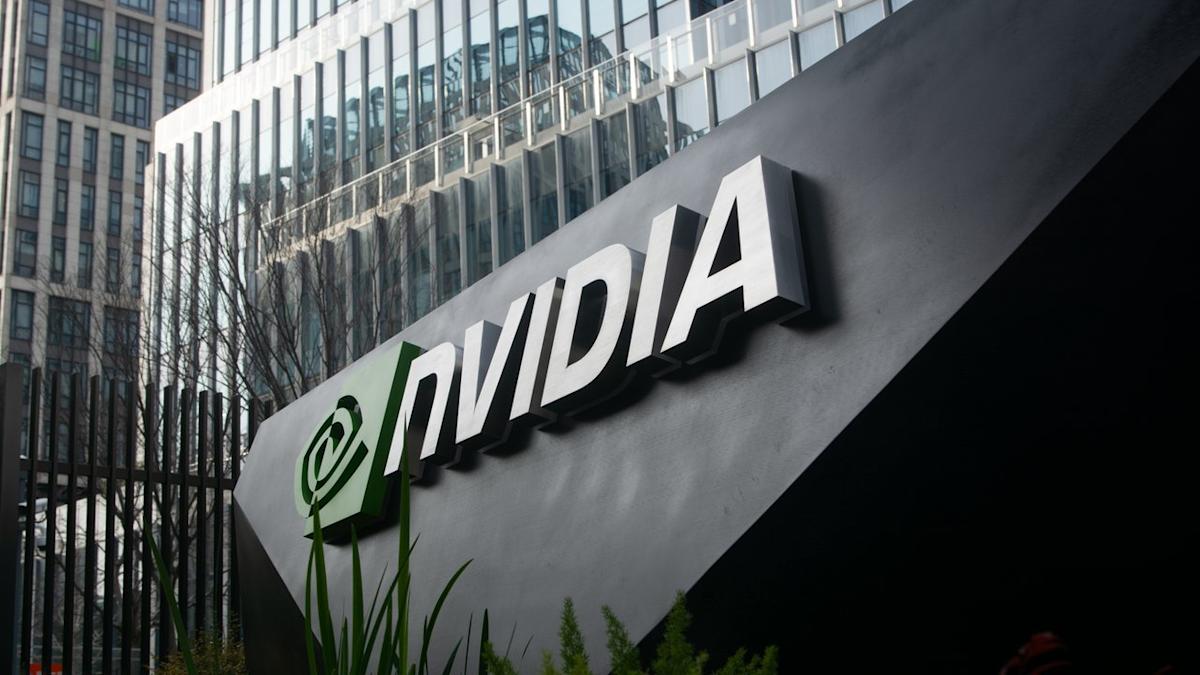
Group 1: Nvidia's Stock Performance - Nvidia's shares have remained in a narrow trading range for months, with a nearly 2% decline on a recent Friday, despite record levels of global capital expenditures on AI infrastructure [1] - Since August, Nvidia's stock has gained just under 2%, which is only slightly better than broader market indexes, while competitors TSMC and AMD have seen increases of approximately 52% and 12%, respectively [1] Group 2: AI Infrastructure Spending - Major tech firms, including Meta Platforms, Alphabet, Microsoft, and Amazon, are expected to spend over $600 billion on AI infrastructure in 2026, indicating a sustained increase in corporate investment in machine-learning compute and data centers [2] - Analysts suggest that there is a disconnect in how investors are pricing future AI spending into equities, even for companies directly involved in the AI boom [2] Group 3: Revenue Concerns - There are growing concerns that the revenue generated from AI may not keep pace with the announced capital expenditures, as noted by JoAnne Feeney from Advisors Capital Management [3] - Despite strong demand for Nvidia's chips and revenue projections that exceed most competitors, valuation multiples have compressed, with Nvidia trading at about 24 times projected profits, which is in line with the Nasdaq-100 and only slightly above the S&P 500 [4] Group 4: Market Expectations and Future Guidance - Investors are awaiting Nvidia's next quarterly report, scheduled for February 25, which is seen as a crucial catalyst that could influence whether the stock breaks out of its current range [5] - Analysts warn that after years of accelerated capital expenditures, growth in technology infrastructure spending may slow, potentially reducing orders for data-center chips [6] Group 5: Competitive Landscape - Concerns persist regarding the sustainability of AI infrastructure spending growth, which could negatively impact Nvidia's performance, as highlighted by Stifel analyst Ruben Roy [7] - Investors are also apprehensive that the significant investments in AI may yield slower returns than anticipated, especially with increasing competition from Google's TPU teams and startups developing alternative AI processors [8]


AI firms like OpenAI seek Nvidia alternatives
Youtube· 2026-02-13 17:37
AI now unveiling its first model to run entirely on chips from the startup Cabus. It's a sign a company's diversifying beyond Nvidia GPUs. Our Dur Debosa has more on that in today's tech check.Morning D. >> Hey, good morning Carl. So never mind that OpenAI is one of Nvidia's largest customers.This is also part of a larger trend. Google shipped Gemini 3 in December trained and served on its own custom AI chips TPUs. Then you got Chinese AI lab GPU releasing GLM trained on Huawei chips and we know that others ...
These 3 Zacks 'Strong Buy' Stocks Reflect the Hottest S&P 500 Stocks of 2026
ZACKS· 2026-02-13 17:30
Core Insights - The technology sector, particularly stocks related to AI, is experiencing significant gains, with SanDisk, Western Digital, and Teradyne being standout performers in 2026 [1][16] Group 1: SanDisk (SNDK) - SanDisk shares have surged over 160% in 2026, driven by its role in the AI market [2][4] - The demand for storage is increasing due to AI data centers and cloud providers, leading to rising NAND prices [3] - The company's revenue reached $3.0 billion, a 61% year-over-year increase, with a fiscal year estimate of $14.1 billion, up 50% from the previous year [4] Group 2: Western Digital (WDC) - Western Digital has also performed exceptionally well, with shares up nearly 70% in 2026, following a strong performance in 2025 [9][10] - The company benefits from a favorable demand environment for scalable technology used by hyperscalers and cloud providers [9] - Free cash flow increased to $653 million, reflecting a 125% rise, indicating strong cash-generating capabilities [11] - Western Digital holds a 20% stake in SanDisk, further linking their performance [12] Group 3: Teradyne (TER) - Teradyne's stock has increased by 60% in 2026, primarily due to the demand for testing equipment for AI chips [13] - The company specializes in testing complex chips, which are in high demand as AI technology evolves [13][17] - Recent quarterly results exceeded previous guidance, contributing to positive market sentiment [17]



How Much Further Will Qualcomm Fall After 18% Slide This Year?
Yahoo Finance· 2026-02-13 17:21
Shares of Qualcomm (QCOM) have struggled so far this year, with the stock down more than 18% year-to-date (YTD) and nearly 32% below its 52-week high. Despite the significant pullback, unfavorable industry dynamics around memory supply could weigh on QCOM’s earnings. With sentiment already negative, the possibility of the stock revisiting its two-year low of $120.80 cannot be ruled out. Qualcomm’s Q1 Surpasses Street’s Forecast Qualcomm delivered better-than-expected Q1 financial numbers. Revenue of $12 ...

Why Dogecoin is Rising Today
Yahoo Finance· 2026-02-13 17:17
Group 1 - The January Consumer Price Index (CPI) report showed a year-over-year increase of 2.4%, with a monthly rise of 0.2% on a seasonally adjusted basis, and core CPI excluding food and energy prices rising by 0.3% from the prior month [2][3] - The inflation data suggests a potential cooling trend, moving closer to the Federal Reserve's target of 2%, and may indicate that the impact of previous tariffs is diminishing [3] - The decline in inflation is likely to encourage the Federal Reserve to continue cutting interest rates, which is seen as a positive factor for cryptocurrency prices, including Dogecoin [4] Group 2 - Dogecoin's price increased over 5% following the inflation report, reflecting its correlation with the broader cryptocurrency market [1][4] - Despite the recent price increase, analysts suggest avoiding investment in Dogecoin due to its lack of real-world utility and the fact that it is not included in recommended investment lists [5][6]
HUA HONG SEMICONDUCTOR LTD(1347.HK)4Q25 RESULTS:RE-RATING UNDERWAY ON ADVANCED NODE POTENTIAL
Ge Long Hui· 2026-02-13 17:17
Core Viewpoint - Hua Hong reported mixed results for 4Q25, with revenue slightly exceeding guidance but net income falling short due to increased R&D labor costs. Management provided a cautious outlook for 1Q26, expecting revenue to decline slightly while gross profit margin (GPM) improves due to demand in AI and localization [1][2][3]. Group 1: 4Q25 Results - Revenue grew 22% year-over-year and 4% quarter-over-quarter to a historical high, driven by a 3% increase in wafer shipments, particularly in MCU and PMIC segments [2]. - GPM narrowed by 0.6 percentage points quarter-over-quarter to 13%, aligning with prior guidance [2]. - Net income was recorded at US$17 million, missing estimates by 53-54%, primarily due to elevated R&D labor costs, although partially offset by foreign exchange gains and government subsidies [2]. Group 2: 1Q26 Guidance - Management guided for 1Q26 revenue of US$650-660 million, representing a 1% decline quarter-over-quarter at the midpoint and 6% below consensus [3]. - GPM is expected to be between 13% and 15%, reflecting a 1 percentage point improvement quarter-over-quarter and above consensus expectations [3]. - Factors contributing to revenue include price increases in PMIC, MCU, and discrete devices for AI applications, alongside strong domestic demand in China, though offset by depreciation in new fabs and weak consumer electronics demand [3]. Group 3: 2026 Outlook - The company is expected to benefit from increased exposure to auto, industrial, communication, and computing sectors, projected to account for approximately 36% of revenue in 2025 [4]. - Initiatives focused on China-for-China and demand for AI-related products are anticipated to mitigate the impact of declining consumer electronics demand [4]. - Potential catalysts for stock performance include the completion of the HLMC (Fab5) injection in 2H26 and ongoing developments in domestic GPUs at HLIC (Fab6) [4]. Group 4: Valuation - Revenue and margin estimates have been slightly revised downward due to moderate near-term demand, leading to EPS cuts of 7% for 2026 and 5% for 2027 [5]. - Despite this, the market is expected to re-rate Hua Hong based on advanced node potential, prompting an increase in target price to HK$116.5, based on a 4.0x price-to-book ratio [5].
Meta, Amazon, and Goolge Lead a $700 Billion Capex Wave: What Stocks Win Beyond NVIDIA?
247Wallst· 2026-02-13 17:15
Core Insights - Major tech companies including Meta, Amazon, and Google are leading a significant capital expenditure (CapEx) wave, with a total of approximately $700 billion allocated for AI infrastructure in 2026 [1] - Despite the massive spending, Nvidia's stock has only increased by 0.24% year-to-date, raising questions about market expectations for sustained GPU demand [1] - Other companies such as Broadcom, Micron, Lumentum, and Bloom Energy have seen substantial stock price increases, indicating strong performance in the AI supply chain [1] Capital Expenditure Breakdown - Hyperscalers like Amazon, Alphabet, Meta, and Microsoft are driving the largest technology infrastructure expansion in history, with Amazon planning $200 billion, Alphabet $185 billion, and Meta up to $135 billion [1] - Secondary spending is also coming from 'neoclouds' and projects like sovereign AI data centers, further contributing to the overall CapEx growth [1] Nvidia's Market Position - Nvidia has experienced explosive growth in its Data Center segment, yet its stock price remains flat, suggesting market skepticism regarding the translation of CapEx into long-term demand for GPUs [1] - The company is a significant position in investment portfolios, reflecting confidence in its future despite current stock performance [1] Other Beneficiaries of the CapEx Wave - **Broadcom**: The company is benefiting from custom chip demand, with a 41% stock increase over the past year, despite a 4% decline year-to-date [1] - **Lumentum**: This company has seen a remarkable 637% stock surge due to strong demand for optical components in data centers [1] - **Micron Technology**: The only US-based memory manufacturer has experienced a 353% stock increase driven by AI memory demand [1] - **Bloom Energy**: The company has seen a 492% stock increase, addressing power demands for AI data centers [1]






Micron stock plunges on Friday: has the rally run too far?
Invezz· 2026-02-13 16:50
Core Viewpoint - Micron stock (NASDAQ: MU) has experienced a pullback following a significant run that had positioned the memory-chip maker as a momentum favorite in the market [1] Company Summary - The recent performance of Micron stock indicates a shift from a strong upward trend to a pullback phase, suggesting potential volatility in investor sentiment [1]


Rivian Hasn't Stopped Losing Money on Its EVs, but Is It a Buy Anyway?
247Wallst· 2026-02-13 16:37
Core Insights - Rivian has reported its first consolidated gross profit of $144 million in 2025, marking a significant improvement from a loss of over $1.3 billion in 2024, driven by cost reductions and software revenue [1] - Despite this milestone, Rivian continues to face challenges with a $3.6 billion net loss in 2025 and expects adjusted EBITDA losses between $1.8 billion and $2.1 billion for 2026 [1] - The company is betting on the upcoming R2 midsize SUV, which is expected to launch in Q2 2026 at a starting price of $45,000, targeting a delivery growth of 47% to 59% in 2026 [1] Financial Performance - Rivian's automotive gross profit remained negative at $432 million for 2025, indicating ongoing losses on vehicle sales [1] - The stock has seen a decline of 82% from its IPO price of $78, closing at $14, and has delivered losses across various time frames, including a 29% drop year-to-date in 2026 [1] - The company anticipates pressure on automotive gross profit in the first half of 2026 due to the ramp-up of R2 production, with expectations for improvement later in the year [1] Market Context - The global EV market has cooled, with a 3% year-over-year decline in sales in January 2026, and significant drops in North America (33%) and China (20%) [1] - Rivian's R2 SUV aims to compete with Tesla's Model Y, but the company may have missed the optimal launch timing due to the current market conditions [1] - Overall new-vehicle sales are projected to decline by 2.4% in 2026, influenced by economic headwinds and policy uncertainties [1] Technological Developments - Rivian is venturing into AI hardware with its in-house Rivian Autonomy Processor (RAP1), which will debut on the R2, enhancing its advanced driver-assistance and autonomy features [1] - The RAP1 chip offers 2.5 times better performance per watt compared to previous Nvidia processors, supporting Rivian's goal of achieving Level 4 autonomy by the end of the year [1]

Believe It: Chip Stocks Aren't as Expensive as Investors Think
Etftrends· 2026-02-13 16:34
Core Viewpoint - Chip stocks, particularly those involved in artificial intelligence (AI), are not as overvalued as previously thought, providing potential investment opportunities within ETFs like QQQ and QQQM [1] Group 1: Semiconductor Stocks - Semiconductors are crucial for AI developments, leading to increased interest in ETFs that include chip stocks [1] - Nvidia, the largest holding in QQQ and QQQM, represents nearly 9% of these ETFs and continues to innovate in AI solutions, indicating strong fundamentals [1] - Broadcom, another significant holding, is experiencing accelerated growth in its AI chip business, driven by high demand for its products, particularly Google's TPU chip [1] Group 2: Investment Outlook - Despite being growth funds, QQQ and QQQM still offer value through their semiconductor holdings, which have attractive fundamental outlooks [1] - AMD is also positioned to benefit from AI developments, with expectations of meaningful revenue from its MI450 products in the latter part of the year [1]