
农业基础设施建设

Search documents
中国将升级改造援津巴布韦灌溉设施
Xin Hua She· 2025-12-19 06:47
新华社哈拉雷12月19日电(记者许正)中国与津巴布韦18日在津首都哈拉雷签署中国援津巴布韦灌溉设 施升级项目立项换文,旨在进一步帮助津巴布韦改善农业基础设施,助力该国加速实现农业现代化。 ...
山东肥城:高标准农田建设涌热潮
Zhong Guo Jing Ji Wang· 2025-12-15 10:02
在安驾庄镇洼里村,连片的高标准农田里几乎看不到积水痕迹。"以前'巴掌田'被土埂分割,下雨后水 流不出去,只能眼睁睁看着庄稼被泡。"村党支部书记刘太钢指着纵横交错的排水系统介绍。 该村通过高标准农田整治,将190公顷碎片化耕地重新规划为11个标准化农田单元,形成了"主渠+支渠 +毛渠"的三级排水网络,辅以3处大型泵站。 天寒地冻,当大多数农田进入冬闲,在山东泰安肥城市王庄镇五里屯村的高标准农田建设现场却是一片 热火朝天的景象。 只见数台大型挖掘机在广袤的田野间轰鸣作业,施工人员冒着严寒,抢抓冬闲黄金期,有条不紊地开展 暗管埋设、机耕道路硬化拓宽工作。空气中弥漫的混凝土气息,与冬日清冷的田野形成鲜明对比,勾勒 出一幅"冬闲不闲建良田"的实干图景。 "冬天小麦长势稳健,田间作业干扰少,正是补齐农田设施短板的好时候。"现场施工负责人张坤龙一边 查看图纸一边介绍,要赶在明年春播前,把这一片的排水系统全部升级改造到位。 "就算降雨量再大,也能实现'雨停田干',今年玉米亩产不仅没减,还比去年增产了120斤。"刘太钢 说。土地碎片化率从83%降至12%,耕种收综合机械化率提升至91%,这些实打实的改造为农业抗灾打 下了坚实基 ...
“十四五”新建改造高标准农田4.6亿亩 为端稳“中国饭碗”提供“硬支撑”
Yang Shi Wang· 2025-12-15 01:48
Core Viewpoint - During the "14th Five-Year Plan" period, China is advancing high-quality construction of high-standard farmland, with over 700 billion yuan allocated to support the establishment and enhancement of 4.6 million hectares of high-standard farmland, significantly contributing to national food security [1][4]. Group 1 - The Ministry of Agriculture and Rural Affairs is guiding localities to improve farmland through standards of leveling fields, ensuring water and road access, and enhancing soil productivity [4]. - There is a focus on optimizing the spatial layout and timing of high-standard farmland construction, prioritizing regions such as Northeast black soil areas, plains, and areas with irrigation conditions [1][4]. - The construction of high-standard farmland is aimed at transforming eligible permanent basic farmland into high-standard farmland [1]. Group 2 - Completed high-standard farmland has effectively improved agricultural production capacity and disaster resilience [6]. - Through concentrated construction and improved field facilities, previously low-yielding and unstable plots have achieved reliable irrigation and drainage, promoting efficient use of agricultural resources [6]. - Many farmlands have reached production levels of "1,000 kilograms per season, 2 tons per year," with more regions experiencing stable production during minor disasters and increased yields during favorable conditions [6].

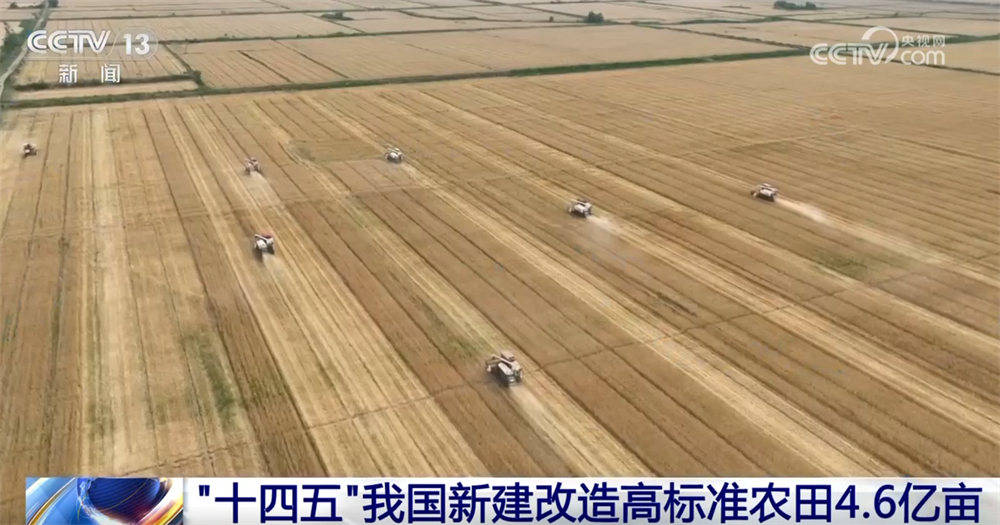
“十四五”期间我国新建改造提升高标准农田4.6亿亩
Yang Shi Wang· 2025-12-14 11:55
Core Viewpoint - During the "14th Five-Year Plan" period, China is advancing high-quality construction of high-standard farmland, with over 700 billion yuan allocated in central funding to support the establishment and upgrading of 4.6 million hectares of high-standard farmland [1]. Group 1 - The construction efforts are prioritized in regions such as Northeast black soil areas, plains, areas with irrigation conditions, and regions with high grain production and potential for increased yield [3]. - There is an ongoing initiative to conduct quality reviews and special rectification actions for high-standard farmland construction, along with regular quality inspections to ensure construction quality [3]. Group 2 - The completed high-standard farmland has effectively enhanced agricultural comprehensive production capacity and disaster resistance capabilities [5].
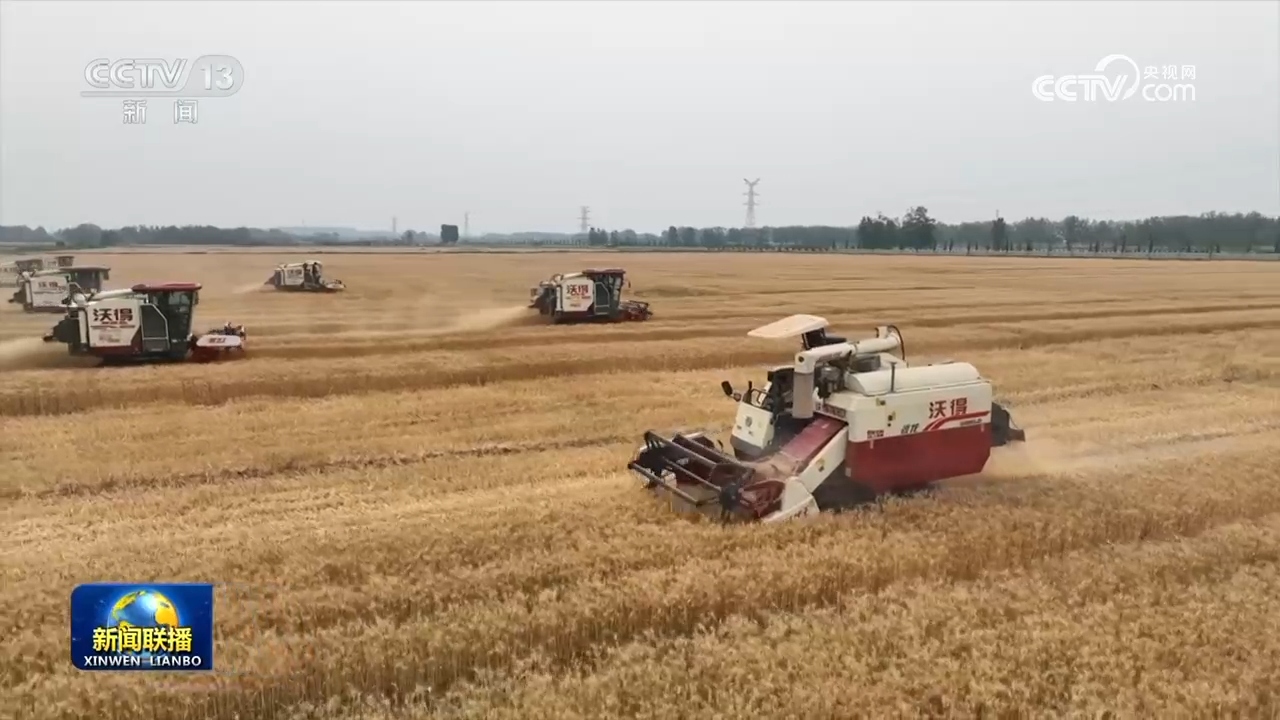
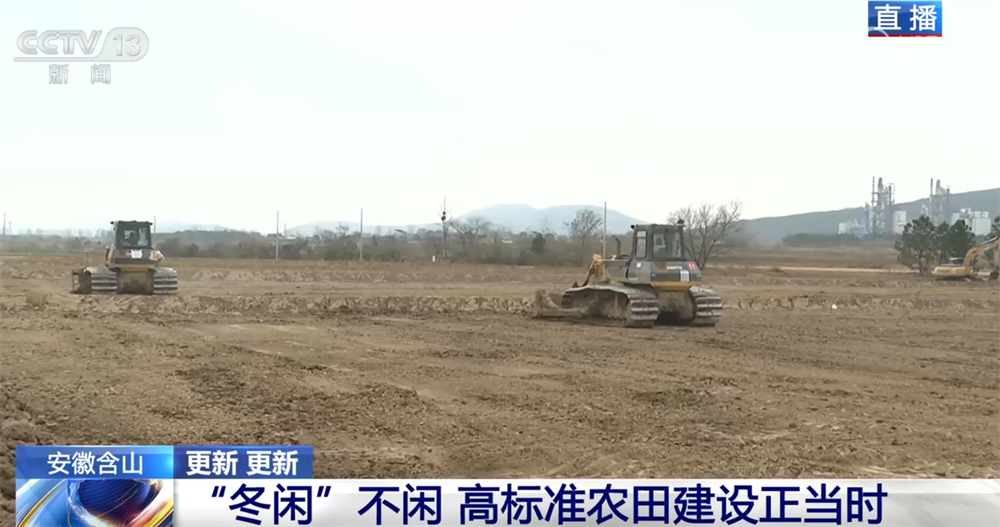
“冬闲”不闲、农机驰骋绘“丰”景 高标准农田建设筑牢粮食安全“根基”
Yang Shi Wang· 2025-12-12 08:22
Core Viewpoint - The "updating" of agricultural practices and infrastructure is a significant change in China's economy, enhancing productivity and living standards for citizens. Group 1: Agricultural Transformation - High-standard farmland construction is actively progressing in Ma'anshan, Anhui, focusing on consolidating fragmented small plots into larger, more efficient farming areas [3][10] - The use of agricultural machinery is emphasized, with mechanized harvesting significantly increasing efficiency compared to manual labor [3] Group 2: Infrastructure Improvement - The project includes the construction of 116 new channels totaling 28.332 kilometers, 9 new agricultural bridges, and 49 new roads spanning 18.891 kilometers to enhance agricultural production conditions [5] - Drainage capabilities are being improved through the construction of ditches, which are required to be at least 0.8 meters deep to manage water effectively during rainy conditions [6] Group 3: Regional Agricultural Impact - Anhui province is a major grain-producing area, maintaining a grain output of over 800 billion jin for eight consecutive years, with 76.21 million acres of high-standard farmland established, accounting for 78.4% of the arable land [10]
甘肃定西:高标准农田建设跑出“加速度”
Xin Hua She· 2025-11-10 12:55
Core Viewpoint - The article highlights the ongoing construction of high-standard farmland in Gansu Province, specifically in Dingxi City, which aims to transform arid land into productive agricultural areas through advanced irrigation and farming techniques [1] Group 1: Agricultural Development - Dingxi City is characterized by dry farming conditions, with issues such as poor soil quality, fragmented land, and insufficient irrigation hindering agricultural growth and farmers' income [1] - The local government has adopted an integrated development model combining high-standard farmland construction, efficient water-saving irrigation, and large-scale operations to enhance agricultural productivity [1] Group 2: Project Progress - As of now, over 2.55 million acres of high-standard farmland have been established across seven counties in Dingxi City, including Anding District [1] - The implementation of a comprehensive management mechanism has effectively improved agricultural production conditions and strengthened drought and flood resistance capabilities [1]
甘肃:聚焦高标准农田建设做实监督 护航粮食和重要农产品稳产保供
Zhong Yang Ji Wei Guo Jia Jian Wei Wang Zhan· 2025-10-13 00:17
Core Viewpoint - The construction of high-standard farmland is crucial for ensuring national food security and the supply capacity of important agricultural products, with a focus on addressing management issues and enhancing oversight [3][4][13]. Group 1: High-Standard Farmland Construction - High-standard farmland construction is a key measure to implement the strategy of "storing grain in the land and technology," which is essential for national food security [3]. - The construction involves significant investment and requires a collaborative approach among various departments to ensure effective management and oversight [5][13]. - The provincial government is actively addressing issues such as unreasonable project planning, non-compliance in bidding and acceptance, and inadequate post-construction management [4][6]. Group 2: Oversight and Accountability - The provincial disciplinary inspection and supervision agencies are intensifying efforts to rectify prominent issues in high-standard farmland construction, focusing on the entire management process from planning to post-construction [4][6]. - A total of 2,336 issues have been rectified, with 49 cases filed and 28 individuals receiving disciplinary actions this year [6]. - The establishment of a comprehensive supervision system is emphasized, involving various stakeholders including local communities and project management teams [10][11]. Group 3: Management and Utilization - Effective management is critical for maximizing the benefits of high-standard farmland, with a focus on clear responsibilities and ongoing supervision [7][8]. - The integration of smart agricultural practices is being explored to enhance operational efficiency and resource management [9]. - The approach includes regular monitoring and community involvement to ensure the sustainability and productivity of the farmland [8][10]. Group 4: Long-term Governance - Continuous supervision is necessary to ensure both immediate benefits and long-term governance in high-standard farmland projects [10][11]. - The provincial government is working on refining policies and regulations to address potential risks and improve the management framework [11][15]. - The focus is on preventing corruption and ensuring that resources are used effectively for the benefit of local communities [14][15].

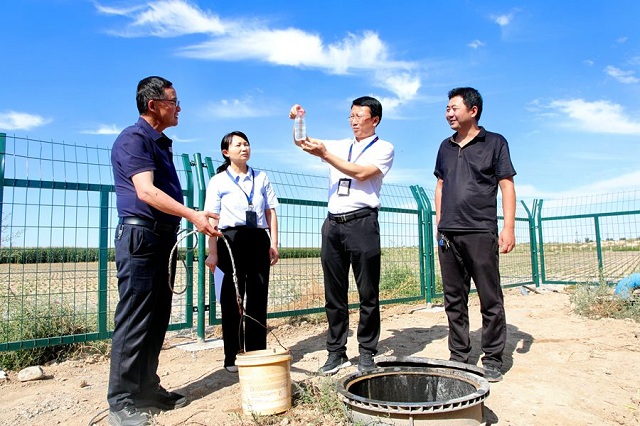
农业农村部、水利部:真抓实干落实关键举措 进一步提升农田防灾减灾能力
Zheng Quan Shi Bao Wang· 2025-09-11 12:04
Core Viewpoint - The meeting emphasized the need for practical implementation of key measures for farmland drainage and flood control to enhance disaster prevention capabilities and ensure national food security [1] Group 1: Key Measures - Continuous investigation of all drainage channels and water-related facilities to accurately understand their distribution, condition, and functional shortcomings [1] - Strengthening the connectivity of drainage channels and supporting facilities to eliminate local blockages and improve drainage systems [1] - Focusing on flood-affected areas to effectively drain water from inundated farmland and fully restore damaged agricultural land [1] Group 2: Responsibility and Community Involvement - Establishing a sound work responsibility system and actively engaging community participation in the process [1] - Promoting systematic remediation through engineering construction methods [1]
甘肃酒泉: 施足金融“底肥” 助粮田成“良田”
Jin Rong Shi Bao· 2025-08-28 02:32
Core Viewpoint - The development of high-standard farmland in Jiuquan, Gansu Province, is being driven by collaboration among local government, state-owned enterprises, and financial institutions, aiming to enhance agricultural productivity and stabilize land rental markets [3][4][5]. Group 1: Agricultural Development Challenges - Jiuquan is a major grain and economic crop production area, facing challenges such as land fragmentation, soil salinization, and low land rental prices, which hinder large-scale agricultural operations [2][3]. - The local agricultural sector has been affected by low economic returns and unstable land transfers, leading to a lack of investment in land improvement and agricultural infrastructure [3]. Group 2: High-Standard Farmland Construction - The construction of high-standard farmland is being implemented through a "whole city and whole county" approach, with financial resources playing a crucial role in the process [3][4]. - The investment in high-standard farmland construction is approximately 3,000 yuan per mu, with government support reaching up to 2,400 yuan per mu [3][4]. Group 3: Financial and Operational Mechanisms - The Gansu branch of the China Development Bank has established a financing model that integrates city-level coordination and county-level implementation, focusing on market-oriented approaches to support high-standard farmland construction [4][5]. - The local government has created operational mechanisms to ensure effective financial support, including the establishment of a working group and the development of implementation plans [5]. Group 4: Impact on Agricultural Practices - The implementation of high-standard farmland has led to significant improvements in agricultural efficiency, with labor costs reduced by over 50% and water savings exceeding 30% due to the adoption of drip irrigation technology [7]. - The rental prices for improved farmland have increased to 700-1,000 yuan per mu, encouraging farmers to lease land more willingly and enhancing the stability of land transfers [7][8]. Group 5: Innovative Financing Solutions - The Gansu branch of the China Development Bank has introduced a sustainable development-linked loan for high-standard farmland projects, tying loan interest rates to water-saving rates, thereby promoting efficient irrigation practices [8].
辽宁出台方案 到2032年力争将永久基本农田全部建成“高标准”
Ren Min Wang· 2025-08-12 02:17
Core Viewpoint - The implementation of the "High-Standard Farmland Construction Plan" in Liaoning aims to enhance food security by transforming all eligible permanent basic farmland into high-standard farmland by 2032, with a target of improving 8 million acres [1][2]. Group 1: High-Standard Farmland Construction Goals - By 2032, Liaoning plans to convert all eligible permanent basic farmland into high-standard farmland, with a cumulative improvement of 8 million acres [1]. - As of 2024, Liaoning has established 38.2 million acres of high-standard farmland, accounting for 61.1% of its total permanent basic farmland of 62.51 million acres [2]. - The construction will proceed in three phases, with a focus on key grain-producing counties and areas with sufficient water resources, aiming for over 59 million acres of high-standard farmland by 2030 [2]. Group 2: Management and Maintenance of High-Standard Farmland - The plan emphasizes the responsibility of operators for the maintenance of high-standard farmland facilities, with village collectives managing non-transferred lands [3]. - A multi-level management system will be established, integrating county-level responsibilities with village-level implementation and community participation [3]. - The plan encourages professional maintenance of technical facilities through government services or industry contracts, while ensuring that any approved land occupation is compensated with equivalent quality and quantity [3].