
文化遗产

Search documents
昨天是文化和自然遗产日 上海开展市集游园会等活动
Jie Fang Ri Bao· 2025-06-15 01:48
Group 1 - The article highlights the celebration of intangible cultural heritage in Shanghai, particularly through various events and markets showcasing traditional crafts and cultural practices [1][2] - The "Follow the Intangible Cultural Heritage in Life" themed market in Baoshan District features traditional crafts such as Luojing Cross-Stitch and Wusong Noodle Sculpture, aiming to promote cultural heritage [1] - The event includes a series of activities like the "Cultural and Natural Heritage Day" and the "Traditional Chinese Medicine Culture Benefit Activities," emphasizing the integration of traditional crafts with modern aesthetics [1][2] Group 2 - The event in Xuhui District showcases ten representative intangible cultural heritage projects, including hand-spun cotton weaving and traditional Chinese clothing techniques, enhancing community engagement [2] - Interactive experiences such as herbal medicine demonstrations and traditional Chinese medicine tastings are provided, making cultural heritage accessible and engaging for the public [2] - The "Haipai Memory" cultural exhibition presents over ten intangible cultural heritage projects, reinforcing the idea that cultural heritage is an integral part of daily life in the community [2]
沉浸式非遗体验中读懂武汉
Chang Jiang Ri Bao· 2025-06-15 00:48
Core Viewpoint - The event aims to promote the integration of intangible cultural heritage (ICH) into modern life, enhancing public engagement and appreciation of traditional culture through immersive experiences and various activities [1][2]. Group 1: Event Overview - The "Cultural and Natural Heritage Day" event in Wuhan was organized by the Wuhan Municipal Bureau of Culture and Tourism and the Wuchang District People's Government, featuring a variety of activities such as ICH exhibitions, performances, and interactive experiences [1]. - The event introduced the "Follow the ICH to Explore Wuhan" themed routes, which include five major themes and ten ICH tourism routes, covering over 50 locations [1]. Group 2: Activities and Attractions - The event featured a non-heritage market with over 40 booths, showcasing ICH projects that attract visitors with their unique charm, including traditional crafts and culinary experiences [2]. - Notable ICH projects such as the Yellow Crane Tower legend and traditional food items like Doupi and Hot Dry Noodles were highlighted, providing visitors with a tangible connection to local culture [2]. - The event included nearly 60 themed activities during the "Cultural and Natural Heritage Day," aimed at bringing ICH closer to the public through exhibitions, performances, and community engagement [2].
檐端藏万象 方寸见古今(文化中国行·华夏博物之旅·传统建筑)
Ren Min Ri Bao· 2025-06-13 22:01
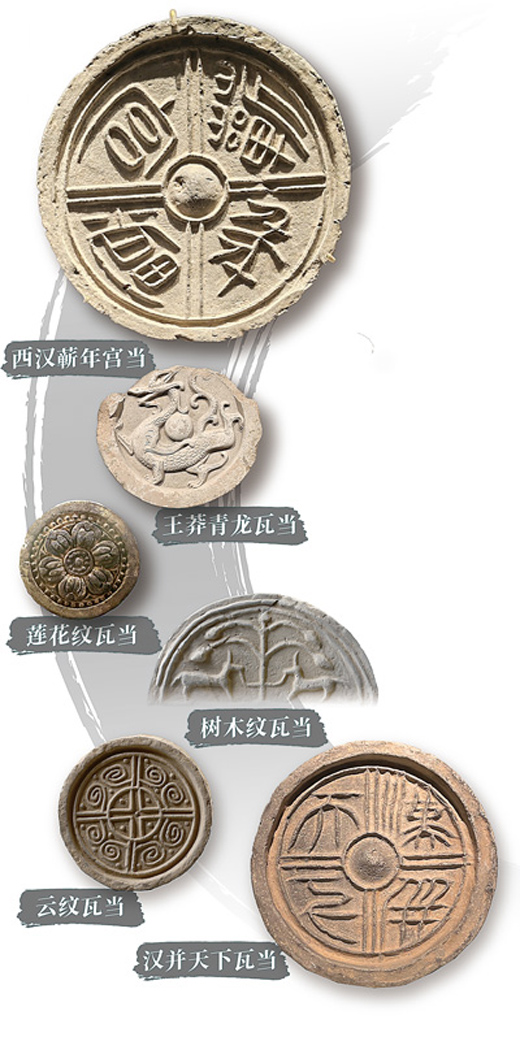
Core Viewpoint - The article emphasizes the significance of瓦当 (wadang) in Chinese architectural history, highlighting its artistic, cultural, and historical value as a representation of the evolution of Chinese civilization [2][9]. Group 1: Historical Development -瓦当, also known as "瓦头" or "勾头," is a traditional architectural component used in ancient Chinese buildings, originating from the Xia Dynasty [2][3]. - The earliest瓦当 were discovered during the Longshan culture period, with significant usage beginning in the Western Zhou Dynasty [3][5]. - The artistic development of瓦当 reflects the evolution of Chinese civilization, with various decorative patterns emerging over time, such as cloud patterns, animal motifs, and textual designs [3][5]. Group 2: Artistic Significance -瓦当 serves not only a functional purpose in protecting wooden structures but also showcases the aesthetic pursuits of ancient artisans through intricate designs [4][6]. - The Han Dynasty marked a golden age for瓦当, with the emergence of文字瓦当 (textual瓦当) and四神瓦当 (Four Divine Beasts瓦当), which were characterized by elaborate craftsmanship and artistic expression [5][6]. - The artistic styles of瓦当 evolved, with influences from Buddhism during the Wei, Jin, and Northern and Southern Dynasties, leading to the popularity of lotus and beast face motifs [6][7]. Group 3: Cultural Reflection -瓦当 reflects ancient customs and societal values, with inscriptions conveying aspirations for prosperity and well-being, such as "长乐未央" (Long-lasting happiness) and "汉并天下" (Unity of the Han Empire) [7][9]. - The craftsmanship of瓦当 demonstrates the advanced skills of ancient artisans, with variations in calligraphy and design that embody the wisdom and creativity of the time [7][8]. -瓦当 has transcended its original architectural function, becoming a unique art form that continues to influence modern design and cultural expressions [8][9].

创新文化遗产品牌,推动文化经济高质量发展
Xin Hua Ri Bao· 2025-06-10 06:32
Core Viewpoint - The article emphasizes the importance of enhancing cultural heritage and its economic value through innovation and digital transformation, as highlighted by President Xi Jinping's directive during the National People's Congress [1] Group 1: Cultural Heritage and Economic Development - The need to deepen urban and rural spiritual civilization construction and promote cultural industries to drive high-quality economic development is underscored [1] - Jiangsu province is rich in cultural heritage, with 3 world-class sites, 251 national key cultural relics, and over 29,000 intangible cultural heritage projects, indicating significant potential for cultural economic growth [1] Group 2: Brand Value Transformation - The article discusses the activation of cultural heritage IP and the establishment of an innovative transformation system to enhance brand value [2] - It suggests a tiered development system for cultural heritage elements, allowing for effective market testing and optimization to create consumer-friendly cultural brands [2] Group 3: Digital Technology Integration - The integration of digital media and cultural heritage is essential for enhancing the cultural economy, with a focus on high-value cultural content and services [3] - The use of digital technologies can improve consumer engagement and create a balanced development of material and spiritual civilization [3] Group 4: Innovative Cultural Experiences - The article highlights the use of interactive technologies to reshape the perception of cultural heritage, creating immersive experiences that engage audiences [4] - Examples include the Nanjing Museum's restoration room, where participants can interactively learn about artifact preservation [4] Group 5: Dual Development System - A dual development system for cultural heritage is proposed, merging historical resources with modern industry [5] - The use of digital twin technology to recreate historical scenes and enhance audience interaction is emphasized [5] Group 6: Global Brand Communication - The article outlines strategies for enhancing the global dissemination of cultural heritage brands, focusing on a layered communication approach [6] - It stresses the importance of cultural translation tools tailored to different regional markets to effectively convey cultural narratives [6] Group 7: International Certification and Trade Mechanisms - Establishing an international certification system and tailored output mechanisms is crucial for facilitating trade in cultural heritage brands [7] - The article advocates for a comprehensive standard framework to ensure authenticity and market acceptance of cultural products [7] Group 8: Cross-National Cooperation - The article promotes a model of cross-national cooperation and shared benefits to enhance the social value of cultural heritage brands [8] - It suggests a "cultural heritage management and development" model for developing countries, providing comprehensive services for digital protection and brand operation [8]