股权投资

Search documents
习近平:发挥好创业投资、私募股权投资支持科技创新作用
母基金研究中心· 2026-02-01 08:51
Core Viewpoint - The article emphasizes the importance of venture capital and private equity in supporting technological innovation, as highlighted by Xi Jinping's article in the "Qiushi" magazine, which outlines the path for China's financial development and the construction of a financial powerhouse [2]. Group 1: Investment Trends - Private equity funds have been crucial in providing financial support for technological innovation, with 90% of companies listed on the Sci-Tech Innovation Board and the Beijing Stock Exchange being backed by venture capital [3]. - The current trend in the industry is to focus on early-stage, small-scale, long-term investments in hard technology, which has become a mainstream consensus among mother funds and venture capital [3]. Group 2: Early and Small Investments - Angel mother funds have entered a period of rapid growth, with over 30 established in China, totaling more than 800 billion yuan. Many of these funds have a high degree of marketization, with over half allowing a maximum investment ratio of 40% in sub-funds [4]. - Local angel mother funds are increasingly building and improving error tolerance mechanisms, which support early-stage investment institutions and encourage a shift in investment stages [4]. Group 3: Long-term Investment - Many newly established mother funds and direct investment funds now have a duration of 15 to 20 years, showing a growing patience for the investment period of sub-funds, with 53% of new guiding funds allowing sub-fund durations of over 10 years [4]. Group 4: Patient Capital - The concept of "patient capital" has gained consensus in the private equity industry, characterized by long-term support and a high tolerance for risk and failure, which is essential for adapting to the long and uncertain cycles of technological innovation [5]. - Compared to previous investment themes focused on internet and consumer sectors, the current focus is on hard technology, necessitating a longer investment horizon for returns [5]. Group 5: Policy Support - Since 2024, the policy environment for the private equity industry has seen significant improvements, with the government increasingly supporting venture capital through various measures, including the "17 policies for promoting high-quality development of venture capital" [6]. - The government has emphasized the importance of developing angel investment, venture capital, and private equity, aiming to attract more social capital into venture investments [6]. Group 6: Future Outlook - The establishment of the National Venture Capital Guiding Fund, with a registered capital of 10 billion yuan, aims to promote patient capital and long-term investments in the venture capital sector [7]. - The article anticipates that the private equity industry will continue to respond to central government calls by enhancing early, small, long-term, and hard technology investments, thereby playing a crucial role in fostering technological innovation in China [7].


西子洁能(002534.SZ)拟1亿元参与设立股权投资基金 重点围绕算力、能源、AI、具身智能相关产业
Ge Long Hui A P P· 2026-01-29 13:33
Core Viewpoint - Xizi Clean Energy (002534.SZ) plans to invest in a new equity investment fund, focusing on technology innovation and strategic emerging industries [1] Group 1: Investment Details - The company will act as a limited partner in collaboration with Xi Jun Capital and Zhejiang Direction Investment Co., Ltd. to establish the Zhejiang Xi Jun Xijie Equity Investment Fund [1] - The total committed capital for the fund is RMB 240 million, with the company contributing RMB 100 million, representing 41.67% of the total commitment [1] Group 2: Investment Focus - The fund will primarily invest in equity of technology innovation enterprises, targeting projects that combine technological innovation with industrial upgrading [1] - Key focus areas include computing power, energy, artificial intelligence, and embodied intelligence industries, particularly in strategic emerging industries supported by national policies [1]

国资灵魂拷问:耐心资本,如何“容亏”?
Sou Hu Cai Jing· 2026-01-29 09:07
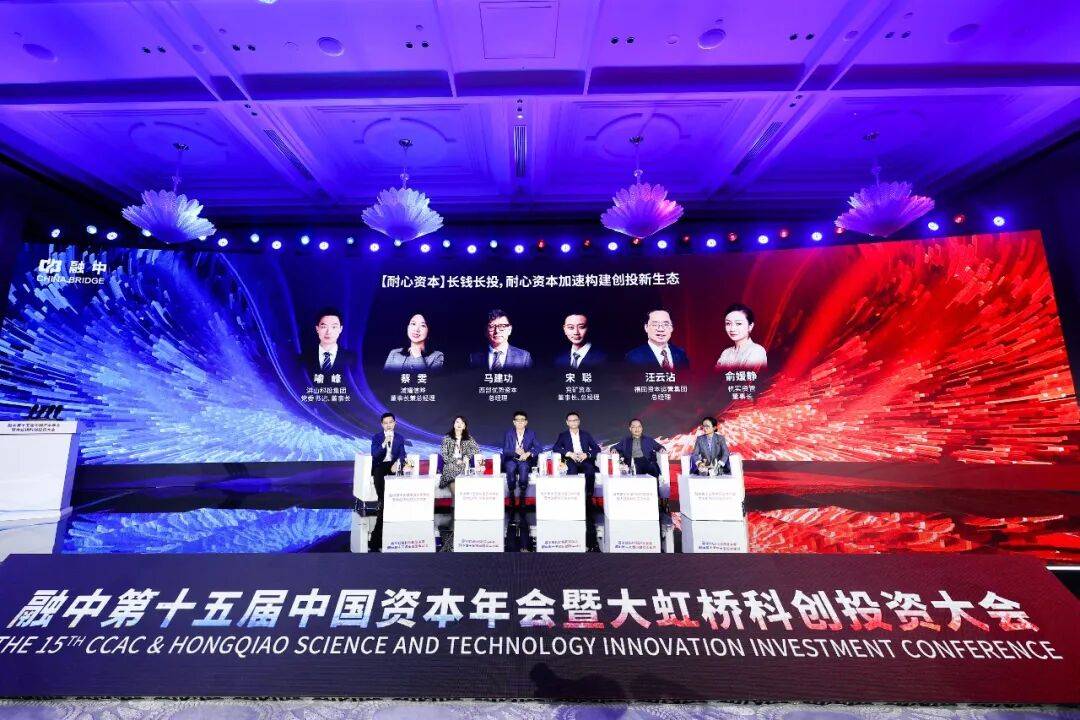
围绕这些问题,2026年1月14日融中第十五届中国资本年会暨大虹桥科创投资大会上,以"【耐心资本】长线长投,耐心资本加速构建创投新生态"为题, 进行了专场论坛讨论。 大佬齐聚,拆解长钱赋能科创的核心逻辑 当前,股权投资行业正步入认知回归与能力重塑的"淬炼期"。"十五五"规划的开局之年,融中第十五届中国资本年会暨大虹桥科创投资大会应势启幕。 国家创投基金、社保等先后入局,在政策引导与市场需求共振下,耐心资本正成为创投生态的核心力量,为新质生产力培育注入长期动能。当前,长周期 LP扩容、制度创新完善、投后赋能深化,那么,长周期LP来源与配置如何优化?政策、市场、行业协同机制如何建立?GP与科创企业长期绑定路径,以 及投早投小投科技的策略升级?耐心资本生态如何构建,从而助力创投机构从财务投资者向长期运营商转型? 喻峰(论坛主持):很高兴又在年初和大家相聚,聊聊耐心资本的话题。距离去年年初中央经济工作会议提出"耐心资本",转眼已是一年,我相信大家都 有很多感悟。首先请介绍一下各自的机构。 蔡雯:我是来自浦耀信晔的蔡雯。浦耀信晔是上海信托的全资子公司,而上海信托隶属于浦发银行,是根正苗红的国资平台。截至目前,我们累计管 ...
共谋出海东盟新机遇 开启协同发展新篇章
Xin Lang Cai Jing· 2026-01-28 22:02
本次活动以"会"为媒、以"访"促合,不仅系统展示了五象新区的战略优势与营商环境,也为南宁与长三 角地区企业在技术协同、市场共享、生态共建等方面合作奠定了坚实基础。下一步,五象新区将持续强 化在长三角地区开展产业招商,推动更多合作落地,加快构建面向东盟的人工智能与跨境产业发展高 地。 本报讯(记者廖欣 实习生吴冬颜)为深化与长三角地区的产业协同,共同开拓面向东盟的人工智能与 跨境产业新蓝海,1月27日,五象新区组织相关单位赴杭州举行"潮起五象 邕抱东盟"人工智能+跨境产 业发展恳谈会。恳谈会吸引了长三角地区40余家人工智能、跨境电商、智能制造等领域企业参与,共话 合作、共谋发展。 会上全面推介了五象新区优良的投资环境、丰厚的优惠政策以及宜居宜业的生态环境,多方面展现新区 的发展潜力与合作魅力。同时,特别设立企业路演环节,一批计划落户五象新区拓展东盟市场的意向企 业进行路演。五象新区还组织了南宁投资引导基金、广西广投桂沪股权投资基金、成为资本等机构现场 与参与企业对接,深入了解企业的产品、技术创新等特点和具体需求,用资本力量助推项目落地。 恳谈会期间,五象新区代表团还密集走访了多家有意向落地的杭州领军企业,通过实 ...
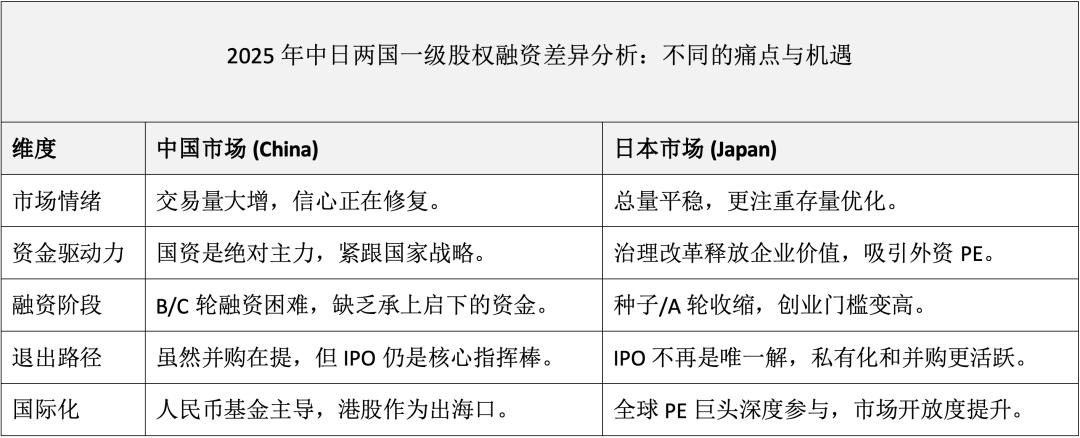
中国反弹 vs 日本平稳:解码2025年中日创投市场温差
3 6 Ke· 2026-01-26 05:22
Core Insights - The 2025 equity investment markets in China and Japan exhibit distinct evolutionary paths amid complex macroeconomic and geopolitical contexts, with China showing a "V-shaped rebound" and Japan experiencing stable growth with a focus on restructuring [3] Group 1: Market Size and Activity - China saw a significant increase in transaction volume, with 9,058 investment transactions in 2025, a 28% year-on-year growth, surpassing the 2021 peak, indicating strong market recovery [5] - The total investment amount in China was 821.368 billion RMB, a slight decrease of 0.44% year-on-year, reflecting a "volume increase, price stability" trend [6] - Japan's VC market remained stable with a total investment of approximately 761.3 billion JPY (about 37 billion RMB), while the PE market reached a historic high, expected to exceed 40 billion USD (about 290 billion RMB) [8][9] Group 2: Financing Rounds and Structure - In China, early-stage financing (seed/angel/A rounds) accounted for 67% of total investments, indicating a dominance of early-stage funding [11] - The middle-stage financing (B/C rounds) saw a drastic decline, creating a "barbell" structure with significant early and late-stage funding but a lack of support for growth-stage companies [12] - Japan experienced an 18% decline in Series A funding, while Series B funding increased by 11%, indicating a shift towards verified quality projects [13][14] Group 3: Funding Sources and Attributes - In China, state-owned enterprises (SOEs) dominated with a penetration rate of 44.55%, marking a historical high, while RMB funds became predominant as USD funds receded [16][17] - Japan's market saw a rise in corporate venture capital (CVC) investments, increasing by 32 billion JPY, alongside a surge in foreign investments from global PE giants like Blackstone and KKR [18][19] Group 4: Exit Environment: IPO vs M&A - China's IPO market rebounded with 277 IPOs, a 26% increase year-on-year, while M&A transactions totaled 955, indicating a growing emphasis on diverse exit strategies [20][22] - Japan's IPO market faced challenges with only 108 IPOs, the lowest in a decade, while M&A activity surged with 167 cases, reflecting a shift towards mergers as a primary exit route [23][24] Group 5: Investment Tracks and Hotspots - In China, key investment areas included advanced manufacturing, AI, and healthcare, while traditional sectors like consumption and education saw reduced interest [25] - Japan focused on deep tech and digitalization, with funding favoring projects with high technological barriers [26][27] Group 6: Matthew Effect and Capital Concentration - In China, 1.43% of leading companies (raising over 1 billion RMB) captured 40.48% of total funding, highlighting a significant concentration of capital [28] - Japan's funding distribution became more selective, with a decrease in the median size of financing rounds from 77.6 million JPY to 62.4 million JPY [30] Group 7: Common Features - Both markets are transitioning from a focus on scale to quality, with China emphasizing high-quality development and Japan focusing on efficiency optimization [32] - The head effect is intensifying, with capital increasingly concentrated in top-tier assets, indicating a challenging environment for lower-tier projects [32] - Strategic capital is replacing purely financial capital, with China seeing a rise in government-led funds and Japan witnessing the strong emergence of CVCs [32] - Both countries are experiencing significant policy interventions to guide capital flows and reshape market rules [34]
大批知名投资人集聚深圳,2026机遇在哪?
Xin Lang Cai Jing· 2026-01-22 13:38
Core Insights - The Chinese private equity investment industry has reached a historic turning point in 2025, with a total fundraising amount exceeding 1.16 trillion yuan, a year-on-year increase of 8%, and the number of new funds surpassing 3,500, up 18% from the previous year [1][35] - A significant structural change is observed, with state-owned limited partners (LPs) contributing 89% of the funding, and hard technology investments accounting for over 60% of the total [1][36] Group 1: Dominance of State Capital - The role of state capital has been further strengthened, with local guiding funds and state-owned enterprises contributing over 50% of the funding, while the proportion of RMB funds exceeds 99% [2][36] - State-owned LPs are integrating national strategies and regional economic development goals into their investment decisions, focusing 70% of their funds on early-stage technology companies [2][36] - The investment strategy of VC/PE has shifted from broad-based approaches to more targeted investments, with a noticeable decrease in the concentration of large funds exceeding 5 billion yuan [2][36] Group 2: Focus on Hard Technology - Hard technology is identified as the primary investment focus for 2025 and the coming years, encompassing areas such as artificial intelligence, robotics, semiconductors, and renewable energy [3][37] - The establishment of key platforms like the Sci-Tech Innovation Board and the Hong Kong Stock Exchange has created critical windows for capitalizing on hard technology investments [3][37] - Early-stage financing transactions (A-round and earlier) accounted for 62% of total deals, with small investments under 100 million yuan making up over 67% [3][37] Group 3: Diversification of Exits - The exit landscape has improved significantly, particularly in the IPO market, with the number of IPOs in mainland China and Hong Kong accounting for 16% and 33% of the global total, respectively [4][38] - The number of IPO cases for invested companies in Hong Kong increased by 148.1% year-on-year, while A-share IPO cases rose by 26.5% [4][38] - Mergers and acquisitions (M&A) have also seen a surge, with a year-on-year increase of 84% in exit cases, highlighting the growing importance of M&A strategies for VC/PE [4][38] Group 4: Long-term Vision and Future Opportunities - Despite the positive performance in investment and exits, the private equity market faces numerous challenges, necessitating a long-term vision to navigate policy directions and market demands [5][39] - The 15th China Capital Annual Conference, themed "Visionaries Win," aims to gather industry leaders to discuss emerging trends and strategies in the investment landscape [5][39] - The conference will also unveil the "2025 Private Equity Investment Annual Series Rankings," recognizing outstanding institutions and individuals in various sectors [6][40]

百强公司—百强大学协同共建三大国际科创中心研讨会召开
Guo Ji Jin Rong Bao· 2026-01-21 02:33
Core Insights - The conference focused on the collaborative construction of three world-class international innovation centers, emphasizing the integration of top universities and leading companies to enhance the innovation ecosystem [1][3] Group 1: Conference Overview - The event was co-hosted by the China Top 100 Listed Companies Forum, Beijing Bank, Wharton Economic Research Institute, and East China University of Science and Technology [1] - The conference aimed to align with the central economic work meeting's requirements for expanding the construction of international innovation centers, focusing on strategic consensus and actionable measures [1] Group 2: Key Contributions - Beijing Bank's Chairman emphasized the importance of technology finance as a primary strategy, aiming to synchronize with national innovation strategies [2] - The Wharton version of the 2026 World University Rankings was released, highlighting the top universities globally, with Harvard and MIT leading, and Tsinghua University and Peking University ranking 6th and 7th respectively [2] Group 3: Strategic Actions - A strategic action plan for building the three international innovation centers was presented, proposing a tiered development structure and five key actions to enhance collaboration [3] - The establishment of the "World Top Universities - Top Companies Innovation Alliance" was announced to facilitate cooperation between leading universities and companies [3] Group 4: Funding Initiatives - A series of innovation funds totaling 150 billion yuan was proposed, including various specialized funds to support the entire lifecycle of innovation enterprises [4] - The global top innovation competition will focus on cutting-edge fields, providing substantial rewards and funding for winning projects [4] Group 5: Collaborative Efforts - The conference concluded with a call for actionable steps to transform strategic consensus into concrete actions, emphasizing the need for universities to accelerate their transformation and for companies to leverage their advantages in capital and industry [5]
唐劲草:新政之下,国资母基金正在走向“六宽一高”
Sou Hu Cai Jing· 2026-01-20 16:47
Core Viewpoint - The implementation of three new policies by the State Council aims to alleviate fundraising anxiety in the equity investment industry by optimizing the operation of state-owned mother funds, focusing on the "Six Widens and One High" approach to enhance quality and efficiency in government investment funds [1][2]. Group 1: Six Widens - **Wide Registration**: The new policy eliminates traditional geographic restrictions on fund registration, allowing for collaborative ecosystems across cities, thus maximizing resource integration and achieving project and capital growth [3]. - **Wide Contribution**: The policy breaks the fixed constraints on government contribution ratios, allowing for increased government investment in venture capital funds, with some regions raising contributions to 70%-90% to expedite fund establishment [4]. - **Wide Funding**: This approach addresses the "wait-and-see" issue in funding sequences, allowing state-owned funds to invest without waiting for all other investors to contribute, thus facilitating quicker project investments [5]. - **Wide Return Investment**: The policy lowers the return investment ratio requirements, enhancing the attractiveness of funds to high-quality venture capital institutions, with some regions reducing the ratio to as low as 0.6 times [7]. - **Wide Incentives**: A flexible profit-sharing mechanism is introduced to motivate fund managers, linking their rewards to performance and encouraging them to focus on quality project identification and post-investment support [8]. - **Wide Tolerance for Errors**: The policy acknowledges the high-risk nature of technology investments, allowing for a tolerance mechanism for failed projects, thus encouraging investment in innovative sectors without the fear of immediate penalties [9]. Group 2: High Efficiency - **High Efficiency**: The new policies aim to streamline the approval process for fund recruitment, targeting a maximum approval time of three months, while providing comprehensive support to fund managers to ensure timely fundraising and project execution [10]. Group 3: Overall Impact - The "Six Widens and One High" framework is a strategic response to the new policies, emphasizing market-oriented and flexible operations to break development constraints and unleash policy benefits, ultimately positioning state-owned mother funds as stabilizers and catalysts for high-quality economic growth [11].
唐劲草:新政之下,国资母基金正在走向“六宽一高”
母基金研究中心· 2026-01-19 08:44
Core Viewpoint - The implementation of three new policies related to government investment funds aims to alleviate fundraising anxiety in the equity investment industry by optimizing the operation of state-owned mother funds, focusing on the "Six Widens and One High" approach, which emphasizes flexibility and efficiency in fund management [1][2]. Group 1: Six Widens and One High - **Wide Registration**: The new policy breaks traditional geographic restrictions, allowing sub-fund managers to choose registration locations without being tied to local tax implications, fostering collaboration between cities [3]. - **Wide Contribution**: The policy allows for an increased government contribution ratio in venture capital funds, with some local governments raising their contribution to 70%-90%, facilitating faster fund establishment [4]. - **Wide Funding**: The adjustment allows government funds to invest without waiting for all other investors to contribute, thus resolving the "wait-and-see" issue in fundraising [5]. - **Wide Return Investment**: The return investment requirements have been relaxed, with some regions lowering the return ratio to as low as 0.6 times, enhancing the attractiveness for quality venture capital institutions [6]. - **Wide Incentives**: A flexible profit-sharing mechanism is established to motivate sub-fund managers, linking their performance to higher profit-sharing ratios [7]. - **Wide Tolerance for Errors**: The policy acknowledges the high-risk nature of tech investments, allowing for a tolerance mechanism for project failures, thus encouraging investment in innovative sectors [8]. Group 2: High Efficiency - **High Efficiency**: The new policies aim to streamline the approval process for fund recruitment, targeting a maximum approval time of three months, while providing comprehensive support to sub-fund managers [10]. Group 3: Overall Impact - The "Six Widens and One High" framework is a practical implementation of the new policies, aiming to balance policy guidance with market dynamics, ultimately serving as a stabilizing force in the equity investment sector and driving high-quality economic development [11].

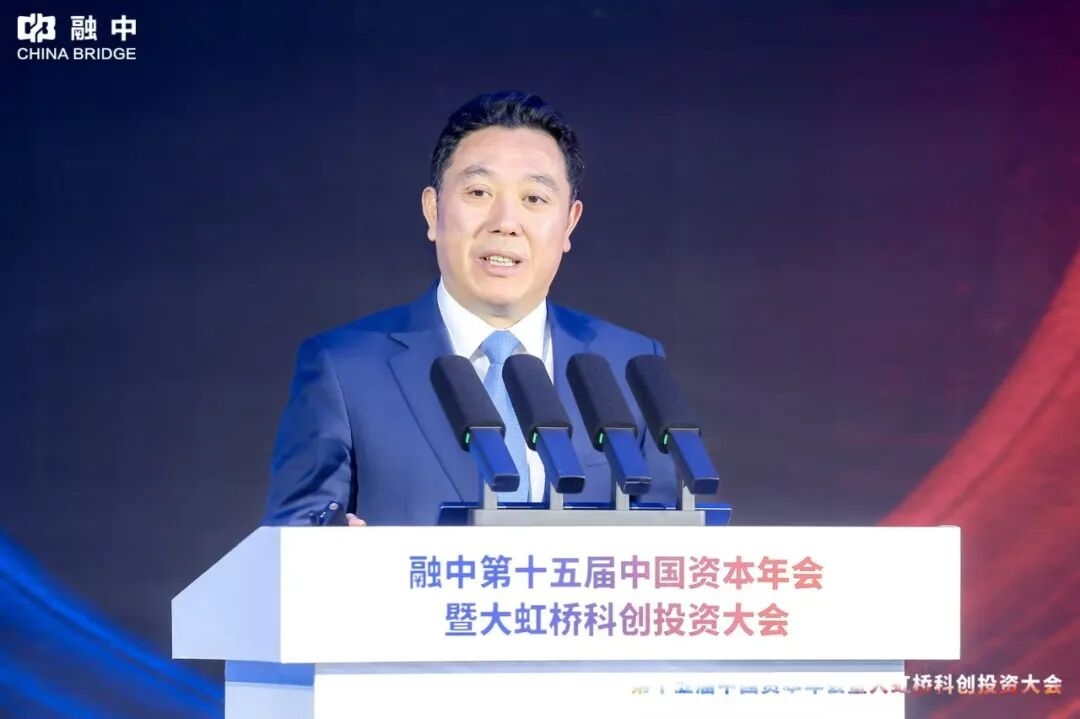
淬·炼 | 融中第十五届中国资本年会暨大虹桥科创投资大会圆满举办
3 6 Ke· 2026-01-16 08:21
Core Insights - The equity investment industry is entering a "refinement period" characterized by a return to fundamentals and capability restructuring, with a focus on hard technology and strategic emerging industries [1] - The 15th China Capital Annual Conference and Hongqiao Science and Technology Innovation Investment Conference aims to create an efficient ecosystem that integrates capital and industry, discussing investment trends and technological innovation [1][2] Group 1: Industry Trends - Long-term capital is expanding, with patient capital becoming a core force supporting technological innovation [1] - Investment institutions are focusing on hard technology and strategic emerging industries, deepening their layouts and uncovering value [1] - The government-guided funds and state-owned capital investment platforms are acting as stabilizers and accelerators for industrial development [1] Group 2: Conference Highlights - The conference featured keynotes from industry leaders, including Zhu Shan, who emphasized the consensus on the venture capital industry's role and the importance of acquiring quality investment targets [4] - A strategic signing ceremony for the establishment of headquarters in Hongqiao was held, indicating a commitment to regional development [6] - The conference included discussions on various topics such as the integration of technology and finance, the role of venture capital in industrial innovation, and the dynamics of the investment landscape [8][27][29] Group 3: Market Data and Projections - The 2025 China Private Equity Market is projected to rebound strongly, with an overall market size reaching 808.2 billion yuan, a 27.9% increase in investment amount, and a 16.3% rise in the number of investments [31] - The market is expected to see a diverse range of exit channels, with 116 IPOs on A-shares and 117 on Hong Kong stocks in 2025, alongside a robust merger and acquisition market valued at 25.9 trillion yuan [31] Group 4: Keynote Insights - Various speakers highlighted the importance of maintaining a competitive edge in the investment landscape, with a focus on technological innovation and the integration of capital markets [23][35] - The discussions underscored the need for a collaborative approach between market-oriented institutions and state-owned capital to achieve mutual benefits [29]