证券服务

Search documents
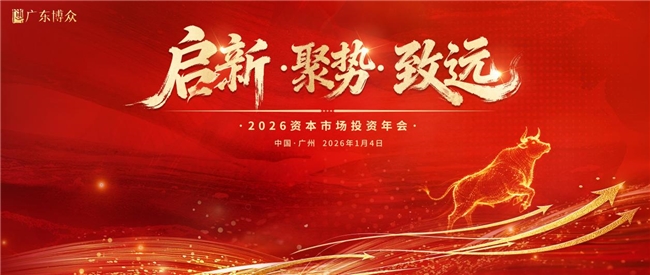
启新聚势,致远 2026! 广东博众顺利举办2026资本市场投资年会
Sou Hu Wang· 2026-01-05 07:47
Group 1 - The 2026 Capital Market Investment Conference held by Guangdong Bozhong focused on macroeconomic trends and industry upgrades, providing insights for investors on investment strategies for 2026 [1] - Liu Tao from Guangdong Bozhong emphasized the importance of analyzing the relationship between capital flow and fundamentals, noting that A-share valuations still have room for improvement and that emerging industries like technology are becoming focal points [3] - Hu Lili highlighted that central state-owned enterprises (SOEs) will be a key market theme in 2026, supported by the "14th Five-Year Plan" and state-owned enterprise reforms, with a market value exceeding 400 trillion yuan, offering low valuations and high dividend advantages [3] Group 2 - Liu Bing focused on the humanoid robot sector within AI, stating it has significant potential for growth in 2026 due to domestic technological breakthroughs and government support for industry development [3] - Sun Wensheng discussed the panel industry entering a profit release phase, with improved supply-demand dynamics and strong cash flow from leading companies, predicting significant profit and cash flow releases in 2026 [4] - A roundtable forum discussed opportunities in AI, with experts suggesting that AI's future is promising due to policy and capital support, and recommended focusing on domestic computing power and related applications [5]

四次公开提名独董征集投票权 投保机构从“外围支持”走向“前台参与”
Zhong Guo Jing Ying Bao· 2025-12-26 18:51
Core Viewpoint - The article discusses the increasing role of the Investor Protection Center in nominating independent directors for listed companies, enhancing the voice of small and medium shareholders in corporate governance [1][4][8]. Group 1: Independent Director Nomination - The Investor Protection Center has publicly nominated independent director candidates and collected voting rights for four companies: First Pharmaceutical, Shangfeng Cement, South Network Energy, and Xinbo Co., indicating a shift towards active participation in corporate governance [1][3][8]. - The nomination of Zhang Lizhi as an independent director for South Network Energy was successfully approved, with 9 valid shareholders authorizing the center to exercise voting rights, representing approximately 0.0422% of the total voting shares [3][8]. - The center's approach allows for a more diverse selection of independent directors, enhancing their independence and professionalism, which is crucial for representing the interests of small shareholders [5][6]. Group 2: Enhancing Shareholder Rights - The initiative aims to strengthen the voice of small shareholders, who traditionally have low participation in corporate governance, often resorting to "voting with their feet" [4][6]. - By publicly nominating independent directors and collecting voting rights, the center facilitates small investors in exercising their voting rights, creating a positive example for active participation in corporate governance [4][5]. - The center's actions are seen as a beneficial attempt to address the weak voice of small shareholders and improve the overall effectiveness of investor rights protection [5][6]. Group 3: Full Chain Rights Protection Mechanism - The nomination process contributes to a comprehensive rights protection mechanism, addressing preemptive measures in addition to existing shareholder rights and securities litigation [6][8]. - The center's involvement allows independent directors to participate directly in major corporate decisions, enhancing preventive measures against potential governance issues [6][7]. - The initiative reflects a broader trend of investor protection agencies transitioning from peripheral supporters to active participants in corporate governance structures [6][7]. Group 4: Challenges and Recommendations - Despite the positive developments, the current mechanism faces challenges, including limited case studies and low shareholder participation rates [8][9]. - Experts suggest improving awareness among small shareholders regarding the nomination process and simplifying the authorization procedures to encourage greater participation [9][10]. - There is a need for ongoing efforts to establish a replicable framework across various industries and companies to enhance market recognition and gradually increase the influence of this mechanism [9][10].



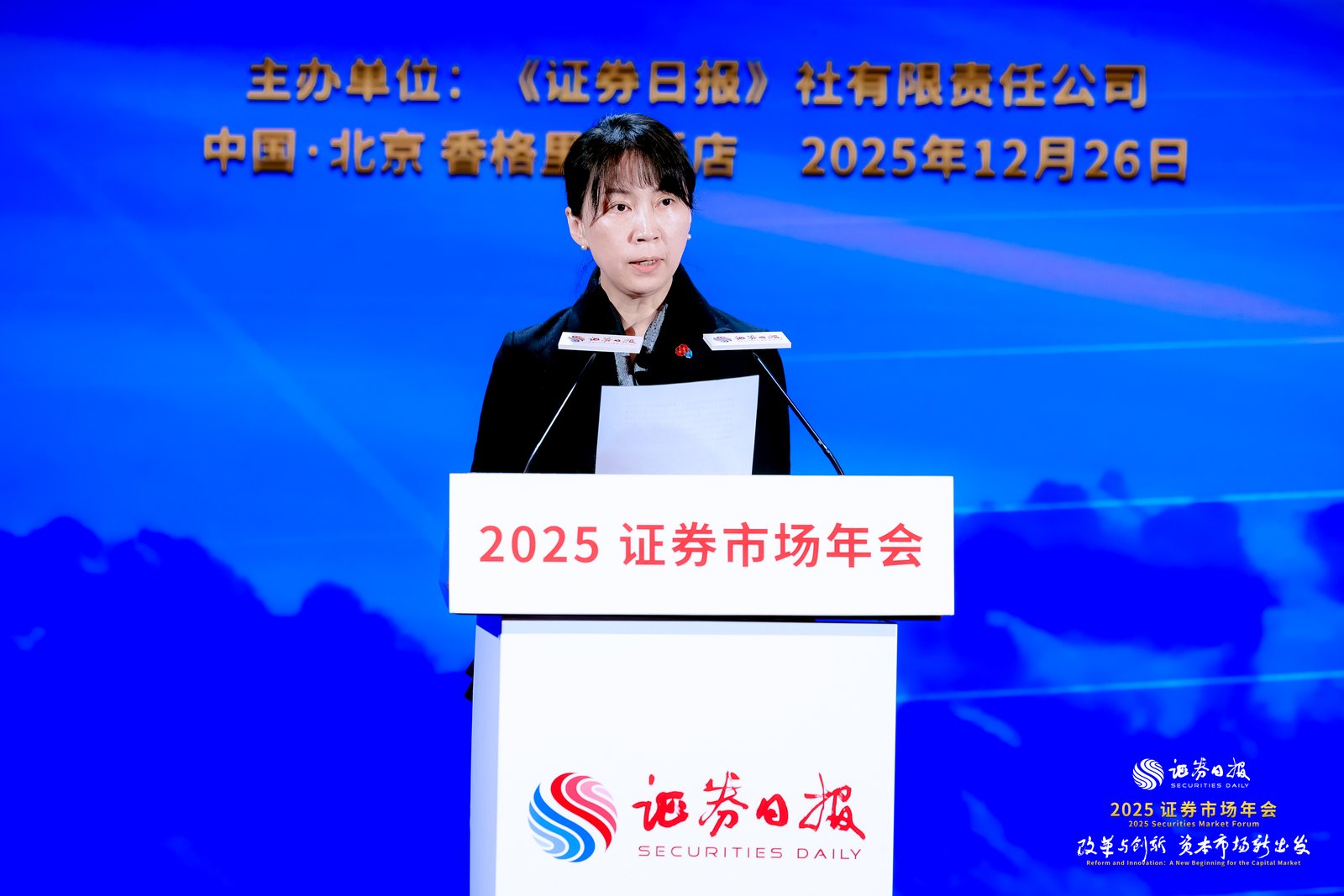
贺瑛:更加有效地发挥法定投保机构职能作用
Zheng Quan Ri Bao· 2025-12-26 05:15
Group 1 - The core viewpoint emphasizes the importance of protecting investors' legal rights as a fundamental aspect of high-quality development in the capital market, highlighting the interdependence between investor protection and market development [5][6] - As of November 2025, the total number of investors in China is expected to exceed 240 million, with the majority being retail investors, which is a key characteristic of the current market [5] - The establishment of a comprehensive investor protection system covering the entire investment process is crucial, including measures to enhance legal protections and punish violations against small and medium investors [6][7] Group 2 - The China Securities Investor Services Center is committed to protecting investors' rights, focusing on litigation support and enhancing corporate governance through shareholder engagement [7][8] - The center plans to implement various strategies during the 14th Five-Year Plan period, including strengthening non-litigation dispute resolution mechanisms and expanding educational initiatives for investors [8][9] - The center aims to create a more transparent and fair market environment, aligning with the regulatory framework and enhancing the overall stability of the capital market [9]
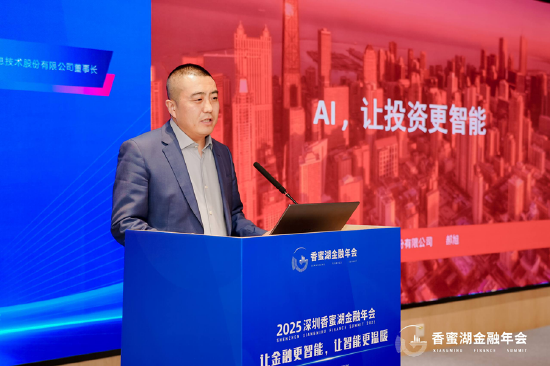
源达信息董事长郝旭:AI非简单替代人类 AI协助投资者构建认知系统 突破信息处理能力边界
Xin Lang Cai Jing· 2025-12-20 13:29
Core Viewpoint - The investment sector is currently facing an information overload issue, and AI technology can empower investment through the construction of cognitive enhancement systems, transforming the industry's information processing model [1][6]. Group 1: Information Overload in Investment - Both institutional and individual investors are confronted with the challenge of information overload, with over 5,000 listed companies in the A-share market and a daily trading volume of 2 trillion yuan, indicating a "data explosion" era [3][8]. - The continuous emergence of vast amounts of data presents significant challenges for decision-making, as human cognitive limits hinder effective processing, making it difficult for investors to keep pace with rapid information flow [3][8]. Group 2: AI Empowerment in Investment - AI can enhance investment capabilities through two dimensions: "perceptual empowerment" and "execution empowerment" [9]. - "Perceptual empowerment" involves AI's ability to cover all data domains, capturing real-time information such as company performance presentations and integrating diverse data sources for comprehensive decision-making [9]. - "Execution empowerment" allows AI to operate based on preset programs, effectively avoiding emotional biases in decision-making, thus ensuring more deterministic execution [9]. Group 3: Upcoming AI Product Launch - The company plans to launch an industry-specific AI product after New Year's Day 2026, developed by its AI application team, which integrates general models with a securities industry knowledge base [4][10]. - The new product will focus on two main modules: "tool-based interaction" and "functional application," aiming to enhance the user experience of trading software and investment decision-making [10]. - "Tool-based interaction" will upgrade trading software to support voice commands, allowing for quick execution of basic operations and logical analysis of market news [5][10]. - "Functional application" will enable users to generate investment strategies based on macroeconomic policies through voice commands, providing automated strategy generation for long-term investment reference [5][10]. Group 4: Market Validation and Future Prospects - The newly launched AI applications are designed to meet actual industry needs, closely aligning with daily trading operations and decision-making scenarios for investors [11]. - As the product enters the market validation phase, it is expected to lower operational barriers for investors, enhance the scientific nature and efficiency of investment decisions, and enrich the digital practices within the securities industry [11].
美SEC批准DTCC启动股票代币化试点
Ge Long Hui A P P· 2025-12-14 10:25
Core Viewpoint - The SEC has issued a "no-action letter" to the DTC, allowing it to provide blockchain tokenization services for specific real-world assets, marking a significant step towards the integration of traditional finance with blockchain technology [1] Group 1: Regulatory Approval - The SEC's approval is for a controlled production environment for the DTC's tokenization services, with a validity period of three years [1] - This action is referred to as the "preliminary foundational version" of the DTCC's tokenization services, indicating it is a pilot program set to launch in 2026 [1] Group 2: Eligible Assets - Initially, the tokenizable qualified securities will be limited to Russell 1000 constituents, U.S. Treasury securities, and mainstream ETFs such as the S&P 500 ETF and Nasdaq 100 ETF [1]
源达信息吴起涤:2026年个人投资者量化投资规模有望超万亿,带来量化服务费用市场空间154亿元(附演讲PPT)
Xin Lang Zheng Quan· 2025-12-01 06:21
Group 1 - The 2025 Analyst Conference highlighted the potential for a bull market in A-shares, attracting global capital inflows [1] - The speaker, Wu Qidi, emphasized the transformation of sell-side research, indicating that only the top 20 brokerage firms can earn substantial commission income, making it difficult for smaller firms to break through [3][17] - The direction of transformation includes shifting from a single institutional service model to a diversified approach that combines external services for institutions, internal wealth management, and industry research [3][17] Group 2 - The number of individual investors in the A-share market has surpassed 240 million as of June 2025, with a steady increase in their scale [3][26] - Despite the growth, the penetration rate of quantitative investment among individual investors remains low, with institutional investors still dominating the space [3] - The scale of public quantitative funds reached 312.1 billion yuan, a 5.8% increase from the end of 2024, while private quantitative funds totaled approximately 1.49 trillion yuan, growing by 6.0% [3] Group 3 - By 2026, the scale of individual quantitative investment is expected to exceed one trillion yuan, creating a market space of 15.4 billion yuan for quantitative services [4][26] - The annualized return of a selected stock pool from 50 brokerages was 7.28% from January 2018 to June 2025, with a maximum drawdown of 46.18% [19] - The research indicates that the lack of a buy-side mindset and herd mentality are reasons for the lower-than-expected returns from the selected stocks [19] Group 4 - The company aims to leverage AI and financial engineering to enhance investment strategies, with specific quantitative strategies showing annualized returns of 22.0% and 16.0% [20] - AI is transforming traditional securities research by automating data collection and analysis, significantly improving efficiency compared to manual methods [23][24] - The research emphasizes the importance of multi-dimensional data applications to better understand future market trends [24]

震慑力再升级 证监会严查立方数科财务造假
Zheng Quan Shi Bao Wang· 2025-11-28 23:56
Core Viewpoint - The China Securities Regulatory Commission (CSRC) has issued administrative penalties and market bans against Lifan Shuke Co., Ltd. for falsifying financial data in its periodic reports, marking a significant step in the crackdown on financial fraud in the capital market [1][2]. Group 1: Company Actions and Penalties - Lifan Shuke has been found to have inflated revenues and costs for three consecutive years, violating securities laws [2]. - The CSRC plans to impose a fine of 10 million yuan on Lifan Shuke and a total of 30 million yuan on 10 responsible individuals [2]. - The company is suspected of triggering mandatory delisting due to serious violations, prompting the Shenzhen Stock Exchange to initiate delisting procedures [1][2]. Group 2: Financial Data Manipulation - From 2021 to 2023, Lifan Shuke inflated its revenue by a total of 638 million yuan and costs by 628 million yuan through various fraudulent activities [2]. - The specific annual inflation figures include 280 million yuan in revenue and 277 million yuan in costs for 2021, 312 million yuan in revenue and 305 million yuan in costs for 2022, and 46 million yuan in revenue and 45 million yuan in costs for 2023 [2]. Group 3: Regulatory Framework and Implications - The case exemplifies a comprehensive regulatory approach combining administrative penalties, market bans, criminal referrals, delisting execution, and intermediary accountability [1][4]. - The CSRC's actions reflect a shift from reactive measures to proactive governance aimed at preventing financial fraud at its source [1][4]. - The regulatory environment has seen an increase in the number of companies facing mandatory delisting due to financial fraud, with Lifan Shuke being the 14th such case this year [6]. Group 4: Intermediary Accountability - The case also involves the accounting firm Zhongxing Caiguanghua, which is under investigation for failing to perform due diligence [2][3]. - The regulatory focus on intermediaries highlights the importance of their role in maintaining market integrity and the need for strict enforcement of their responsibilities [4][7]. - The establishment of a multi-layered accountability system aims to delineate clear behavioral boundaries for all market participants, thereby protecting investor rights and enhancing market ecology [7].

证监会剑指财务造假,发行人+中介机构被同步追责
券商中国· 2025-11-28 12:49
Core Viewpoint - The China Securities Regulatory Commission (CSRC) has issued administrative penalties and market bans against Lifan Shuke Co., Ltd. for falsifying financial data in its periodic reports, marking a significant step in the crackdown on financial fraud in the capital market [1][3][6]. Summary by Sections Administrative Penalties - Lifan Shuke has been found to have inflated its revenue and costs for three consecutive years, violating securities laws. The CSRC plans to impose a fine of 10 million yuan on the company and a total of 30 million yuan on 10 responsible individuals [1][3]. Financial Data Manipulation - From 2021 to 2023, Lifan Shuke inflated its revenue by a total of 638 million yuan and costs by 628 million yuan through various fraudulent activities. The breakdown includes 280 million yuan in revenue and 277 million yuan in costs for 2021, 312 million yuan in revenue and 305 million yuan in costs for 2022, and 46 million yuan in revenue and 45 million yuan in costs for 2023 [3][4]. Regulatory Response - The CSRC has initiated an investigation into Zhongxing Caiguanghua Accounting Firm for failing to perform due diligence, indicating a shift towards holding intermediary institutions accountable alongside companies committing fraud [2][4]. Broader Implications - This case represents a growing trend in the capital market, with Lifan Shuke being the 14th company this year facing potential delisting due to serious violations. The increase in such cases is attributed to stricter regulations and a zero-tolerance policy towards financial fraud [6][7]. Systematic Approach to Fraud - The regulatory framework now includes a combination of administrative penalties, market bans, criminal referrals, delisting procedures, and accountability for intermediaries, creating a comprehensive deterrent against financial fraud [2][7]. Recommendations for Improvement - Experts suggest enhancing the accountability of intermediary institutions and establishing a more robust mechanism for investor compensation, as well as improving the connection between administrative enforcement and criminal justice to strengthen deterrence against financial fraud [5][7].

证监会剑指财务造假 发行人+中介机构被同步追责
Zheng Quan Shi Bao Wang· 2025-11-28 10:07
Group 1 - The core issue revolves around the administrative penalties and market bans imposed on Lifan Shuke Co., Ltd. for falsifying financial data in its periodic reports, leading to a proposed fine of 10 million yuan for the company and 30 million yuan for 10 responsible individuals [1][2] - Lifan Shuke has inflated its revenue and costs for three consecutive years, with a total of 638 million yuan in inflated revenue and 628 million yuan in inflated costs from 2021 to 2023, prompting the Shenzhen Stock Exchange to initiate delisting procedures [2][5] - The case highlights a significant shift in regulatory enforcement, moving from reactive measures to proactive governance, with a comprehensive approach that includes administrative penalties, market bans, criminal referrals, and accountability for intermediaries [1][6] Group 2 - The involvement of Zhongxing Caiguanghua Accounting Firm in the case indicates a broader crackdown on financial fraud, as the firm has faced multiple penalties for failing to fulfill its responsibilities in previous audits [3][4] - The number of companies facing mandatory delisting due to financial fraud has reached a record high this year, reflecting stricter regulations and a zero-tolerance stance from regulatory authorities [5] - There is a growing emphasis on a multi-layered accountability system in the capital market, which includes administrative, civil, and criminal penalties for both the perpetrators of fraud and the intermediaries that facilitate such actions [6][7]
证监会剑指财务造假,发行人+中介机构被同步追责
证券时报· 2025-11-28 09:31
Core Viewpoint - The article discusses the administrative penalties and market bans imposed by the China Securities Regulatory Commission (CSRC) on Lifan Shuke Co., Ltd. for falsifying financial data over three consecutive years, highlighting a shift towards stricter regulatory measures against financial fraud in the capital market [1][4]. Group 1: Company Specifics - Lifan Shuke has been found to have inflated its revenue and costs by a total of 638 million yuan (approximately 6.38 billion) from 2021 to 2023, with specific annual figures of 280 million yuan (2.80 billion) in 2021, 312 million yuan (3.12 billion) in 2022, and 46 million yuan (0.46 billion) in 2023 [4]. - The CSRC plans to impose a fine of 10 million yuan (1 million) on Lifan Shuke and an aggregate fine of 30 million yuan (3 million) on 10 responsible individuals [1][4]. Group 2: Regulatory Actions - The CSRC has initiated a comprehensive approach to combat financial fraud, which includes administrative penalties, market bans, criminal referrals, delisting procedures, and accountability for intermediaries [2][9]. - The case against Lifan Shuke marks a significant instance where both the company and the involved accounting firm, Zhongxing Caiguanghua, are being held accountable, reflecting a dual focus on punishing the primary offenders and their accomplices [5][9]. Group 3: Market Implications - Lifan Shuke is potentially the 14th company this year facing mandatory delisting due to financial fraud, indicating a record high for such cases in a single year [8]. - The regulatory environment has shifted towards a "zero tolerance" stance on financial fraud, with enhanced collaboration between the CSRC and the Supreme People's Procuratorate to ensure comprehensive accountability [8][9].