
证券服务

Search documents
东吴证券晨会纪要-20260324
Soochow Securities· 2026-03-24 00:37
Macro Strategy - The core viewpoint indicates that the current geopolitical tensions in the Middle East and hawkish signals from major central banks during the "Super Central Bank Week" have led to a significant rise in long-term government bond yields, putting pressure on gold and silver prices. The stronger hawkish stance from the Bank of England has strengthened the British pound and euro, while the US dollar index has shown relative weakness, leading to a phenomenon where both the dollar index and gold prices have declined simultaneously. This reflects that gold pricing is influenced not only by US real interest rate expectations but also by global real interest rate expectations [1][36]. Industry Analysis - The Chinese shipbuilding industry has achieved a transformation from "scale expansion" to "quality and quantity improvement," maintaining its position as a global leader in key metrics for 16 consecutive years. This industry is crucial for realizing the strategy of becoming a manufacturing and maritime power [2][37]. Investment Recommendations - Green Town Services (02869.HK) is expected to see steady growth in core profits, with projected net profits of 9.88 billion, 10.98 billion, and 11.90 billion yuan for 2026, 2027, and 2028 respectively, reflecting year-on-year growth rates of 12.2%, 11.2%, and 8.3%. The company maintains a "buy" rating due to its strong cash position and commitment to dividends [7]. - XPeng Motors (09868.HK) has adjusted its revenue forecasts for 2026 and 2027 to 96.2 billion and 126.5 billion yuan, respectively, with a projected net profit of -1.4 billion and 2.1 billion yuan. The company is maintaining a "buy" rating based on its AI capabilities and new model launches [8]. - Longking Environmental Protection (600388) has adjusted its 2026 net profit forecast down to 14.1 billion yuan but maintains a "buy" rating due to its dual-driven growth strategy in green energy and electric mining vehicles [9]. - Tuhu-W (09690.HK) is expected to see improvements in profitability driven by store expansion and product upgrades, with net profit forecasts adjusted to 7.1 billion and 9.5 billion yuan for 2026 and 2027, respectively, maintaining a "buy" rating [12]. - Li Ning (02331.HK) has raised its net profit forecasts for 2026 and 2027 to 30.6 billion and 33.0 billion yuan, respectively, maintaining a "buy" rating due to strong performance in professional categories and refined operations [16]. - Ningde Times (300750) maintains its net profit forecasts for 2026, 2027, and 2028 at 940 billion, 1168 billion, and 1428 billion yuan, respectively, with a "buy" rating based on its leading position in the global battery market [24].
超预期!东吴、东海拟战略整合!能否重构长三角券业版图?
券商中国· 2026-03-14 00:29
Core Viewpoint - Dongwu Securities is accelerating the strategic integration with Donghai Securities, aiming to purchase 83.77% of Donghai Securities' shares, which is expected to reshape the securities industry landscape in the Yangtze River Delta region [1][2]. Summary by Sections Strategic Acquisition Details - Dongwu Securities plans to acquire 83.77% of Donghai Securities through a combination of issuing shares and cash payments, with the share price set at 9.46 yuan per share. The estimated market value of Donghai Securities is approximately 6.5 billion yuan based on the latest closing price [1][2]. Shareholding Structure and Optimization - After the acquisition, Changzhou Investment Group, the current major shareholder of Donghai Securities, will become a significant shareholder of Dongwu Securities, holding over 5% of its shares. This will further optimize Dongwu Securities' shareholding structure and strengthen strategic collaboration [3]. Complementary Advantages - Dongwu Securities and Donghai Securities possess complementary strengths in regional layout, business structure, and customer resources. The integration is expected to enhance operational efficiency and create greater value for shareholders [4]. Financial Performance and Projections - As of Q3 2025, Dongwu Securities reported total assets of 216.96 billion yuan and net assets of 42.83 billion yuan. The projected net profit for 2025 is between 3.43 billion and 3.67 billion yuan, reflecting a year-on-year increase of 45% to 55% [5]. Support for Regional Development - The integration aligns with the "New National Nine Policies" aimed at strengthening the financial sector and enhancing the competitiveness of leading institutions. This move is expected to bolster the financial capabilities of Jiangsu province and support the integrated development of the Suzhou, Wuxi, and Changzhou metropolitan area [6]. Industry Implications - This transaction may mark the first instance of securities firms within the same province merging, potentially expanding Dongwu Securities' asset scale by over 30%. The consolidation of securities licenses in Jiangsu province is anticipated to foster regional synergy [7].



两会政府工作报告学习解读与投资看点
2026-03-06 02:02
Summary of Key Points from the Conference Call Industry Overview - The conference call primarily discusses the macroeconomic outlook and government policies impacting various sectors, particularly focusing on the construction, energy, and real estate industries. Core Insights and Arguments 1. **GDP Growth Target**: The GDP growth target for 2026 is set at 4.5%-5.0%, aligning with expectations. However, there is a notable gap in fiscal spending versus debt increase, necessitating reliance on tax revenue recovery and central government support for local tax sources [1][2][3]. 2. **Dual Carbon Policy**: The dual carbon policy has shifted from "energy consumption control" to "carbon emission control," enhancing quantitative constraints. This is expected to benefit sectors like carbon accounting software, carbon trading, smart grids, and hydrogen energy [1][4]. 3. **Coal Sector Outlook**: The coal sector is viewed as having a "second growth curve," driven by AI-related electricity demand growth, which offsets dual carbon pressures. Domestic and import supply reductions are anticipated, with coal prices expected to rise from a bottoming phase, suggesting over 50% upside potential for coal stocks [1][20][21]. 4. **Debt Market Expectations**: The bond market has already priced in the subdued fiscal expectations, with a short-term forecast for 10-year government bond yields to retreat to 1.85%-1.9%. There remains room for interest rate cuts throughout the year [1][12][14]. 5. **Construction and Building Materials**: The focus is on major projects under the "15th Five-Year Plan," with significant investment opportunities in western development, major canals, and high-standard farmland construction. The construction materials sector is nearing a profitability inflection point, with leading companies like Oriental Yuhong expected to benefit [1][22][26]. 6. **Consumer Sector Trends**: Consumer spending is expected to show a "high-low" rhythm, with potential weakness in Q2. Opportunities in high-end travel and service consumption are highlighted, particularly with the expansion of spring break trials [2][15]. 7. **Investment Directions**: The report emphasizes investment in new infrastructure, urbanization, and livelihood improvements, with a focus on projects like major railways and hydropower. The total investment in these areas is projected to exceed 8 trillion yuan [22][24]. 8. **Real Estate Policy Changes**: The real estate sector's focus has shifted from risk prevention to stabilizing the market, with a new emphasis on a "people-centered" approach. The reform of housing provident funds is highlighted as a key support mechanism [27][30][31]. Other Important but Potentially Overlooked Content 1. **Tax Revenue Recovery**: The anticipated recovery in tax revenue due to price increases and economic expansion is crucial for addressing the fiscal gap [2][3]. 2. **AI and Energy Demand**: The demand for coal is expected to increase due to AI-driven electricity needs, indicating a shift in energy consumption patterns [20]. 3. **Urban Renewal Initiatives**: The report outlines significant urban renewal projects, with a focus on old neighborhood renovations and infrastructure safety, potentially driving demand for construction materials [23][34]. 4. **Green Energy Initiatives**: The introduction of "green fuels" and a multi-energy approach is noted, with major state-owned enterprises involved in clean energy projects [24]. 5. **Market Sentiment**: The overall market sentiment reflects cautious optimism, with expectations for gradual recovery in various sectors, particularly in construction and real estate [1][10][12]. This summary encapsulates the key points discussed in the conference call, providing insights into the macroeconomic environment and sector-specific developments that may influence investment strategies moving forward.





践行“以投资者为本”理念 浙商证券以高质量分红助力资本市场生态优化
Zhong Zheng Wang· 2026-02-13 08:21
Core Viewpoint - The company emphasizes the importance of cash dividends as a key method for returning value to shareholders and demonstrating corporate strength, aligning with the "investor-centric" philosophy [1][2]. Group 1: Dividend Strategy - Zhejiang Securities has committed to a stable and predictable high-quality dividend policy, responding to the new "National Nine Articles" and the China Securities Regulatory Commission's requirements for cash dividends [1]. - In the first half of 2025, the company plans to distribute a cash dividend of 0.07 yuan per share (including tax), totaling 317 million yuan (including tax), positioning itself as a proactive participant in the brokerage industry's mid-year dividend distribution [1]. - Since its listing in 2017, the company has distributed a total of 4.064 billion yuan in dividends, with a 2024 annual dividend of 0.10 yuan per share (totaling 454 million yuan) and an additional third-quarter dividend of 0.05 yuan per share (totaling 227 million yuan) [2]. Group 2: Regulatory Environment - The new "National Nine Articles" aims to strengthen cash dividend regulations, promote higher dividend yields, enhance dividend stability, and encourage multiple distributions within a year [2]. - The China Securities Regulatory Commission has revised the guidelines for cash dividends, simplifying mid-year distribution procedures to provide institutional support for quality companies to increase returns [2]. Group 3: Future Outlook - The company plans to continue its "quality improvement, efficiency enhancement, and return focus" strategy, aiming for high-quality development by enhancing core competitiveness and optimizing resource allocation [3]. - By prioritizing investor interests and increasing direct returns through cash dividends, the company aims to foster a new ecosystem in the capital market that allows investors to share in economic growth [3].

H股刚上市 这家期货公司大举“出海”
Zhong Guo Ji Jin Bao· 2026-02-09 15:25
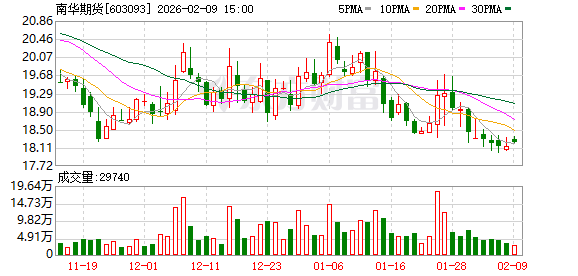
Group 1 - Nanhua Futures plans to use the entire HKD 12.03 billion raised from its IPO to increase capital for its overseas subsidiary, Honghua International, bringing its total investment in the subsidiary to HKD 20.29 billion [2][4] - The capital increase is aimed at strengthening the capital base of its overseas subsidiaries in Hong Kong, the UK, the US, and Singapore, to expand international business and enhance competitiveness in the global market [4][6] - Honghua International has demonstrated strong profitability, with projected net assets of RMB 1.783 billion, operating income of RMB 654 million, and net profit of RMB 417 million by the end of 2024, resulting in a return on equity (ROE) exceeding 20% [4][5] Group 2 - Other Chinese securities and futures firms are also actively pursuing international expansion, with Huatai Securities planning to increase capital for its subsidiary Huatai International by up to HKD 9 billion to support overseas business development [6] - The competitive landscape in the domestic market is intensifying, prompting firms to seek international business as a crucial growth avenue [6]
新城发展拟2523万港元及6282万港元出售新城晋峰资产管理、新城晋峰证券全部股权
Zhi Tong Cai Jing· 2026-01-20 11:11
Core Viewpoint - New City Development (01030) announced the conditional sale of its subsidiaries, New City Jin Feng Asset Management Co., Ltd. and New City Jin Feng Securities Co., Ltd., to Jin Feng Capital Holdings Limited for a total consideration of HKD 88.05 million, aimed at optimizing resources and streamlining the group's structure [1] Group 1: Transaction Details - SRCIM, a wholly-owned subsidiary of the company, has entered into two share transfer agreements with Jin Feng Capital Holdings Limited, agreeing to sell the entire issued share capital of target company A for HKD 25.23 million and target company B for HKD 62.82 million [1] - The sale is conditional, with both parties agreeing to the terms outlined in the share transfer agreements [1] Group 2: Strategic Rationale - The board believes that the sale will enable the group to optimize resources and streamline its structure, particularly as the target companies do not have significant business operations [1] - For the fiscal year ending December 31, 2024, the target companies are expected to incur overall losses, with only minimal profits projected for the year ending December 31, 2025 [1] - The proceeds from the sale will allow the group to allocate financial resources to its primary business operations as a property developer or other future business developments [1]
地方金融控股行业信用风险展望(2025年12月)
Lian He Zi Xin· 2026-01-16 11:17
Financial Overview - Total assets of local financial holding companies are projected to grow from CNY 84,530.60 million at the end of 2023 to CNY 108,296.23 million by June 2025, representing an increase of approximately 28.3%[2] - Total profit is expected to rise from CNY 1,158.03 million in 2023 to CNY 698.61 million by June 2025, indicating a decline in profitability[2] - The net profit is forecasted to decrease from CNY 970.31 million in 2023 to CNY 573.61 million by June 2025, reflecting a significant drop in earnings[2] Concentration Ratios - The asset concentration ratio (CR5) is expected to increase from 42.46% at the end of 2023 to 46.15% by June 2025, indicating a trend towards asset concentration among the top five firms[1] - The profit concentration ratio (CR10) is projected to rise from 60.98% in 2023 to 63.88% by June 2025, showing that profit generation is becoming increasingly concentrated among the top ten firms[1] Regulatory Environment - The financial regulatory framework has deepened since 2024, focusing on compliance and risk prevention, which has increased management costs and governance challenges for local financial holding companies[6] - The regulatory trend is moving towards a more legal and refined approach, with stricter requirements for risk identification and internal control for subsidiaries[6] Market Dynamics - The local financial holding industry has formed a three-tier development structure, with significant resource and risk differentiation across regions, necessitating attention to operational risks of new platforms[6] - The capital strength of local financial holding companies shows significant differentiation, with provincial platforms generally having better short-term debt repayment capabilities compared to city-level platforms[6] Credit Risk Outlook - The overall credit rating of the local financial holding industry remains stable and at a high level, with provincial platforms generally having better credit quality than city-level platforms[6] - The industry is expected to face continued pressure on profitability in 2026, but with macroeconomic recovery and government support, the overall credit risk is considered manageable[6]
瑞银-中国股票市场及宏观经济展望
瑞银· 2026-01-16 02:53
Investment Rating - The report indicates a strong rebound in the Chinese stock market in 2025, with the total market capitalization of A-shares surpassing 100 trillion RMB and daily trading volume frequently exceeding 3 trillion RMB, leading to a historical high annual trading volume of 400 trillion RMB [4][5]. Core Insights - The attractiveness of Chinese assets is expected to further increase in 2026, supported by innovation capabilities, favorable policies, ample liquidity, and potential capital inflows from domestic and international institutional investors [5][6]. - Foreign investment interest in the Chinese stock market has significantly increased, with the number of overseas investors from Europe and the US rising by over 30% compared to last year [7]. - The overall earnings growth for A-shares in 2026 is projected to be around 8%, with a breakdown of 5% revenue growth, 4% valuation uplift, and 1% from buyback expectations [10][18]. Summary by Sections Market Performance - In 2025, the Chinese stock market showed a strong performance, with A-shares' total market value exceeding 100 trillion RMB and daily trading volumes reaching historical highs [4][5]. Future Outlook - The report anticipates that the attractiveness of Chinese assets will continue to rise in 2026, driven by strong innovation, supportive policies, and liquidity [5][6]. Foreign Investment - There is a notable increase in foreign interest in the Chinese stock market, with foreign holdings rising from a low of 2.6% at the end of 2023 to 1.3% currently [7]. Earnings Growth - The expected earnings growth for A-shares in 2026 is around 8%, with contributions from revenue growth, valuation uplift, and profit margin improvements [10][18]. Sector Preferences - Preferred sectors include AI, internet, brokerage, photovoltaic, and overseas companies, with a focus on the growth potential in these areas [11].
东方财富跌2.02%,成交额41.31亿元,主力资金净流出6.04亿元
Xin Lang Cai Jing· 2026-01-15 02:51
Core Viewpoint - Oriental Fortune's stock price has experienced fluctuations, with a recent decline of 2.02% and a total market capitalization of 382.77 billion yuan, while the company shows a year-to-date stock price increase of 4.49% [1] Group 1: Stock Performance - As of January 15, Oriental Fortune's stock price was 24.22 yuan per share, with a trading volume of 4.131 billion yuan and a turnover rate of 1.27% [1] - The stock has increased by 4.49% year-to-date, with a 0.92% rise over the last five trading days and a 7.12% increase over the last 20 days, but has decreased by 4.50% over the last 60 days [1] Group 2: Financial Performance - For the period from January to September 2025, Oriental Fortune reported operating revenue of 2.543 billion yuan, reflecting a year-on-year growth of 13.41%, and a net profit attributable to shareholders of 909.7 million yuan, which is a 50.57% increase year-on-year [2] Group 3: Shareholder Information - As of September 30, 2025, the number of shareholders for Oriental Fortune was 1.0139 million, a decrease of 8.84% from the previous period, while the average number of circulating shares per person increased by 9.70% to 13,193 shares [2] - The company has distributed a total of 4.818 billion yuan in dividends since its A-share listing, with 2.504 billion yuan distributed over the last three years [3] - The top circulating shareholders include Hong Kong Central Clearing Limited, holding 540 million shares, and the Guotai CSI All-Index Securities Company ETF, holding 327 million shares, both showing significant changes in their holdings [3]

东方财富涨2.03%,成交额66.32亿元,主力资金净流入3.52亿元
Xin Lang Cai Jing· 2026-01-12 03:58
Core Viewpoint - Oriental Fortune's stock price has shown a positive trend with a year-to-date increase of 6.21% and a recent net inflow of capital, indicating strong investor interest and confidence in the company's performance [1][2]. Financial Performance - For the period from January to September 2025, Oriental Fortune achieved a revenue of 2.543 billion yuan, representing a year-on-year growth of 13.41% [2]. - The net profit attributable to shareholders for the same period was 9.097 billion yuan, reflecting a significant year-on-year increase of 50.57% [2]. Shareholder Information - As of September 30, 2025, the number of shareholders for Oriental Fortune was 1.0139 million, a decrease of 8.84% from the previous period [2]. - The average number of circulating shares per shareholder increased by 9.70% to 13,193 shares [2]. Dividend Distribution - Since its A-share listing, Oriental Fortune has distributed a total of 4.818 billion yuan in dividends, with 2.504 billion yuan distributed over the last three years [3]. Major Shareholders - As of September 30, 2025, the top circulating shareholder was Hong Kong Central Clearing Limited, holding 540 million shares, an increase of 55.5162 million shares from the previous period [3]. - The fourth largest circulating shareholder, Guotai CSI All-Index Securities Company ETF, held 327 million shares, which increased by 132 million shares [3].