
食品电商

Search documents
宁夏寻鲜工坊电子商务有限公司成立 注册资本10万人民币
Sou Hu Cai Jing· 2025-08-30 09:21
Group 1 - Ningxia Xunxian Workshop E-commerce Co., Ltd. has been established with a registered capital of 100,000 RMB [1] - The legal representative of the company is Ma Yanhui [1] - The business scope includes food sales (only pre-packaged food), internet food sales (only pre-packaged food), wholesale and retail of edible agricultural products, and various technical services [1] Group 2 - The company is authorized to engage in food production, road cargo transportation (excluding hazardous goods), grain processing food production, and internet food sales, subject to approval from relevant authorities [1] - The company can independently conduct business activities based on its business license, except for projects that require approval [1]
娃哈哈天猫店“变身记”:同源康退幕,宗馥莉公司悄然接手?
Sou Hu Cai Jing· 2025-08-14 18:21
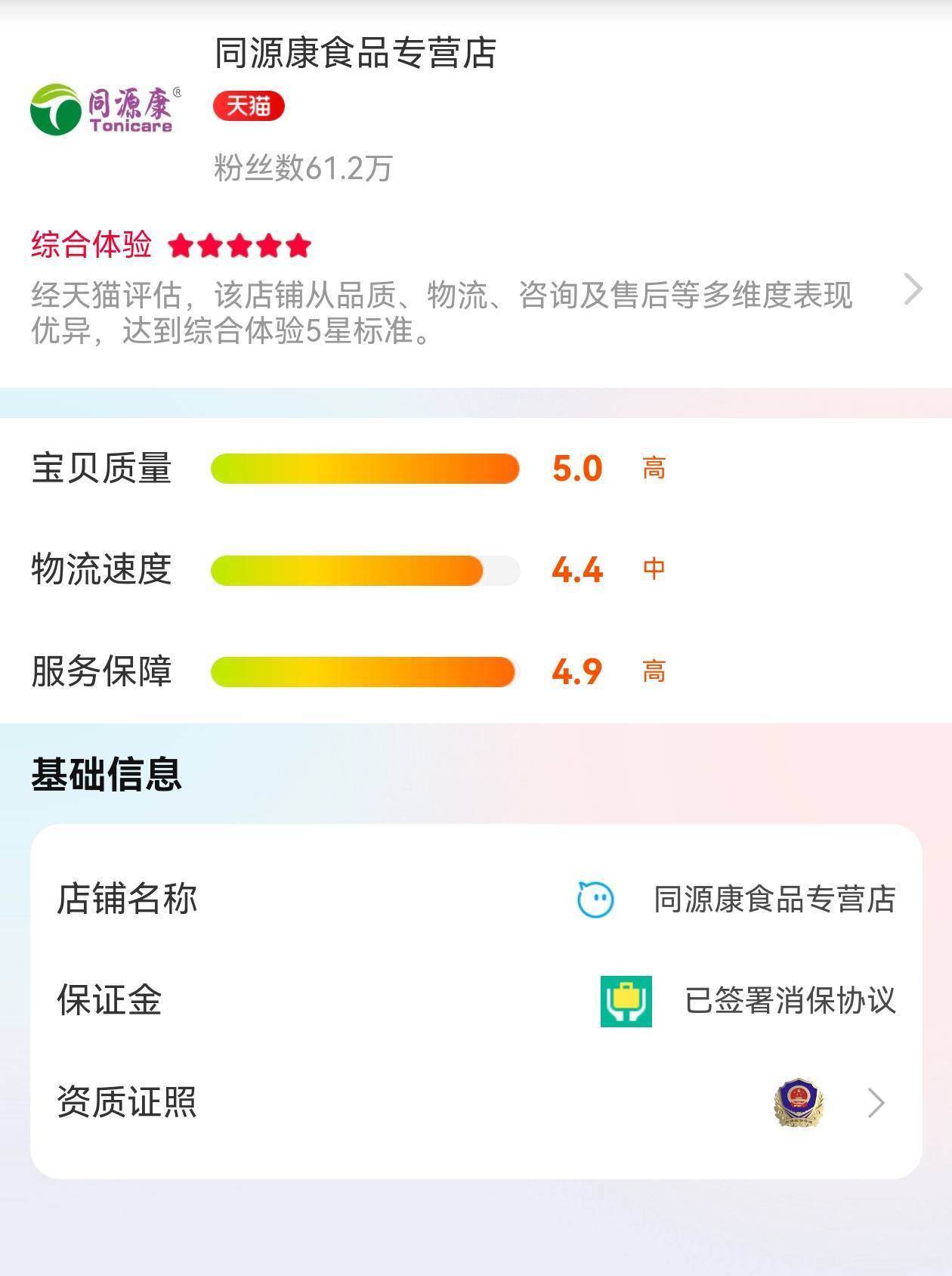
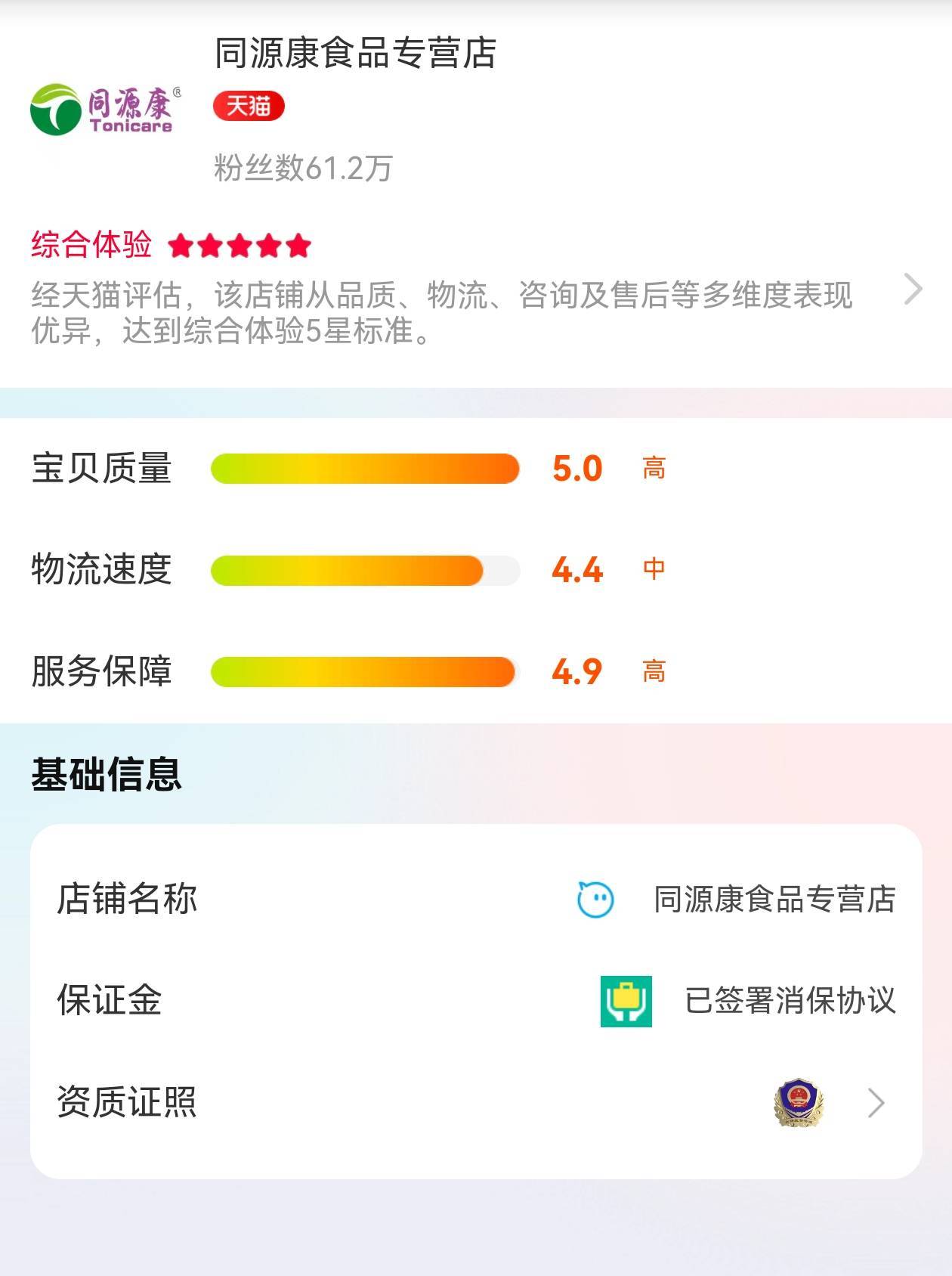
Group 1 - The Tmall store "娃哈哈官方旗舰店" has been renamed to "同源康食品专营店," raising public curiosity about its operational status [1] - The new operating entity for the store is 同源康电子商务(杭州)有限公司, which indicates a shift in the store's management [1] - The collaboration between 同源康电子商务 and 娃哈哈 ended earlier this year, providing clarity on the reasons behind the name change [5] Group 2 - The operational rights for the 娃哈哈 brand's Tmall flagship store have been transferred to 杭州恒意电子商务有限公司, which has close ties to 娃哈哈's chairman [5] - 同源康电子商务 is backed by significant capital, with 三捷投资集团 holding 75% of its shares, and its actual controller, 杜建英, owning 99.8% [5] - The name change reflects ongoing strategic adjustments in 娃哈哈's e-commerce approach [5][7] Group 3 - The store name change has sparked interest in 娃哈哈's e-commerce strategy and the competitive landscape within the e-commerce sector [7] - The evolving e-commerce market is expected to attract more brands and companies into the competitive arena [7]

娃哈哈天猫旗舰店“换帅”,同源康接手又易主宗馥莉公司?
Sou Hu Cai Jing· 2025-08-14 08:58
Core Insights - The Tmall store "Wahaha Official Flagship Store" has been renamed to "Tongyuan Kang Food Specialty Store," raising public speculation about changes in operational rights [1][5] - The new store is operated by Tongyuan Kang E-commerce (Hangzhou) Co., Ltd., which has become independent from Wahaha, confirming the end of their partnership earlier this year [5] - The operational rights of the Wahaha brand's Tmall flagship store have been transferred to Hangzhou Hengyi E-commerce Co., Ltd., closely linked to Wahaha Group's chairman, Zong Fuli, indicating a strategic shift in Wahaha's e-commerce strategy [7] Company Structure - Tongyuan Kang E-commerce (Hangzhou) Co., Ltd. is backed by Sanjie Investment Group, which holds 75% of its shares, with the actual controller, Du Jianying, owning 99.8% [7]
食品电商客服快速响应客户咨询的实用方法
Sou Hu Cai Jing· 2025-08-06 09:17
Core Insights - The article emphasizes the importance of implementing intelligent customer service systems in the food e-commerce sector to enhance customer inquiry response efficiency [2][9] Group 1: Intelligent Customer Service Systems - Intelligent customer service, represented by models like the Tanyue Intelligent Agent, has undergone significant upgrades, allowing for autonomous knowledge learning and system construction without complex configurations [2] - These systems utilize precise semantic recognition technology to quickly match answers from self-built knowledge bases, enabling instant responses within three seconds [2] - The efficiency of handling simple and repetitive inquiries, such as product information and return processes, not only improves problem resolution rates but also alleviates the workload of human customer service representatives [2] Group 2: Human Customer Service Scheduling - Proper scheduling of human customer service representatives based on store traffic and peak inquiry times is crucial [5] - Historical data analysis helps identify high inquiry periods, such as holidays and promotional events, allowing for increased staffing during these times [5] - Establishing a handover system for customer service shifts ensures accurate information transfer and prevents delays in customer inquiries [5] Group 3: Common Questions Quick Query Library - In addition to the intelligent customer service knowledge base, a quick query library for human representatives should be established, categorizing frequently asked questions [6] - This library allows customer service representatives to quickly retrieve standard responses, reducing the time spent on formulating replies [6] - Regular updates to the library ensure the information remains relevant and useful, while training sessions for staff enhance their familiarity with the content [6] Group 4: Optimizing Inquiry Channels and Processes - Integrating multiple inquiry channels, such as online chat, phone, and email, allows customers to choose their preferred method while ensuring information synchronization [8] - Simplifying the inquiry process reduces customer wait times and operational steps, such as providing quick access options in online chat interfaces [8] - Clear transfer rules and time limits for inquiries that require escalation ensure seamless transitions and minimize customer wait times [8] Group 5: Overall Strategy - The combination of intelligent customer service systems, effective human scheduling, a quick query library, and optimized inquiry processes collectively enhances the ability of food e-commerce customer service to respond swiftly to inquiries [9] - This integrated approach ultimately leads to improved customer satisfaction and lays a solid foundation for the growth of the store [9]

2025上半年电商融资数据榜:28起融资约25.2亿元 同比下降约四成
Sou Hu Cai Jing· 2025-07-23 08:02
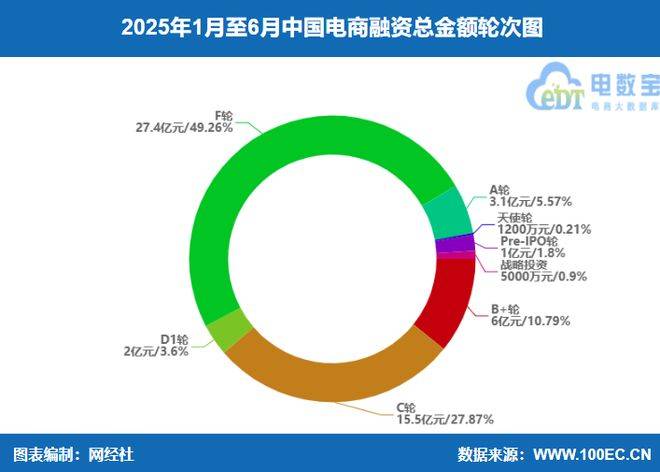
Core Insights - The report indicates a significant decline in e-commerce financing in China during the first half of 2025, with a total of 28 financing events, representing a year-on-year decrease of approximately 60% in the number of events and a 40% decrease in total financing amount to about 2.52 billion yuan [1][3][6]. Financing Amount Distribution - The financing rounds distribution shows that the F round accounted for 2.74 billion yuan, making up 49.26% of the total amount; the C round contributed 1.55 billion yuan, or 27.87%; the B+ round accounted for 600 million yuan, or 10.79%; the A round raised 310 million yuan, or 5.57%; D1 round brought in 200 million yuan, or 3.6%; Pre-IPO round raised 100 million yuan, or 1.8%; strategic investments totaled 50 million yuan, or 0.9%; and angel rounds raised 12 million yuan, or 0.21% [3]. Provincial Distribution - Guangdong province led in financing amount with 3.29 billion yuan, accounting for 57.73% of the total; Shanghai followed with 1.43 billion yuan, or 25.09%; Beijing raised 787 million yuan, or 13.81%; Shandong contributed 180 million yuan, or 3.16%; Hunan raised 10 million yuan, or 0.18%; and Zhejiang contributed 2 million yuan, or 0.03% [6]. Monthly Distribution - February recorded the highest financing amount at 1.285 billion yuan, representing 55.53% of the total; March saw 482 million yuan, or 20.83%; June raised 400 million yuan, or 17.29%; January brought in 137 million yuan, or 5.92%; April raised 10 million yuan, or 0.43% [8]. Financing Events Distribution - In terms of the number of financing events, B rounds had the highest count with 5 events, making up 22.73%; A rounds had 4 events, or 18.18%; C, angel, and Pre-IPO rounds each had 3 events, accounting for 13.64% each; F rounds had 2 events, or 9.09%; and D rounds and strategic investments each had 1 event, or 4.54% [10]. Financing Events by Province - Guangdong province had the most financing events with 7 occurrences, accounting for 31.82%; Beijing followed with 5 events, or 22.73%; Shanghai and Jiangsu each had 3 events, or 13.64%; Shandong had 2 events, or 9.09%; and Hunan and Zhejiang each had 1 event, or 4.54% [13]. Notable Financing Events - Neighboring Technology, an e-commerce service provider, completed an angel round financing of 16 million yuan on June 23, 2025, to enhance technology and service efficiency [18] - Temu, an export e-commerce platform, secured an undisclosed amount in A round financing on June 23, 2025, to strengthen global supply chain and market expansion [19] - Haizhi Online, an industrial e-commerce platform, raised 100 million yuan in B+ round financing on June 22, 2025, to improve digital service systems [20] - Global Trade Hub, a cross-border service provider, completed A round financing of 20 million Canadian dollars on June 21, 2025, to develop digital service systems [21] - Fanhu, a food delivery platform, completed B round financing on June 16, 2025, with undisclosed amount to enhance product development and delivery network [22]
超6万人来食品电商博览会“扫货”
Hang Zhou Ri Bao· 2025-04-29 01:52
Group 1 - The 2025 China (Hangzhou) Food E-commerce Expo attracted over 60,000 attendees and featured more than 2,000 quality food exhibitors across an exhibition space of over 50,000 square meters [1][2] - The expo showcased various food categories including snacks, health foods, fresh fruits, beverages, dairy products, and local specialties, serving as a platform for exhibitors to expand market channels [1] - Zhejiang Maishang Food Co., a snack food company, reported nearly 30 potential clients from the expo, highlighting the event's effectiveness in understanding customer needs and market dynamics [1] Group 2 - The expo had a strong international presence, with products from 18 countries and regions including Germany, France, Italy, Russia, India, and Pakistan [2] - The African products showcased at the expo, such as tea and coffee beans, attracted significant interest, with many buyers engaging in discussions with exhibitors [2] - The event also included a high-quality development conference for food e-commerce and six sub-forums, featuring representatives from major platforms like Douyin, Taobao, and JD.com, focusing on industry trends and consumer behavior [2]