
Biomanufacturing

Search documents
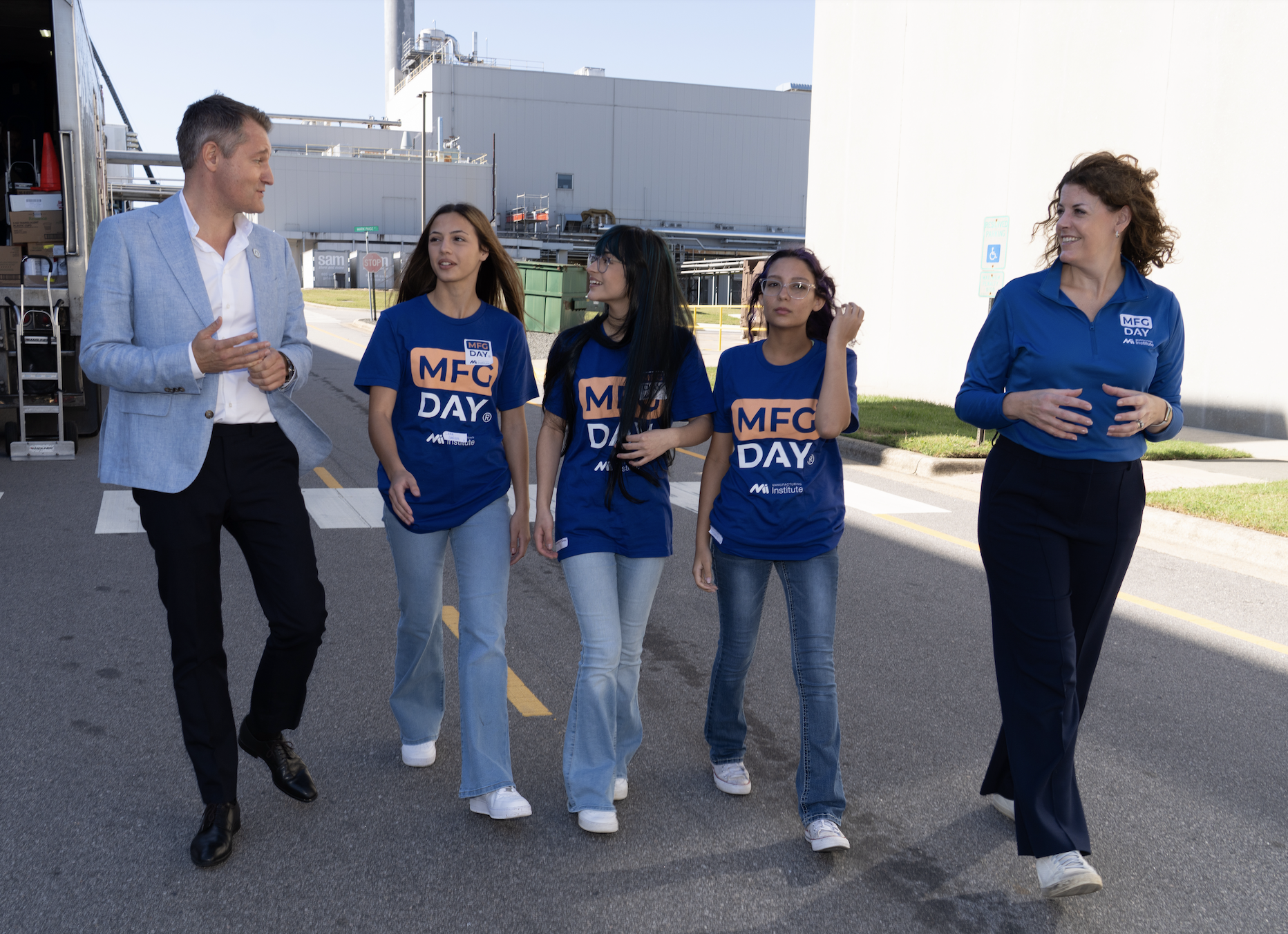
Novonesis Hosts National Flagship Manufacturing Day Event at North America Headquarters
Globenewswire· 2025-10-06 14:00
Core Insights - Novonesis hosted Manufacturing Day to showcase the future of biomanufacturing and engage local students and educators in understanding the industry [1][2][7] Company Overview - Novonesis is a global leader in biosolutions, employing over 2,200 people across North America [4] - The Franklinton, North Carolina facility is the largest multipurpose enzyme manufacturing plant in the U.S., while the Blair, Nebraska site is the largest enzyme production facility dedicated to biofuels and animal health [4] - The West Allis, Wisconsin location is recognized as the largest fermentation site of lactic bacteria globally [4] Industry Context - The U.S. bioeconomy is valued at $210 billion and is projected to nearly double by 2030 [4] - The industry relies on microbes, enzymes, and proteins to innovate and create sustainable products across more than 30 sectors, including food and beverages, bioenergy, and agriculture [5] Workforce Development - The U.S. will need 3.8 million new manufacturing workers in the next decade, with nearly half of these positions likely to remain unfilled without enhanced training [6] - Novonesis collaborates with educational institutions to bridge the skills gap, co-founding the BioWork program to prepare students for entry-level roles in biotechnology and pharmaceutical manufacturing [6]

Shineco Achieves Mass Production of High-Purity Physical Phospholipids, Breaking Foreign Monopoly and Unlocking Innovation Across Industries
Prnewswire· 2025-09-10 13:30
Core Insights - Shineco Inc. has achieved a significant breakthrough in the large-scale production of high-purity, highly active free-form soybean phospholipids through its proprietary APCC-UF technology, addressing a global technical challenge in the industry [1][4]. Technology and Production - The APCC-UF technology utilizes 70–80% pure water as a solvent and fresh soybean colloid as raw material, eliminating chemical solvents and allowing for precise extraction of high-purity active phospholipids under mild conditions [3][4]. - Testing results show a total phospholipid content of 97.8%, with phosphatidylcholine (PC) content at 50.2%, and no detectable solvent or heavy metal residues, indicating superior quality compared to traditional methods [3][4]. - The technology has been validated on a thousand-ton production line, with plans to expand to a ten-thousand-ton capacity, significantly increasing yield and reducing production costs [4]. Market Impact - This advancement is expected to reshape the global active phospholipid industry, providing essential materials for mRNA vaccine delivery, liposomal drug development, and various health applications [5][6]. - The global pharmaceutical phospholipid market is projected to grow at a compound annual growth rate (CAGR) of over 15% in the next five years, indicating strong demand for Shineco's products [6]. Competitive Position - Shineco's phospholipid products are positioned to compete in both the research-grade market and emerging sectors such as pharmaceutical intermediates and high-end skincare, leveraging its cost advantages and innovative technology [6][7]. - The company's technological breakthrough is seen as a model of Chinese leadership in high-end biomanufacturing, potentially transforming its business structure and enhancing gross margins and overall valuation [5][7].

Scientific Industries Completes Strategic Refocus and Secures Proceeds of $10 million to Accelerate Growth of Two Data-Driven Business Platforms; Divests Genie® Division to OHAUS Corporation’s affiliate Troemner, LLC
Globenewswire· 2025-08-07 20:05
Core Insights - Scientific Industries Inc. has sold its Genie Division to Troemner, LLC for $9.6 million in cash, with potential earnouts of up to $1.5 million over the next year [1] - The company is shifting its focus towards AI-driven platforms in pharmacy automation and biomanufacturing, aiming to create long-term shareholder value [2] - The VIVID platform has deployed nearly 2,000 units, enhancing pharmacy automation and addressing pharmacist shortages [4] - The company is developing a machine learning pill library expected to launch in Q1 2026, which will improve accuracy and efficiency in pharmacy operations [4] - Scientific Bioprocessing's DOTS platform is set to revolutionize biomanufacturing by converting biological signals into machine-readable data [6][7] - The company has raised over $27 million since 2020 and plans to reinvest proceeds from the Genie division sale into scaling its core platforms [8] Company Strategy - The CEO emphasized the transformation from a legacy analog business to a digital infrastructure provider for the pharmacy and pharmaceutical industries [5][9] - The focus is on providing critical infrastructure to over 24,000 independent pharmacies in North America [5] - The company aims to position itself as a foundational technology provider for intelligent life science operations [9] Financial Overview - The financing secured on April 18, 2025, amounted to $1.5 million from existing investors through the sale of common stock and warrants [7] - The proceeds from the Genie division sale and warrant exercises will be reinvested into the Torbal Division and Scientific Bioprocessing platforms [7]

发展海洋资源!海南生物制造重磅文件发布
合成生物学与绿色生物制造· 2025-07-14 13:29
Core Viewpoint - The article discusses the "Action Plan for Promoting High-Quality Development of the Biological Manufacturing Industry in Hainan Province (2025-2027)", which aims to enhance the biological manufacturing sector in Hainan through a structured development path focusing on marine biological manufacturing and breeding [1][2]. Group 1: Development Strategy - The "5+8+N" development path emphasizes two main areas: marine biological manufacturing and biological breeding, targeting five key sectors: biomedicine, biological food, biological agriculture, biological materials, and biological chemicals and energy [2][3]. - The plan includes establishing an innovation center for marine biological manufacturing by the end of this year and aims to cultivate several flagship products and key industrial chain projects [2][3]. Group 2: Advantages of Hainan - Hainan possesses unique advantages for developing the marine biological manufacturing industry, including rich marine resources, favorable policies from the free trade port, established platforms for deep-sea biological development, and a solid industrial foundation with a nearly 800 billion yuan output in high-end food processing and biomedicine [3][4]. - The province plans to develop marine bio-based materials using resources like blue and red algae to produce materials such as polylactic acid and carrageenan fibers [3]. Group 3: Future Goals - By the end of 2027, Hainan aims to create a "dual-core, dual-wing, multi-point" industrial spatial layout centered around Haikou and Sanya, with the goal of achieving over 100 billion yuan in biological manufacturing output and enhancing the overall quality of the industry [4][5].

京津冀观察 | 国家速滑馆人形机器人实训基地启用;天津设校园200米安全区
Guan Cha Zhe Wang· 2025-07-09 02:26
Group 1: Digital Economy and Innovation - The 2025 Global Digital Economy Conference held in Beijing showcased significant achievements in the digital economy, with Beijing ranking second globally in the digital economy benchmark city index [1] - The conference led to the establishment of the "Global Digital Economy City Alliance," focusing on key areas such as digital infrastructure and cross-border data governance [1] - Beijing aims to upgrade its digital economy to a "smart economy," enhancing computing power and talent reserves to provide replicable experiences for global digital-friendly city construction [1] Group 2: Environmental Cooperation - The sixth meeting of the environment ministers of the Shanghai Cooperation Organization (SCO) took place in Tianjin, resulting in a joint declaration to support sustainable development initiatives [2][4] - The meeting emphasized cooperation to promote green, sustainable, and low-emission development among member countries [4] Group 3: Robotics and Technology - The National Speed Skating Hall's humanoid robot training base was officially opened, hosting the first 3V3 robot soccer training match [6] - The base aims to support the upcoming 2025 World Humanoid Robot Games and has attracted eight teams for training, enhancing the appeal of global humanoid robot innovation resources [6] Group 4: Cultural Development - The China International Publishing Exchange Center project has been completed, covering an area of 132,000 square meters and designed to facilitate international cultural exchanges [7] - The center will host major cultural projects and international exchange activities, showcasing China's cultural strength [7] Group 5: Drone Technology - The 2025 International Drone Application and Control Conference was held in Beijing, attracting over 1,000 guests and 500 exhibitors to discuss technological advancements and industry opportunities [8] - The conference featured various technical sessions and forums, highlighting innovations in drone logistics and safety management [8] Group 6: Beidou Information Industry - The Beijing-Tianjin-Hebei region announced plans to collaboratively advance the Beidou spatial information industry, focusing on infrastructure and policy standards [9] - The initiative includes sharing data resources and expanding applications in autonomous driving and low-altitude economy [9] Group 7: Education and Safety Regulations - Tianjin implemented new safety regulations for schools, establishing a 200-meter safety zone around educational institutions to enhance student safety [12] - The regulations include prohibiting certain businesses within the safety zone and ensuring schools are equipped with adequate security measures [12] Group 8: Automotive Technology - The establishment of a 4D imaging radar project in Tianjin's Xiqing District aims to fill a gap in the local industry and support the upgrade of the electric vehicle sector [13] - The project will serve as the first production center in northern China for 4D millimeter-wave radar technology [13] Group 9: Health and Biotechnology - The approval of a new method for producing D-alloheptulose sugar marks a significant breakthrough for the biomanufacturing industry in Qinhuangdao, with a production capacity of 10,000 tons per year [14] - This "healthy sugar" has a caloric value of only 1/10 of sucrose and is produced using a novel fermentation process [14] Group 10: High-Speed Rail Development - The China High-Speed Rail Exhibition in Beijing highlighted the country's achievements in high-speed rail, with an operational mileage of 48,000 kilometers, accounting for over 70% of the global total [15] - The exhibition showcased the development journey and innovations in China's high-speed rail technology [15]


发力全球生物经济!美国领先企业发起美国生物制造联盟
合成生物学与绿色生物制造· 2025-06-04 14:21
Core Viewpoint - The establishment of the American Bio-Manufacturing Alliance (AAB) aims to enhance the U.S. bio-manufacturing capabilities, promote domestic innovation, and increase the country's influence in the rapidly growing global bio-economy [1][2] Group 1: Alliance Formation - The AAB was formed on May 21, 2023, and includes stakeholders from the bio-manufacturing sector, such as CEOs from Manus, Pivot Bio, Novonesis North America, Kula Bio, and LanzaTech Global [1] - The formation of the alliance follows a call from the emerging biotechnology national security council (NSCEB) for a coordinated national strategy to strengthen U.S. leadership in the field [1] Group 2: Objectives of AAB - AAB has two main objectives: to increase demand for bio-based products and technologies in the U.S. and to ensure a comprehensive market for existing and emerging bio-products [2] - Founding members highlighted the economic and environmental potential of bio-manufacturing, emphasizing the development of low-cost, high-performance agricultural inputs to reduce reliance on global supply chains [2] Group 3: Industry Impact - Bio-manufacturing is applicable across various sectors, including agriculture, energy, chemicals, materials, nutrition, and pharmaceuticals, utilizing biological materials to produce sustainable products [1] - The global bio-manufacturing market is currently valued at $20 billion and is expected to experience significant growth over the next decade [1]

C1 生物制造产业化的关键路径是什么?谭天伟等人提出保障原料供应、提升碳转化率等策略,实现可持续发展
合成生物学与绿色生物制造· 2025-06-03 12:36
Core Viewpoint - The article emphasizes the importance of C1 biomanufacturing as a sustainable alternative to traditional chemical production, highlighting its potential to address global challenges related to resource depletion and carbon emissions [1][12]. Group 1: C1 Biomanufacturing Overview - C1 biomanufacturing utilizes one-carbon compounds such as CO₂, CO, CH₄, and CH₃OH as raw materials, converting them into high-value chemicals and fuels through microbial processes [3][5]. - The technology integrates metabolic engineering, synthetic biology, and fermentation techniques, aiming to transition from laboratory to industrial scale while ensuring economic viability and environmental sustainability [3][5]. Group 2: Economic and Technical Challenges - Current carbon conversion efficiencies in C1 biomanufacturing are below 10%, leading to increased capital and operational costs, with fermentation equipment costs exceeding 92% in some cases [7][9]. - The article identifies two sustainable pathways for improving production: a dual-stage bioconversion system using steel mill flue gas and a hybrid process coupling CO₂ electrochemical reduction to methanol with microbial conversion [5][9]. Group 3: Raw Material Supply Issues - C1 biomanufacturing faces challenges related to the supply of raw materials, which are geographically dispersed and subject to significant cost fluctuations, with raw material costs accounting for over 57% of operational expenses [9][10]. - Developing technologies that utilize waste materials as raw inputs is crucial for enhancing economic viability and ensuring stable supply chains [9][10]. Group 4: Policy and Collaborative Efforts - Establishing a collaborative mechanism among industry, academia, and research institutions is essential for securing raw material supply, enhancing conversion efficiency, and creating a transparent profit-sharing model [10][12]. - Successful examples include partnerships like Lanzatech's collaboration with Shougang Group for ethanol production from steel mill emissions, demonstrating the importance of upstream and downstream cooperation [10]. Group 5: Environmental Benefits and Future Directions - C1 biomanufacturing shows significant carbon reduction potential, with the ability to achieve net reductions of 17.20 to 1219.03 tons of CO₂ equivalent per ton of chemical produced [11]. - The article suggests that advancements in technology and ongoing cost optimization will pave the way for the commercialization of C1 biomanufacturing in the near future [8][11].

BioClick – an enzyme engineering game-changer, launched by eXoZymes and supported by a $300K NIH grant
Globenewswire· 2025-04-10 20:30
Core Insights - eXoZymes Inc. has launched BioClick, an innovative initiative aimed at enhancing enzyme engineering for advanced chemical reactions, supported by a $300K grant from the NIH [1][5] - BioClick focuses on group transfer reactions, inspired by Click Chemistry, enabling the development of more effective drugs through processes like prenylation [2][3] - The initiative introduces high-throughput screening capabilities, allowing rapid testing of enzyme variations, significantly reducing time and costs in drug development [3][4] Company Overview - eXoZymes, founded in 2019, has developed a biomanufacturing platform that utilizes AI-engineered enzymes to produce essential chemicals sustainably [6][7] - The company aims to replace traditional chemical production methods with eco-friendly alternatives, positioning itself as a leader in the next generation of biomanufacturing [8][9] Technological Advancements - The BioClick tool set incorporates artificial intelligence to automate the design of novel small molecules, enhancing the potential for new and improved drugs [4] - eXoZymes' exozymes are designed to operate outside living cells, overcoming limitations in synthetic biology and enabling scalable biosolutions [7][8]

eXoZymes Provides Fourth Quarter and Full Year 2024 Update
Globenewswire· 2025-04-02 20:05
Core Insights - eXoZymes Inc. is focused on developing AI-engineered enzymes to transform sustainable feedstock into nutraceuticals, medicines, biofuels, and other valuable chemicals, with an update on operations through the fiscal year ended December 31, 2024 [1][2] Company Overview - Founded in 2019, eXoZymes has created a biomanufacturing platform that enables the engineering, control, and optimization of natural processes to produce chemical compounds, aiming to replace traditional chemical production methods with sustainable alternatives [5] - The company has introduced "exozymes," advanced enzymes enhanced through AI and bioengineering, which can replace toxic petrochemical processes and inefficient biochemical extraction [6][8] Operational Highlights - eXoZymes successfully completed its initial public offering and began trading on Nasdaq on November 13, 2024, despite a challenging fundraising environment for bio- and high-tech sectors [9] - The company is concentrating on commercialization through spin-outs, joint ventures, and licensing deals to expedite entry into multiple markets [9] Technology Development - eXoZymes has developed a proprietary process that generates AI-derived-signal-rich enzyme data, significantly improving the enzyme development process and facilitating the next generation of biomanufacturing [9] - By freeing enzyme-driven chemical reactions from cellular limitations, exozyme biosolutions address scaling bottlenecks that have hindered commercial success in the synthetic biology space [7]
Dyadic(DYAI) - 2024 Q4 - Earnings Call Transcript
2025-03-27 02:58
Financial Data and Key Metrics Changes - As of December 31, 2024, cash, cash equivalents, and investment-grade securities increased to approximately $9.3 million from $7.3 million as of December 31, 2023 [35] - Revenue for the year ended December 31, 2024, rose to approximately $3.495 million compared to $2.899 million the previous year, driven by license revenue and enzyme sales [35][36] - The net loss for the year ended December 31, 2024, was approximately $5.809 million or $0.20 per share, compared to a net loss of $6.795 million or $0.24 per share for the previous year [39] Business Line Data and Key Metrics Changes - The company emphasized strong revenue performance from milestone and license payments totaling $1.9 million, focusing on products that do not require human or animal clinical trials for commercialization [8] - Recombinant human serum albumin (RHSA) is on track for commercial launch in 2025, with significant progress in the commercialization of several cell culture media components [14][52] - The dairy enzyme portfolio achieved a productivity milestone of $425,000, with a commercial launch anticipated in late 2025 [18] Market Data and Key Metrics Changes - The human albumin market is approximately $5.6 billion and is expected to grow at double digits per year, driven by increased vaccine production [106] - The DNase I and DNA ligase market is around $900 million, also growing at nearly double digits annually [106] - The non-animal dairy proteins market is valued at $26 billion, indicating significant opportunities for products like alpha-lactalbumin and lactoferrin [107] Company Strategy and Development Direction - The company is focused on near-term product commercialization and technology licensing, with a dual-track strategy of commercializing non-pharmaceutical products while building a robust biopharmaceutical pipeline [9][10] - Partnerships with organizations like CEPI and the Gates Foundation are aimed at accelerating the development and adoption of the C1 platform for vaccines and treatments [11][26] - The company is committed to delivering sustainable value to shareholders and partners through a growing pipeline and strong collaborations [11] Management's Comments on Operating Environment and Future Outlook - Management expressed optimism about the company's strategic focus on product commercialization and technology licensing, positioning it to capitalize on emerging opportunities [7] - The management highlighted the importance of ongoing partnerships and funding initiatives to support long-term innovation and market presence [25][29] - The company is seeing increased interest in its platforms and technology, indicating a positive outlook for future revenue generation [50] Other Important Information - The company received a $4.5 million grant from CEPI to support the development of recombinant protein vaccines using the C1 platform, with Dyadic expected to receive $2.4 million of this amount [25][40] - The company is also advancing its pipeline of innovations in both animal and human health, demonstrating the versatility of the C1 platform [29] Q&A Session Summary Question: Can you explain the Gates Foundation and CEPI grants and their significance? - Management confirmed ongoing interest from both organizations and highlighted the importance of these grants in advancing the C1 platform and driving innovation [45][46] Question: What is the status of albumin commercialization? - Management indicated that they are on track for commercialization in early 2025, emphasizing the need for product validation and quality assurance [52][56] Question: Can you clarify the components of research and development revenue? - Management noted that 80% of R&D expenses are covered by external funding, which supports the development of the C1 platform [61] Question: What is the market size opportunity for various products? - Management provided insights into the market sizes for human albumin, DNase I, and non-animal dairy proteins, highlighting significant growth potential in these areas [106][107] Question: What is the status of the work done in South Africa? - Management mentioned that the focus has shifted to animal health vaccines, with ongoing development and potential clinical studies expected by the end of the year [119][120]
