
Trade

Search documents
Private payrolls rose 42,000 in October, more than expected and countering labor market fears: ADP
Youtube· 2025-11-05 13:45
Core Insights - The ADP private payroll data indicates a growth of 42,000 jobs in October, with goods-producing sectors adding 9,000 jobs and service-providing sectors adding 33,000 jobs, raising questions about whether this is the new normal for job growth [1][5] - There is a notable decline in employment among small businesses, with a loss of 10,000 jobs for companies with fewer than 50 workers, marking the third consecutive month of job losses in this segment [2][8] - The job gains are primarily concentrated in larger companies, while small and medium-sized businesses are experiencing job losses, suggesting a potential impact from tariffs and other economic pressures [3][10] Employment Trends - The sectors showing job growth include trade, transportation, and utilities, while education, healthcare, leisure, and hospitality are experiencing declines [4][7] - Wage growth remains unchanged at 4.5% for job stayers and 6.7% for job changers, indicating a stable but tight labor market [4][5] - The overall recovery in employment is described as tepid, with significant weaknesses in professional and information services, as well as leisure and hospitality [6][8] Economic Implications - The current job growth of 42,000 may be sufficient to maintain or lower the unemployment rate, especially in the context of stagnant labor force growth [12] - Small businesses, which employ three out of four workers in the U.S., are facing challenges in hiring, potentially due to tariff uncertainties and demographic shifts [8][10][14] - The Federal Reserve is closely monitoring these employment figures to guide monetary policy decisions, indicating a "muddled middle" in the job market [16][18]
Private sector added better-than-expected 42,000 jobs in October, ADP says
Fox Business· 2025-11-05 13:36
Group 1 - Private sector added 42,000 jobs in October, exceeding economists' estimates of 28,000 jobs [1] - Previous month's payrolls were revised from a loss of 32,000 to a loss of 29,000 [1] - Job creation in October marked the first increase since July, although hiring remains modest compared to earlier this year [2] Group 2 - Trade, transportation, and utilities led job creation with an addition of 47,000 positions [2] - Education and health services added 25,000 jobs, financial activities added 11,000, natural resources and mining contributed 7,000, and construction added 5,000 [2] Group 3 - Information sector lost 17,000 positions, professional and business services lost 15,000 jobs, and other services lost 14,000 [3] - Leisure and hospitality lost 5,000 jobs, while manufacturing lost 3,000 [3] Group 4 - Pay growth has remained largely flat for over a year, indicating a balance in supply and demand [2]


X @外汇交易员
外汇交易员· 2025-10-21 01:27
Trade Policy Concerns - NFTC urges the Trump administration to immediately suspend the "affiliate rule" [1] - The rule has caused billions of US dollars in US exports to stall [1] - The rule may prompt China and other countries to exclude US companies from their supply chains [1] - The rule contradicts Trump's desire to reduce trade deficits and expand US exports [1] Regulatory Impact - The "affiliate rule" prohibits US companies from exporting goods and technology to companies partially owned by sanctioned entities [1] Government Response - The White House and the US Department of Commerce have not responded to requests for comment [1]
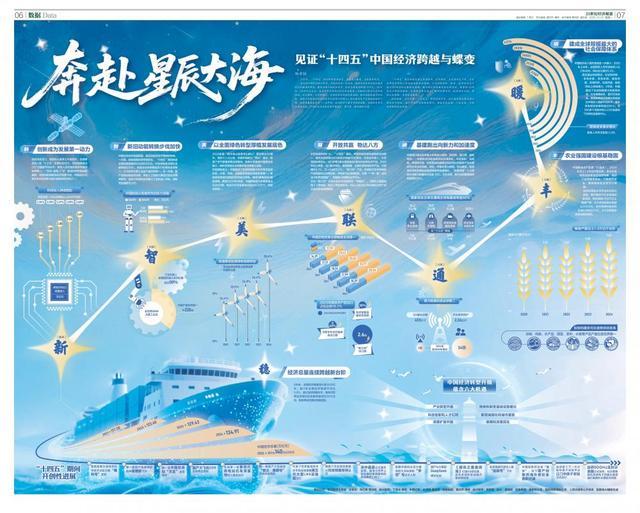
奔赴星辰大海 见证“十四五”中国经济跨越与蝶变
2 1 Shi Ji Jing Ji Bao Dao· 2025-10-17 22:48
Core Insights - The article highlights the significant achievements of China's economy during the "14th Five-Year Plan" period, emphasizing its resilience and contributions to global economic growth [1][3]. Economic Growth - Over the past five years, China's economic increment is expected to exceed 35 trillion yuan, with an average annual growth rate of 5.5%, surpassing the global average [3]. - China's contribution to global economic growth has remained around 30% annually, establishing it as a stable anchor for the world economy [3]. Innovation - National R&D investment has increased by nearly 50% compared to the end of the "13th Five-Year Plan," with R&D intensity approaching the OECD average [4]. - China ranks 10th in the global innovation index and has maintained the largest number of R&D personnel in the world for several years [4]. Industrial Transformation - The manufacturing sector is projected to contribute an additional 8 trillion yuan during the "14th Five-Year Plan," maintaining over 30% of global manufacturing growth [5]. - China continues to lead in the production of over 220 major industrial products, with significant advancements in AI and innovative pharmaceuticals [5]. Green Development - China has made substantial progress in environmental quality, with the fastest improvement in air quality and the largest increase in forest resources globally [6]. - By mid-2025, the installed capacity of renewable energy has surpassed that of coal, with 368.9 million new energy vehicles and nearly 16.7 million charging facilities, both ranking first in the world [6]. Trade and Global Cooperation - During the "14th Five-Year Plan," China's goods trade volume has remained the largest globally, with service trade expected to exceed 1 trillion USD for the first time in 2024 [8]. - High-tech products account for nearly 20% of exports, with significant growth in electronic information and high-end equipment sectors [8]. Infrastructure Development - China has established the world's largest networks of highways, high-speed rail, and ports, while also rapidly expanding new infrastructure in computing and smart cities [9]. - The computing power scale has grown at an annual rate of 30% over the past five years, with major nodes accounting for about 70% of the national total [9]. Agricultural Strength - China has achieved 21 consecutive years of grain production growth, with a target of 1.4 trillion jin by 2024, ensuring food security [10]. - The country has built over 1 billion mu of high-standard farmland, with a mechanization rate exceeding 74% for major crops [10]. Social Welfare - By mid-2025, the per capita disposable income reached 21,840 yuan, reflecting a nominal growth of 5.3% [11]. - China has developed the largest education, social security, and healthcare systems globally, with a basic pension insurance coverage exceeding 95% [11].
X @Bloomberg
Bloomberg· 2025-10-10 04:50
Japan’s economy likely contracted in the third quarter after five consecutive periods of growth, as US President Trump’s tariffs campaign took a toll on exports, according to a Bloomberg survey of economists https://t.co/nB3jYfSx5L ...
中国 -大约在秋季:改革与刺激之辩
2025-09-28 14:57
Summary of Key Points from the Conference Call Industry Overview - The report focuses on the Chinese economy, highlighting the current economic conditions and anticipated policy responses in the context of structural reforms and stimulus measures [3][7]. Core Insights and Arguments 1. **Economic Performance**: Exports remain strong, but domestic demand is cooling. Short-term policies are expected to support infrastructure and alleviate local government debt [3][7]. 2. **Structural Reforms**: Significant structural reforms, such as the redesign of local incentive mechanisms and social security reforms, are anticipated to be addressed in the upcoming 15th Five-Year Plan [3][7]. 3. **Growth Momentum**: There is a noted weakening in growth momentum due to fiscal constraints and a diminishing marginal effect of consumption incentives. GDP growth is projected to decline to 4.5% in Q3 [7][9]. 4. **Policy Stance**: The government is likely to adopt a stance of "adjustment rather than a shift," focusing on minor policy tweaks rather than aggressive stimulus measures [7][9]. 5. **Fiscal Support**: Anticipated fiscal measures include a new policy financial tool worth 500 billion RMB for local infrastructure projects and 1 trillion RMB in support for local government debt [9][9]. Additional Important Content 1. **Retail Performance**: Retail sales in the automotive and home appliance sectors have further slowed since September, reflecting both high base effects and local government subsidy management [8][20]. 2. **Real Estate Market**: Residential sales remain sluggish, with expectations of a significant decline in growth rates due to high base effects in the future [8][17]. 3. **Construction Activity**: The construction industry is experiencing weak activity, with low demand for rebar and cement, indicating broader economic challenges [18][24]. 4. **Trade Dynamics**: Container throughput at major ports has shown a recovery, indicating a divergence in export performance between the U.S. and non-U.S. markets [15][11]. 5. **Inflation Expectations**: Structural reforms are deemed crucial for stabilizing inflation expectations and releasing excess household savings [9][9]. This summary encapsulates the key points discussed in the conference call, providing insights into the current state of the Chinese economy and the anticipated policy responses.
X @Bloomberg
Bloomberg· 2025-09-24 06:00
Trade Performance - Thailand's export growth slowed to its lowest rate in almost a year [1] - US tariffs are negatively impacting demand for Thai products [1]
Indian Exporters Are Expanding Production in Africa to Dodge US Tariff
Bloomberg Television· 2025-08-29 06:08
Engine companies are scrambling to offset the pain from steep new U.S. tariffs. Export is racing to Africa in search of a tariff haven after Washington slapped a 50% duty on some Indian goods earlier this week. Now for more.Bloomberg sends you're Ganga joins us now from Kigali Rwanda. And you were yesterday we were talking about China seeing the opportunity and sizing up the opportunity in the African continent. Now, India as well, looking for new markets.Absolutely. Jomana, and you just mentioned in the in ...

What's Next as US Imposes 50% Tariffs on India
Bloomberg Television· 2025-08-27 07:51
Trade Impact - The US has imposed a 50% tariff on some Indian goods, doubling the existing 25% duty [1] - These tariffs are "punishingly high" for India, the highest among Asian economies, and will affect different sectors differently [2] - The US is India's largest export market, with Indian exporters selling $87 million worth of goods to the US market last year, representing 2% of India's GDP [2] - High tariffs could shut down the market for Indian exporters, forcing them to diversify into newer markets [3] - Labor-intensive sectors like footwear, leather, gems, jewelry, and textiles are at risk of unemployment due to buyers putting orders on hold [4] - India's ambition of becoming a manufacturing powerhouse may be thwarted [5] Economic Strategy - India is primarily a consumption-led economy, with 60% of its GDP driven by consumption [5] - The Indian government is trying to boost consumption by cutting consumption taxes to mitigate the economic pain [6] - The Indian economy will still experience an economic hit despite being driven by domestic demand [7] Geopolitical Implications - The tariffs will have a far-reaching impact on the strategic relationship between India and the US [7] - The tariffs are supposedly for India's continued purchase of Russian oil [8] - India is edging away from the US and moving closer to the BRICS block, with increased trade pledged with Russia over the next 5 years [9][10] - China and India are trying to improve their ties, with Modi expected to meet Xi Jinping [10]

X @外汇交易员
外汇交易员· 2025-08-06 03:13
Trade Performance - Vietnam's July exports increased by 16% year-over-year to $42270 million, exceeding the expected 14% growth [1] - Rice exports reached 782 thousand tons, a 42% year-over-year increase [1] - Coffee exports for the first seven months totaled 1050 thousand tons, up 69% year-over-year [1] - July imports increased by 178% year-over-year, surpassing the anticipated 152% growth [1] Economic Indicators - July's industrial production index rose by 85% year-over-year, compared to 108% in June [1] - Retail sales in July increased by 92% year-over-year, up from 83% in June [1] - July's CPI increased by 319% year-over-year, lower than the 357% increase in June [1]