交通建设

Search documents
交建股份: 安徽省交通建设股份有限公司第三届董事会第二十二次会议决议公告
Zheng Quan Zhi Xing· 2025-07-10 16:22
Core Points - The company held its 22nd meeting of the third board of directors on July 10, 2025, with all 8 directors present, confirming the legality of the meeting procedures [1][2] - The board unanimously approved the proposal to transfer investment fund shares and exit the investment fund [1] - The board also unanimously agreed to terminate the investment in a joint venture project and authorized the management to handle subsequent procedures [2] Summary by Categories - **Meeting Details** - The meeting was convened by Chairman Hu Xiankuan and was attended by all 8 directors, with two participating via telecommunication [1] - The meeting complied with relevant laws and regulations, ensuring procedural legality [1] - **Decisions Made** - The board approved the proposal regarding the transfer of investment fund shares, with a unanimous vote of 8 in favor [1] - The board also agreed to terminate the investment in the joint venture project, with a unanimous vote of 8 in favor, and authorized management to proceed with the necessary follow-up actions [2]

交建股份: 安徽省交通建设股份有限公司关于转让投资基金份额暨退出投资基金的公告
Zheng Quan Zhi Xing· 2025-07-10 16:22
Group 1 - The company, Anhui Transportation Construction Co., Ltd., has agreed to transfer its 1% partnership interest in the Tianjin Rail Transit Industry Fund, amounting to a capital contribution of RMB 50 million, to Tianjin Iron Investment Asset Management Co., Ltd. for the same amount [1][2]. - Following the transfer, the company will no longer hold any shares in the Tianjin Rail Transit Fund, aligning with its investment strategy and future development plans [1][2]. - The transaction is not expected to have a substantial impact on the company's business operations and does not harm the interests of the company and its shareholders [2]. Group 2 - The transfer agreement involves Anhui Transportation Construction Co., Ltd. as the transferor and Tianjin Iron Investment Asset Management Co., Ltd. as the transferee [2]. - The transaction will require the completion of industrial and commercial change registration procedures as per legal regulations [2]. - The company emphasizes the importance of cautious decision-making for investors regarding this transaction [2].
交建股份: 安徽天禾律师事务所关于安徽省交通建设股份有限公司差异化分红事项的法律意见书
Zheng Quan Zhi Xing· 2025-07-10 16:21
Group 1 - The core viewpoint of the article is that Anhui Transportation Construction Co., Ltd. is implementing a differentiated dividend distribution plan for the year 2024, which is legally supported and compliant with relevant regulations [1][2][7] - The company has repurchased a total of 6,546,700 shares, which will not participate in the profit distribution, leading to a differentiated dividend distribution for the remaining shares [3][5] - The proposed cash dividend distribution is 0.65 yuan (including tax) for every 10 shares held, amounting to a total cash dividend of approximately 39.80 million yuan [5][6] Group 2 - The legal opinion confirms that the differentiated dividend distribution complies with the Company Law, Securities Law, and relevant regulations, ensuring no harm to the interests of the company and its shareholders [7] - The calculation for the cash dividend distribution is based on the total share capital of 618,924,235 shares, with adjustments made for the repurchased shares [5][6] - The impact of the differentiated dividend distribution on the ex-dividend reference price is minimal, with an absolute value change of less than 1% [7]
交建股份: 安徽省交通建设股份有限公司2024年年度权益分派实施公告
Zheng Quan Zhi Xing· 2025-07-10 16:09
Core Points - The company announced a cash dividend of 0.065 CNY per share for its A shares [1][8] - The profit distribution plan was approved at the annual shareholders' meeting on May 19, 2025 [2] - The total cash dividend to be distributed amounts to approximately 39.8 million CNY (including tax) [2] Distribution Plan - The cash dividend will be distributed to all shareholders registered with the China Securities Depository and Clearing Corporation Limited, Shanghai Branch, as of the close of trading on the registration date [2][5] - The distribution is based on a total share capital of 618,924,235 shares, with 612,377,535 shares eligible for the dividend after excluding repurchased shares [2] - The cash dividend per share is calculated as 0.064 CNY after adjusting for the total share capital [3] Relevant Dates - The registration date for shares is July 16, 2025, with the ex-dividend date and cash dividend payment date both set for July 17, 2025 [5][9] Taxation Information - The company will not withhold personal income tax at the time of dividend distribution; however, tax will be calculated based on the holding period when shares are sold [8] - The actual cash dividend received by shareholders after tax will be 0.0585 CNY per share [8][9]
国家发改委副主任李春临:国家综合立体交通网主骨架“6轴7廊8通道”目前建成率已超90%
news flash· 2025-07-09 02:43
Group 1 - The core viewpoint of the article highlights the acceleration and centralization of China's infrastructure development during the 14th Five-Year Plan period [1] - The national comprehensive three-dimensional transportation network framework, consisting of "6 axes, 7 corridors, and 8 channels," has achieved a construction completion rate of over 90% [1] - This infrastructure network covers more than 80% of counties and serves approximately 90% of the economy and population, effectively connecting the east and west, as well as the north and south of the country [1]
今年1-5月广东省重点项目完成投资4522亿元
news flash· 2025-07-08 04:00
Core Insights - Guangdong Province plans to arrange 1,500 key construction projects by 2025, with an annual investment target of 1 trillion yuan [1] - From January to May this year, the investment in key projects reached 452.2 billion yuan, accounting for 45.2% of the annual investment plan [1] - A total of 105 projects, including the second phase of the Hong Kong University of Science and Technology (Guangzhou) and a 10,000-ton carbon fiber project by Donghua Energy (Maoming), have commenced construction [1] Investment Projects - Ongoing projects include the Guanghe High-speed Railway segment from Baiyun Airport T3 to Jiangcun West, the Nansha to Zhuhai (Zhongshan) intercity railway, and the third phase expansion of Guangzhou Baiyun International Airport [1] - Other significant projects under construction are the Shenzhen Outer Ring Expressway (Phase III), Yangjiang Fanshi No.1 offshore wind farm, the second phase of Taipingling Nuclear Power Plant, and the South China Titanium Valley project [1] - The Longma Group's high-end equipment manufacturing base project in Yangjiang is also progressing smoothly [1]
交通领域固废资源化利用获突破,交通运输部将加快产业化推广
Di Yi Cai Jing· 2025-07-03 00:28
Core Viewpoint - The "14th Five-Year Plan for Green Transportation" encourages the large-scale application of industrial solid waste in transportation construction, highlighting significant breakthroughs in the resource utilization of solid waste in the road transportation sector [1][5]. Group 1: Policy and Implementation - The Ministry of Transport has approved the completion of the pilot task for "Research and Industrial Application of Solid Waste Resource Utilization Technology," achieving all expected goals [1][2]. - The pilot project has established a comprehensive solution for the application of solid waste in road construction, effectively controlling environmental risks associated with solid waste [2][3]. Group 2: Achievements and Impact - Since the implementation of the pilot, a total of 493 million tons of various solid waste have been utilized across 102 kilometers of demonstration roads, resulting in a reduction of construction material costs by 500 million yuan and a decrease in carbon emissions by 61,000 tons [3]. - The pilot has successfully created a closed-loop system for solid waste resource utilization in road construction, covering the entire process from raw material selection to quality control [3]. Group 3: Technological Innovations - The research institute has developed innovative technologies for the resource utilization of phosphogypsum and electrolytic manganese slag, achieving significant breakthroughs in construction processes and establishing performance databases [4]. - Various special geotechnical treatment technologies have been developed and successfully applied in different climatic regions, addressing local solid waste material challenges [4]. Group 4: Local Initiatives - Jiangxi Province has pioneered the development of local standards for the use of lithium slag in roadbed engineering, resulting in cost savings exceeding 3 million yuan and a reduction in carbon emissions by 480 tons [5]. - Shanxi Province has effectively utilized over 200,000 tons of sandstone waste in road construction, significantly reducing costs and land occupation for waste storage [5].

今年前半年一批交通建设项目迎来新进展 年底广东高速公路将达1.2万公里
Nan Fang Ri Bao Wang Luo Ban· 2025-07-02 08:24
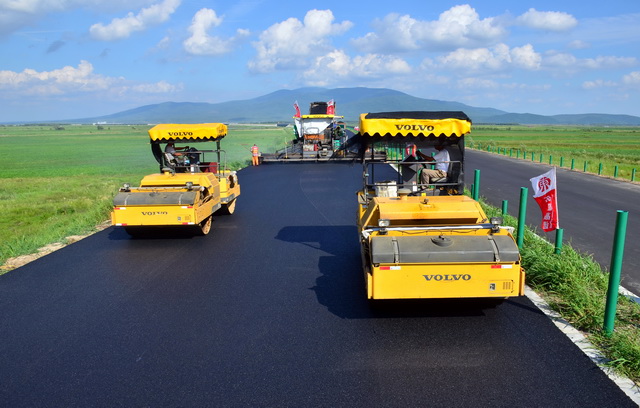
Core Viewpoint - The transportation infrastructure projects in Guangdong are making significant progress in the first half of 2025, contributing to the province's goal of reaching 12,000 kilometers of expressways by the end of the 14th Five-Year Plan [1][6]. Group 1: Transportation Projects Progress - Major transportation projects have seen new developments, including the completion of the 218-kilometer "most beautiful tourist road" in Huizhou, which connects scenic areas and enhances local tourism [2][6]. - The construction of the Zeng Tian Expressway is underway, with full surface paving expected to be completed by the end of the year, improving traffic flow in eastern Guangzhou [2][3]. - The Yuedong Intercity Railway has achieved a cumulative investment of 2.142 billion yuan, with significant milestones reached in construction, including the completion of all bridge substructures [4][6]. Group 2: Economic and Social Impact - The transportation projects are not only vital for economic development but also serve as important public welfare initiatives, enhancing the quality of life for residents [2]. - The completion of these projects is expected to reduce travel time significantly, with the Zeng Tian Expressway cutting the distance to downtown Guangzhou by nearly 30 kilometers [3]. - The successful execution of these projects is anticipated to strengthen the transportation network in the Shantou-Chaozhou-Jieyang urban agglomeration, promoting regional integration [4][6]. Group 3: Future Outlook - Guangdong plans to complete nine expressway projects this year, contributing to the overall goal of 12,000 kilometers of expressways by the end of the 14th Five-Year Plan [6]. - Four out of seven planned railway projects are already in the acceptance stage, indicating a strong pipeline for future transportation infrastructure [6].
广东交通集团跨“山海”筑“通途” “黄金通道”串起“黄金内湾”
Shen Zhen Shang Bao· 2025-07-01 22:35
Core Insights - Guangdong Transportation Group celebrates its 25th anniversary, having expanded its highway network from 501 kilometers in 2000 to 8,181 kilometers by 2025, contributing significantly to the connectivity of the Greater Bay Area [1][2]. Group 1: Highway Development - The group currently has 8 highway projects under construction in the Greater Bay Area, totaling approximately 548.8 kilometers, with 2 new projects starting, covering about 201 kilometers and a total investment of around 2,137 billion [1]. - The highway mileage in Guangdong has seen consistent growth, surpassing 11,700 kilometers by the end of 2024, with the group accounting for 8,181 kilometers, representing about 70% of the province's total highway mileage [2]. Group 2: Economic Impact - The highways have significantly boosted regional economies, with the Guangzhou-Shenzhen Expressway contributing over 400 billion to the economy of the surrounding areas from 2002 to 2020 [2]. - The newly opened Shenzhen-Zhongshan Bridge recorded over 31 million vehicle trips in its first year, facilitating the free flow of talent, goods, capital, and information across the Pearl River Delta [2]. Group 3: Tourism and Business Growth - The influx of tourists due to the Shenzhen-Zhongshan Bridge led to a 102.36% increase in visitors to Zhongshan during the 2024 National Day holiday, generating tourism revenue of 1.968 billion [3]. - The first phase of the Zhongshan Life Science Park has achieved a 65% occupancy rate, attracting over 30 biopharmaceutical companies to establish operations [3]. Group 4: Infrastructure Projects - Ongoing infrastructure projects include the Huangmaohai Cross-Sea Channel, the expansion of the Shenshan and Zhongjiang Highways, and the construction of various expressways, which are enhancing the connectivity of the Greater Bay Area [3].
中国交建: 中国交建关于以集中竞价交易方式回购公司A股股份的回购报告书
Zheng Quan Zhi Xing· 2025-06-30 16:28
Key Points - The company plans to repurchase its A-shares with a total fund amounting to no less than RMB 500 million and no more than RMB 1 billion [1][5] - The repurchase will be funded by the company's own funds [5][7] - The repurchase period is set for 12 months from the date of the shareholders' meeting approval [1][3] - The maximum repurchase price is capped at RMB 13.58 per share [1][5] - There are no plans for major shareholders or executives to reduce their holdings in the next six months [1][8] Repurchase Plan Details - The purpose of the repurchase is to enhance shareholder value and investor confidence, and to stabilize and increase the company's market value [3][7] - The repurchased shares will be ordinary shares (A-shares) [3][5] - The repurchase will be conducted through a centralized bidding method on the Shanghai Stock Exchange [3][5] - If the stock is suspended for more than 10 trading days due to major events, the repurchase plan will be postponed accordingly [3][4] Financial Impact - The repurchase is expected to reduce the registered capital of the company [5][8] - Based on the lower limit of RMB 500 million, approximately 45.45 million shares will be repurchased, representing about 0.56% of the total share capital [5][6] - The repurchase will not significantly impact the company's daily operations, financial status, or future development [7][8] Authorization and Compliance - The board of directors is authorized to handle all matters related to the repurchase within the legal framework [9][10] - The company has opened a dedicated account for the repurchase of shares [10]