
传感器

Search documents
奥迪威递表港交所
Zhi Tong Cai Jing· 2025-11-27 14:10
Core Viewpoint - Guangdong Audiwei Sensor Technology Co., Ltd. (referred to as Audiwei) has submitted an application to list on the Hong Kong Stock Exchange, with CMB International as its sole sponsor. The company is recognized as a global leader in sensor and actuator solutions, focusing on smart home, smart automotive, smart terminals, and smart manufacturing applications that integrate artificial intelligence with the physical world [1]. Industry Position - According to Frost & Sullivan data, Audiwei ranks second in China for smart home product sensor revenue in 2024 [1]. - The company is projected to rank third globally in terms of ultrasonic sensor and actuator shipments for the automotive sector in 2024 [1]. - Audiwei is expected to rank fifth in China for overall sensor shipments in 2024 [1]. - In the global automotive sensor shipment market, Audiwei is anticipated to hold the third position in 2024 [1].

新股消息 | 奥迪威递表港交所
智通财经网· 2025-11-27 14:05
Core Viewpoint - Guangdong Audiwei Sensor Technology Co., Ltd. has submitted its application for listing on the Hong Kong Stock Exchange, with CMB International as the sole sponsor, positioning itself as a leader in sensor and actuator solutions for various intelligent applications [1] Group 1: Company Overview - Audiwei is recognized as a global leader and pioneer in providing intelligent sensing and precision micro-actuation solutions [1] - The company focuses on applications in smart homes, smart vehicles, smart terminals, and intelligent manufacturing, integrating artificial intelligence with the physical world [1] Group 2: Market Position - According to Frost & Sullivan, Audiwei ranks second in China for revenue from smart home product sensors in 2024 [1] - The company is projected to rank third globally in terms of shipment volume for automotive ultrasonic sensors and actuators in 2024 [1] - Audiwei is also expected to rank fifth in China for overall sensor shipment volume and third globally for automotive sensor shipment volume in 2024 [1]
605488放大招:开启机器人“触觉智能TPU”新时代
Shang Hai Zheng Quan Bao· 2025-11-27 13:16
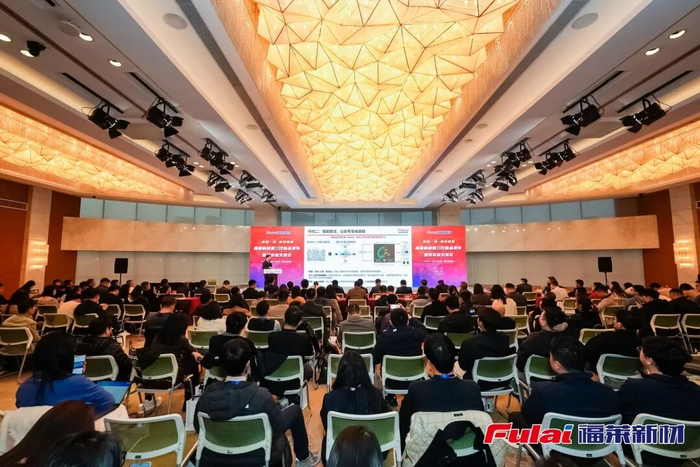
Core Insights - The company, Folei New Materials, launched its third-generation electronic skin product, featuring a Tactile Processing Unit (TPU) that enables edge computing at the fingertip level, enhancing the sensory capabilities of robots [1][9][11]. Product Development - The third-generation electronic skin integrates a chip within the flexible sensor, allowing for deep integration of sensing and processing [11]. - Advanced intelligent algorithms have been incorporated, enabling the sensor to possess deep perception capabilities rather than just simple touch detection [11]. - The effective sensing area has been significantly increased, providing robots with richer and more dimensional tactile information [11]. Market Engagement - Folei New Materials has established collaborations with dozens of domestic and international clients, with some expressing clear demand for bulk orders [3][18]. - The company has made progress in the North American market, achieving small batch orders and establishing a wholly-owned subsidiary, Apex Sensing LLC, in California [18]. Strategic Direction - The company is transitioning from a functional coating material supplier to a provider of intelligent sensing solutions, with electronic skin as the core of this transformation [9]. - Continuous investment in research and development is emphasized, with significant increases in R&D spending, particularly in flexible sensor projects [14]. Collaborative Efforts - Folei New Materials is actively promoting industry-academia collaboration, having established a joint laboratory with Zhejiang Tsinghua Flexible Electronics Technology Research Institute to focus on breakthroughs in flexible chip technology [14][16]. - Strategic partnerships with companies like Tongzhi Technology aim to enhance the integration of AI algorithms and flexible sensing technology [14]. Investor Reception - The launch event attracted significant attention, with over 100 institutions and nearly 300 attendees, indicating strong investor interest in the electronic skin technology [3][19].


福莱新材:“电子皮肤”产品完成多次迭代并批量供货
Zheng Quan Shi Bao Wang· 2025-11-27 12:40
Core Viewpoint - Fulei New Materials (605488) is focusing on the emerging sector of flexible sensors, having successfully transitioned from a material supplier to a smart sensing solution provider, with its "electronic skin" products now in mass production [1][2] Group 1: Business Development - The company has established partnerships with dozens of clients, some of whom have placed bulk order requests [1] - Fulei New Materials has set up a wholly-owned subsidiary, Apex Sensing LLC, in Silicon Valley, marking a significant step towards internationalization [1] - The company emphasizes its competitive advantages in intelligence, product form, and efficiency, delivering tactile intelligent TPU rather than just sensor resistance signals [2] Group 2: Product Innovation - The third-generation product, "chip-sensing integration," features highly miniaturized and digitized circuits, making it more compatible with dexterous hands [2] - The company is focusing its R&D efforts on tactile sensors for robotics, industrial detection systems, and consumer electronics, with R&D expenses reaching 91.56 million yuan, a year-on-year increase of 25.46% [2] Group 3: Team and Expertise - The R&D team for flexible sensors has doubled in size, attracting experts in the sensor field and AI algorithm models, providing strong technical support for continuous innovation and industrialization [2] Group 4: Market Position and Challenges - The flexible sensor market is still in its early development stage, with high potential but significant uncertainties regarding order acquisition, technical solutions, mass production pace, and scale [2]
芯动联科:公司始终密切关注包括商业航天在内的下游应用领域的发展机遇
Zheng Quan Ri Bao· 2025-11-27 11:13
Core Viewpoint - The company is actively monitoring opportunities in downstream application fields, including commercial aerospace, and is committed to expanding its product applications based on market and customer demands [2]. Group 1: Company Developments - The company has high-performance MEMS inertial sensor products that are characterized by high reliability and have applications in commercial aerospace, high-reliability fields, unmanned systems, and intelligent driving [2]. - Ongoing projects in the commercial aerospace sector are progressing, establishing a technological foundation for the company to participate in the commercial aerospace industry chain and support national action plans [2]. - The company plans to leverage its core advantages in high-performance MEMS inertial technology to continuously expand the breadth and depth of product applications [2].
公司问答丨芯动联科:公司在商业航天领域主要开展高性能MEMS惯性传感器业务
Ge Long Hui A P P· 2025-11-27 09:39
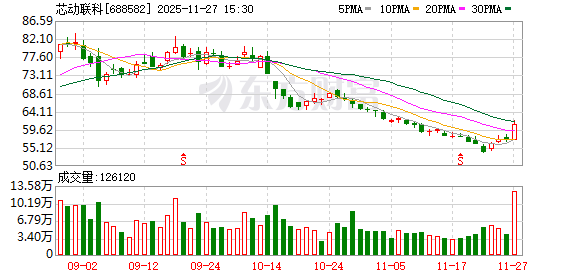
Core Viewpoint - The company is actively involved in the commercial aerospace sector, focusing on high-performance MEMS inertial sensors, including MEMS gyroscopes and MEMS accelerometers, which are essential for satellite navigation, attitude control, and orbit determination systems [1]. Group 1 - The company primarily conducts business in the commercial aerospace field with high-performance MEMS inertial sensors [1]. - Core products include MEMS gyroscopes and MEMS accelerometers [1]. - The company's products have been gradually applied in the commercial aerospace sector for several years [1].
芯动联科(688582.SH):在商业航天领域主要开展高性能MEMS惯性传感器业务
Ge Long Hui· 2025-11-27 08:20
Core Viewpoint - The company is actively engaged in the commercial aerospace sector, focusing on high-performance MEMS inertial sensors, including MEMS gyroscopes and MEMS accelerometers, which are essential for satellite navigation, attitude control, and orbit determination systems [1] Group 1 - The company's core products are MEMS gyroscopes and MEMS accelerometers [1] - The applications of the company's products in the commercial aerospace field have been gradually implemented and sustained over several years [1]
郑州高新区气体传感器国内市场占比超七成
Zhong Guo Xin Wen Wang· 2025-11-25 08:13
Core Insights - The gas sensor market in Zhengzhou has a domestic market share exceeding 70%, while the gas detection instrument market holds a 15% share, both ranking first in the country [1][2] - The 2025 Sensor Conference will be held from November 29 to December 1 in Zhengzhou, focusing on technological advancements and industry ecosystem development [1] - The conference will adopt a new format featuring one opening ceremony, eight professional forums, and six concurrent activities, highlighting topics such as "embodied" and "new energy vehicle sensors" [1] Industry Development - Zhengzhou has established a systematic layout involving "technology-industry-finance-talent," leading to the creation of the "China (Zhengzhou) Sensor Valley" and an industrial scale exceeding 32 billion yuan [2] - Over 2,900 sensor-related enterprises are concentrated in the Zhengzhou High-tech Zone, contributing to the growth of the sensor industry [2] - The conference will also release the "China Sensor High-Quality Development Declaration (Zhengzhou Declaration 2025)" and the "2025 Top Ten Sensor Park Development Report," promoting Zhengzhou's industrial policies and business environment [2]
高华科技股价涨5.22%,鹏华基金旗下1只基金重仓,持有148.85万股浮盈赚取269.41万元
Xin Lang Cai Jing· 2025-11-25 03:49
Group 1 - The core viewpoint of the news is that GaoHua Technology's stock has seen a significant increase of 5.22%, reaching a price of 36.50 CNY per share, with a trading volume of 138 million CNY and a turnover rate of 3.72%, resulting in a total market capitalization of 6.786 billion CNY [1] - GaoHua Technology, established on February 29, 2000, and listed on April 18, 2023, specializes in the research, design, production, and sales of high-reliability sensors and sensor network systems [1] - The company's main business revenue composition includes high-reliability sensors at 85.06%, sensor network systems at 14.43%, sensor chips at 0.28%, and other supplementary sources at 0.24% [1] Group 2 - From the perspective of major circulating shareholders, Penghua Fund's GaoHua Quality Growth Mixed A Fund (010490) reduced its holdings by 486,600 shares, now holding 1.4885 million shares, which accounts for 1.42% of circulating shares, with an estimated floating profit of approximately 2.6941 million CNY [2] - The GaoHua Quality Growth Mixed A Fund was established on November 18, 2020, with a current scale of 966 million CNY, achieving a year-to-date return of 42.71% and a one-year return of 40.77% [2] - The fund manager, Hu Ying, has been in position for 4 years and 11 days, managing assets totaling 1.468 billion CNY, with the best fund return during the tenure being 38.1% and the worst being -1.66% [3] Group 3 - The GaoHua Quality Growth Mixed A Fund has high exposure to GaoHua Technology, with the stock being the tenth largest holding, representing 5.08% of the fund's net value after reducing its holdings by 486,600 shares [4]
传感器大会五大亮点抢先剧透
Zheng Zhou Ri Bao· 2025-11-25 00:43
Core Insights - The 2025 Sensor Conference will be held in Zhengzhou from November 29 to December 1, focusing on high-quality development in the sensor industry [1] Group 1: Event Highlights - Highlight 1: The conference will gather top global resources to build an ecological event, emphasizing the importance of smart sensors in national strategic layouts and the continuous growth of the market [2] - Highlight 2: The conference will release core industry development results and authoritative guidelines, clarifying future innovation directions and providing precise guidance for enterprises and technology development [3] - Highlight 3: A series of professional sub-forums will be set up to cover the entire sensor industry chain, addressing topics such as integrated circuit talent cultivation and advanced sensor technologies [4] Group 2: Industry Development - Highlight 4: The conference will showcase high-quality industry cooperation results and sign multiple quality project agreements, injecting new momentum into regional industrial development [5] - Highlight 5: Various activities, including high-end industry summits and professional skill competitions, will promote deep integration of industry, academia, and research, facilitating rapid implementation of innovative results [6]