
Central Banking

Search documents
香港金管局维持基本利率在4.75%不变,隔夜美联储按兵不动。
news flash· 2025-07-30 23:04
Group 1 - The Hong Kong Monetary Authority has maintained the base interest rate at 4.75% [1] - The Federal Reserve has decided to keep its rates unchanged [1]
Federal Reserve System () Update / Briefing Transcript
2025-07-30 19:30
Summary of Federal Reserve System Update / Briefing July 30, 2025 Key Points on the Federal Reserve and Economic Conditions Economic Overview - The economy is in a solid position with a low unemployment rate and maximum employment achieved [1][4] - GDP growth moderated to 1.2% in the first half of the year, down from 2.5% last year, with a stronger second quarter growth of 3% [2][3] - Consumer spending has slowed, while business investment in equipment and intangibles has increased [3][4] - The housing sector remains weak, and payroll job gains averaged 150,000 per month over the past three months [3][4] Inflation Insights - Inflation is running above the 2% target, with total PCE prices rising 2.5% over the past year and core PCE prices rising 2.7% [5][4] - Services inflation has eased, but increased tariffs are contributing to higher prices in some goods categories [5][6] - The Fed is focused on keeping longer-term inflation expectations anchored while managing potential inflation risks [7][6] Monetary Policy Decisions - The Federal Open Market Committee decided to maintain the federal funds rate at 4.5% [2][6] - The current monetary policy is viewed as modestly restrictive, appropriate for the current economic conditions [11][12] - The Fed is awaiting more data on employment and inflation before making decisions on potential rate cuts [12][13] Labor Market Dynamics - The labor market remains solid, with the unemployment rate at 4.1% and wage growth moderating but still outpacing inflation [4][21] - There are downside risks to the labor market, with job creation slowing and the supply of workers also declining [20][81] - The Fed is closely monitoring the balance of risks in the labor market and the overall economy [8][81] Future Considerations - The Fed is in a wait-and-see mode regarding the impact of tariffs on inflation and the broader economy [31][36] - Discussions are ongoing about potential revisions to the monetary policy framework, with a focus on balancing maximum employment and price stability [9][84] - The Fed emphasizes the importance of data in guiding future monetary policy decisions, particularly regarding inflation and employment [63][94] Additional Insights - The Fed does not consider the fiscal needs of the government when making monetary policy decisions, focusing instead on its dual mandate [40][41] - The independence of the Fed is highlighted as crucial for making data-driven decisions without political influence [73][74] - The Fed is monitoring the evolving economic landscape, including consumer spending trends and the effects of tariffs on inflation [76][78]
韩国央行会议纪要:一名委员表示,货币政策决策必须谨慎,尽管维持宽松政策立场是适当的。
news flash· 2025-07-29 07:06
韩国央行会议纪要:一名委员表示,货币政策决策必须谨慎,尽管维持宽松政策立场是适当的。 ...
European Central Bank () Update / Briefing Transcript
2025-07-24 13:45
Summary of the European Central Bank Update / Briefing July 24, 2025 Industry Overview - The briefing pertains to the European Central Bank (ECB) and its monetary policy decisions in the context of the Eurozone economy. Key Points and Arguments 1. **Interest Rates Unchanged**: The ECB decided to keep the three key interest rates unchanged, maintaining a focus on stabilizing inflation at the 2% medium-term target [2][16][75]. 2. **Current Inflation Status**: Inflation is currently at 2%, aligning with the ECB's target, with domestic pressures easing as wage growth slows [2][7][8]. 3. **Economic Resilience**: The Eurozone economy has shown resilience despite global challenges, supported by strong private consumption and investment, although firms are hesitant to invest due to geopolitical uncertainties and trade disputes [3][5][6][31]. 4. **Unemployment Rate**: The unemployment rate stood at 6.3% in May, close to its lowest since the euro's introduction, indicating a robust labor market [6]. 5. **Inflation Dynamics**: Annual inflation was reported at 2% in June, with energy prices rising but still lower than the previous year. Food price inflation eased to 3.1% [7][8]. 6. **Wage Growth Trends**: Year-on-year growth in compensation per employee slowed to 3.8% in Q1, down from 4.1% in the previous quarter, indicating moderating labor costs [8][30]. 7. **Risks to Economic Growth**: Risks remain tilted to the downside, including global trade tensions, geopolitical conflicts, and potential financial market sentiment deterioration [11][12][39]. 8. **Monetary Policy Approach**: The ECB will adopt a data-dependent approach, assessing inflation outlooks and risks on a meeting-by-meeting basis without pre-committing to a specific rate path [4][16][75]. 9. **Credit Conditions**: Easier financing conditions are supporting domestic demand, with the average interest rate on new loans to firms declining to 3.7% in May [14][15]. 10. **Future Projections**: The ECB anticipates that if trade and geopolitical tensions are resolved swiftly, it could improve sentiment and spur economic activity [11][12][55]. Additional Important Content 1. **Digital Euro Development**: The ECB is focused on developing a digital euro to respond to evolving payment preferences, emphasizing the importance of maintaining currency issuance protection [51][66]. 2. **Market Reactions**: The ECB acknowledges market expectations for potential rate cuts but emphasizes that decisions will be based on data and economic developments [72][75]. 3. **Liquidity in the System**: Despite a reduction in liquidity due to various factors, the ECB maintains that there is still ample liquidity in the system, exceeding €2 trillion [60][61]. 4. **Trade Negotiations Impact**: The ECB is closely monitoring ongoing trade negotiations, indicating that resolution of uncertainties could significantly influence economic behavior and decision-making [20][24][49][55]. This summary encapsulates the key insights from the ECB's briefing, highlighting the current economic landscape, monetary policy stance, and future outlook for the Eurozone.
X @Bloomberg
Bloomberg· 2025-07-24 11:26
Turkey’s central bank lowered interest rates for the first time since March, resuming a cutting cycle that was derailed by a political crisis stemming from the arrest of a leading opposition figure https://t.co/aW3sCK7ZFu ...
葡萄牙财长:(财政部)下周将决定央行行长的任命问题。
news flash· 2025-07-18 14:53
Group 1 - The Portuguese Finance Minister announced that the Ministry will decide on the appointment of the central bank governor next week [1]
KVB PRIME:美联储应与财政部合作以降低借贷成本
Sou Hu Cai Jing· 2025-07-18 01:18
Core Viewpoint - Kevin Warsh, a former Federal Reserve governor, calls for comprehensive reform of the Federal Reserve's operations and suggests forming a policy alliance with the Treasury Department, which has garnered significant attention in financial and political circles [1][3]. Group 1: Credibility Issues - Warsh emphasizes the need for "mechanism reform" in policy execution, indicating a deep-seated concern regarding the current Federal Reserve's credibility, which is essential for effective monetary policy and financial stability [3]. - He directly challenges the current Federal Reserve officials, suggesting that the credibility issue stems from their actions, which poses a public challenge to the leadership of the Federal Reserve [3][5]. Group 2: Potential Leadership Changes - Warsh is considered a strong candidate for the next Federal Reserve chair, aligning closely with President Trump's demand for lower interest rates to stimulate economic growth, which enhances his standing in Trump's eyes [4]. - If Warsh were to assume leadership, a fundamental shift in the Federal Reserve's operational style could occur, potentially leading to conflicts with existing members who uphold traditional decision-making processes [4][6]. Group 3: Political Implications - Trump's dissatisfaction with current chair Jerome Powell is evident, as he has repeatedly called for Powell's resignation, indicating a desire for a shift in the Federal Reserve's policy direction [5]. - Warsh's potential appointment could fulfill Trump's economic agenda, allowing him to demonstrate control over economic policy while possibly stimulating investment and consumption through lower interest rates [5]. Group 4: Risks of Policy Alliance - Establishing a policy alliance between the Federal Reserve and the Treasury could enhance short-term policy coordination but risks undermining the Federal Reserve's independence, which is crucial for maintaining price stability and preventing inflation [6]. - Internal conflicts between Warsh and existing Federal Reserve members could hinder decision-making efficiency and policy coherence, leading to delays in responding to complex economic conditions and increasing market uncertainty [6].

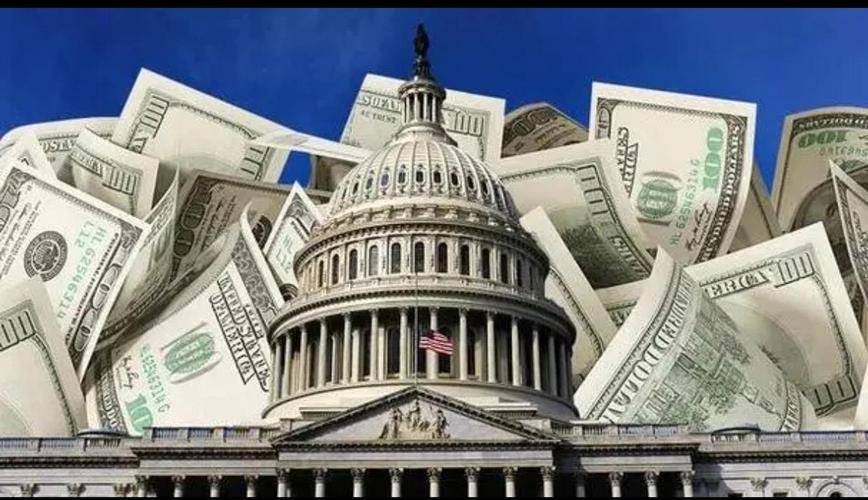
美联储主席候选人沃什:美联储应与财政部合作以降低借贷成本
Jin Shi Shu Ju· 2025-07-18 01:00
Core Viewpoint - Kevin Warsh calls for a comprehensive reform of the Federal Reserve's operations and suggests a policy alliance with the Treasury Department, indicating a significant shift in monetary policy approach [1][2]. Group 1: Federal Reserve Leadership and Policy - Warsh criticizes the current Federal Reserve officials, particularly Chairman Jerome Powell, for their credibility issues and failure to lower interest rates, which aligns with President Trump's demands [1][2]. - There is speculation about Trump's potential actions regarding Powell's position, with discussions among Republican lawmakers about possibly dismissing him [2][3]. - Warsh believes that the Federal Reserve's mechanism change is inevitable and emphasizes the need for a new "Treasury-Fed agreement" to manage national debt issuance effectively [3]. Group 2: Interest Rates and Economic Policy - Warsh argues that the delay in interest rate cuts is a significant flaw and that public pressure from the President on the Federal Reserve is justified [2][3]. - He supports the current policy of quantitative tightening but insists on collaboration between the Federal Reserve and the Treasury to lower borrowing costs [3]. - The market anticipates that the Federal Reserve will maintain the benchmark interest rate at the end of July but may begin to cut rates in September [6].
X @Bloomberg
Bloomberg· 2025-07-15 09:17
Monetary Policy - India's central bank will consider further interest rate cuts if inflation falls below its projection [1] - The central bank may also cut rates if growth comes under pressure in Asia's third largest economy [1] Economic Outlook - The Governor of India's central bank, Sanjay Malhotra, made the statement regarding potential rate cuts [1]