
玻璃纤维

Search documents
中国巨石(600176) - 2025 Q2 - 业绩电话会
2025-08-28 09:00
Financial Data and Key Indicator Changes - The company achieved operating revenue of ¥9.109 billion, growing 17.7% year-over-year [5] - Total profit reached ¥2.119 billion, growing 83% year-over-year, while net profit was ¥1.758 billion, growing 78% year-over-year [5] - Non-GAAP net profit significantly increased by 170% year-over-year to ¥1.701 billion [5] - Net cash flow from operating activities was ¥1.441 billion, an increase of ¥1.214 billion year-over-year [5] - Total assets reached ¥53.7 billion, with the asset-liability ratio falling below 40% for the first time [5] Business Line Data and Key Indicator Changes - Yarn and electronic cloth sales volumes reached historical highs, with 1.5822 million tons of yarn sold, growing nearly 4% year-over-year, and 485 million meters of electronic cloth sold, growing 5.9% year-over-year [3] - The company focused on optimizing market structure and increasing the proportion of high-end products [2] Market Data and Key Indicator Changes - In the first half of the year, China's new wind power installed capacity was 51.39 million kilowatts, with year-over-year growth of 98.9% [1] - Automotive production in China reached 15.565 million vehicles, growing 10.8% year-over-year, with new energy vehicle production growing 36.2% [1] - The electronic information industry showed improvement, with microcomputer production reaching 166 million units, growing 5.6% year-over-year [1] Company Strategy and Development Direction - The company aims to adhere to a dual-wheel drive of volume increase and price enhancement, focusing on market competitive advantages and marketing strategies [1] - The strategic focus includes sales priority, efficiency improvement, innovation-driven development, quality requirements, system construction, and effective team culture [7][8] Management's Comments on Operating Environment and Future Outlook - Management expressed confidence in achieving annual targets and emphasized the importance of maintaining stable sales volume and price targets [7] - The company is optimistic about the overall market recovery and expects steady growth in the second half of the year [27] Other Important Information - The company has released ESG reports for five consecutive years, with improved ratings [5] - Interim dividends of ¥680 million were planned, with a dividend ratio exceeding 40% [6] Q&A Session Summary Question: Outlook on coarse sand segment and pricing strategy - Management noted that the supply and demand situation for coarse sand is stable, with a focus on controlling capacity and stabilizing prices [10][12] Question: Future price fluctuation range for coarse sand - Management indicated that achieving a net profit of around ¥900 to ¥1,000 per ton is ideal, while reaching ¥2,000 per ton would be considered abnormal [23][24] Question: Plans for overseas production expansion - Management confirmed that the U.S. factory has turned profitable and that there are plans for further overseas expansion, with a focus on Southeast Asia, Africa, and Europe [26][27] Question: Adjustments to pricing strategy in response to high-end product demand uncertainty - Management stated that they will monitor market conditions and adjust pricing strategies as necessary, particularly in response to high-end product demand fluctuations [48][49]

中国巨石(600176) - 2025 Q2 - 业绩电话会
2025-08-28 09:00
Financial Data and Key Indicator Changes - The company achieved operating revenue of ¥9.109 billion, growing 17.7% year-over-year [5] - Total profit reached ¥2.119 billion, growing 83% year-over-year, while net profit was ¥1.758 billion, growing 78% year-over-year [5] - Non-GAAP net profit significantly increased by 170% year-over-year to ¥1.701 billion [5] - Net cash flow from operating activities was ¥1.441 billion, an increase of ¥1.214 billion year-over-year [5] - Total assets reached ¥53.7 billion, with the asset-liability ratio falling below 40% for the first time [5] Business Line Data and Key Indicator Changes - Yarn and electronic cloth sales volumes reached historical highs, with 1.5822 million tons of yarn sold, growing nearly 4% year-over-year, and 485 million meters of electronic cloth sold, growing 5.9% year-over-year [3] - The company focused on optimizing market structure and increasing the proportion of high-end products [2] Market Data and Key Indicator Changes - The overall market supply and demand situation showed significant improvement, with glass fiber yarn output growth of approximately 4.9% year-over-year [1] - In the renewable energy sector, China's new wind power installed capacity grew by 98.9% year-over-year [1] - Automotive production in China increased by 10.8% year-over-year, with new energy vehicle production growing by 36.2% [1] - The electronic information industry saw a 5.6% year-over-year growth in microcomputer production [1] Company Strategy and Development Direction - The company is focusing on dual-wheel drive of volume increase and price enhancement, strengthening market competitive advantages [1] - Emphasis on innovation and R&D, with first-half R&D investment of ¥280 million, up 10.73% year-over-year [4] - The company plans to implement interim dividends for the first time, with a dividend amount of ¥680 million and a dividend ratio exceeding 40% [7] - Future focus includes maintaining sales volume and price targets, improving efficiency, and adhering to innovation-driven development [8] Management's Comments on Operating Environment and Future Outlook - Management expressed confidence in achieving annual targets and completing the 14th Five-Year Plan [7] - The company anticipates stable growth in export markets in the second half of the year, despite a 1.9% decline in volume in the first half [27] - Management noted that the anti-involution policy may lead to more rational capacity deployment in the industry [16] Other Important Information - The company has been recognized for its ESG efforts, with improved ratings from MSCI and Wind [5] - The company is actively planning overseas expansion, with a focus on balancing domestic and international capacity growth [27] Q&A Session Summary Question: Outlook on coarse sand segment and pricing strategy - Management noted that the overall new capacity added was substantial, and they are cautiously controlling capacity release [12] - Future pricing is expected to remain stable with some increases, particularly in mid-to-high-end products [15] Question: Future price fluctuation range for coarse sand - Management indicated that achieving a net profit of around ¥2,000 per ton would be abnormal under current conditions [24] Question: Plans for overseas production expansion - The company is exploring opportunities in Southeast Asia, Africa, and Europe, with a balanced approach to domestic and international capacity growth [27] Question: Impact of tariffs and anti-dumping investigations - Management stated that they are monitoring the situation and adjusting strategies accordingly to mitigate risks [48] Question: Demand for high-end products and pricing strategy adjustments - Management acknowledged potential uncertainties in high-end product demand but emphasized ongoing adjustments to pricing strategies based on market conditions [49]
中国巨石(600176.SH):2025年中报净利润为16.87亿元、同比较去年同期上涨75.51%
Xin Lang Cai Jing· 2025-08-28 02:25
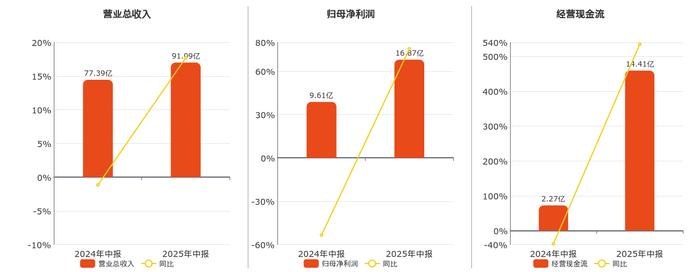
Core Insights - China Jushi (600176.SH) reported a total operating revenue of 9.109 billion yuan for the first half of 2025, ranking second among disclosed peers, with a year-on-year increase of 1.370 billion yuan, representing a 17.70% growth [1] - The net profit attributable to shareholders reached 1.687 billion yuan, ranking first among peers, with a year-on-year increase of 0.726 billion yuan, reflecting a 75.51% growth [1] - The net cash inflow from operating activities was 1.441 billion yuan, ranking second among peers, with a significant year-on-year increase of 1.214 billion yuan, showing a 534.54% rise [1] Financial Ratios - The latest debt-to-asset ratio is 39.96%, ranking third among peers, with a decrease of 0.22 percentage points from the previous quarter and a reduction of 2.73 percentage points year-on-year [3] - The latest gross profit margin is 32.21%, ranking first among peers, with an increase of 1.69 percentage points from the previous quarter and a year-on-year increase of 10.71 percentage points [3] - The latest return on equity (ROE) is 5.48%, ranking third among peers, with a year-on-year increase of 2.11 percentage points [3] Earnings Per Share and Turnover Ratios - The diluted earnings per share is 0.42 yuan, ranking third among peers, with a year-on-year increase of 0.18 yuan, reflecting a 75.51% growth [3] - The latest total asset turnover ratio is 0.17 times, showing a year-on-year increase of 0.02 times, which is a 14.55% rise [3] - The latest inventory turnover ratio is 1.54 times, with a year-on-year increase of 0.07 times, marking two consecutive years of growth and a 4.84% increase [3] Shareholder Structure - The number of shareholders is 103,100, with the top ten shareholders holding 2.474 billion shares, accounting for 61.80% of the total share capital [3] - The largest shareholder is China National Building Material Group Corporation, holding 29.22% of the shares [3] - Other significant shareholders include Zhenstone Holdings Group Co., Ltd. (16.88%) and Hong Kong Central Clearing Limited (10.10%) [3]

中国巨石(600176):复价控本盈利改善 中期分红回馈股东
Xin Lang Cai Jing· 2025-08-28 02:25
Group 1 - The company reported a revenue of 9.109 billion yuan for 1H2025, representing a year-on-year increase of 17.70%, and a net profit attributable to shareholders of 1.687 billion yuan, up 75.51% year-on-year [1] - In 2Q2025, the company achieved a revenue of 4.630 billion yuan, a year-on-year increase of 6.28%, and a net profit of 957 million yuan, which is a 56.58% increase year-on-year [1] - The mid-term dividend payout ratio was 40.34%, with a dividend yield of 1.26% [1] Group 2 - The average price of alkali-free glass fiber yarn increased by 4.70% in 2Q2025, while the fine yarn price rose by 7.93% [1] - The company’s domestic average monthly production in 2Q2025 was 680,000 tons, reflecting a year-on-year increase of 17% [1] - The company’s sales volume in the wind power sector accounted for over 23% of total sales in the first half of the year, with a year-on-year growth rate exceeding 60% [1] Group 3 - The gross profit margin for 2Q2025 was 33.84%, an increase of 11.27 percentage points year-on-year, while the net profit margin was 21.49%, up 7.19 percentage points year-on-year [1] - The company’s total cost for glass fiber yarn and electronic cloth decreased by 3% in 1H2025 due to various cost-reduction measures [2] - The company plans to achieve net profits of 3.446 billion yuan, 4.097 billion yuan, and 4.733 billion yuan for the years 2025, 2026, and 2027, representing year-on-year growth rates of 41%, 19%, and 16% respectively [2]
大增10587%,3倍大牛股,业绩炸裂
Zhong Guo Zheng Quan Bao· 2025-08-27 22:36
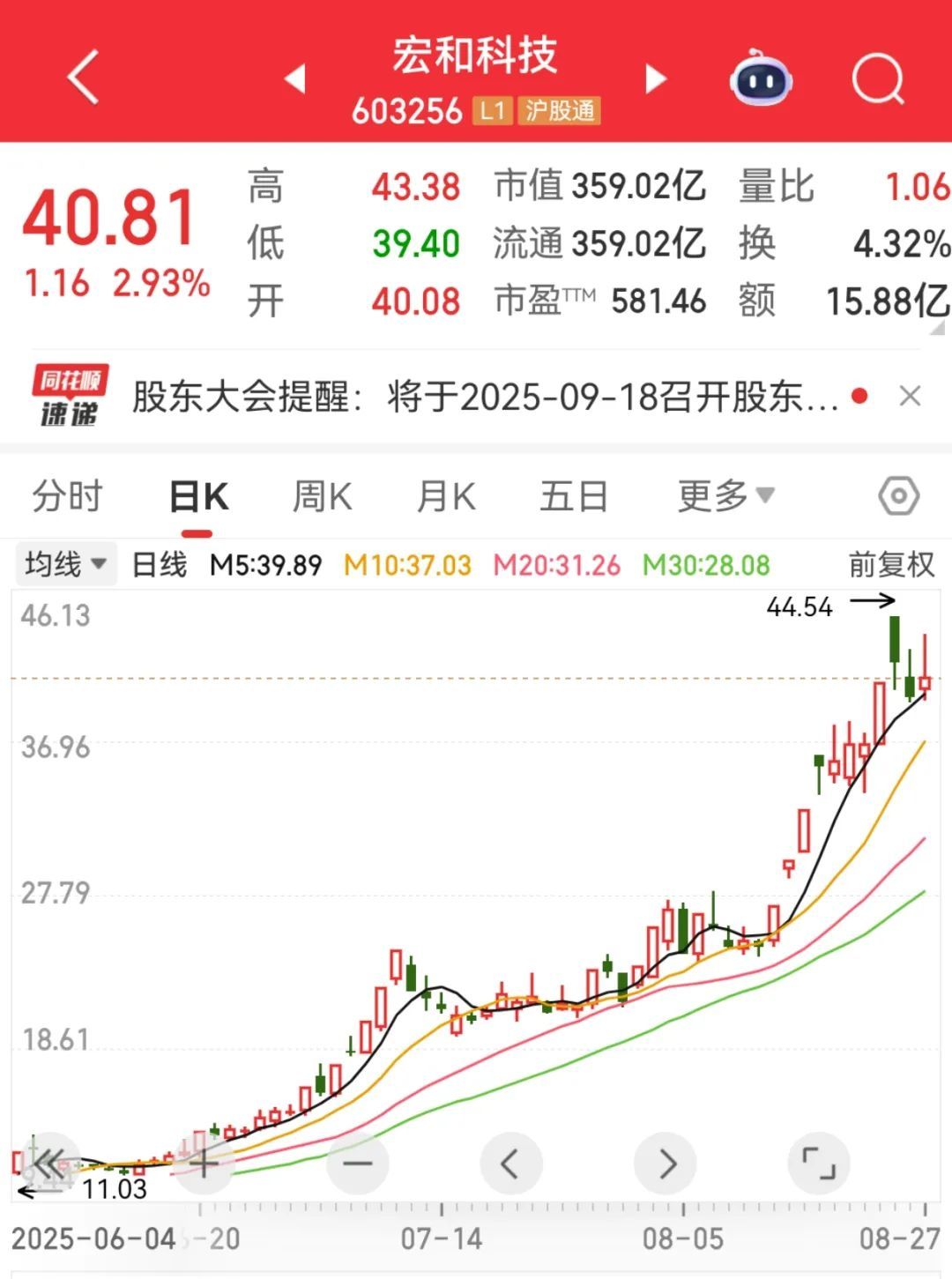
Core Viewpoint - The company reported significant growth in its financial performance for the first half of 2025, driven by increased prices of electronic-grade glass fiber cloth and successful mass production of high-performance products [1][3]. Financial Performance - The company achieved a revenue of 550 million yuan, representing a year-on-year increase of 35% [1]. - The net profit attributable to shareholders reached 87.3751 million yuan, showing a remarkable year-on-year growth of 10,587.74% [1]. Stock Performance - On August 27, the company's stock price rose by 2.93%, closing at 40.81 yuan per share, with a total market capitalization of 35.902 billion yuan [1]. - The stock has seen a substantial increase of 388.74% year-to-date [1]. Product Development - The growth in performance is attributed to the rise in prices of ordinary E-glass electronic-grade glass fiber cloth and the successful mass production and delivery of high-performance low dielectric cloth and low thermal expansion coefficient electronic cloth [3][4]. - The company has achieved breakthroughs in high-end products, with plans to expand production capacity based on market demand [5][6]. Industry Context - The overall operation of the glass fiber industry in China has improved compared to the previous two years, with supply-side capacity control and rapid growth in the PCB electronic sector [7][8]. - The production of microcomputers in China reached 166.45 million units in the first half of the year, marking a year-on-year increase of 5.6% [8]. - The global PCB market is projected to approach 95 billion USD by 2029, with a compound annual growth rate of approximately 5.2% over the next five years [8].

九鼎新材:公司报告期内计提资产减值准备1657.46万元
Mei Ri Jing Ji Xin Wen· 2025-08-27 16:15
Group 1 - The company reported a credit impairment loss of 9.03 million yuan during the reporting period, which will reduce the net profit attributable to shareholders for the first half of 2025 by 524,100 yuan [1] - The company recognized an asset impairment provision of 16.57 million yuan, and the reversal of previously recognized asset impairment provisions amounted to 5.76 million yuan, resulting in a net reduction of 10.82 million yuan in net profit for the first half of 2025 [1] - The company confirmed a fair value change gain of other non-current financial assets amounting to 2.85 million yuan, which will increase the net profit attributable to shareholders for the first half of 2025 by 2.85 million yuan [1]

大增10587%!3倍大牛股,业绩炸裂
Zhong Guo Zheng Quan Bao· 2025-08-27 15:16
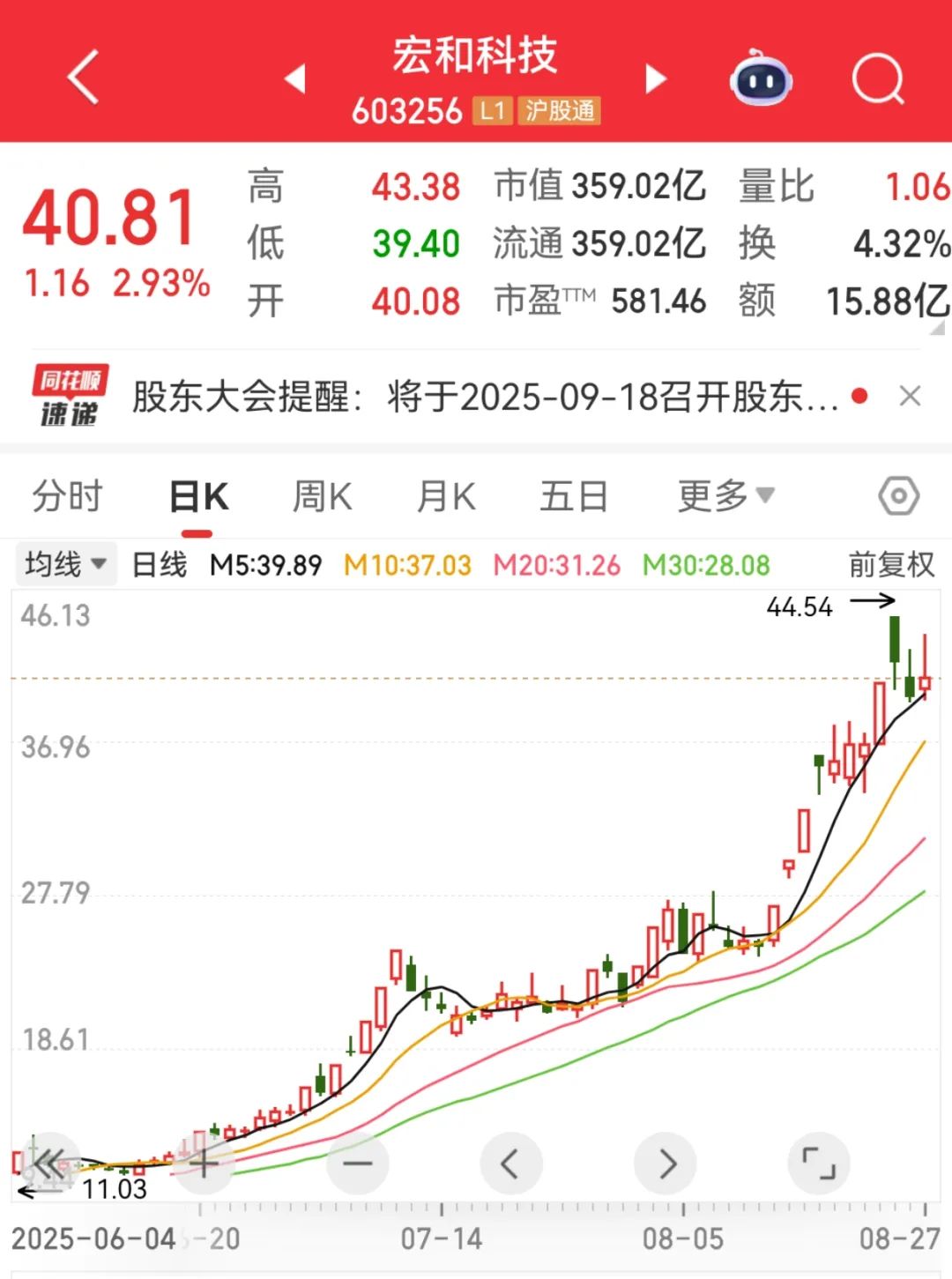
Company Performance - In the first half of 2025, the company achieved operating revenue of 550 million yuan, a year-on-year increase of 35% [1] - The net profit attributable to shareholders reached 87.3751 million yuan, reflecting a significant year-on-year growth of 10,587.74% [1] - The company's stock price rose by 2.93% on August 27, closing at 40.81 yuan per share, with a total market capitalization of 35.902 billion yuan [1] Key Growth Drivers - The substantial growth in performance is attributed to two main factors: the price increase of ordinary E-glass electronic-grade glass fiber cloth and the successful mass production and delivery of high-performance low dielectric cloth and low thermal expansion coefficient electronic cloth [2][3] - The mass delivery of high-end products has been a key driver of the company's significant revenue increase [4] Product Development and Strategy - The company specializes in the R&D, production, and sales of mid-to-high-end electronic-grade glass fiber cloth and yarn, supported by a professional R&D team [4] - The company has achieved breakthroughs in high-end products, with plans to begin mass supply to downstream customers in 2025, based on market demand [4] - The company has shifted from relying on imported high-end raw materials to self-research and production of high-end electronic yarn products, reducing procurement costs and cycles [4] Industry Outlook - The overall operation of the glass fiber industry in China has improved compared to the previous two years, with supply-side capacity control and a rapid growth in the PCB electronic industry [6] - The production of microcomputers in China reached 166.45 million units in the first half of the year, a year-on-year increase of 5.6% [6] - The global PCB market is projected to approach 95 billion USD by 2029, with a compound annual growth rate of approximately 5.2% over the next five years [6] - The recovery in consumer electronics demand and the rapid development of AI servers are expected to provide growth momentum for the electronic-grade glass fiber industry [6]
玻纤量价齐升 中国巨石上半年净利润大增75.51%
Zheng Quan Shi Bao Wang· 2025-08-27 14:29
Core Viewpoint - The company reported significant growth in revenue and net profit for the first half of 2025, driven by increased demand in the fiberglass sector, particularly in the wind power industry [1][2] Financial Performance - The company achieved an operating income of 9.109 billion yuan, a 17.70% increase from 7.739 billion yuan in the same period last year [1] - Net profit reached 1.687 billion yuan, up 75.51% from 961 million yuan year-on-year [1] - The non-recurring net profit was 1.701 billion yuan, reflecting a remarkable growth of 170.74% [1] Market Demand and Sales - The company benefited from a significant increase in product sales, with a total of 1.5822 million tons of roving and 485 million meters of electronic cloth sold [1] - The installed capacity in the wind power sector and the trend towards larger blades contributed to the sales growth [1] Production Capacity and Project Development - The company’s Jiujiang manufacturing base completed the phased production of a 200,000-ton fiberglass pool kiln drawing line ahead of schedule [1] - The Tongxiang headquarters upgraded its production capacity to 200,000 tons through a cold modification of its fiberglass pool kiln drawing line [1] - The Huai'an zero-carbon intelligent manufacturing base commenced the construction of a 100,000-ton electronic-grade fiberglass production line [1] - New investment projects in the Chengdu base are progressing smoothly, and the company is planning a new round of overseas expansion [1] Technological Innovation and Green Development - The company made significant technological breakthroughs, including innovations in process and automation technology [2] - A comprehensive innovation system from basic research to industrial transformation has been established, leading to over a hundred successful applications [2] - The Huai'an zero-carbon intelligent manufacturing base serves as a benchmark for optimizing clean energy systems and recycling processes [2] Cost Control and Digital Transformation - The company implemented a cost control strategy focusing on "increase, save, and reduce," while also expanding low-cost financing channels [2] - The financing interest rates reached new lows, and the company accelerated its digital and intelligent transformation [2] - Two of the company’s factories were recognized as exemplary intelligent factories by the Ministry of Industry and Information Technology [2] Shareholder Returns - The company proposed a profit distribution plan for the first half of 2025, with a cash dividend of 1.70 yuan per 10 shares, totaling 681 million yuan [2]
九鼎新材:2025年上半年净利润同比增长145.18%
Xin Lang Cai Jing· 2025-08-27 13:36
Core Viewpoint - The company reported a significant increase in revenue and net profit for the first half of 2025, indicating strong financial performance and growth potential [1] Financial Performance - The company's operating revenue for the first half of 2025 reached 718 million yuan, representing a year-on-year growth of 26.09% [1] - The net profit for the same period was 44.2936 million yuan, showing a substantial year-on-year increase of 145.18% [1] Dividend Policy - The company announced that it will not distribute cash dividends, issue bonus shares, or increase capital through reserves [1]
中国巨石: 中国巨石关于2025年中期利润分配方案的公告
Zheng Quan Zhi Xing· 2025-08-27 11:25
Core Viewpoint - The company plans to distribute a cash dividend of 1.70 yuan per 10 shares (including tax) based on the total share capital as of the equity distribution registration date, amounting to a total cash dividend of approximately 40.34% of the distributable profit [1][2]. Group 1: Profit Distribution Plan - The total distributable profit is 818,733,651.19 yuan [1]. - As of June 30, 2025, the total share capital is 4,003,136,728 shares, leading to a total cash dividend distribution of 40.34% [2]. - The company will adjust the per-share distribution ratio if there are changes in total share capital before the equity distribution registration date, while maintaining the total distribution amount [2]. Group 2: Decision-Making Process - The board of directors has the authority to determine and implement the specific profit distribution plan, as authorized by the shareholders' meeting [2]. - The profit distribution plan complies with the company's articles of association and the three-year shareholder return plan for 2024-2026 [2].