金融监管

Search documents
白宫关门3天后开始乱了,数十万人被波及,特朗普发出最后警告
Sou Hu Cai Jing· 2025-10-04 07:42
Group 1 - The U.S. government shutdown has severely impacted various sectors, particularly finance and public services, with regulatory bodies like the SEC and CFTC halting operations, leading to IPO applications being rejected and delayed [1][3] - Stock prices of government-related companies have generally declined, while precious metals and commodities have seen price rebounds due to market panic [3] - The shutdown has caused significant delays in import and export permit approvals, particularly affecting time-sensitive goods, resulting in trade disruptions [3] Group 2 - The shutdown has led to the withholding of important economic data, such as employment rates and price indices, increasing uncertainty for foreign businesses regarding the U.S. economy [3] - Over hundreds of thousands of government employees are on unpaid leave, creating financial strain for many, especially younger individuals who struggle to meet daily expenses [3] - President Trump has expressed a somewhat positive outlook on the shutdown, suggesting it could relieve burdens, while attributing the responsibility for the shutdown to the Democratic Party [3][5] Group 3 - The political conflict between the two parties has intensified, with Trump warning of potential large-scale layoffs of federal employees from Democratic institutions if the funding issue remains unresolved [5][7] - The shutdown is being used as a political weapon, with Democrats aiming to pressure Republicans while Republicans seek to diminish the influence of Democratic institutions [7] - The ongoing political standoff is expected to continue, with the Senate set to vote on a temporary funding bill, and the likelihood of a compromise appearing low [9] Group 4 - The shutdown may have international implications, potentially affecting U.S. military aid to Ukraine amid the ongoing conflict, and could embolden actions in the Middle East [9] - The lack of military oversight due to the shutdown could lead to riskier behavior from U.S. forces abroad, particularly in sensitive regions like the South China Sea and Taiwan Strait [9]

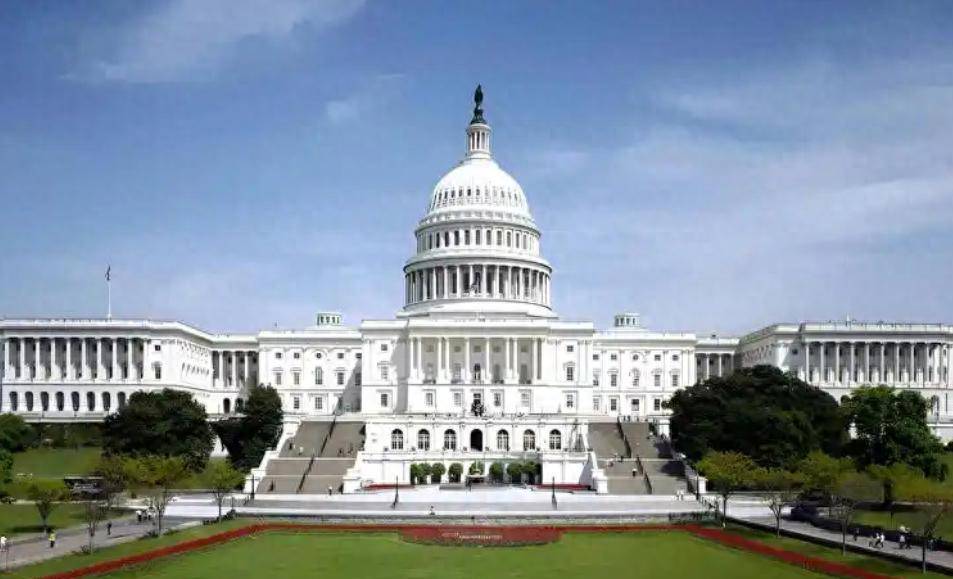
美国证交会暂停IPO申请 美国推迟多项经济数据发布
Xin Lang Cai Jing· 2025-10-03 11:42
Core Points - The U.S. federal government has entered a shutdown for the first time in nearly seven years, impacting various public services and economic data releases [1] - The shutdown has led to the suspension of IPO applications by the U.S. Securities and Exchange Commission (SEC), causing delays for many companies looking to go public [1] - Companies directly or indirectly associated with the government are experiencing noticeable pressure on their stock prices due to the shutdown [1] - The release of key economic data, including unemployment claims and durable goods orders, has been postponed as a result of the government shutdown [1]
金融监管系统新一轮人事调整,涉及多个地方局
Zheng Quan Shi Bao· 2025-10-03 06:57
Core Insights - A new round of leadership adjustments has occurred in the local financial regulatory bureaus, with significant changes in six regions due to the return of two bureau heads to the central financial regulatory authority [1][2] - By the end of the year, 18 out of 36 local bureaus have experienced leadership changes, representing 50% of the total [1][4] - The trend shows a younger leadership demographic, with 31 of the current bureau heads born in the 1970s or later [4][5] Leadership Changes - The leadership changes were primarily triggered by the return of the heads from Shandong and Shanxi to the central authority, leading to a series of adjustments in other regions [2][4] - Key appointments include: - Xie Guijun, former head of Shandong, and Tan Zhen, former head of Shanxi, returning to the central authority [2] - Ni Jinqian, born in the 1970s, appointed as the new head of Shanxi [2] - Liu Lixin and Jing Jinsheng appointed as heads of Liaoning and Yunnan, respectively [2][3] Demographic Trends - The adjustments have resulted in a younger leadership team, with an increase in the number of bureau heads from the "post-70s" generation [4][5] - Notably, several newly appointed heads have backgrounds as discipline inspection secretaries, indicating a focus on governance and oversight [5][6] Summary of Adjustments - A detailed table of recent leadership changes highlights the transitions across various local financial regulatory bureaus, including: - Shanxi: Ni Jinqian replaces Tan Zhen - Inner Mongolia: Gao Wangdong replaces Liu Lixin - Liaoning: Liu Lixin replaces Yu Lin - Shandong: Yu Lin replaces Xie Guijun - Qinghai: Zhao Jiang replaces Jing Jinsheng [7][8]
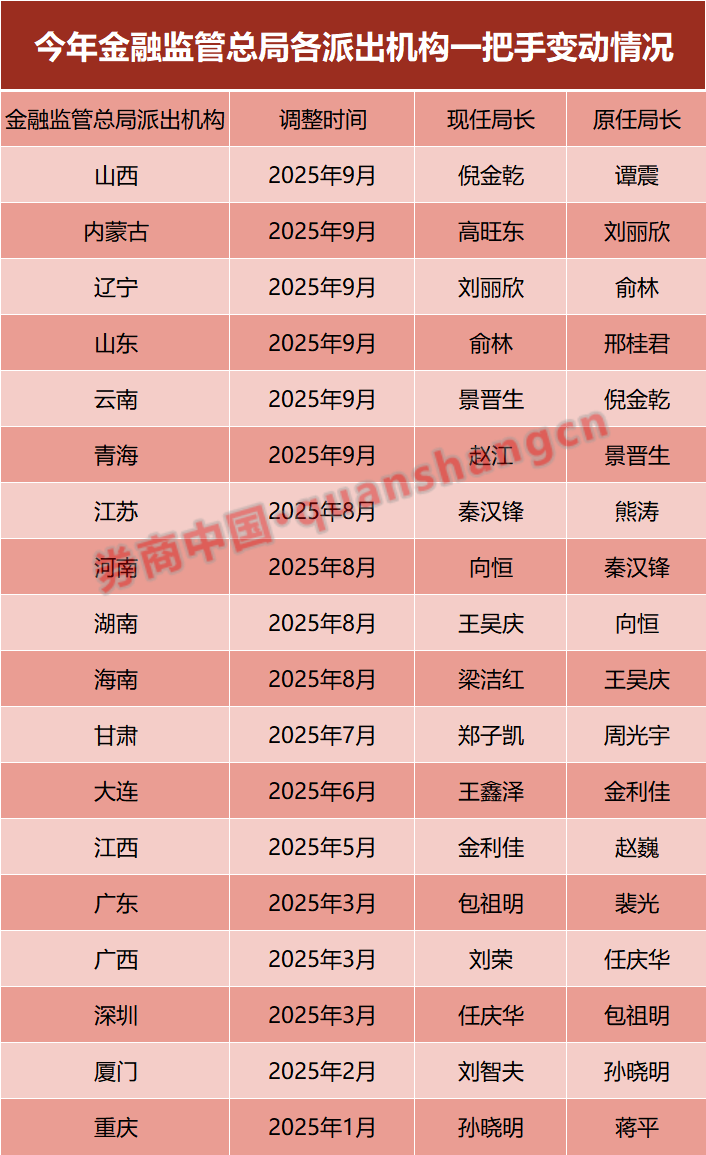
金融监管系统新一轮人事调整!涉及多个地方局
证券时报· 2025-10-03 06:28
Core Viewpoint - The recent adjustments in the leadership of local financial regulatory agencies in China indicate a significant shift, with 50% of the agencies experiencing changes in their heads this year, reflecting a trend towards younger leadership and a focus on regulatory experience [1][6]. Group 1: Leadership Changes - A new round of leadership adjustments occurred in local financial regulatory agencies, primarily triggered by the return of the heads from Shandong and Shanxi to the central regulatory authority [3][6]. - As of now, 18 out of 36 local regulatory agencies have seen changes in their leadership this year, with a notable increase in the number of leaders born in the 1970s, now totaling 31 [1][6]. - The new heads of the Shandong and Shanxi financial regulatory agencies, both born in the 1970s, have extensive regulatory experience, with previous roles in significant regulatory departments [3][6]. Group 2: Background of New Leaders - The new head of the Shandong Financial Regulatory Bureau, Xing Guijun, and the new head of the Shanxi Financial Regulatory Bureau, Tan Zhen, both have a strong background in regulatory roles, having served in various capacities within the former banking and insurance regulatory commissions [3][6]. - The leadership changes also include younger leaders, such as Ni Jinqian, who is now the youngest head among the 36 local agencies, previously serving in multiple regulatory roles [3][6]. Group 3: Trends in Leadership Appointments - Many of the newly appointed heads have backgrounds as discipline inspection secretaries, indicating a trend towards appointing leaders with strong oversight and compliance experience [7]. - The adjustments are part of a broader strategy to build a robust financial regulatory team, emphasizing the importance of regulatory experience and the implementation of rotation and exchange systems among leaders [7].

美国多家金融监管机构“停摆”,IPO受理暂停
Bei Jing Ri Bao Ke Hu Duan· 2025-10-02 14:17
Group 1 - The U.S. federal government shutdown has led to over 90% of employees at the Securities and Exchange Commission (SEC) being placed on unpaid leave, with only about 393 employees remaining to handle urgent enforcement and market oversight tasks [1] - The Commodity Futures Trading Commission (CFTC) has retained only 5.7% of its 543 employees during the shutdown to ensure market supervision and fraud prevention [1] - The shutdown may delay or cancel the release of key economic data, affecting investors' ability to assess macroeconomic trends and potentially leading to asset price volatility [1] Group 2 - The SEC will continue to process regular corporate filings but will suspend the acceptance of initial public offering (IPO) applications, which could hinder the recent recovery in the U.S. IPO market [1] - As of September 29, 2023, there have been 263 IPOs in the U.S. this year, raising a total of $52.94 billion, the highest since 2021 [1] - The potential impact of the shutdown may also affect the approval of cryptocurrency-linked exchange-traded funds (ETFs), which were expected to launch in early October [2]
美国暂停受理IPO
Xin Lang Cai Jing· 2025-10-02 11:37
Core Points - The U.S. federal government shutdown has led to significant staffing reductions at key financial regulatory agencies, with the SEC furloughing over 90% of its employees, retaining only about 393 for urgent enforcement and market oversight [1] - The CFTC has retained only 5.7% of its 543 employees during the shutdown, which may hinder its ability to monitor markets and prevent fraud [1] - The shutdown could delay or cancel the release of critical economic data, affecting investor assessments of macroeconomic trends and potentially leading to asset price volatility [1] - The SEC will continue to process routine corporate filings but will suspend IPO applications, which may dampen the recent recovery in U.S. IPO activity [1] - As of September 29, 2023, U.S. IPOs have raised $52.94 billion this year, the highest since 2021, with 263 IPOs completed [1] Industry Impact - The shutdown may impact the approval of several cryptocurrency-linked ETFs, which were expected to launch in early October [2] - Democratic Congresswoman Maxine Waters warned that the shutdown poses significant risks to financial markets and investors, particularly at a time when strong regulation is needed [2] - The Federal Reserve and the FDIC will continue to operate normally, as their funding does not rely on congressional appropriations [2]
Thailand Plans Wider Crypto ETFs Beyond Bitcoin
Yahoo Finance· 2025-10-02 11:04
Core Viewpoint - Thailand's SEC is developing regulations to expand cryptocurrency ETFs beyond Bitcoin, aiming to enhance investment opportunities in the digital asset space [2][5]. Group 1: Expanded Crypto ETFs - The SEC is drafting regulations that would allow mutual funds and institutional investors to create cryptocurrency ETFs that include a basket of cryptocurrencies [2]. - Currently, Thai investors can only access crypto by purchasing tokens directly or through licensed asset managers using overseas ETFs, but the new initiative will enable domestic offerings of crypto ETFs [3]. - This move is part of a broader strategy to make tokenized instruments mainstream investment options, especially as younger investors seek alternative assets [4]. Group 2: Regulatory Oversight - The SEC is pursuing stronger enforcement measures, including a proposed bill that would allow it to suspend transactions upon detecting irregularities and investigate cases like insider trading [6][7]. - The SEC's enforcement currently relies on limited police resources, and expanding its authority is deemed essential for restoring investor confidence [7]. - New regulatory changes require all licensed digital asset businesses to use SEC-approved auditors, effective October 2025, to strengthen internal controls and enhance investor protection [8]. Group 3: Strategic Objectives - The initiatives reflect the SEC's dual strategy of expanding investment opportunities while reinforcing institutional safeguards to support these opportunities [9].
【特稿】美国多家金融监管机构“停摆” IPO受理暂停
Xin Hua She· 2025-10-02 10:07
Group 1 - The U.S. federal government shutdown has led to over 90% of employees at the Securities and Exchange Commission (SEC) being placed on unpaid leave, with only about 393 employees remaining to handle urgent enforcement and market oversight tasks [1] - The Commodity Futures Trading Commission (CFTC) has retained only 5.7% of its 543 employees during the shutdown, which may hinder its ability to supervise markets and prevent fraud [1] - The shutdown could delay or cancel the release of key economic data, affecting investors' assessment of macroeconomic trends and potentially leading to asset price volatility [1] Group 2 - The SEC will continue to process routine corporate filings but will suspend the acceptance of initial public offering (IPO) applications, which may dampen the recent recovery in U.S. IPO activity [1] - As of September 29, 2023, U.S. IPOs have raised a total of $52.94 billion from 263 offerings this year, the highest since 2021 [1] - The shutdown may also impact the approval of cryptocurrency-linked exchange-traded funds (ETFs), which were expected to launch in early October [2]
香港金管局:截至8月底外汇基金总资产为40702亿港元
智通财经网· 2025-09-30 08:41
Core Insights - The total assets of the foreign exchange fund as of August 31, 2025, amounted to HKD 40,702 billion, a decrease of HKD 324 billion compared to the end of July 2025, with foreign currency assets decreasing by HKD 361 billion and Hong Kong dollar assets increasing by HKD 37 billion [1] Group 1 - The decrease in foreign currency assets is primarily attributed to the sale of US dollars under the currency board system [1] - The increase in Hong Kong dollar assets is mainly due to the revaluation of Hong Kong stocks at market price [1] Group 2 - As of August 31, 2025, the monetary base was HKD 20,142 billion, a reduction of HKD 284 billion, representing a decrease of 1.4% compared to the end of July 2025 [1] - The reduction in the monetary base is mainly due to the purchase of Hong Kong dollars under the currency board system, although this decrease was partially offset by an increase in the total amount of liability certificates [1] Group 3 - The total amount of supporting assets decreased by HKD 803 billion to HKD 22,112 billion, a decline of 3.5% [1] - The decrease in supporting assets is mainly due to the transfer of assets from the supporting portfolio to the investment portfolio as approved by the Foreign Exchange Fund Advisory Committee, as well as the sale of US dollars under the currency board system [1] - The support ratio fell from 112.19% at the end of July 2025 to 109.78% at the end of August 2025 [1]
美元地位越来越弱?全球结算占比不足50%,人民币强势抢夺市场
Sou Hu Cai Jing· 2025-09-29 16:17
Group 1 - The recent discussions around Hong Kong brokers checking Chinese accounts and the removal of mandatory foreign exchange settlement are seen as part of a natural economic evolution rather than confrontational actions against the dollar [2][5] - The account checks in Hong Kong are aligned with global capital regulation trends, aiming to distinguish between legitimate investors and those engaging in illegal activities [5][6] - The removal of mandatory foreign exchange settlement reflects a long-term policy shift that allows businesses to manage currency risks based on their needs, rather than a sudden rejection of the dollar [8][24] Group 2 - The value of currency is fundamentally tied to its ability to be exchanged for real productive capacity, rather than being anchored to commodities like gold or oil [10][11] - Historical examples illustrate that an increase in currency supply without a corresponding increase in production leads to inflation and currency devaluation [11][13] - The current global reliance on the dollar is diminishing as other economies, such as Russia, are willing to accept currencies like the yuan for trade, reflecting a shift in production capabilities [15][18] Group 3 - The long-term trend indicates that the yuan is likely to appreciate gradually due to China's significant manufacturing capacity, which surpasses that of the US, Japan, and Germany combined [20][22] - The gradual appreciation of the yuan is intended to protect export-oriented businesses from sudden cost increases, allowing them to transition towards higher quality and brand-focused strategies [22][24] - Despite the yuan's current small share in global trade settlements, its usage is steadily increasing, particularly in trade with ASEAN and Russia, indicating a gradual expansion rather than a complete replacement of the dollar [24][26]