
储能

Search documents
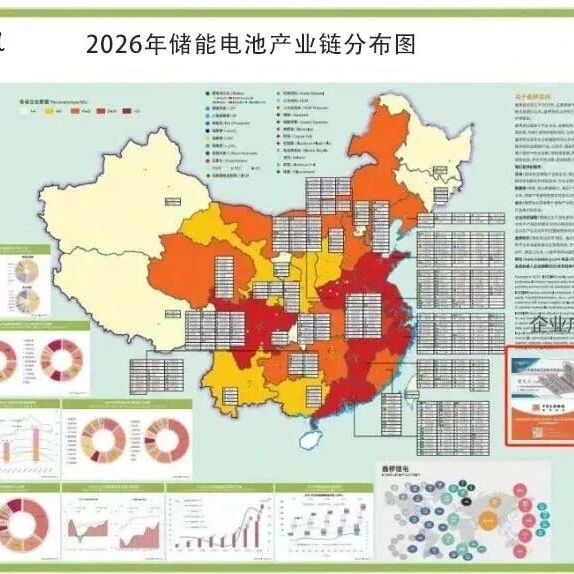
招商!鑫椤资讯2026中国储能产业分布图
鑫椤锂电· 2026-03-09 06:52
Core Viewpoint - The article emphasizes the importance of a distribution map for energy storage companies, serving as a targeted advertisement to reach decision-makers in the industry [1]. Group 1: Target Audience - The distribution map is aimed at key decision-makers in energy storage system procurement, upstream and downstream enterprises in the industry chain, government investment departments, and investment institutions [3]. Group 2: Map Features - The regional layout heat map precisely marks leading enterprises and industrial clusters in key provinces and cities across the country [4]. - The industry chain panorama covers core enterprises from lithium mining to battery cells, PCS, system integration, EPC, and applications [4]. - Key projects are highlighted within the map [4]. Group 3: Policy Insights - The policy heat index provides a clear overview of subsidy intensity, storage requirements, and electricity pricing policies across various provinces [5].

政府工作报告两次提及氢能,菲律宾启动3.3GW海风招标
Ping An Securities· 2026-03-09 06:18
Investment Rating - The report maintains a "Strongly Outperform" rating for the industry [1]. Core Insights - The government work report emphasizes hydrogen energy, indicating a commitment to developing this sector [6]. - The Philippines has initiated a 3.3GW offshore wind tender, signaling growth potential in emerging offshore wind markets [5][10]. - The report highlights a decline in polysilicon prices, which may impact the solar energy sector negatively [5][6]. Summary by Sections Wind Power - The Philippines' Department of Energy has launched the fifth round of green energy auctions, offering 3.3GW of fixed-bottom offshore wind capacity, with results expected by September 22 [5][10]. - The wind power index decreased by 0.02%, outperforming the CSI 300 index by 1.04 percentage points, with a current PE_TTM valuation of approximately 25.45 times [3][11]. Solar Power - Polysilicon prices have significantly declined, with n-type polysilicon trading between 45,000 to 53,000 CNY per ton, averaging 48,300 CNY per ton, a decrease of 6.58% week-on-week [5][6]. - The solar equipment index fell by 2.38%, with specific declines in solar cell and module indices [3]. Energy Storage & Hydrogen Energy - The government work report mentions hydrogen energy twice, highlighting the establishment of a national low-carbon transition fund to foster new growth points in hydrogen and green fuels [6]. - The report suggests a high demand for new energy storage solutions, recommending investments in leading companies in the domestic and international markets [6]. Investment Recommendations - For energy storage, the report recommends focusing on large-scale storage and competitive companies like Sungrow Power and Huaneng [6]. - In the lithium battery sector, it suggests investing in companies like CATL and Penghui Energy, as the industry emerges from a price decline cycle [6]. - In wind power, it highlights opportunities in companies like Goldwind Technology and Mingyang Smart Energy, especially with the acceleration of deep-sea and floating wind projects [6]. - In solar power, it emphasizes the importance of companies involved in the BC cell industry and those with storage capabilities, such as LONGi Green Energy and Trina Solar [6].





南网储能20260306
2026-03-09 05:18
Summary of Conference Call Notes Company and Industry Overview - The conference call discusses the operations and strategies of **Nanfang Energy Storage**, focusing on the **pumped storage and new energy storage** sectors in the context of recent regulatory changes and market dynamics. Key Points and Arguments Regulatory Impact - The **114 Document** introduces a capacity compensation mechanism for new energy storage, which is expected to positively influence the company's operations. However, the actual impact will depend on the detailed implementation by provincial authorities and the operational performance of power stations in the market [3][11] - Existing pumped storage plants will continue to operate under the framework established by the **633 Document**, with minimal impact expected on their overall performance due to stable pricing principles [2][3] Capacity and Investment Plans - The company has a **500-600 MW** resource reserve for new energy storage and plans to prioritize investments in the five southern provinces and the northwest region, which are rich in renewable energy [2][5] - The company currently has **8 pumped storage projects** under construction, with a total capacity nearing **10 million kW**. The first units are expected to be operational between **2026 and 2029** [5][6] Financial Performance and Dividend Policy - The company maintains a stable dividend policy, committing to a payout ratio of at least **30%** and plans to distribute dividends twice a year. Current cash flow projections support this dividend strategy during the **14th Five-Year Plan** period [2][8] - The internal rate of return (IRR) for the Ningxia Zhongwei project is approximately **4%**, with a strict investment policy that prohibits loss-making projects [6][12] Market Participation and Strategy - The company is preparing to enter the electricity market and auxiliary service markets, with a focus on a step-by-step approach based on provincial government directives. The participation of existing pumped storage plants in the market is still under evaluation [4][9] - The company has developed an AI-assisted pricing model for electricity trading, focusing primarily on the spot market while considering auxiliary services as a supplementary strategy [2][8] Cost Comparisons and Technology - The EPC cost for new energy storage projects has decreased to **0.7-0.8 CNY/Wh**. While pumped storage has a higher unit cost, its overall lifecycle cost and regulation capabilities are considered superior [9][12] - The company is exploring various technology routes, primarily lithium batteries, while also preparing for demonstrations of alternative technologies like flow batteries [6][9] Future Outlook - The company anticipates that the **14 Document** will lead to clearer capacity compensation standards, which will influence future investment strategies and project timelines [6][12] - The overall investment in energy storage during the **14th Five-Year Plan** is still being defined, with no specific percentage of total investment allocated yet [7][12] Additional Important Content - The company emphasizes the importance of aligning its projects with the needs of the power system and the regulatory environment, which will dictate the feasibility and timing of new projects [10][11] - The company is the only entity within the Southern Power Grid system authorized to invest, develop, and operate grid-side energy storage, ensuring no direct competition in this sector [6][7]

碳酸锂:延续供需紧平衡区间震荡企稳,成材:重心下移偏弱运行
Hua Bao Qi Huo· 2026-03-09 04:53
Report Summary 1. Report Industry Investment Rating No information provided. 2. Core View of the Report The lithium carbonate market will continue to maintain a tight supply - demand balance and stabilize with fluctuations under the fermentation of geopolitical risks [4]. 3. Summary by Relevant Catalogs Market Performance - Last week, the main contract of lithium carbonate oscillated in the range of 151,100 - 160,900 yuan/ton, trading volume shrank to 228,000 lots, and open interest increased by 1,529 lots to 333,900 lots. The net institutional position decreased month - on - month. The average price of SMM battery - grade lithium carbonate was 155,250 yuan/ton. The upstream lithium salt plants were still reluctant to sell, while a small number of material factories made bargain purchases. The market inquiries increased, but actual transactions were light [1]. Fundamental Analysis - **Supply**: Last week, the prices of raw materials (SMM lithium spodumene concentrate CIF China, lithium mica, and amblygonite) decreased month - on - month. The SMM weekly operating rate rebounded to 51.5%, and the total output increased to 22,590 tons (+768 tons). In February, the export of lithium carbonate from Chile to China increased by 32.04% month - on - month and 85.89% year - on - year, strengthening the medium - term supply loosening expectation [2]. - **Demand**: Last week, the production and inventory of ternary lithium iron increased. As of February 8, the penetration rate of new energy vehicle sales dropped to 36.3%. The production and sales of energy - storage cells were booming with low inventory, which was a structural highlight. SMM predicted that the production of ternary lithium iron in March would increase by more than 19% month - on - month, and the industrial chain production schedule maintained high prosperity [2]. - **Inventory**: Last week, the SMM four - place social inventory decreased to 43,000 tons (-1,300 tons), the sample weekly inventory decreased to 99,400 tons, and the total inventory days decreased to 27.9 days, maintaining a tight balance overall [2]. Macro - policy Analysis - **International**: The 15% temporary tariff policy of the US White House is still within the window period, which is a phased positive for demand [3]. - **Domestic**: The subsidy for trading in old cars for new ones and the export tax rebate for batteries directly stimulate terminal consumption and improve macro - liquidity. The management method for the comprehensive utilization of new energy vehicle power batteries raises the recycling threshold and eliminates backward production capacity, optimizing the domestic supply structure and raising the cost support center in the long term. The development of Qinghai Salt Lake, the "15th Five - Year Plan" for energy storage, and a series of deployments in the Central Economic Work Conference work together to support the long - term supply - demand balance. The central bank's structural interest rate cut strengthens the medium - and long - term positive atmosphere [3]. Impact of Geopolitical Factors The escalation of the US - Iran conflict has increased the risk - aversion sentiment, and the US dollar index has fluctuated more. Short - term price fluctuations may intensify, but its impact is subject to the dominant tight supply - demand balance pattern in the lithium market [4].
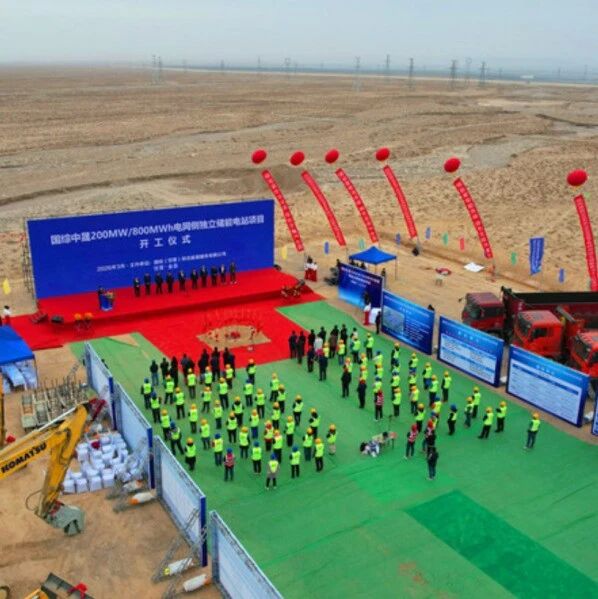
200MW/800MWh!金昌电网侧独立储能项目开工
中关村储能产业技术联盟· 2026-03-09 04:08
文 | 中国甘肃网 联系人: 曹先生 13552712189 李先生 13581741680 柏女士 18031451007 相关阅读 王先生 13581885520 赵先生 18210188771 全球储能协会组织携手ESIE 2026!开启国际储能合作新篇章 国家发改委定调!新型储能列入六大新兴支柱产业 详细日程发布 | ESIE 2026主题论坛:储能+AIDC协同发展 近日,金昌市重点工程—— 国综中晟200MW/800MWh电网侧独立储能项目在金川区西坡光伏产业园正式开工。该项目总投资约7.8亿元。 该项目采用成熟的磷酸铁锂电池技术,规划建设40组5MW/20MWh储能单元并配套330kV升压站 ,展现了大规模、长时储能的系统集成实 力;投运后,该项目将作为区域电网的核心"调节器"与"蓄水池",在提升电网调频调峰能力、平抑新能源波动及促进清洁能源消纳方面发挥关 键作用, 预计每年可消纳约2.1亿千瓦时新能源电量,减排二氧化碳约16.5万吨 ,不仅为区域电力系统安全稳定运行提供有力支撑,更实现了 显著的绿色节能效益。 中国储能产业发展的风向标 第十四届储能国际峰会暨展览会 ESIE 2026 时间: ...
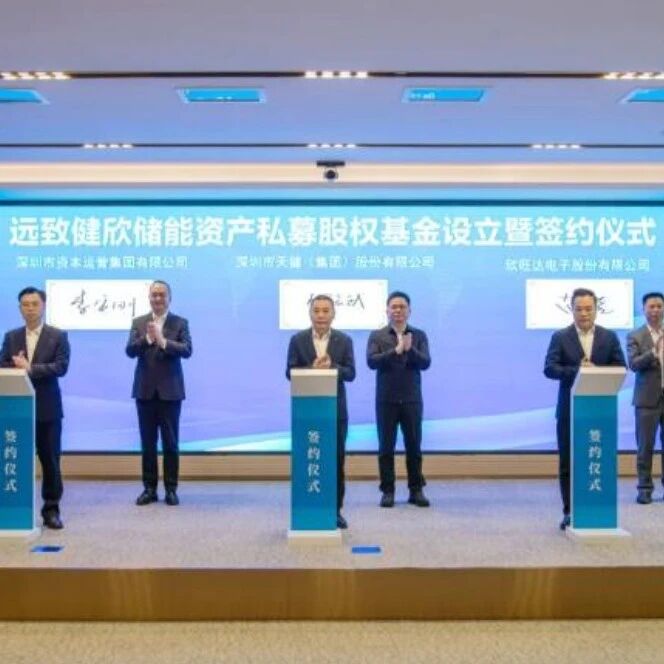
欣旺达携手天健集团设立5亿基金
中关村储能产业技术联盟· 2026-03-09 04:08
Group 1 - The "Yuan Zhi Jian Xin Energy Storage Asset Private Equity Fund" has been officially established with a total scale of 500 million yuan, focusing on new energy storage stations primarily based on electrochemical storage, integrated solar storage, and energy management systems [3][5] - XINWANDA, a leading global provider of lithium battery and energy storage system solutions, plays a crucial role in this collaboration by providing industry leadership and technical support [5] - The fund has already reserved a number of high-quality projects in Guangdong, Zhejiang, Anhui, and Hebei, aiming to promote energy transition and cultivate new productive forces through capital operations and complementary industrial advantages [5] Group 2 - XINWANDA has confirmed its participation in the 14th International Energy Storage Summit and Exhibition (ESIE 2026), inviting industry peers to attend this global energy storage industry event [6] - The ESIE 2026 will take place from March 31 to April 3, 2026, at the Capital International Exhibition Center in Beijing, with free admission for attendees [7]


智联光储氢 绿链新未来 | CIHC 2026中国氢能展&第十六届中国国际清洁能源博览会将于3月25日在京盛大启幕
势银能链· 2026-03-09 03:30
Core Viewpoint - The 16th China International Clean Energy Expo (CEEC 2026) will be held from March 25 to 27, 2026, in Beijing, serving as a pivotal platform for global clean energy policy, technological revolution, and business model convergence, particularly in the context of China's "dual carbon" strategy and the 14th Five-Year Plan [3][11]. Group 1: Event Overview - CEEC 2026 is positioned as a top window to understand China's energy transition, focusing on the core theme "Smart Integration of Solar, Storage, and Hydrogen for a Green Future" [8]. - The expo will feature a multi-dimensional matrix including the China Photovoltaic Innovation Exhibition, China Energy Storage Conference, CIHC China Hydrogen Exhibition, and the inaugural China New Energy AI Exhibition, collectively illustrating the ecosystem of the new power system [8][15]. Group 2: Policy Alignment - The event aligns with recent policy signals, such as the National Energy Administration's guidance on promoting integrated development of new energy, which emphasizes that by 2030, integrated development will be a key approach for new energy [9]. - The Ministry of Industry and Information Technology and other departments have issued guidelines for zero-carbon factory construction, indicating a focus on sectors like photovoltaics and lithium batteries [10]. Group 3: Industry Transformation - CEEC 2026 reflects the industry's shift from "scale-oriented" to "value competition," addressing challenges such as renewable energy consumption and system collaboration barriers [8][13]. - The expo aims to break down industry barriers and information silos, promoting a new industrial pattern characterized by "networked symbiosis" rather than isolated breakthroughs [13]. Group 4: Specialized Exhibitions - The China Photovoltaic Innovation Exhibition will focus on governance and achieving supply-demand balance in the photovoltaic industry, with discussions on transitioning from scale and price competition to energy efficiency and technological innovation [16]. - The Fourth China Energy Storage Conference will explore policy benefits and industry trends, emphasizing new operational models and safety in energy storage [18]. - The CIHC 2026 will serve as a global platform for hydrogen energy, showcasing the integration of green hydrogen with various industrial applications [20]. Group 5: Participation and Engagement - CEEC 2026 has attracted numerous leading enterprises, including state-owned enterprises and international exhibitors, indicating strong industry interest and participation [25]. - The event will feature a rich array of activities, including international conferences, product launches, and interactive public engagement initiatives to enhance awareness of clean energy [26][28].
装备制造行业周报(3月第1周):1-2月挖掘机出口态势良好-20260309
Century Securities· 2026-03-09 02:39
Investment Rating - The report does not explicitly state an investment rating for the industry [3]. Core Insights - The excavator export situation is favorable, with a total of 35,934 units sold in January-February 2026, representing a year-on-year increase of 13.1%, while domestic sales decreased by 9.19% [6]. - The photovoltaic sector is experiencing a rise in polysilicon prices, but overall demand remains weak, leading to a "price without market" scenario [6]. - The energy storage sector is seeing fluctuations in lithium prices, with battery-grade lithium carbonate averaging around 153,000 RMB per ton, reflecting an increase of 11.7% [6]. Summary by Sections Market Overview - In the past week, the mechanical equipment, electric power equipment, and automotive industry indices changed by -2.81%, 0.55%, and -2.76%, respectively, ranking 19th, 6th, and 16th among 31 first-level industries [11]. Industry News and Key Company Announcements - On March 6, it was reported that green electricity from Guangxi and Yunnan will be traded in the East China region, with a total of 314 million kilowatt-hours of green electricity expected [21]. - The National Development and Reform Commission announced major projects under the 14th Five-Year Plan, including significant investments in renewable energy and infrastructure [21]. - IDC forecasts that the global intelligent robot hardware market will approach $30 billion by 2026, with China leading the growth in the embodied intelligent robot market [21]. - BYD's chairman announced rapid charging capabilities for their second-generation blade battery, achieving 70% charge in just 5 minutes [21].
装备制造行业周报(3月第1周):1-2月挖掘机出口态势良好
Century Securities· 2026-03-09 02:24
Investment Rating - The report does not explicitly state an investment rating for the industry [3]. Core Insights - The excavator export situation is favorable, with a total of 35,934 units sold in January-February 2026, representing a year-on-year increase of 13.1%, while domestic sales decreased by 9.19% [6]. - The photovoltaic sector is experiencing a rise in polysilicon prices, but overall demand remains weak, leading to a "price without market" scenario [6]. - The energy storage sector is seeing fluctuations in lithium prices, with battery-grade lithium carbonate averaging around 153,000 RMB per ton, reflecting an 11.7% increase [6]. Market Overview - In the past week, the mechanical equipment, electric power equipment, and automotive industry indices changed by -2.81%, 0.55%, and -2.76%, respectively, ranking 19th, 6th, and 16th among 31 first-level industries [11]. - The performance of sub-sectors within the mechanical equipment and electric power equipment industries showed mixed results, with grid equipment rising by 6.66% and motors declining by 5.82% [14]. Industry News and Key Company Announcements - On March 6, it was reported that green electricity from Guangxi and Yunnan will be traded in the East China market, with a total of 314 million kilowatt-hours of green electricity expected [21]. - The National Development and Reform Commission announced plans for major strategic projects, including renewable energy initiatives, to support modernization and improve living standards [21]. - A report indicated that the global smart robotics hardware market is projected to approach $30 billion by 2026, with China leading the growth in the embodied intelligent robotics market [21].
供需边际转松,价格高位震荡
Yin He Qi Huo· 2026-03-09 01:37
Report Industry Investment Rating - Not provided in the given content Core Viewpoints - In March, the supply - demand situation of lithium carbonate marginally eased, but due to the low overall inventory - sales ratio, the need for upstream restocking, good downstream demand, and high enthusiasm for price - setting, there is support at the lower end. It is recommended to wait for the macro - environment to stabilize before buying [6]. - Strategies include: unilateral trading (buy when the macro - environment stabilizes), arbitrage (3 - 5 positive spread enters the delivery receipt stage), and options (protective strategy) [6]. Summary by Directory Chapter 1: Demand Analysis 1.1 New Energy Vehicles - **Domestic Market**: In January 2026, China's new energy vehicle production and sales reached 1.041 million and 0.945 million respectively, with year - on - year growth of 2.5% and 0.1%. New energy passenger vehicle production was 0.938 million, a year - on - year decrease of 0.6%, and the retail penetration rate was 38.6%. The cumulative production of power cells from January to February increased by 33% year - on - year, and it is expected to reach the January level in March. In January, factors such as the rush to export ternary batteries due to the decline in export tax rebates, the increase in battery capacity per vehicle, and the surge in heavy - truck sales due to subsidies were more beneficial to power batteries than vehicle sales [13]. - **Global Market**: In 2025, the cumulative sales of global new energy vehicles increased by 19% year - on - year to 20.542 million, compared with a 26% year - on - year increase in the same period last year. European new energy vehicle sales from January to December 2025 increased by 31% year - on - year to 3.887 million, compared with a 3% year - on - year decrease in the same period last year, and a 22% year - on - year increase in January 2026. US new energy vehicle sales from January to December 2025 decreased by 3% year - on - year to 1.495 million, compared with an 11% year - on - year increase in the same period last year, and a 25% year - on - year decrease in January 2026. China's new energy vehicle exports from January to December 2025 were 2.583 million, a year - on - year increase of 103%, compared with an 11% year - on - year increase in the same period last year, and a 101% year - on - year increase in January 2026 [20]. 1.2 Energy Storage Market - In January 2026, the newly commissioned new - type energy storage project installation scale in China was 3.78GW/10.90GWh, a year - on - year increase of 62%/106% and a month - on - month decrease of 84%/86%, with independent energy storage accounting for 90%. The new - type energy storage market started well. Policy support, such as the capacity tariff mechanism for grid - side independent new - type energy storage proposed in Document No. 114 of the National Development and Reform Commission in 2026, has promoted the development of the energy storage market. After the Spring Festival, the downstream demand for restocking was concentratedly released [25]. 1.3 Cell and Cathode Production Scheduling - SMM's January production data showed that battery production decreased by 6.2% month - on - month, with ternary batteries decreasing by 5.5% and lithium iron phosphate batteries decreasing by 5.6%. Power cell production decreased by 5.2% month - on - month, while energy storage cell production increased by 0.8% month - on - month. Ternary cathode material production decreased by 0.9% month - on - month, and lithium iron phosphate production decreased by 1.8% month - on - month. Electrolyte production decreased by 6.4% month - on - month. - SMM's February - March production scheduling data showed that battery production decreased by 11% in February and increased by 23% in March. Ternary cathode material production decreased by 15% in February and increased by 21% in March; lithium iron phosphate production decreased by 11% in February and increased by 15% in March. Electrolyte production decreased by 10% in February and increased by 22% in March. It is expected that each link will increase by 16 - 23% in March [33]. Chapter 2: Supply Analysis 2.1 Smelter Restart and Lithium Carbonate Production Recovery - From January to February, due to the maintenance of some smelters, production decreased month - on - month but still increased by 42% year - on - year. In March, with the restart of production and the ramping up of new production capacity, the monthly production is expected to exceed 100,000 tons, reaching a historical high. Although there was a situation of smelting losses due to the faster decline of lithium prices than ore prices, smelters did not reduce production due to losses because they had sufficient concentrate inventories before the Spring Festival. The production increased by more than 1,600 tons during the Spring Festival compared with before the festival, and increased by 768 tons week - on - week in the first week after the festival, indicating that smelters have restarted production [41]. 2.2 China's Monthly Lithium Carbonate Production by Raw Material - The supply of mica ore is insufficient, which affects the production of lithium carbonate from mica [42]. 2.3 Lithium Carbonate Supply Increase in March - In January - February, Chile's lithium salt exports were at a high level. Considering the delay in imports during the Spring Festival, they may arrive at Chinese ports in March - April, including a large amount of lithium sulfate as raw material for lithium carbonate. The supply of lithium carbonate increased significantly in March [49]. Chapter 3: Supply - Demand Balance and Inventory 3.1 Lithium Carbonate Supply - Demand Balance Estimation - Not elaborated in detail in the given text, only a graph of China's lithium carbonate supply - demand balance is presented [53]. 3.2 Dynamic Restocking Space in the Middle and Upstream of Lithium Carbonate - Since August 2025, there has been continuous destocking for 7 months, and the domestic inventory - sales ratio has dropped to the level of early 2022, with a tight fundamental situation supporting price increases. Inventory has shifted downstream, and there is still restocking space in the middle and upstream. The smelter inventory has dropped to the lowest level since SMM has data. Since March, the destocking speed has slowed down, with a 720 - ton decrease in inventory this week, and attention should be paid to the inflection point of inventory accumulation [60].