
光伏设备及元器件

Search documents
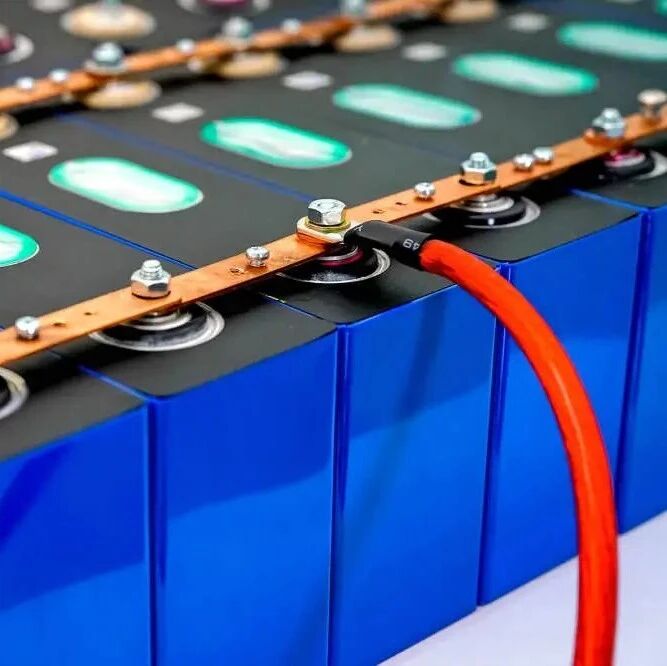
锂电池制造价格连降33个月后首涨
21世纪经济报道· 2026-03-09 11:35
Group 1: CPI Analysis - In February, the Consumer Price Index (CPI) increased by 1.0% month-on-month and 1.3% year-on-year, marking the highest month-on-month increase in nearly two years and the highest year-on-year increase in nearly three years [1][5] - The core CPI, excluding food and energy, rose by 1.8% year-on-year, the highest since 2020, indicating a gradual recovery in consumer demand, although it remains relatively low [5][7] - The increase in CPI is attributed to the concentrated release of consumer demand during the long Spring Festival holiday, with service prices rising significantly [6][7] Group 2: PPI Insights - The Producer Price Index (PPI) rose by 0.4% month-on-month but decreased by 0.9% year-on-year, with the decline narrowing for three consecutive months [2][9] - The rise in PPI is driven by increasing prices in upstream mining and smelting sectors, while midstream and downstream product prices have seen more moderate increases [2][9] - Notably, the price of lithium-ion battery manufacturing has increased by 0.2% after a 33-month decline, reflecting the effectiveness of capacity governance and anti-"involution" policies in the industry [9][10] Group 3: Industry Trends - The recent price rebound in the photovoltaic and lithium battery sectors indicates the effectiveness of policies aimed at capacity governance and reducing "involution" competition, shifting the focus from price competition to quality and profit [10] - The domestic policy cycle is entering a new phase, with significant investments in new infrastructure and modern energy systems expected to improve demand across the electrical equipment and electronic information sectors [10] - Future price stability will depend on the ability of consumer demand and corporate investment to absorb rising costs, with potential impacts on profit margins rather than significant increases in end prices [10]

2月通胀点评:输入性因素的影响或放大
Bank of China Securities· 2026-03-09 07:39
Inflation Overview - February CPI increased by 1.3% year-on-year, the highest in nearly three years, driven significantly by food prices which contributed approximately 0.30 percentage points to the CPI increase[7] - February CPI rose by 1.0% month-on-month, marking the highest growth in two years, with food prices contributing about 0.33 percentage points[7] - Core CPI in February grew by 1.8% year-on-year, up 1.0 percentage points from January[4] Price Contributions - Service prices increased by 1.6% year-on-year, contributing approximately 0.75 percentage points to the CPI[7] - In February, the combined impact of airfares, transportation rentals, travel agency fees, and hotel accommodation accounted for about 0.32 percentage points of the CPI increase[6] - The prices of aquatic products, fresh fruits, pork, lamb, beef, eggs, and poultry collectively influenced the CPI to rise by approximately 0.34 percentage points[5] PPI Trends - February PPI increased by 0.4% month-on-month, with production materials rising by 0.5%[18] - Year-on-year, February PPI decreased by 0.9%, but the decline is narrowing, indicating a potential upward trend in PPI throughout the year[25] - The increase in PPI is influenced by rising international prices of non-ferrous metals and crude oil, which have led to price increases in related domestic industries[24] Risks and Outlook - The report highlights risks of a second wave of global inflation and potential rapid economic downturns in Europe and the U.S.[37] - The ongoing geopolitical tensions in the Middle East have caused international oil prices to rise sharply, which may further impact domestic inflation in March[7]
税费政策支持中国经济向“绿”发展
Zhong Guo Xin Wen Wang· 2026-02-27 14:15
Group 1 - China's recent policies have significantly supported economic transformation towards green and low-carbon development, with notable improvements in energy structure and pollution control [1] - The sales revenue of key green product manufacturing industries, including new energy vehicles, photovoltaic equipment, and lithium-ion batteries, has grown at an annual rate of over 30% during the 14th Five-Year Plan period [1] - The green technology service industry has seen annual revenue growth rates of 51.1% for new energy, 28.5% for energy-saving, and 18.2% for environmental protection services, providing essential technical support for green transformation [1] Group 2 - In Jiangsu, tax authorities have enhanced tax collection management, leveraging green tax policies to encourage enterprises to invest in wastewater treatment, with one large paper enterprise investing over 2 billion yuan in environmental protection [2] - The Suzhou Industrial Park has created over 160 green manufacturing enterprises, with the new energy and green industry output nearing 90 billion yuan, achieving energy consumption and carbon emission intensity about one-third of the national average [2] - In Inner Mongolia, the implementation of green tax policies has led to the establishment of 437 green mines and the ecological restoration of 117 square kilometers of historical mining sites during the 14th Five-Year Plan period [2] Group 3 - The robust growth of the green industry and the continuous release of transformation dividends are driving China's economic development towards a green low-carbon transition, as analyzed by a professor from Renmin University [3]
(经济观察)税费政策支持中国经济向“绿”发展
Zhong Guo Xin Wen Wang· 2026-02-27 13:21
Core Viewpoint - China's recent tax policies are significantly supporting the transition towards a green economy, promoting low-carbon development across various sectors, particularly in renewable energy and environmental protection [1][2]. Group 1: Tax Policy Impact - The sales revenue of key green product manufacturing industries, including new energy vehicles, photovoltaic equipment, and lithium-ion batteries, has seen an annual growth rate of over 30% during the "14th Five-Year Plan" period [1]. - The sales revenue for green technology services, including new energy, energy-saving, and environmental protection, has increased annually by 51.1%, 28.5%, and 18.2% respectively [1]. - The ecological protection and environmental governance sectors have experienced an average annual revenue growth of 13.2%, providing essential technical support for the green transition [1]. Group 2: Regional Developments - In Guangxi, wind power development has accelerated, with a wind farm project benefiting from over 10 million yuan in tax reductions, easing financial pressures and ensuring project progress [2]. - In Jiangsu, tax authorities are leveraging green tax policies to encourage companies to invest in wastewater treatment, with one large paper company investing over 2 billion yuan in environmental protection, achieving a water recycling rate exceeding 90% [2]. - The Suzhou Industrial Park has established over 160 green manufacturing enterprises, generating nearly 90 billion yuan in output value from new energy and green industries, with energy consumption and carbon emissions intensity at about one-third of the national average [2]. Group 3: Coal Sector Initiatives - In Inner Mongolia, coal companies are being informed about green tax policies, with one company integrating mining reclamation with eco-tourism, creating a national mining park that has generated significant employment [3]. - This coal company has benefited from a total of 8.2269 million yuan in environmental tax reductions since 2018, which has supported the construction of green mines [3]. - During the "14th Five-Year Plan" period, Inner Mongolia has established 437 green mines and completed ecological restoration of 117 square kilometers of historically polluted mining areas [3]. Group 4: Expert Analysis - The robust growth of the green industry and the continuous release of transformation dividends are driving the economy towards a green low-carbon transition, as analyzed by experts [3].
中国石化等在台州成立综合能源公司
2 1 Shi Ji Jing Ji Bao Dao· 2026-02-27 09:48
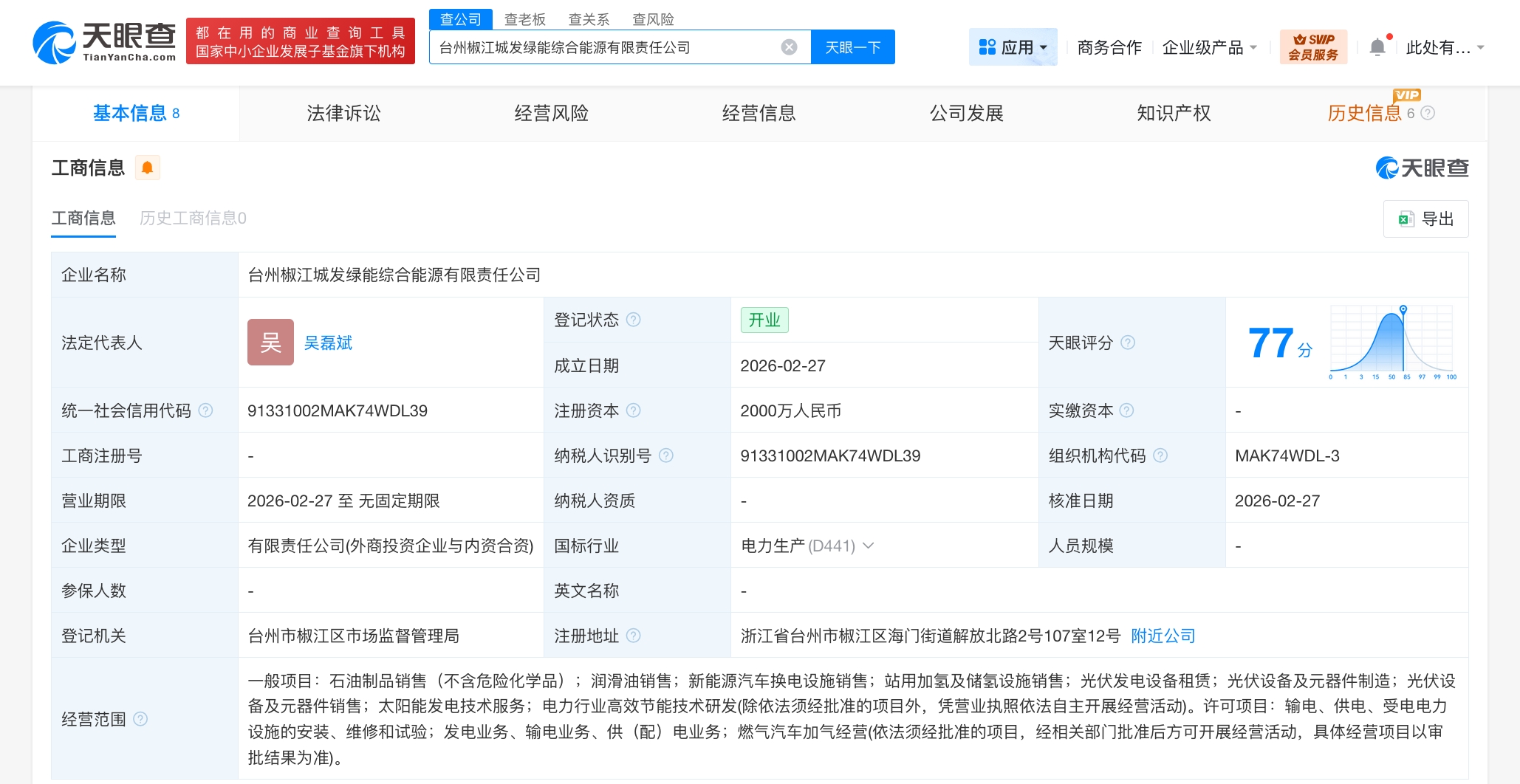
Group 1 - The establishment of Taizhou Jiaojiang Chengfa Green Energy Comprehensive Energy Co., Ltd. was recently reported, with a registered capital of 20 million RMB [1][3] - The company is co-owned by Taizhou Jiaojiang Chengfa Comprehensive Energy Co., Ltd. and Sinopec Sales Co., Ltd., indicating a partnership between a local entity and a major state-owned enterprise [1][3] - The business scope includes sales of petroleum products, lubricants, sales of new energy vehicle battery swap facilities, hydrogen production and storage facilities, photovoltaic equipment leasing, and solar power technology services [1][3] Group 2 - The company is classified as a limited liability company with foreign investment and domestic joint venture, reflecting its operational structure [3] - The legal representative of the company is Wu Leibin, and it is registered under the Taizhou Jiaojiang District Market Supervision Administration [3] - The company is involved in the electric power production industry, which aligns with current trends towards renewable energy and sustainability [3]

绿色税制推动生态保护与经济发展双向奔赴
Ren Min Wang· 2026-02-27 06:52
Group 1 - The green transformation of economic and social development is a key aspect of achieving high-quality development, with significant growth in green product manufacturing industries such as new energy vehicles, photovoltaic equipment, and lithium-ion batteries, all showing annual sales growth rates exceeding 30% during the 14th Five-Year Plan period [1] - The clean energy generation sales revenue, including wind, solar, hydro, and nuclear power, is projected to account for 42.6% of total power generation sales revenue by 2025, with wind and solar power sales revenue expected to grow at an annual rate of 25.4% during the same period [1] - The cumulative implementation of environmental protection tax incentives since its introduction in 2018 has reached 111.06 billion yuan, with significant reductions in taxes promoting pollution control and clean production [1] Group 2 - The green tax system has become a crucial support for promoting ecological protection and economic development, as demonstrated by the coal industry leader in Shanxi, which achieved 100% resource utilization of solid waste and zero wastewater discharge, resulting in a 50.29% decrease in environmental protection tax payments [2] - The wastewater treatment industry in Xinjiang has successfully achieved a stable water reuse rate of 90% and has benefited from over 280,000 yuan in tax reductions, showcasing a positive cycle of environmental investment supported by policy [3] - In Hunan Province, the cumulative implementation of environmental protection tax incentives has reached 2.882 billion yuan, facilitating the transition to ultra-low emissions and supporting the development of high-strength steel for engineering and automotive applications [4]
曜能国际新能源设备(广东)有限公司成立,注册资本500万人民币
Sou Hu Cai Jing· 2026-02-26 21:58
Core Viewpoint - Recently, the establishment of YaoNeng International New Energy Equipment (Guangdong) Co., Ltd. was reported, indicating a growing interest in the new energy sector, particularly in charging infrastructure and related technologies [1] Company Summary - YaoNeng International New Energy Equipment (Guangdong) Co., Ltd. has a registered capital of 5 million RMB [1] - The legal representative is Ke Mingfeng, with the following shareholding structure: - 80% held by Ji Group Co., Ltd. - 19% held by Ke Mingfeng - 1% held by Shenzhen Lezhi Enterprise Management Consulting Co., Ltd. [1] - The company is classified under the electricity, heat, gas, and water production and supply industry [1] Business Scope - The company's business activities include: - Sales of charging piles and electric vehicle charging - Manufacturing and sales of power distribution and control equipment - Sales of new energy propulsion equipment and battery sales - Sales of photovoltaic equipment and components - Energy storage technology services and import/export of goods and technology [1] - The company is authorized to operate without specific licensing requirements, except for projects that require approval [1]
南京中城电梯有限公司成立,注册资本1000万人民币
Sou Hu Cai Jing· 2026-02-26 21:46
Core Viewpoint - Nanjing Zhongcheng Elevator Co., Ltd. has been established with a registered capital of 10 million RMB, fully owned by Zhongtan Installation Group Co., Ltd. [1] Group 1: Company Information - The legal representative of Nanjing Zhongcheng Elevator Co., Ltd. is Zhu Junming [1] - The company is registered with a capital of 10 million RMB [1] - The business scope includes special equipment installation, modification, repair, inspection, and testing, as well as sales of special equipment and construction materials [1] Group 2: Business Operations - The company is involved in various activities such as electric vehicle charging infrastructure operation, photovoltaic equipment leasing, and solar power technology services [1] - The registered address is located at No. 148, Xinhua Road, Dachang Street, Jiangbei New District, Nanjing [1] - The company is classified as a limited liability company with a business term until February 26, 2026, with no fixed expiration [1]
爱旭股份增资至21.2亿
2 1 Shi Ji Jing Ji Bao Dao· 2026-02-26 07:41
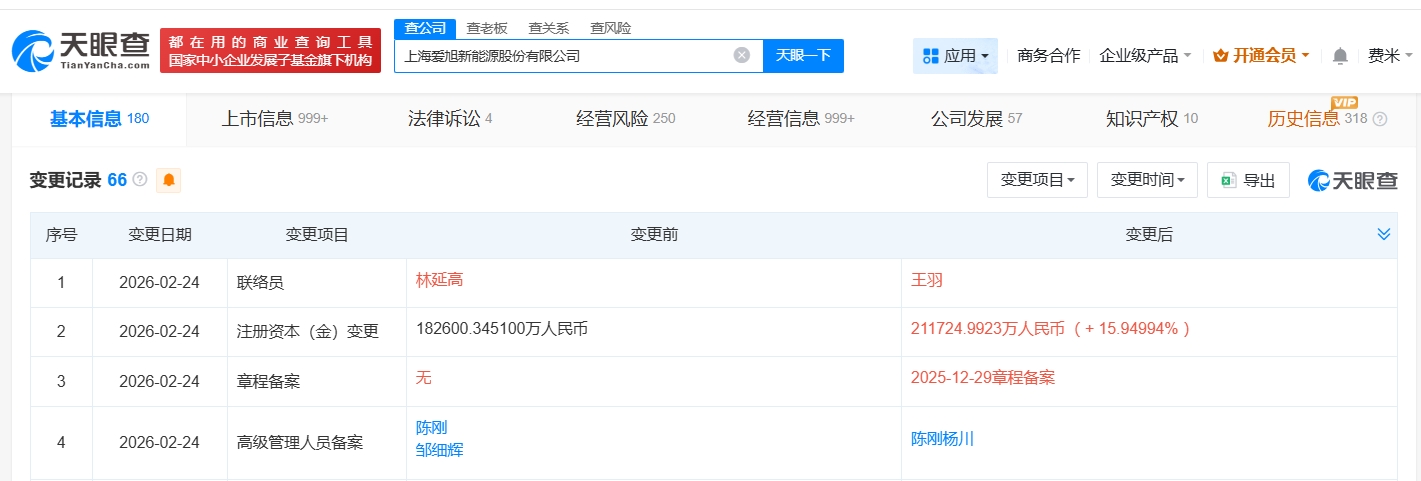
Core Viewpoint - Aiko Solar Energy Co., Ltd. (爱旭股份) has increased its registered capital from approximately 1.83 billion RMB to about 2.12 billion RMB, marking a growth of approximately 16% [1]. Company Information - Aiko Solar was established in August 1996 and is engaged in the research and development of emerging energy technologies, manufacturing and sales of photovoltaic equipment and components [1]. - The legal representative of the company is Chen Gang, and the company is co-held by Chen Gang, Zhuhai Hengqin Shunhe Enterprise Management Partnership (Limited Partnership), and Harmony Tianming Investment Management (Beijing) Co., Ltd. - Yiwu Qiguang Equity Investment Partnership (Limited Partnership) [1]. Capital Changes - The recent business change occurred on February 24, 2026, with the registered capital increasing from 1,826 million RMB to 2,117 million RMB [2]. - The capital increase reflects a significant investment in the company's growth and operational capabilities [1][2]. Shareholding Structure - Chen Gang holds 15.49% of the shares, making him the largest shareholder and actual controller of the company [3]. - Other major shareholders include Zhuhai Hengqin Shunhe Enterprise Management Partnership (10.73%) and Harmony Tianming Investment Management (6.83%) [3].

爱旭股份增资至21.2亿,增幅约16%
Zhong Guo Neng Yuan Wang· 2026-02-26 07:29
Group 1 - The core point of the article is that Aishuxin Co., Ltd. (stock code: 600732) has increased its registered capital from approximately 1.83 billion RMB to about 2.12 billion RMB, representing an increase of around 16% [1] Group 2 - Aishuxin Co., Ltd. was established in August 1996 and is represented by Chen Gang [1] - The company's business scope includes research and development of emerging energy technologies, manufacturing of photovoltaic equipment and components, and sales of photovoltaic equipment and components [1] - The shareholders include Chen Gang, Zhuhai Hengqin Shunhe Enterprise Management Partnership (Limited Partnership), and Hesheng Tianming Investment Management (Beijing) Co., Ltd. - Yiwu Qiguang Equity Investment Partnership (Limited Partnership) [1]