合成生物学

Search documents
新股消息 | 引航生物递表港交所
智通财经网· 2026-02-12 13:14
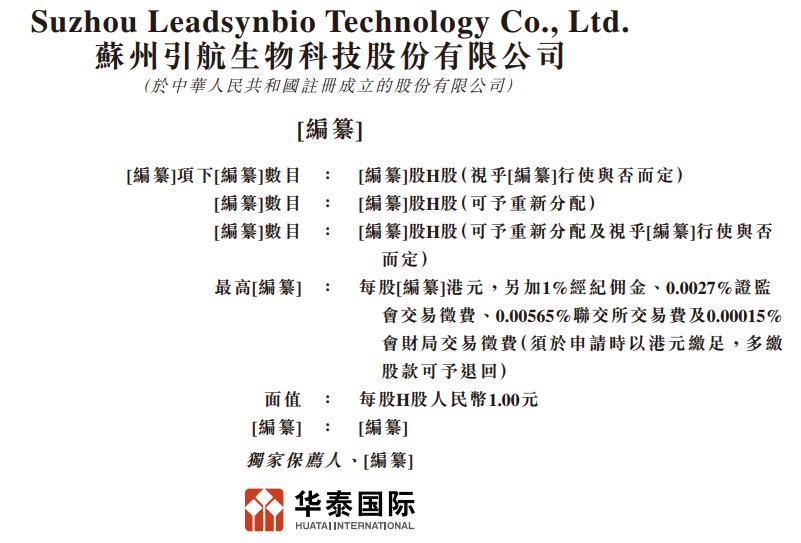
獨家保薦人、[编纂] 智通财经APP获悉,据港交所2月12日披露,苏州引航生物科技股份有限公司(简称:引航生物)向港交所主板递交 上市申请,华泰国际为其独家保荐人。招股书显示,引航生物是以技术创新为驱动的合成生物学引领者,致力于 提供绿色可持续、高效生产且具备突出成本优势的生物基产品。公司的产品已在相关市场占据领先地位。就原料 药及中间体而言,根据灼识咨询,自2025年实现氟苯尼考的规模化生产后,以截至2025年9月30日止九个月的收入 计,公司于同期的市场份额为24.5%,位居全球氟苯尼考行业第二位;以截至2025年9月30日止九个月的收入(包括 内部及外部销售)计算,公司的D-乙酯市场份额44.5%,位居全球D-乙酯行业排名第一。 Suzhou Leadsynbio Technology Co., Ltd. 蘇州引航牛物科技股份有限公司 (於中華人民共和國註冊成立的股份有限公司) [编纂] [编纂]項下[编纂]數目 : [編纂]股H股(視乎[编纂]行使與否而定) [编纂]數目 [编纂]股H股(可予重新分配) : [编纂]數目 [编纂]股H股(可予重新分配及視乎[编纂]行使與否 : 而定) 最高[编纂] 每 ...

引航生物递表港交所
Zhi Tong Cai Jing· 2026-02-12 13:14
据港交所2月12日披露,苏州引航生物科技股份有限公司(简称:引航生物)向港交所主板递交上市申请,华泰国际 为其独家保荐人。招股书显示,引航生物是以技术创新为驱动的合成生物学引领者,致力于提供绿色可持续、高 效生产且具备突出成本优势的生物基产品。公司的产品已在相关市场占据领先地位。就原料药及中间体而言,根 据灼识咨询,自2025年实现氟苯尼考的规模化生产后,以截至2025年9月30日止九个月的收入计,公司于同期的市 场份额为24.5%,位居全球氟苯尼考行业第二位;以截至2025年9月30日止九个月的收入(包括内部及外部销售)计 算,公司的D-乙酯市场份额44.5%,位居全球D-乙酯行业排名第一。 Suzhou Leadsynbio Technology Co., Ltd. 蘇州引航牛物科技股份有限公司 (於中華人民共和國註冊成立的股份有限公司) [编纂] 獨家保薦人、[编纂] [编纂]項下[编纂]數目 : [編纂]股H股(視乎[编纂]行使與否而定) [编纂]數目 [编纂]股H股(可予重新分配) : [编纂]數目 [编纂]股H股(可予重新分配及視乎[编纂]行使與否 : 而定) 最高[编纂] 每股[編纂]港元,另加 ...
合成生物学周报:工信部公布35例非粮生物基材料,阿洛酮糖应用有望迎来爆发
Huaan Securities· 2026-02-10 13:30
Investment Rating - The industry rating is "Overweight" [3] Core Insights - The report highlights the ongoing active research in life sciences and the rapid integration of biotechnology into economic and social development, providing innovative solutions to major challenges such as health, climate change, resource security, and food security. The National Development and Reform Commission has issued the "14th Five-Year Plan for the Development of the Bioeconomy," indicating a trillion-yuan market potential in the bioeconomy sector [3][4]. Industry Performance - The Huazhong Synthetic Biology Index increased by 0.11% to 1278.44 during the week of February 2-6, 2026, outperforming the Shanghai Composite Index by 1.39 percentage points and the ChiNext Index by 3.40 percentage points [4]. - The report notes that the synthetic biology sector is experiencing a policy dividend, with Shenzhen proposing up to 100 million yuan in support for R&D efforts in the field [8]. Company Developments - Beijing Huaguan Bio completed a multi-hundred million yuan C-round financing to enhance its R&D and production capabilities in the pharmaceutical and health sectors [32]. - Dejin Bio secured several million yuan in A-round financing to advance its recombinant botulinum toxin clinical research and international expansion [33]. - The report mentions that Impossible Foods is leveraging technology to reshape the plant protein market [11]. Market Dynamics - The report indicates that the synthetic biology sector is witnessing a surge in financing, with nearly a hundred companies completing new funding rounds since 2025 [31]. - The top five companies in the synthetic biology sector by stock performance during the week were Pingtan Development (+12%), Jinbo Bio (+12%), Huaxi Bio (+12%), Shandong Heda (+10%), and Yaxiang Co. (+10%) [17]. Policy and Regulatory Developments - The Ministry of Industry and Information Technology announced 35 examples of non-grain bio-based materials, marking a significant step towards establishing a new green development framework [7]. - The National Health Commission approved 22 new food items, including a significant breakthrough in domestic human milk oligosaccharides (HMOs) production [7]. Research and Innovation - Tsinghua University has initiated a national key R&D project focused on the intelligent design principles of efficient microbial chassis cells, aiming for breakthroughs in both fundamental theory and application demonstration [9]. - The report highlights the strategic cooperation between Tianjin University and China National Petroleum Corporation to expand efforts in synthetic biology and related fields [9].


合成生物学周报:工信部公布35例非粮生物基材料,阿洛酮糖应用有望迎来爆发-20260210
Huaan Securities· 2026-02-10 10:50
Investment Rating - The industry investment rating is "Overweight" [3] Core Insights - The report highlights the ongoing active research in life sciences and the accelerating integration of biotechnology into economic and social development, providing new solutions to major challenges such as health, climate change, resource security, and food security. The National Development and Reform Commission has issued the "14th Five-Year Plan for the Development of the Bioeconomy," indicating a trillion-yuan market potential in the bioeconomy sector [3][7]. Industry Performance - The Huazhong Synthetic Biology Index increased by 0.11% to 1278.44 during the week of February 2-6, 2026, outperforming the Shanghai Composite Index by 1.39 percentage points and the ChiNext Index by 3.40 percentage points [4][14]. - The report notes that the synthetic biology sector is experiencing a policy dividend, with Shenzhen proposing up to 100 million yuan in support for R&D efforts in the field [8]. Company Developments - Beijing Huaguan Bio completed a multi-hundred million yuan C-round financing to focus on new product development in the pharmaceutical and health sectors [31]. - Dejin Bio secured several million yuan in A-round financing to advance its recombinant botulinum toxin clinical research and international expansion [33]. - The report mentions that Impossible Foods is leveraging technology to drive market expansion and reshape plant-based protein [11]. Market Dynamics - The report indicates that the synthetic biology sector is witnessing a surge in financing, with nearly a hundred companies completing new rounds of financing since 2025 [31]. - The top five companies in the synthetic biology sector by stock performance during the week were Pingtan Development (+12%), Jinbo Bio (+12%), Huaxi Bio (+12%), Shandong Heda (+10%), and Yaxiang Co. (+10%) [17][21]. Policy and Regulatory Updates - The Ministry of Industry and Information Technology announced 35 examples of non-grain bio-based materials, marking a significant step towards building a new green development pattern [7]. - The National Health Commission approved 22 new food products, including a significant breakthrough in domestic human milk oligosaccharides (HMOs) technology [7]. Research and Innovation - Tsinghua University has initiated a national key R&D project focused on the intelligent design principles of efficient microbial chassis cells, aiming for breakthroughs in both fundamental theory and application demonstration [9]. - The report highlights the strategic cooperation between Tianjin University and China National Petroleum Corporation to expand in synthetic biology and other fields [9].
杭州生物制造大会【生物基化学品与材料专场】,免费注册参会!
synbio新材料· 2026-02-10 06:26
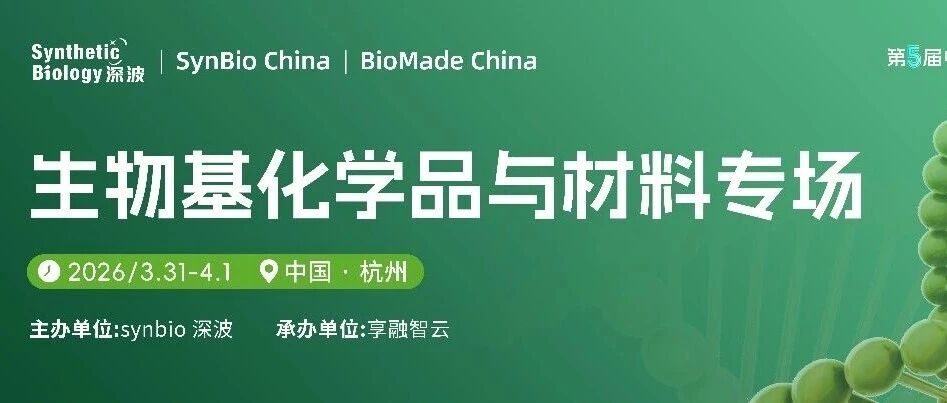
大会地点 | 杭州市 大会规模 | 1000人 主办单位 | synbio深波 承办单位 | 享融智云 大会介绍 0 1 大会时间 | 2026年3月31日-4月1日 在全球推进绿色转型与"双碳"目标的战略背景下,生物基化学品与材料作为生物制造产业的核心支 柱,凭借原料可再生、全生命周期低碳环保等核心优势,正加速替代传统石油基产品,在包装、纺 织、汽车等领域展现出广阔应用前景,成为全球产业绿色转型的关键赛道。 我国高度重视该领域发展,将生物基新材料列为关键战略材料,多项产业扶持政策持续落地。然 而,产业仍面临包括综合成本竞争力、原料供应链稳定、产品性能优化及终端市场接受度等关键问 题。 基于此, 2026年3月31日-4月1日 ,"第五届中国合成生物学及生物制造大会"将在杭州举办,其中设 置 【 生物基化学品与材料专场】 ,旨在汇聚产学研用多方智慧,破解产业发展难题,助力生物基 化学品与材料产业高质量发展。 会议路演报名(审核制) 请添加下方微信,备注 "报名路演" 商务合作 0 4 生物基大宗化学品的绿色生物制造 基于合成生物技术的分子和材料创新 生物基平台化合物的规模化生产与高值化利用 呋喃生物基新材料技 ...
凯赛生物总裁杨晨:以生物智造筑牢双碳基石 打造产业协同生态
Zhong Guo Zheng Quan Bao· 2026-02-09 23:17
Core Viewpoint - Biomanufacturing is a crucial component of national strategic technological strength and a key engine for promoting green and low-carbon industrial transformation. The company, Kasei Biotech, has been deeply engaged in this field for over 20 years, leveraging core technologies and products to build competitive advantages [2] Group 1: Green Transformation in Downstream Industries - Kasei Biotech focuses on developing chemicals through biotechnological processes, aiming to create low-cost alternatives to traditional petrochemical products. The biomanufacturing process is characterized by mild reaction conditions and the use of renewable plant materials or biomass waste, significantly reducing reliance on non-renewable fossil resources [3] - The company has developed a series of biobased long-chain dicarboxylic acids and biobased hexamethylenediamine, which are typical products in the biomanufacturing industry. These products meet high-performance requirements while being cost-effective and environmentally friendly, thus supporting downstream industries in overcoming carbon barriers and enhancing market competitiveness [3] Group 2: Application and Production Capacity - Kasei Biotech's biobased composite materials have been successfully applied in various sectors, including new energy, transportation logistics, pipelines, and construction. For instance, biobased polyamide composite materials for battery shells reduce weight and costs while meeting fire resistance and protection needs [4] - The company has established a production capacity of 40,000 tons of biobased dodecanedioic acid and a 5,000-ton production line for biobased high-temperature polyamide. The company is also building a complete industrial chain in its Hefei biobased materials base [4] Group 3: Future Development and Innovation - Kasei Biotech plans to expand the application scenarios of biobased polyamides and composite materials, focusing on sectors such as automotive, energy storage, and robotics through joint ventures with industry leaders [5] - The company emphasizes the importance of technological innovation and supply chain security, continuously increasing R&D investment to support the development and commercialization of biobased products [6] - Future plans include enhancing the efficiency of core products, advancing research on new biobased materials, and developing high-value utilization technologies for biomass waste [7] Group 4: Collaborative Ecosystem - Kasei Biotech believes that the commercialization of new materials requires collaboration among various stakeholders, including capital, technology, industry, and government. The company has engaged in partnerships with state-owned enterprises and local governments to establish its first biomanufacturing materials industrial base [8] - The collaboration model of "central enterprises + local governments + industry leaders" is seen as an effective way to integrate resources and drive innovation in biobased materials [8] - The company aims to break the inertia of traditional petrochemical materials in downstream industries through application demonstration projects, thereby enhancing industry awareness and expanding commercialization pathways [9]

凯赛生物总裁杨晨: 以生物智造筑牢双碳基石 打造产业协同生态
Zhong Guo Zheng Quan Bao· 2026-02-09 22:04
Core Viewpoint - Biomanufacturing is a crucial component of national strategic technological strength and a key engine for promoting green and low-carbon industrial transformation. The company, Kasei Biotech, has been deeply engaged in this field for over 20 years, leveraging core technologies and products to build competitive advantages [1] Group 1: Green Transformation in Downstream Industries - Kasei Biotech focuses on developing chemicals through biomanufacturing processes, which create low-cost alternatives to traditional petrochemical products. This method utilizes biological conversion, operates under mild conditions, and avoids heavy metal catalysts, significantly reducing reliance on non-renewable fossil resources [2] - The company has developed a series of bio-based long-chain dicarboxylic acids and bio-based hexamethylenediamine, which are typical products in the biomanufacturing industry. These products meet high-performance requirements while being cost-effective and environmentally friendly, supporting downstream industries in reducing carbon footprints [2] Group 2: Application and Production Capacity - Kasei Biotech's bio-based composite materials have been applied in various sectors, including new energy, transportation logistics, and construction. For instance, bio-based polyamide composite materials for battery shells reduce weight and costs while meeting fire resistance and protection needs [3] - The company has established production lines for bio-based dodecanedioic acid and high-temperature polyamide, with a focus on creating a complete industrial chain in its Hefei base. The production layout is strategically organized across different locations to optimize capacity [3] Group 3: Future Development and Innovation - Kasei Biotech plans to expand the application scenarios of bio-based polyamides and composite materials, collaborating with partners like CATL to deepen application breadth and provide demonstration projects for low-carbon transformation in downstream industries [4] - The company emphasizes the importance of technological innovation and supply chain security, committing to continuous R&D investment to support the development of bio-based products [5] Group 4: Digitalization and AI Integration - Digitalization and smart technology are key development directions for Kasei Biotech, with a vision to reshape low-carbon living through biomanufacturing. The company has implemented AI tools in various research areas, enhancing operational efficiency across R&D, production, and management [6] Group 5: Collaborative Ecosystem in Synthetic Biology - Kasei Biotech recognizes the challenges in commercializing new materials and emphasizes the need for collaboration among capital, technology, industry, and government to drive the industry forward. The company has engaged in partnerships to enhance resource integration and support the commercialization of bio-based materials [7] - The collaboration model involving state-owned enterprises, local governments, and industry leaders aims to create a synergistic value network, facilitating the development of bio-based new materials across various sectors [7][8] Group 6: Strategic Goals for the Next 3-5 Years - The company aims to focus on three core areas in the next 3-5 years: advancing the high-value utilization of biomass waste, expanding the commercial application of bio-based polyamides and composites, and accelerating the construction of industrial demonstration projects and ecosystems [8]
以生物智造筑牢双碳基石 打造产业协同生态
Zhong Guo Zheng Quan Bao· 2026-02-09 20:25
Core Viewpoint - Biomanufacturing is a crucial component of national strategic technological strength and a key engine for promoting green and low-carbon industrial transformation. The company, Kasei Biotech, has been deeply engaged in this field for over 20 years, leveraging core technologies and products to build competitive advantages [1]. Group 1: Business Model and Product Development - Kasei Biotech focuses on developing chemicals through biotechnological processes, aiming to create low-cost, high-performance bio-based new materials that empower downstream industrial upgrades and promote the large-scale development of the biomanufacturing industry [1][2]. - The company has developed a series of bio-based long-chain dicarboxylic acids and bio-based hexamethylenediamine, which are typical products in the biomanufacturing industry. These products meet high-performance requirements while achieving low cost, lightweight, and recyclability, effectively reducing the carbon footprint of downstream products [2]. Group 2: Production Capacity and Industrial Layout - Kasei Biotech's Shanxi synthetic biological industrial park has launched a 40,000-ton biomanufacturing project for sebacic acid, which has quickly replaced chemical methods. A 5,000-ton bio-based high-temperature polyamide production line has also been established [3]. - The company is building a complete industrial chain in its Hefei bio-based materials industrial base, focusing on resin, composite materials, and application products. The production layout will be coordinated across different regions, with specific focuses for each base [3]. Group 3: Research and Development Strategy - Kasei Biotech emphasizes innovation-driven development, with a commitment to increasing R&D investment. Significant progress is expected in projects related to green dicarboxylic acids, bio-based piperidine, and bio-based long-chain polyamides by 2025 [4]. - The company is integrating AI technology into its R&D, production, and management processes, enhancing operational efficiency and supporting the development of bio-based new products [4][5]. Group 4: Collaborative Ecosystem and Market Penetration - Kasei Biotech is collaborating with various stakeholders, including state-owned enterprises and local governments, to create a synergistic ecosystem for biomanufacturing. This collaboration aims to leverage resources and expertise to overcome challenges in commercialization [6][7]. - The company is focusing on application scenario demonstration projects to break the inertia of traditional petrochemical materials in downstream industries, thereby enhancing industry recognition and expanding commercialization pathways for bio-based new materials [7]. Group 5: Future Development Directions - In the next 3-5 years, Kasei Biotech will focus on three core development areas: advancing the high-value utilization of biomass waste, expanding the application and commercialization of bio-based polyamides and their composites, and accelerating the construction of industrial demonstration projects and ecosystems [7].
【2025活动回顾 & 2026计划】生物基和生物制造领域 | DT新材料
Xin Lang Cai Jing· 2026-02-06 11:21
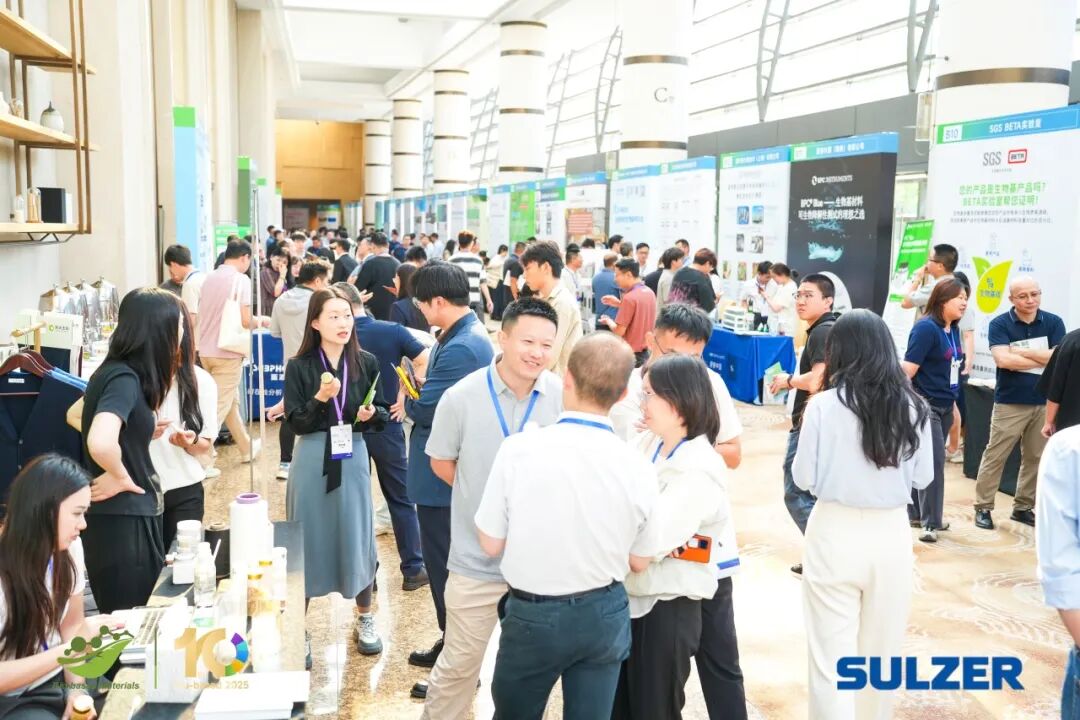
Core Insights - The bio-based and bio-manufacturing industry is transitioning from a technology exploration phase to a critical stage of industrialization and marketization by 2025, driven by global green transformation and China's "dual carbon" strategy [1][30][31] - The DT New Materials' bio-based and bio-manufacturing service platform has successfully hosted multiple offline brand exhibitions, gathering over 3000 experts and industry leaders to discuss key topics in technology transformation and industrial collaboration [1][30] - The platform has launched its official website, attracting over 500 domestic and international companies to its "new product database" [1][30] Industry Events - The 10th Bio-based Conference and Exhibition took place from May 25-27, 2025, in Shanghai, attracting over 1000 representatives from the bio-based sector, including experts, production companies, and investment institutions [3][31] - The conference featured over 20 specialized sessions and discussions on international trends, bio-based technology, and downstream applications, along with three major awards [3][35] - The 4th Synthetic Biology and Green Bio-manufacturing Conference was held on August 21, 2025, with over 400 attendees and 40 presentations focusing on macro forums and AI applications in bio-manufacturing [11][37] Awards and Recognition - The 3rd DT New Leaf Award recognized 28 products from over 70 entries, with categories including innovative materials and applications [9][35] - The "Bio-based Decade: Sci-tech Innovation Power" award was granted by over 10 industrial experts, while the "Bio-based Decade: Symbiotic Transformation" award was given to 49 representative companies [9][35] Future Outlook - The bio-based materials are expected to penetrate various sectors of daily life, transitioning from "substitution" to "leadership" roles in the market [1][30] - The industry aims to accelerate the transformation of scientific achievements and contribute to building a green, low-carbon circular economy [2][31]
合成生物学行业报告发布!技术路径、产业布局与投资逻辑等全解(可获取PDF全文)
synbio新材料· 2026-02-04 09:59
Core Insights - The report titled "Synthetic Biology Industry & Investment Strategy Research Report" provides a comprehensive analysis of the synthetic biology sector, covering technical pathways, market landscape, representative companies, industrial clusters, and policy trends [2]. Group 1: Company Overview - Zhejiang Jintou Shengyuan Equity Investment Co., Ltd. was established in June 2023 with a registered capital of 200 million yuan, serving as a market-oriented equity investment platform under the Zhejiang Provincial Innovation Investment Group [6]. - The company focuses on sectors such as new materials, new technologies, and biomedicine, with a total fund scale exceeding 10 billion yuan, aiming to enhance the operation of provincial government industrial funds [6][34]. Group 2: Market Dynamics - The global synthetic biology market has grown from $5.3 billion in 2018 to over $17 billion in 2023, with an average annual growth rate of 27%. It is projected to reach nearly $50 billion by 2028 [25]. - The Chinese market is expected to be approximately 10 billion yuan in 2024, continuing to grow to 12.406 billion yuan in 2025 [25]. Group 3: Technological Advancements - Shanghai Kasei Biotechnology Co., Ltd. has pioneered the large-scale production technology of bio-based long-chain dicarboxylic acid since 2003, breaking the monopoly of chemical synthesis [7]. - Ginkgo Bioworks has expanded its offerings into life science tools and services, integrating various foundational tools to assist downstream clients in producing desired biological products [14][15]. Group 4: Investment Strategies - The report emphasizes the importance of strategic partnerships and collaborations in the synthetic biology sector, highlighting the need for investment in innovative technologies and platforms to drive growth [19][25]. - The investment landscape is characterized by a shift from pure service models to integrated solutions that combine research services with product offerings, particularly in the context of AI and automation [15][16].