血液制品

Search documents
粤开市场日报-20251112
Yuekai Securities· 2025-11-12 07:48
Market Overview - The A-share market saw a majority of indices decline today, with the Shanghai Composite Index down 0.07% closing at 4000.14 points, the Shenzhen Component down 0.36% at 13240.62 points, the Sci-Tech 50 down 0.58% at 1379.45 points, and the ChiNext Index down 0.39% at 3122.03 points [1][10] - Overall, there were 1756 stocks that rose and 3561 that fell, with a total market turnover of 19450 billion yuan, a decrease of 485 billion yuan compared to the previous trading day [1] Industry Performance - Among the Shenwan first-level industries, the top gainers included household appliances (up 1.22%), comprehensive (up 1.05%), textile and apparel (up 0.87%), petroleum and petrochemicals (up 0.84%), and pharmaceutical and biological (up 0.61%) [1] - The leading decliners were in the sectors of electric equipment (down 2.10%), machinery equipment (down 1.23%), computers (down 1.04%), national defense and military industry (down 0.87%), and automobiles (down 0.81%) [1] Concept Sector Performance - The concept sectors with the highest gains included insurance selection, lithium battery electrolyte, blood products, stem cells, SPD, in vitro diagnostics, genetic testing, white household appliances selection, aluminum industry, three-child policy, industrial metals selection, synthetic biology, satellite internet, weight loss drugs, and central enterprise banks [2]
禾元生物涨2.33%,成交额1.16亿元,主力资金净流出1131.63万元
Xin Lang Cai Jing· 2025-11-12 01:59
Group 1 - The core viewpoint of the news is that He Yuan Bio has experienced a significant decline in stock price and financial performance, with a notable drop in trading activity and net outflow of funds [1][2]. Group 2 - As of November 12, He Yuan Bio's stock price increased by 2.33% to 88.00 CNY per share, with a trading volume of 1.16 billion CNY and a market capitalization of 31.46 billion CNY [1]. - The company has seen a net outflow of 11.32 million CNY in principal funds, with large orders showing a buy of 20.27 million CNY and a sell of 27.88 million CNY [1]. - Year-to-date, He Yuan Bio's stock price has decreased by 3.40%, and it has dropped 21.43% over the last five trading days [1]. - The company has appeared on the "Dragon and Tiger List" three times this year, with the most recent instance on November 7, where it recorded a net buy of -69.68 million CNY [1]. Group 3 - He Yuan Bio, established on November 16, 2006, is located in Wuhan, Hubei Province, and specializes in the research, production, and sales of products using rice endosperm cell recombinant protein expression technology [1]. - The company's main business revenue composition includes 75.44% from recombinant human albumin and 24.56% from other products [1]. Group 4 - He Yuan Bio belongs to the pharmaceutical and biological industry, specifically in the blood products sector, and is associated with concepts such as innovative drugs, newly listed stocks, biopharmaceuticals, and mid-cap stocks [2]. - As of October 28, the number of shareholders for He Yuan Bio reached 47,100, an increase of 84,075% compared to the previous period, while the average circulating shares per person decreased by 99.85% to 869 shares [2]. - For the period from January to September 2025, He Yuan Bio reported a revenue of 19.66 million CNY, a year-on-year decrease of 8.51%, and a net profit attributable to the parent company of -121 million CNY, also down 8.44% year-on-year [2].
杰特贝林与百洋医药强强联合
Qi Lu Wan Bao· 2025-11-07 14:27
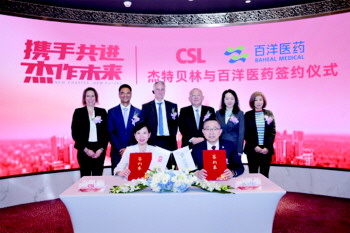
Core Insights - Qingdao Baiyang Pharmaceutical Co., Ltd. has signed a deepened cooperation agreement with CSL, a global biotechnology leader, to exclusively promote and sell CSL's human albumin product, AmbuMab, in specific markets in China [1][2] - The human albumin market in China is the largest therapeutic drug market, exceeding 30 billion yuan, with a projected growth to 57 billion yuan by 2030, reflecting a compound annual growth rate of 6.0% from 2025 to 2030 [2] - The collaboration aims to leverage CSL's high-quality blood products and Baiyang's commercial platform to meet the increasing demand for high-quality blood products in China [1][3] Company Overview - Baiyang Pharmaceutical has established a strong commercial capability and market network in the liver disease treatment sector, which is a strategic area for the collaboration [3][5] - Baiyang's innovation pipeline covers multiple core therapeutic areas, including oncology, critical care, fibrosis, and bone health, aiming to enhance the clinical application of high-quality pharmaceutical products [5] - CSL has been a key supplier in the Chinese market for nearly 40 years, with its human albumin products accounting for nearly 24% of the market share [2] Market Dynamics - The human albumin product, AmbuMab, is designed for the Chinese market and has a unique advantage of being stored at temperatures not exceeding 30°C, reducing reliance on complex cold chain logistics [2] - The collaboration is expected to improve the accessibility of human albumin for critical illness patients in China, contributing to the "Healthy China 2030" initiative [3][5] - The partnership will also focus on enhancing the standardization, specialization, and high-quality development of the blood products market in China [5]

天坛生物“增收不增利”血液制品龙头遭遇增长阵痛
Xin Lang Cai Jing· 2025-11-07 10:01
Core Insights - Tian Tan Biological Products (600161.SH) has shown high growth in recent years but reported a significant decline in net profit in its Q3 2025 report, indicating a situation of "increased revenue but decreased profit" [1] Financial Performance - For the first three quarters of 2025, the company's operating revenue increased by 9.62% year-on-year, reaching 4.465 billion yuan, while net profit attributable to shareholders dropped by 22.16% to 819 million yuan [1] - In Q3 2025, net profit saw a substantial decline of 42.84%, with gross profit margin falling from 55% in the same period last year [1] Factors Affecting Profitability - The decline in profit is attributed to three main factors: 1. Price pressure due to national drug procurement policies that have led to a continuous decline in prices of core products like human albumin and intravenous immunoglobulin [1] 2. Rising costs, with operating costs increasing by 37.87%, significantly outpacing revenue growth [1] 3. Difficulties in cash collection, as accounts receivable and notes receivable increased compared to the previous year [1] Cash Flow and Asset Quality - The company's cash flow and asset quality have deteriorated, with cash reserves dropping from 4.805 billion yuan to 1.898 billion yuan, a decline of over 60% [1] - The net operating cash flow was only 117 million yuan, a dramatic drop of 91% year-on-year [1] - The decline in cash flow is attributed to changes in sales credit policies and increased tax burdens, reflecting a need to relax credit conditions to maintain sales, leading to slower cash inflow and increased liquidity pressure [1] Industry Dynamics - Tian Tan Biological has relied on its extensive plasma collection resources, owning 107 plasma collection stations, accounting for approximately 20% of the national collection volume [2] - However, this resource advantage is being challenged by technological advancements, such as the approval of the world's first plant-based recombinant human albumin, which reduces reliance on human plasma [2] - The industry is shifting from a "resource-driven" model to a "technology and scale-driven" model, indicating a significant change in competitive dynamics [2] Conclusion - The profit decline of Tian Tan Biological is reflective of broader changes in the blood product industry, influenced by procurement policies, rising costs, and technological innovations [2]

天坛生物“增收不增利” 血液制品龙头遭遇增长阵痛
Xin Lang Zheng Quan· 2025-11-07 09:17
Core Viewpoint - TianTan Bio, a leading company in China's blood products industry, is experiencing a significant decline in profitability despite revenue growth, raising concerns about the underlying industry dynamics and potential shifts in competition [1][6]. Revenue and Profitability - In the first three quarters of 2025, TianTan Bio reported a revenue increase of 9.62%, reaching 4.465 billion yuan, but the net profit attributable to shareholders decreased by 22.16% to 819 million yuan [1][2]. - The third quarter saw a dramatic net profit decline of 42.84%, with gross margin dropping from 55.33% to 43.81% year-on-year [1]. Factors Affecting Profitability - Price pressure is a significant factor, as national drug procurement policies have led to a decline in prices for key products like human albumin and intravenous immunoglobulin, shifting the industry from a "price protection" strategy to a "price reduction for volume" competition [1][2]. - Costs have risen sharply, with operating costs increasing by 37.87%, significantly outpacing revenue growth, driven by higher expenses in plasma collection, labor, electricity, and compliance [2]. - Collection difficulties are evident, with accounts receivable surging from 262 million yuan to 2.221 billion yuan, a growth of over seven times, indicating increased credit risk [2]. Cash Flow and Asset Quality - The company's cash flow and asset quality have deteriorated, with cash reserves plummeting from 4.805 billion yuan to 1.898 billion yuan, a decline of over 60% [3]. - Operating cash flow net amount fell by 91% to 117 million yuan, attributed to changes in sales credit policies and increased tax burdens, reflecting a slowdown in cash inflow and heightened liquidity pressure [3][4]. Industry Dynamics - The traditional resource advantage of TianTan Bio, based on its extensive plasma collection network, is under threat from technological advancements [5]. - New products, such as plant-based recombinant human albumin, are emerging, potentially disrupting the reliance on human plasma and altering the industry's cost structure and competitive landscape [5]. Future Outlook - TianTan Bio's profit decline is indicative of broader changes in the blood products industry, driven by procurement policies, rising costs, and technological innovations [6]. - The company must find a new balance between resource control, technological breakthroughs, and scale effects to navigate the ongoing transformation in the industry [6].
百洋医药携手杰特贝林 深度布局中国血液制品黄金赛道
Zheng Quan Ri Bao· 2025-11-05 08:12
Core Insights - Human albumin is a critical blood product widely used in emergency treatments and is considered a "lifeline" in clinical emergency and critical care in China [1] - The human albumin market in China is the largest therapeutic drug market, exceeding 30 billion yuan, with a projected growth to 57 billion yuan by 2030, reflecting a compound annual growth rate (CAGR) of 6.0% from 2025 to 2030 [1] - The partnership between Jettabell and Baiyang Pharmaceutical aims to enhance the accessibility and supply chain resilience of human albumin products in China, particularly for liver disease treatment [2][4] Market Dynamics - The human albumin market in China is characterized by high policy barriers and resource scarcity, making it a "golden track" in the biopharmaceutical sector [1] - Jettabell has a significant market share of 24% in China, with a strong focus on human albumin as a strategic product for nearly 40 years [1][3] - The demand for human albumin is expected to grow due to the aging population and increasing clinical needs [1] Strategic Collaboration - The recent agreement between Jettabell and Baiyang Pharmaceutical grants Baiyang exclusive rights to promote and distribute Jettabell's human albumin product, Ambomai®, in specific markets in mainland China [4] - This collaboration is expected to leverage Baiyang's established commercialization capabilities and market network to better serve the growing demand for high-quality blood products in China [4][5] - Both companies aim to enhance the quality and accessibility of human albumin treatments, contributing to the broader goal of improving patient health and quality of life in China [5]
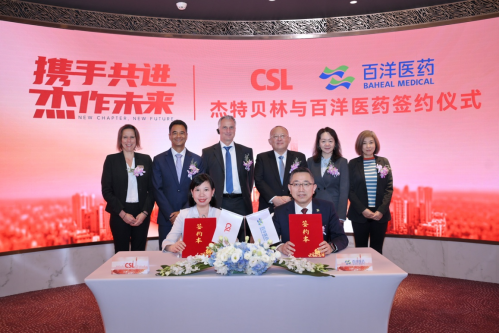
与杰特贝林再合作,百洋医药获一款人血白蛋白产品的独家权益
Bei Ke Cai Jing· 2025-11-05 08:06
Core Viewpoint - Qingdao Baiyang Pharmaceutical Co., Ltd. has signed a deepened cooperation agreement with CSL, granting exclusive promotion, sales, and distribution rights for CSL's human albumin product, AmbuM, in specific markets within mainland China [1][2]. Group 1: Company Overview - Baiyang Pharmaceutical is expanding its collaboration with CSL, building on their previous partnership in the retail market established in 2018 [1]. - The company aims to leverage its established market network in liver disease treatment to provide comprehensive solutions for patients [3]. Group 2: Industry Insights - Human albumin is the largest therapeutic drug market in China, exceeding 30 billion yuan, with a long-standing dominance of imported products [2]. - CSL holds a significant market share of nearly 24% in the human albumin sector in China [2]. - The market for human albumin is projected to grow to 57 billion yuan by 2030, with a compound annual growth rate of 6.0% from 2025 to 2030 [2]. - AmbuM is specifically designed for the Chinese market, with a key advantage of being stored at temperatures not exceeding 30°C, enhancing drug accessibility and supply chain resilience [2].
深度布局中国血液制品黄金赛道,杰特贝林与百洋医药强强联合
Guo Ji Jin Rong Bao· 2025-11-05 07:40
Core Viewpoint - Qingdao Baiyang Pharmaceutical has signed a deepened cooperation agreement with global biotechnology leader CSL to exclusively promote, sell, and distribute CSL's human albumin product, Alburex®, in specific markets in China, excluding Hong Kong, Macau, and Taiwan, aiming to meet the growing demand for high-quality blood products in the Chinese market [1][3]. Industry Overview - Human albumin is a critical blood product used in emergency treatments and various medical conditions, making it a "lifeline" in clinical emergency and critical care [3]. - The human albumin market in China is the largest therapeutic drug market, exceeding 30 billion yuan, with a long-standing import-dominated structure [3]. - CSL has been a key supplier in China for nearly 40 years, holding a market share of nearly 24% [3]. - The market for human albumin in China is projected to grow to 57 billion yuan by 2030, with a compound annual growth rate (CAGR) of 6.0% from 2025 to 2030 [3]. Product Characteristics - CSL's human albumin is developed and produced under strict global quality standards, with its clinical value and safety widely recognized in the international medical community [4]. - Alburex® is specifically designed for the Chinese market, with a key advantage of being stored at temperatures not exceeding 30°C, reducing reliance on complex cold chain logistics and enhancing drug accessibility [4]. Strategic Collaboration - The collaboration will create strong synergies in the liver disease field, addressing the growing market demand for albumin as a key treatment for liver cirrhosis and related complications [5]. - Baiyang Pharmaceutical has established a strong commercial capability and mature market network in liver disease treatment, positioning it well to provide comprehensive treatment solutions [5]. Future Outlook - Both companies aim to leverage this partnership to enhance the accessibility of albumin in China and improve the quality of life for critically ill patients, contributing to the "Healthy China 2030" initiative [6][7]. - Baiyang Pharmaceutical plans to continue enriching its product matrix and driving more high-quality pharmaceutical health products into clinical applications [6].
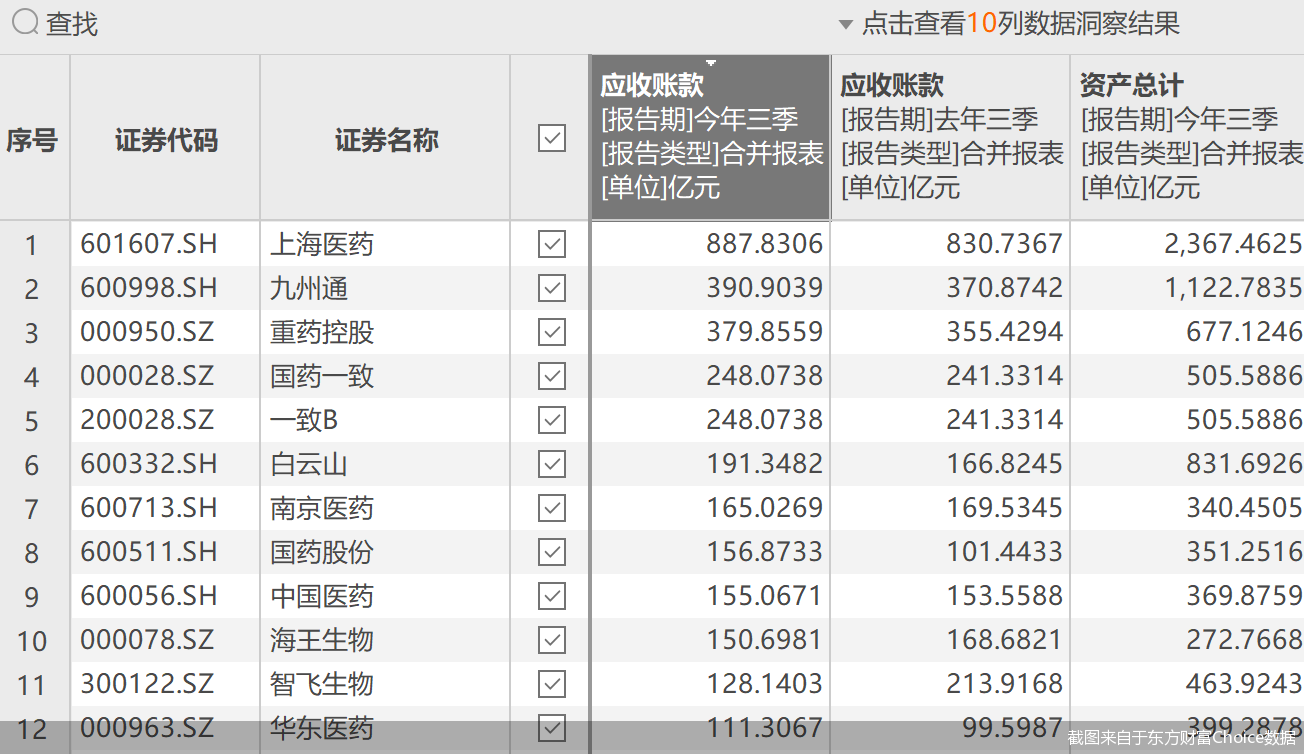
14只医药股应收账款超百亿元
Bei Jing Shang Bao· 2025-11-03 16:24
Core Viewpoint - The report highlights the increasing accounts receivable among A-share pharmaceutical companies, with significant implications for cash flow and financial health in the industry [1][2]. Group 1: Accounts Receivable Overview - As of the end of Q3, 14 A-share pharmaceutical companies reported accounts receivable exceeding 10 billion yuan, with Shanghai Pharmaceuticals leading at 88.783 billion yuan and Jiuzhoutong at 39.09 billion yuan [2]. - The blood products sector has seen a notable increase in accounts receivable, with companies like Tiantan Biological reporting a rise from 2.5 million yuan to 112 million yuan year-on-year [4]. - Companies such as Lingkang Pharmaceutical and Xinmai Medical have also experienced significant increases in accounts receivable, with Xinmai's rising from 20.7 million yuan to 47.8 million yuan [5]. Group 2: Accounts Receivable as a Percentage of Total Assets - Eight companies have accounts receivable that exceed 50% of their total assets, with Renmin Tongtai at the highest ratio of 62.1% [7]. - *ST Suwu and Zhongyao Holdings follow, with accounts receivable ratios of 56.28% and 50% respectively, indicating a concerning level of financial strain [8]. - The high percentage of accounts receivable relative to total assets suggests potential liquidity issues and increased risk of credit losses for these companies [8]. Group 3: Industry Dynamics - The pharmaceutical distribution sector is particularly affected, as public hospitals, which dominate the market, often negotiate longer payment terms, leading to increased accounts receivable for distributors [2]. - To gain market share, pharmaceutical distributors may adopt lenient credit policies, which can temporarily boost sales but also lead to higher accounts receivable [2][4]. - The overall trend indicates that while high accounts receivable can reflect aggressive sales strategies, it also poses risks related to cash flow and financial stability [8].
14只医药股应收账款超百亿元,血液制品企业普遍大增
Bei Jing Shang Bao· 2025-11-03 12:48
Core Viewpoint - The report highlights the increasing accounts receivable among A-share pharmaceutical companies, with a significant number exceeding 10 billion yuan, indicating potential liquidity issues and financial health concerns in the industry [1][3]. Accounts Receivable Overview - As of the end of Q3, 14 A-share pharmaceutical companies reported accounts receivable exceeding 10 billion yuan, with Shanghai Pharmaceuticals leading at 88.783 billion yuan, followed by Jiuzhoutong at 39.09 billion yuan [3][4]. - The blood products sector has seen a notable increase in accounts receivable, with companies like Tiantan Biological and Boya Biological reporting significant year-on-year growth [5][6]. Industry Characteristics - The pharmaceutical distribution sector is primarily responsible for high accounts receivable, as public hospitals, which dominate the market, often negotiate longer payment terms, leading to increased receivables for distributors [3][10]. - Companies may adopt lenient credit policies to attract more clients, which can temporarily boost sales but also result in higher accounts receivable [3][10]. Financial Ratios - Eight companies have accounts receivable constituting over 50% of their total assets, with Renmin Tongtai having the highest ratio at 62.1% [8][9]. - *ST Suwu and Zhongyao Holdings follow, with accounts receivable ratios of 56.28% and significant increases compared to the previous year [9][10]. Performance Implications - High accounts receivable can lead to reduced cash flow and increased opportunity costs, potentially impacting profitability due to higher bad debt provisions [10]. - However, in certain scenarios, elevated accounts receivable may not be detrimental if they align with healthy revenue and profit growth, and if customer quality and payment terms are managed effectively [10].