
白蛋白

Search documents
华兰生物:生物药新增长曲线逐渐清晰-20260330
HTSC· 2026-03-30 13:40
Investment Rating - The report maintains a "Buy" rating for the company [5][7]. Core Insights - The company is expected to experience steady growth in blood products, a gradual recovery in vaccine sales, and rapid growth in biopharmaceuticals, driven by new product launches and clinical advancements [1][5]. - The forecast for 2025 includes revenues of 4.6 billion RMB, with a net profit attributable to the parent company of 940 million RMB, reflecting a 5% increase in revenue but a 14% decrease in net profit year-over-year [1][11]. Revenue Performance - Blood products revenue for 2025 is projected at 3.39 billion RMB, a 4% increase year-over-year, with a gross margin of 50.2%, down 4.2 percentage points year-over-year [2]. - Vaccine revenue is expected to reach 1.2 billion RMB in 2025, marking a 7% year-over-year increase, with a net profit of 180 million RMB, despite an 11% decline in net profit year-over-year [3]. Product Development and Innovation - The company is advancing in various product lines: - Blood products include new processes for IVIG and ongoing clinical trials for FⅨ and SCIG [4]. - Vaccine developments include multiple candidates in different clinical phases, with a focus on flu vaccines and new adjuvants [4]. - Biopharmaceuticals are also progressing, with several products entering late-stage clinical trials [4]. Financial Projections - The company’s net profit forecasts for 2026, 2027, and 2028 are 1.02 billion RMB, 1.14 billion RMB, and 1.27 billion RMB, respectively, reflecting a significant downward adjustment of 40% and 44% for 2026 and 2027 compared to previous estimates [5][12]. - The target price is set at 17.28 RMB, based on a 31x PE ratio for 2026, which is a premium compared to the average PE of comparable companies [5][13].

博雅生物20260323
2026-03-24 01:27
Summary of the Conference Call for Boya Bio-Pharmaceuticals Company Overview - **Company**: Boya Bio-Pharmaceuticals - **Industry**: Blood products and biopharmaceuticals Key Points Industry and Regulatory Changes - Starting January 2026, the value-added tax on blood products will increase from 3% to 13%, leading to a significant decline in the company's actual pre-tax prices and creating substantial uncertainty for 2026 performance. The company is currently seeking policy exemptions from the State Administration of Taxation [2][8] - The blood products industry is facing increased pressure from price controls and expanded procurement policies, which are expected to impact pricing and inventory levels [4][8] Financial Performance and Projections - In 2025, the company achieved a plasma collection volume of 662.31 tons, a 5% increase year-over-year, with Green Cross contributing 119.91 tons, reflecting a 10.46% growth [2][5] - The consolidated gross margin for 2025 is projected at 49.9%, a decrease of 14.8 percentage points, primarily due to the lower margin of Green Cross and overall industry price pressures [2][5] - The company anticipates that the new production process for Green Cross's immunoglobulin will enhance yield from 1,200-1,300 units/liter to levels comparable to Boya's standards [2][5] Research and Development - The company has accelerated its R&D pipeline, with approvals for 10% concentration immunoglobulin and human tetanus immunoglobulin, and clinical approval for PCC [2][10] - The company aims to expand its international sales, particularly in "Belt and Road" markets, with products currently in the registration phase in various countries [2][10] Strategic Focus and Business Segmentation - Boya is actively divesting non-blood product businesses, having completed the disposal of Boya New and is targeting the divestiture of Nanjing New Hundred by 2026 to focus entirely on blood products [2][14] - The company is implementing integrated management across its 21 plasma stations to enhance efficiency and reduce costs, particularly in key provinces like Jiangxi and Anhui [7][9] Market Competition and Challenges - The introduction of recombinant human albumin is not expected to pose a significant threat in the short term due to its higher costs and limited indications compared to human-derived products [3][13] - The company is exploring ways to manage the competition from imported albumin by discussing potential regulatory adjustments with national authorities [3][13] Future Outlook - The company is optimistic about its growth trajectory, aiming to exceed the industry average growth rate of approximately 5.5% in 2026 [2][5][9] - Despite the challenges posed by regulatory changes and market pressures, the company plans to enhance operational efficiency and maintain a focus on high-quality development through innovation and strategic marketing [17] Conclusion - Boya Bio-Pharmaceuticals is navigating a complex regulatory environment while focusing on growth in its core blood products business. The company is committed to improving operational efficiencies and expanding its market presence, particularly in international markets, while managing the challenges posed by increased taxation and competition.

并购公司业绩“爆雷”!博雅生物总裁辞职,任职未满10个月
Mei Ri Jing Ji Xin Wen· 2026-02-27 11:04
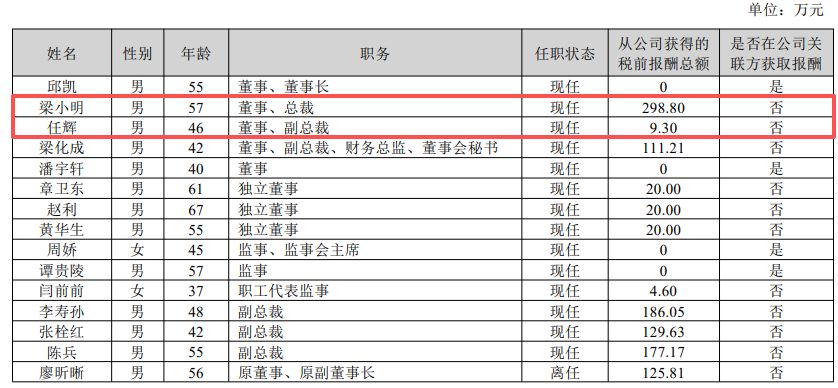
Core Viewpoint - The resignation of Ren Hui, the president of Boya Bio, after less than 10 months in office, coincides with the company's forecast of a significant decline in net profit for 2025, primarily due to asset impairment from an acquisition [1][5]. Group 1: Company Leadership Changes - Ren Hui resigned from his positions as president and board member of Boya Bio due to work changes, and his resignation leaves the president position temporarily vacant [1][2]. - Ren Hui was appointed as president on May 16, 2025, and previously served as vice president starting October 23, 2024, with a reported pre-tax salary of 93,000 yuan in 2024 [2][3]. Group 2: Financial Performance - Boya Bio's 2025 annual performance forecast indicates a net profit decline of 65.62% to 73.55%, estimated between 105 million yuan and 136.5 million yuan, with a projected non-recurring net loss of 7.5 million to 15 million yuan [5][6]. - The decline in financial performance is attributed to three main factors: impairment losses from the acquisition of Green Cross Hong Kong Holdings, depreciation and amortization impacts from the acquisition, and decreased gross margins in the blood products business due to intensified market competition and regulatory changes [6][7]. Group 3: Acquisition Impact - The acquisition of Green Cross Hong Kong Holdings in November 2024 has led to significant impairment losses, totaling approximately 300 million yuan, affecting the company's financial outlook for 2025 [6][7]. - The performance of the acquired company's products, particularly hyaluronic acid, has been negatively impacted by a downturn in the market, contributing to the overall financial challenges faced by Boya Bio [6][7]. Group 4: Shareholder Actions - Despite the poor financial outlook, the controlling shareholder, China Resources Pharmaceutical Group, has increased its stake in Boya Bio, acquiring an additional 6.0509 million shares, representing 1.20% of the total share capital [4][6]. - The stock price of Boya Bio has been on a downward trend since October 2024, with a significant drop from a peak of 41.51 yuan to a closing price of 22.25 yuan as of February 27, 2026, resulting in a market capitalization of approximately 11.22 billion yuan [6][7].

中信建投:国产白蛋白批签发占比提升,新产品研发持续推进
Xin Lang Cai Jing· 2026-02-27 00:10
Core Viewpoint - The domestic blood products industry is expected to maintain steady growth in the issuance of batches for albumin, intravenous immunoglobulin (IVIG), and fibrinogen by 2025, with an increase in the proportion of domestic albumin batch issuances compared to the previous year [1] Industry Summary - The issuance growth rate for factor VIII and prothrombin complex concentrate (PCC) is accelerating, while the issuance of rabies immunoglobulin and anti-rabies immunoglobulin is also showing good growth [1] - Due to centralized procurement and other factors, some domestic companies have adjusted the bidding prices for products like albumin and factor VIII, which is beneficial for increasing sales volume through price adjustments [1] - Companies are continuously advancing their research and development pipelines, focusing on recombinant products and new types of immunoglobulins, including chromatographic IVIG and subcutaneous immunoglobulin [1] - By 2026, the industry is advised to pay attention to the expansion of plasma stations, trends in industry mergers and acquisitions, and progress in new product development [1] - Companies that are at the forefront of the industry and are expected to continue expanding plasma station resources through both organic growth and external integration should be closely monitored for sustained growth in blood product business [1]

投资观点&研究专题周周谈第163期:血制品2025年行业总结及2026年展望
Huachuang Securities· 2026-02-23 10:45
Investment Rating - The report maintains a positive outlook on the blood products industry, suggesting that the supply-demand relationship will gradually improve, leading to performance recovery for companies in this sector [10][34]. Core Insights - The blood products industry is characterized by a clear long-term growth trajectory, supported by a favorable regulatory environment for plasma collection and an expanding product range among companies [12][34]. - Short-term performance has been impacted by supply-demand mismatches, with a notable decline in profitability observed in 2025 due to excess supply and price reductions [19][36]. - The report highlights the importance of white albumin and immunoglobulin (IVIG) as core products, with a stable demand expected despite recent price pressures [33][34]. Summary by Sections Market Review - The report notes a decline of 0.85% in the medical index, underperforming the CSI 300 index by 1.22 percentage points, ranking 21st among 30 sectors [6]. - The top-performing stocks in the medical sector include Aidi Te, Zhendai Medical, and Olin Bio, while the worst performers include Beixin Life and Huayuan Bio [6]. Industry and Stock Events - The report emphasizes the recovery of plasma collection activities post-pandemic, which has led to increased supply and a shift in the market dynamics for blood products [19][26]. - The report identifies key companies to watch, including Tian Tan Biological and Bo Ya Biological, as they are expected to benefit from the industry's growth [12][34]. Overall Perspective and Investment Themes - The report suggests focusing on innovative drugs, medical devices, and the blood products sector, highlighting the potential for significant growth driven by domestic differentiation and international expansion [10][12]. - The report also discusses the ongoing consolidation in the industry, particularly among state-owned enterprises, which may enhance market concentration and operational efficiencies [46]. Supply and Demand Dynamics - The report indicates that the supply of blood products is expected to tighten in 2026 due to a slowdown in plasma collection growth and a decrease in imported white albumin supply [30][34]. - Demand for white albumin remains robust, with sales showing signs of stabilization despite recent challenges [33][34]. Future Outlook - The report anticipates a gradual return to a balanced supply-demand relationship in the blood products industry, which could lead to improved financial performance for key players [34][36]. - The potential for new product introductions and market expansions is highlighted as a significant driver for future growth in the sector [12][34].




投资观点&研究专题周周谈第163期:血制品2025年行业总结及2026年展望-20260223
Huachuang Securities· 2026-02-23 07:59
Investment Rating - The report maintains a positive outlook on the blood products industry, suggesting that the sector has clear long-term growth potential due to increasing supply and demand elasticity [12][19][36]. Core Insights - The blood products industry is expected to benefit from a more relaxed approval process for plasma collection stations during the 14th Five-Year Plan, leading to increased production capacity and a diverse range of products [12][19]. - The report highlights a significant shift in the industry from a supply surplus to a supply-demand balance, with expectations for improved performance in 2026 as supply constraints tighten and demand remains stable [36][34]. - Key companies to watch include TianTan Biotech, BoYa Bio, and HuaLan Bio, which are expected to see performance improvements as the market stabilizes [12][36]. Summary by Sections Market Review - The report notes that the CITIC pharmaceutical index fell by 0.85%, underperforming the CSI 300 index by 1.22 percentage points, ranking 21st among 30 primary industries [6]. - The top-performing stocks in the sector included AidiTe and ZhenDe Medical, while stocks like BeiXin Life and HuaYuan Bio faced significant declines [6][12]. Industry and Stock Events - The blood products sector has experienced a prolonged adjustment period, with a cumulative decline of 18.1% since early 2025, significantly underperforming the broader pharmaceutical sector [16]. - The report indicates that the performance of major blood product companies has varied, with some like WeiGuang Bio and HuaLan Bio performing better than the sector average [16]. Overall Perspective and Investment Themes - The report emphasizes the transition from a quantity-driven to a quality-driven approach in the innovative drug sector, suggesting a focus on differentiated products and international expansion [10]. - In the medical device sector, there is a notable recovery in bidding volumes for imaging equipment, with companies like MaiRui and LianYing expected to benefit from ongoing upgrades [10]. - The report also highlights the importance of the CXO and life sciences services sectors, predicting a recovery in domestic investment and a return to high growth rates [10]. Blood Products - The blood products industry is characterized by a clear growth trajectory, with both supply and demand expected to show significant elasticity [12][19]. - The report suggests that the industry will see improved performance due to a combination of increased plasma collection and a tightening supply situation, which is expected to stabilize prices and enhance profitability for key players [36][34].
华创医药周观点:血制品2025年行业总结及2026年展望 2026/02/23
华创医药组公众平台· 2026-02-23 02:31
Core Viewpoint - The blood products industry is expected to experience a recovery in performance in 2026 after a period of supply-demand imbalance in 2025, driven by a reduction in supply growth and stable demand for key products like albumin and immunoglobulin [14][36][31]. Market Review - The CITIC Pharmaceutical Index fell by 0.85%, underperforming the CSI 300 Index by 1.22 percentage points, ranking 21st among 30 primary industries [8]. - The top ten stocks by growth this week included Aidi Te, Zhend Medical, and Olin Bio, while the worst performers included Beixin Life and Huayuan Bio [8]. Overall View and Investment Themes - The innovative drug sector is transitioning from quantity to quality, emphasizing differentiated products and internationalization [10]. - In the medical device sector, there is a notable recovery in bidding volumes for imaging equipment, and home medical devices are benefiting from subsidy policies [10]. - The innovation chain (CXO + life science services) is expected to see a rebound in overseas financing and a bottoming out in domestic financing, indicating a potential upturn in the industry [10]. - The pharmaceutical industry is anticipated to enter a new growth cycle, particularly in the specialty raw materials sector, with a focus on patent expirations and vertical expansion [10]. Blood Products Industry Insights - The blood products sector has faced a supply-demand mismatch leading to short-term performance pressure, with a significant decline in net profit growth rates in 2025 [14][17]. - The industry is characterized by a long-term growth trajectory due to regulatory support for plasma collection stations and an expanding product range [11][17]. - The average price of albumin and immunoglobulin has been affected by supply-demand dynamics, with prices reflecting inventory trends [22][31]. - The domestic plasma collection volume has seen rapid growth, but the supply may face adjustments in 2026 due to a slowdown in growth rates [23][30]. Supply and Demand Dynamics - The supply side is experiencing a tightening due to reduced growth in plasma collection and a decrease in the number of import approvals for albumin [30][24]. - The demand for albumin remains robust, with sales showing resilience despite pricing pressures, while immunoglobulin sales are expected to stabilize [31][27]. - The market structure for blood products in China differs significantly from global trends, with albumin dominating the market share [37]. Future Outlook - The blood products industry is projected to improve in 2026 as supply constraints and stable demand lead to a more balanced market [36][32]. - Companies in the sector are expected to benefit from improved performance metrics as the supply-demand relationship normalizes [36][32]. - The ongoing consolidation within the industry, particularly among state-owned enterprises, is likely to enhance market stability and growth potential [43][38].
Cell子刊:复旦大学金俊团队等揭示老年人免疫力下降背后的分子与细胞生物学机制
生物世界· 2025-12-30 08:30
Core Viewpoint - The research highlights the role of extracellular proteins in supporting T cell immunity, particularly in the context of aging and its impact on immune response [2][4][7]. Group 1: Research Findings - The study published in Cell Reports reveals that even healthy elderly individuals with normal albumin levels (>25g/L) may experience limited T cell functionality during acute viral infections due to relatively lower albumin concentrations [2]. - Activated T cells can internalize extracellular proteins like albumin, degrade them in lysosomes, and release free amino acids such as leucine, which are crucial for maintaining mTORC1 activity and cytokine production, thereby enhancing antiviral and antitumor immunity [4][5]. - The transcription factor TFE3 plays a central regulatory role in this process, with its expression being specifically upregulated during T cell activation, promoting lysosomal biogenesis and protein degradation capabilities [4][5]. Group 2: Clinical Implications - The clinical significance of this pathway has been validated in elderly lung cancer patients, where tumor-infiltrating CD8⁺ T cells showed significantly reduced lysosomal degradation capacity and cytokine secretion compared to middle-aged patients [5]. - The study suggests that the activation of mTORC1 is regulated by both rapid signals from extracellular free amino acids and sustained amino acid signals from lysosomal degradation of extracellular proteins, which may influence the differentiation balance between effector T cells and memory T cells [5][7]. - The functional impairment of elderly T cells arises from both intrinsic lysosomal dysfunction and extrinsic declines in plasma albumin levels [5][7].

禾元生物:公司产品奥福民®已于2025年7月获批后按计划上市销售,医院准入、渠道铺货等工作正稳步推进
Mei Ri Jing Ji Xin Wen· 2025-12-18 10:05
Core Viewpoint - The company, He Yuan Bio (688765.SH), is actively expanding its hospital coverage for its product, Aofumin®, which is set to be launched in July 2025, and is currently progressing with hospital access and distribution channels [1]. Group 1 - The company confirmed that its production and operations are normal, with no undisclosed major issues or operational difficulties [1]. - The company is addressing investor inquiries regarding the application of its albumin product in hospitals in Wuhan and is committed to providing updates through public information [1].
中信建投:医药零售行业转型变革稳步推进 关注后续多元催化
智通财经网· 2025-11-20 01:54
Traditional Chinese Medicine - The short-term pressure on the industry base is expected to gradually ease, with channel adjustments accelerating and a recovery in demand anticipated by year-end, leading to improvements for most companies on a low base [1] - The current valuation of the sector is at a low level, with institutional holdings being low, indicating potential for valuation improvement as the fundamentals of the traditional Chinese medicine industry continue to improve [1] - Long-term transformation is underway, with companies actively transitioning towards biopharmaceuticals and chemical drug innovation to create a second growth curve, and the consumer goods nature of traditional Chinese medicine companies offers significant brand extension opportunities [1] Blood Products - The supply side is expected to see an increase in the number of plasma stations as local "14th Five-Year" plans are implemented, with ongoing industry consolidation and mergers anticipated [2] - On the demand side, while the short-term price of albumin is under pressure, there is significant growth potential for demand in immunoglobulin and factor products, with ongoing research and development of new products [2] - The variety of blood products is expected to increase, which will drive profit margins from plasma extraction [2] Vaccines - The industry is facing ongoing operational pressures, but there is optimism for improved sales and contributions from new products [3] - Recent policies related to commercial insurance, medical prevention integration, and industry mergers provide a solid foundation for future development in the vaccine sector [3] - The expansion of vaccine companies into international markets is accelerating, with expectations for progress in overseas market development [3] Pharmaceutical Retail - The industry is showing clear signs of marginal improvement, with better funding conditions and sustained demand for four categories of drugs, leading to expected same-store sales growth [4] - The sector's valuation is at historical lows, with low institutional holdings, and there is anticipation for demand recovery due to respiratory diseases and increased industry concentration [4] - Long-term transformation is being actively pursued by leading pharmacies, with pilot projects expected to yield incremental contributions and valuation recovery by 2026 [4] Pharmaceutical Distribution - The growth of medical insurance expenditures is stable, providing long-term market momentum [5] - The high entry barriers for new players indicate potential for increased industry concentration [5] - Innovative business models are accelerating growth and contributing additional revenue [5] State-Owned Enterprise Reform - The policy framework for state-owned enterprise reform has matured, with clear reform directions and ongoing implementation of market value management and merger policies [6] - The ongoing "14th Five-Year" plan is expected to improve the operations and valuations of related enterprises [6]