Telecommunications

Search documents
TELUS Digital showcases AI transformation in telecom: Unlocking value with innovative use cases at Mobile World Congress 2026
Prnewswire· 2026-02-24 11:45
TELUS Digital showcases AI transformation in telecom: Unlocking value with innovative use cases at Mobile World Congress 2026 [Accessibility Statement] Skip NavigationHow 2 trillion tokens and 20+ production use cases help telecoms escape 'Pilot Purgatory' with insights from NVIDIA, F3 Networks and TELUSVANCOUVER, BC, Feb. 24, 2026 /PRNewswire/ - [TELUS Digital] will showcase production-ready artificial intelligence (AI) driven customer experience (CX) and network optimization solutions for telecommunicatio ...



华为2025年销售收入超8800亿元,创史上第二高仅次2020年峰值
Sou Hu Cai Jing· 2026-02-24 09:35
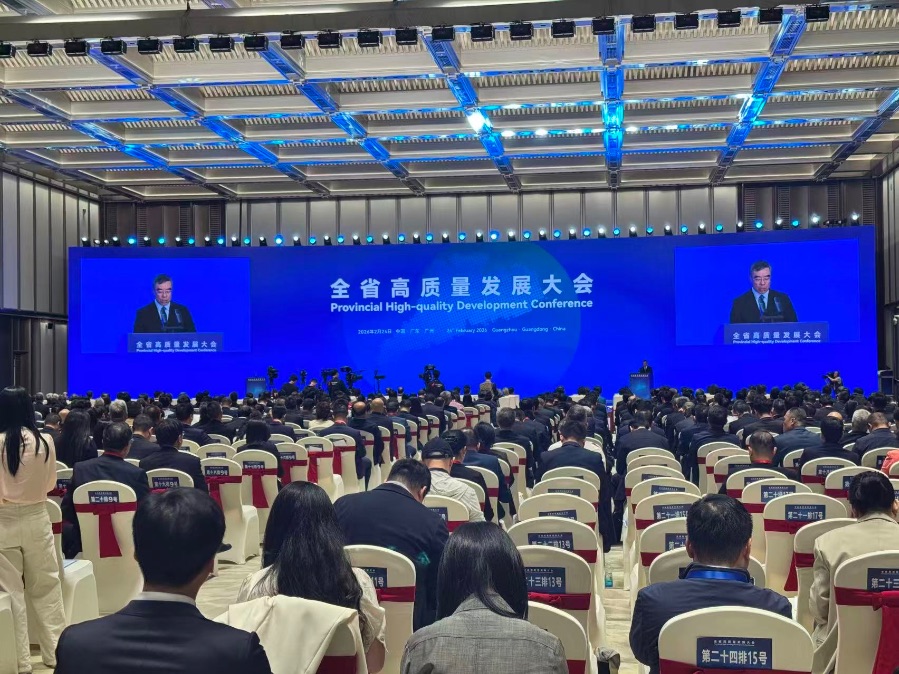
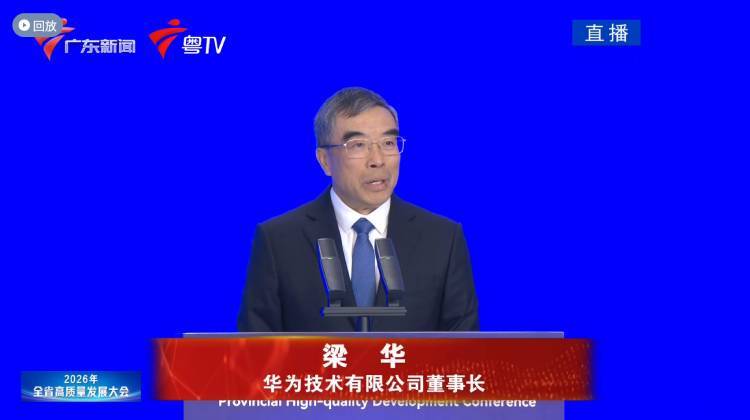
据《科创板日报》报道,此前有消息称华为2025年销售收入具体为8809亿元,同比增长2.2%。回顾过去六 年,华为2019-2024年营收情况分别为8588亿元、8914亿元、6368亿元、6423亿元、7042亿元和8621亿元。 【太平洋科技快讯】2月24日消息,华为2025年经营业绩出炉,年度销售收入突破8800亿元大关。华为董 事长梁华在2026广东省高质量发展大会上发表讲话时透露,2025年华为公司销售收入超过8800亿元人民 币,并表示整体经营稳健,持续做强核心竞争力,坚持走高质量发展道路。 ...
Nokia and AWS showcase industry-first agentic AI-powered network slicing with du and Orange
Globenewswire· 2026-02-24 09:00
Core Insights - Nokia and AWS have launched the first agentic AI-powered 5G-Advanced network slicing solution, enabling telecommunication providers to deliver premium services dynamically based on real-world conditions [1][2][4] Group 1: Technology and Innovation - The agentic AI slicing solution utilizes real-world internet data to enable adaptive network slicing, enhancing service delivery for telecommunications providers [2][5] - This innovation allows for autonomous adjustments to network performance during unpredictable events, optimizing resource utilization and service quality [3][6] - The solution integrates Nokia's advanced network slicing capabilities with AWS's AI technologies, transforming network slicing into a business enabler for operators [4][9] Group 2: Applications and Use Cases - The agentic AI-powered slicing can support various applications, including critical services in manufacturing, IoT, smart cities, and emergency response [6][7] - It enhances network performance for premium customers during high-demand events, ensuring quality service for applications like gaming and streaming [6][7] - The solution is designed to anticipate customer needs and deliver tailored services across diverse use cases, from mission-critical applications to immersive entertainment [8][10] Group 3: Collaboration and Market Impact - du and Orange are the first telecommunications providers to pilot this innovative slicing solution in their networks [1][5] - The collaboration aims to unlock new revenue streams for operators by enabling real-time, intent-based service provisioning [4][11] - The integration of agentic AI with existing infrastructure allows for flexible and scalable network operations, enhancing overall service delivery [11]



Nokia and AWS showcase industry-first agentic AI-powered network slicing with du and Orange
Globenewswire· 2026-02-24 09:00
Core Insights - Nokia and AWS have launched the first agentic AI-powered 5G-Advanced network slicing solution, enabling telecommunication providers to deliver premium services dynamically based on real-world conditions [1][2][4] Group 1: Innovation and Technology - The collaboration combines Nokia's advanced network slicing with AWS AI technologies, allowing for adaptive network slicing that responds intelligently to various conditions [2][10] - The agentic AI analyzes real-world data such as traffic, events, and locations to optimize network performance and service delivery [2][11] - This innovation aims to transform network slicing from a technical capability into a business enabler, allowing operators to monetize their 5G investments through differentiated services [4][10] Group 2: Use Cases and Applications - The agentic AI-powered slicing can be applied across various sectors, including manufacturing, IoT, smart cities, and emergency services, enhancing service quality during critical situations [6][8] - It supports on-demand slicing for premium 5G services, ensuring quality during traffic surges and emergencies, thus improving connectivity for first responders [6][12] - The solution is designed to optimize network performance for high-demand events, such as concerts and sporting events, by adjusting slicing policies based on real-time data [7][9] Group 3: Industry Impact - The innovation is expected to unlock new revenue streams for telecommunication providers by enabling real-time, intent-based service provisioning [4][5] - Companies like du and Orange are among the first to pilot this solution, showcasing its potential to enhance customer experiences and operational efficiency [8][9] - The integration of agentic AI with existing infrastructure allows for scalable and flexible network operations, crucial for modern telecommunications [12]


史上第二高!华为2025年营收破8800亿
Ge Long Hui· 2026-02-24 08:18
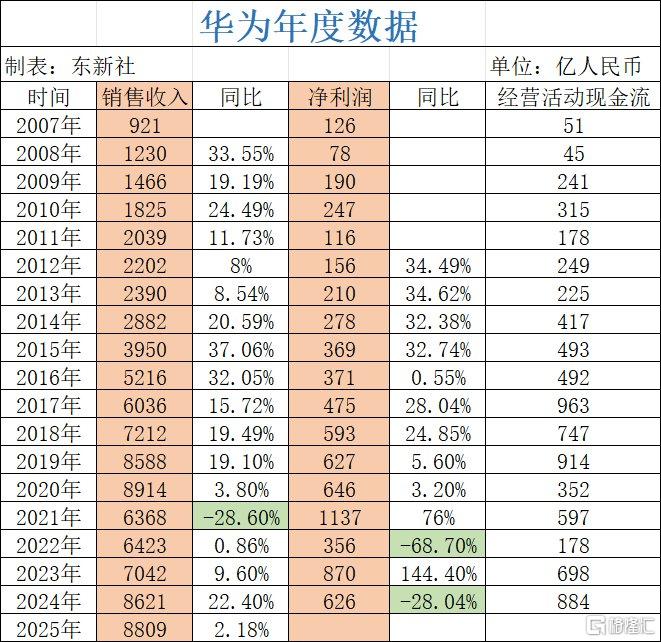
Core Viewpoint - Huawei's sales revenue for 2025 is projected to exceed 8800 billion RMB, marking a 2.18% year-on-year increase, and is the second highest in the company's history after 2020 [1][2]. Group 1: Financial Performance - Huawei's sales revenue for 2025 is specifically reported at 8809 billion RMB, showing a slight recovery compared to previous years [1]. - The peak revenue was recorded in 2020 at 8914 billion RMB, followed by a significant decline due to U.S. sanctions impacting its mobile business [1]. - The revenue for 2024 was 8621 billion RMB, reflecting a 22.4% year-on-year growth, while the growth for 2025 is considerably lower at 2.18% [2][3]. Group 2: Business Developments - The HarmonyOS ecosystem is evolving, with over 40 million devices running HarmonyOS 5 and 6, and more than 75,000 native applications and cloud services available [1]. - Huawei has 43 mainstream industry models based on Ascend pre-training and over 200 open-source models adapted to the Ascend ecosystem, facilitating the implementation of over 6000 solutions [1]. Group 3: Future Outlook - Analysts suggest that while Huawei's revenue is returning to historical highs, the company faces significant growth pressure moving forward [2]. - The ability to surpass the 9000 billion RMB revenue mark and exceed historical peaks will depend on the growth of new business areas such as AI computing and smart vehicles [2].
华为:2025年销售收入超过8800亿元人民币,鸿蒙终端设备数突破4000万!
Mei Ri Jing Ji Xin Wen· 2026-02-24 06:13
Core Insights - In 2025, the company reported sales revenue exceeding 880 billion RMB, reflecting a year-on-year growth of 2.2% [1][3] Group 1: Company Performance - The company is focusing on strengthening its core competitiveness and adhering to a high-quality development path [3] - The overall business operation of the company remains stable, with a commitment to providing competitive products and services globally [3] Group 2: Ecosystem Development - The HarmonyOS ecosystem is evolving from usable to user-friendly, with over 40 million devices equipped with HarmonyOS 5 and HarmonyOS 6 [3] - There are more than 75,000 native applications and cloud services available, with widespread applications in finance, electricity, energy, transportation, and communication sectors [3] - Currently, 43 mainstream industry models are based on the Ascend pre-training, and over 200 open-source models are adapted to the Ascend ecosystem, facilitating the implementation of more than 6,000 solutions [3]
史上第二高,华为2025年销售收入超8800亿元
Feng Huang Wang· 2026-02-24 06:05
Core Insights - Huawei's sales revenue for 2025 is projected to exceed 880 billion RMB, marking a 2.2% year-on-year increase [3][4] - This revenue figure positions 2025 as the second highest in Huawei's history, following a peak in 2020 [4] - The company faces significant growth pressure moving forward, with a stark contrast between the 22.4% growth in 2024 and the modest 2.2% expected in 2025 [4] Revenue Trends - Huawei's revenue over the past six years has been as follows: 2019: 858.8 billion RMB; 2020: 891.4 billion RMB; 2021: 636.8 billion RMB; 2022: 642.3 billion RMB; 2023: 704.2 billion RMB; 2024: 862.1 billion RMB [3] - The historical peak revenue of 891.4 billion RMB in 2020 was followed by a significant decline due to U.S. sanctions impacting its mobile business [3][4] Future Growth Strategies - Huawei aims to enhance its R&D investments, focusing on products and solutions that meet the growing demand for computing power, particularly in AI and smart automotive sectors [4] - The company is committed to building an AI open ecosystem centered around its Ascend series and strengthening the HarmonyOS ecosystem to improve user experience [4] - Key initiatives include solidifying digital infrastructure, creating an open AI ecosystem, and co-developing the Harmony operating system to enhance usability [4] Ecosystem Development - The HarmonyOS ecosystem has seen over 40 million devices equipped with HarmonyOS 5 and 6, with more than 75,000 native applications and cloud services available [4] - There are currently 43 mainstream large models pre-trained on Ascend, with over 200 open-source models adapted to the Ascend ecosystem, facilitating the deployment of over 6,000 solutions [4]

华为去年营收超8800亿,梁华呼吁打造开放开源的AI生态
Nan Fang Du Shi Bao· 2026-02-24 04:50
Group 1: Company Performance and Ecosystem Development - Huawei's overall business remains stable, with annual sales revenue exceeding 880 billion RMB, expressing gratitude to global customers and partners for their support [2] - The HarmonyOS ecosystem is evolving from usable to user-friendly, with over 40 million devices equipped with HarmonyOS 5 and HarmonyOS 6, and more than 75,000 native applications and cloud services available [2] - The development of the Ascend ecosystem includes 43 mainstream industry models based on Ascend pre-training, with over 200 open-source models adapted to the ecosystem, leading to the implementation of over 6,000 solutions [2] Group 2: AI Infrastructure and Innovation - Huawei will continue to increase R&D investment in integrated machine cluster supernodes and other products to meet the rapidly growing computing power demand, aiming to build an AI open ecosystem centered on generation [3] - The company emphasizes the importance of digital infrastructure as the foundation for AI innovation and application, highlighting the need for early planning of AI data centers and related power infrastructure [4] - Huawei aims to create an open-source AI ecosystem to accelerate the release of AI industry value, focusing on collaborative innovation and the transformation of traditional industries [4] Group 3: Operating System and User Experience - The company is committed to co-building the Harmony operating system to enhance user experience, emphasizing the importance of interoperability among devices in the intelligent era [5] - Industry experience indicates that building a technology ecosystem requires open collaboration and innovation, rather than competition among single technologies or companies [5]
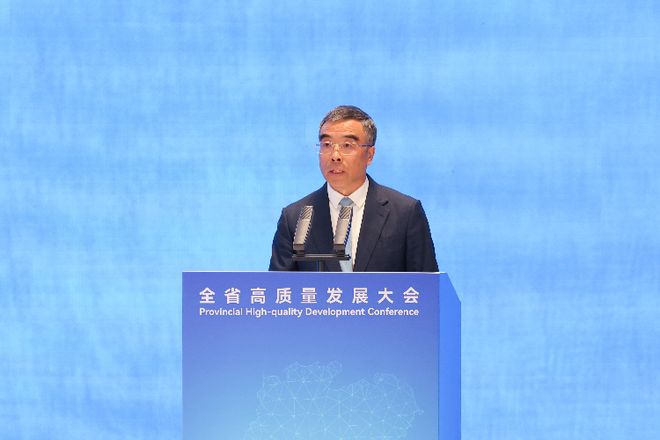
华为去年营收超8800亿 梁华呼吁打造开放开源的AI生态
Nan Fang Du Shi Bao· 2026-02-24 04:46
Core Insights - Huawei's overall business remains stable, with annual sales revenue exceeding 880 billion RMB, expressing gratitude to global customers and partners for their support [1] - The HarmonyOS ecosystem is evolving from usable to user-friendly, with over 40 million devices equipped with HarmonyOS 5 and 6, and more than 75,000 native applications and cloud services available [1] - The development of the Ascend ecosystem is progressing, with 43 mainstream large models based on Ascend pre-training and over 200 open-source models adapted to the ecosystem, leading to the implementation of over 6,000 solutions [1] Group 1: Digital Infrastructure and AI - Digital infrastructure is deemed the foundation for AI innovation and application, with Huawei committing to increasing R&D investment to meet the growing demand for computing power [2][3] - The integration of AI technology infrastructure and application scenarios is highlighted as a key feature of the fourth industrial revolution, emphasizing the need for systematic innovation [2][3] Group 2: Open AI Ecosystem - The importance of building an open-source AI ecosystem is stressed, which is essential for unlocking the value of the AI industry and requires collaboration and continuous development [3] - Huawei aims to deepen open-source initiatives around the Ascend platform, encouraging faster innovation and application development among developers and research institutions [3] Group 3: HarmonyOS Development - The need to co-build the Harmony operating system is emphasized to enhance user experience through interoperability among various devices [4] - The construction of a technology ecosystem is viewed as a collaborative effort rather than a competition among single technologies or companies, promoting shared value creation [4][5]
华为公司董事长梁华:持续夯实数智基础设施,打造开放AI生态
2 1 Shi Ji Jing Ji Bao Dao· 2026-02-24 04:24
Core Viewpoint - The Guangdong High-Quality Development Conference emphasizes the theme of "coordinated development of manufacturing and service industries," with Huawei's chairman sharing insights on the company's performance and strategic focus for the future [1][3]. Company Performance - In 2025, Huawei's overall business remained stable, achieving a sales revenue exceeding 880 billion RMB [3]. - The number of terminal devices equipped with HarmonyOS 5 and HarmonyOS 6 surpassed 40 million, with over 75,000 native applications and cloud services available [3]. Research and Development Focus - Huawei plans to increase R&D investment to meet the growing demand for computing power, focusing on products and solutions such as integrated machines, clusters, and super nodes [3]. - The company aims to strengthen the HarmonyOS ecosystem and enhance user experience while investing in foundational large models and intelligent agents for various industries [3]. Industry Trends - The rapid development of artificial intelligence is expected to accelerate the integration of the digital and physical worlds, reshaping existing development paradigms and application models [4]. - To promote coordinated innovation between manufacturing and service industries, Huawei's chairman proposed three key points: solidifying digital infrastructure, creating an open AI ecosystem, and co-building the Harmony operating system ecosystem [4]. Ecosystem Collaboration - The construction of a technological ecosystem requires open-source collaboration and innovation, enabling value creation and sharing within the industry [4]. - The chairman called for more developers and users to participate in building the Harmony ecosystem to enhance user experience and achieve mutual benefits [4].