昇腾

Search documents
孟晚舟华为年报致辞:坚持开源开放,繁荣产业生态
凤凰网财经· 2026-03-31 15:37
Core Viewpoint - Huawei's 2025 annual report indicates a stable business performance with a global sales revenue of 880.9 billion RMB and a net profit of 68 billion RMB, marking the second-highest revenue in the company's history [2][4]. Group 1: Revenue and Business Performance - Huawei's overall revenue for 2025 reached 880.9 billion RMB, showing a year-on-year growth of 2.2% [2][4]. - The revenue breakdown by business segments includes: - ICT Infrastructure: 375.014 billion RMB, up 2.6% - Terminal Business: 344.473 billion RMB, up 1.6% - Digital Energy: 77.312 billion RMB, up 12.7% - Intelligent Automotive Solutions: 45.018 billion RMB, up 72.1% [5][6]. - The intelligent automotive solutions business achieved significant growth and profitability, with a revenue increase of over 70% [7]. Group 2: Strategic Focus and R&D Investment - Huawei emphasizes strategic focus on four main pillars: strategic focus, battlefield transformation, open-source collaboration, and quality-driven success [2][6]. - The company invested 192.3 billion RMB in R&D in 2025, accounting for 21.8% of total sales revenue, with cumulative R&D investment exceeding 1.382 trillion RMB over the past decade [8][9]. Group 3: Ecosystem Development - The Harmony ecosystem has crossed a critical threshold, with over 10 million developers and more than 36 million devices running Harmony 5.0 by the end of 2025 [9][10]. - The Ascend ecosystem has developed over 3,000 partners and 4 million developers, while the Kunpeng ecosystem has over 6,800 partners and 3.8 million developers [10][26]. Group 4: Future Outlook - Huawei plans to strengthen its core ecosystem in 2026, focusing on enhancing developer tools and services to improve the Harmony ecosystem experience [28]. - The company aims to maintain strategic focus and high-quality development, ensuring that quality remains the foundation of its survival and growth [29][30].


华为:2025年实现销售收入8809亿元,净利润680亿元
新华网财经· 2026-03-31 13:21
Core Viewpoint - Huawei's 2025 annual report indicates that the company's operational results met expectations, achieving global sales revenue of 880.9 billion RMB and a net profit of 68 billion RMB [2]. Financial Performance - Sales revenue for 2025 reached 126.018 billion USD (880.9 billion RMB), showing an increase from 862.1 billion RMB in 2024 [3]. - Operating profit was 13.867 billion USD (96.9 billion RMB), with an operating profit margin of 11.0%, consistent with the previous year [3]. - Net profit for 2025 was 9.732 billion USD (68.036 billion RMB), up from 62.6 billion RMB in 2024 [3]. - Operating cash flow amounted to 18.222 billion USD (127.4 billion RMB), significantly higher than 88.4 billion RMB in 2024 [3]. - Total assets reached 190.961 billion USD (1.335 trillion RMB), an increase from 1.290 trillion RMB in 2024 [3]. - The debt-to-asset ratio improved to 55.0%, down from 57.8% in 2024 [3]. Market and Industry Insights - The report highlights that Huawei's overall operations are stable, benefiting from the rapid development of China's AI industry and the accelerated digital transformation across sectors [2]. - The company leveraged its comprehensive advantages in computing, storage, networking, energy, terminals, and smart automotive solutions to meet the growing demand for computing power [2]. - Huawei's sales revenue in the Chinese market reached 616.249 billion RMB, driven by the development of AI and the construction of an open ecosystem centered around Ascend [2].

华为算力概念股,集体拉升
Di Yi Cai Jing Zi Xun· 2026-02-27 02:17
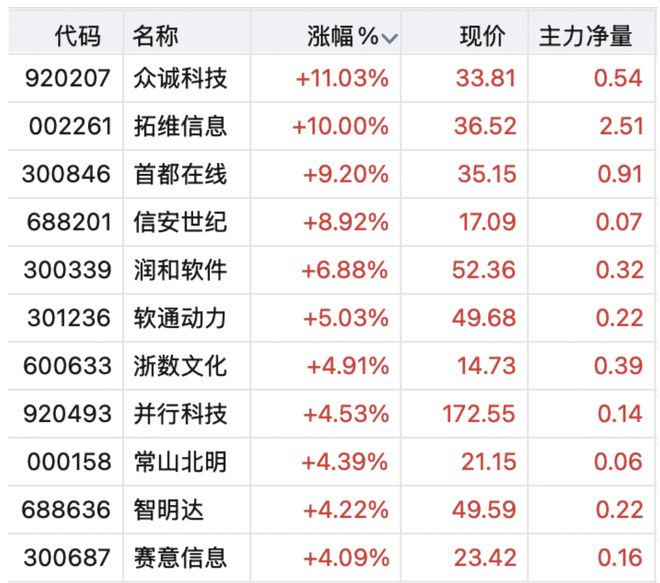
Core Viewpoint - Huawei's recent developments in AI and cloud computing have led to a significant rise in related stocks, indicating strong market interest and potential investment opportunities in the sector [1][2]. Group 1: Stock Performance - On February 27, Huawei-related stocks experienced a collective surge, with notable increases including: - Zhongcheng Technology up by 11.03% to 33.81 [2] - Tuowei Information up by 10.00% to 36.52 [2] - Capital Online up by 9.20% to 35.15 [2] - Other companies also saw gains, including Runhe Software (+6.88%), Softcom Power (+5.03%), and Changshan Beiming (+4.39%) [2]. Group 2: Huawei's Technological Advancements - Huawei's chairman Liang Hua announced that 43 mainstream large models are now based on the Ascend pre-training, with over 200 open-source models adapted for production ecosystems, facilitating the application of more than 6,000 solutions [1][2]. - On February 26, Huawei Cloud's public beta version was launched, offering developers and enterprises an intelligent coding solution that includes features such as code generation, knowledge Q&A, and unit test case generation [3].
华为算力概念反复走强 华胜天成触及涨停
Xin Lang Cai Jing· 2026-02-27 01:52
Core Viewpoint - The Huawei computing concept is gaining strength, leading to significant stock price increases for related companies such as Huasheng Tiancheng and Tuowei Information [1] Group 1: Market Performance - Huasheng Tiancheng reached its daily limit increase, while Tuowei Information also hit the limit [1] - Yuntian Lifi rose over 10%, and other companies like Runhe Software, Softcom Power, Changshan Beiming, Shenzhou Digital, and Tuoer Si also experienced gains [1] Group 2: Industry Developments - Huawei's chairman, Liang Hua, announced that 43 mainstream industry models are currently based on the Ascend pre-training [1] - Over 200 open-source models have been adapted to the Ascend ecosystem, facilitating the implementation of more than 6,000 solutions [1]


华为昇腾板块盘初拉升,拓维信息涨停
Jin Rong Jie· 2026-02-27 01:47
Group 1 - Huawei's Ascend segment saw a significant increase in early trading, indicating strong market interest [1] - Tuo Wei Information reached its daily limit up, reflecting positive investor sentiment [1] - Other companies such as Yuntian Lifa, Capital Online, Xinan Century, Runhe Software, and Keda Guochuang also experienced gains, suggesting a broader trend in the sector [1]



华为销售收入超8800亿四连增 鸿蒙终端设备数突破4000万台
Chang Jiang Shang Bao· 2026-02-25 23:58
Core Insights - Huawei's overall business remains stable, with annual sales revenue exceeding 880 billion yuan, marking the second highest in history for 2025 [2][4] - The company has achieved continuous revenue growth for four consecutive years, with a projected revenue of 862.1 billion yuan for 2025 [3][4] - The HarmonyOS ecosystem is expanding, with over 40 million devices running HarmonyOS 5 and 6, and more than 75,000 native applications and cloud services available [4] Financial Performance - In the first half of 2025, Huawei reported revenue of 427.04 billion yuan, a year-on-year increase of 3.95%, while net profit decreased by 32% to 37.195 billion yuan [2] - Research and development investment for the first half of 2025 reached 96.95 billion yuan, accounting for 22.7% of total revenue, reflecting a year-on-year increase of 9.04% [2] Market Expansion - Huawei is accelerating its overseas market expansion, with successful deployments of innovative solutions in Nigeria and Peru aimed at enhancing connectivity in underserved areas [8][9] - The company is collaborating with various operators to implement advanced network solutions, such as the EcoMatrix in Peru and the Alpha antenna in Ghana, which significantly improve network efficiency and coverage [8][9] Strategic Focus - Huawei is committed to strengthening its core competitiveness and focusing on high-quality development, aiming to provide competitive products and services globally [2][4] - The company emphasizes the importance of building a robust digital infrastructure and fostering an open-source ecosystem to accelerate the release of AI's industrial value [5][6]

昇腾算力2026年展望
2026-02-25 04:13
Summary of the Conference Call on the Ascend Industry Industry Overview - The conference focused on the Ascend industry and its supply chain outlook for 2026, with a positive sentiment regarding growth and development in this sector [1] - The discussion highlighted the trend of "ToG going overseas," indicating a significant shift in the industry dynamics, particularly in the performance and pricing of domestic models [1][2] Core Insights and Arguments - **Domestic Computing Power**: There is a strong belief in the growth of domestic computing power, driven by competitive pricing and operational cost advantages compared to overseas counterparts like NVIDIA [2] - **Market Demand**: The demand for domestic computing power is expected to remain robust, with an increase in marginal demand and a more diversified customer base beyond just the top-tier companies [3][4] - **Huawei's Strategy**: Huawei is shifting its focus towards AI hardware and chips, indicating a strategic realignment that could enhance its market position and cash flow [4] - **Supply Chain Profitability**: There is an anticipated improvement in the profitability of the supply chain, with suppliers experiencing better margins due to increased demand in the AI sector [5][6] Key Developments - **Supplier Dynamics**: Suppliers are expected to see significant improvements in their profitability, with a noted shift in bargaining power due to supply constraints in the AI market [5] - **Investment Recommendations**: Specific companies were highlighted for potential investment, including: - **Huafeng Technology**: Expected to benefit from increased procurement of components related to the Ascend servers [6] - **Power Management Chips**: Companies like Jiehuate are seen as having opportunities in this segment [6] - **Server Manufacturing**: Companies such as Fenghuo Communication and Huakun Zhenyu are recommended due to their involvement in both Ascend and Kunpeng server production [6] Additional Important Points - The conference emphasized the shift in customer strategies, with Huawei engaging more with mid-tier internet companies, which could lead to a more balanced demand across the industry [3] - Concerns regarding the profitability of Huawei's upstream supply chain have been alleviated, with evidence of improved margins and demand dynamics [5][6] This summary encapsulates the key points discussed during the conference call, providing insights into the Ascend industry and its future outlook.

策马跃壑启新程——广东奋力推进制造业与服务业协同发展
2 1 Shi Ji Jing Ji Bao Dao· 2026-02-25 02:04
Group 1 - Guangdong has set a record for passenger volume during the Spring Festival, with railway passenger volume reaching a historical high and airports also breaking records for passenger throughput [1] - The provincial government emphasizes the theme of "promoting the coordinated development of manufacturing and service industries" at the annual high-quality development conference, indicating a strong commitment to achieving first-place status in economic development [1][2] - The integration of manufacturing and service industries is seen as a key driver for enhancing production efficiency and fostering new business models, which is crucial for Guangdong's economic growth [2][3] Group 2 - Companies like Shein are leveraging cross-border e-commerce and data integration to create a unique "small orders and quick response" model, showcasing the successful fusion of manufacturing and services [3] - The Guangdong government is focused on promoting the transformation of technological achievements into practical applications, which is essential for strengthening the industrial base and fostering a modern industrial system [3][4] - The manufacturing sector in Guangdong is robust, accounting for about one-eighth of the national industrial scale, with a target industrial added value of 4.89 trillion yuan by 2025 [6][7] Group 3 - The service industry in Guangdong is becoming a significant force for economic growth, with a projected service industry added value accounting for 10.5% of the national total by 2025 [6][7] - The province aims to transition from chain-based collaboration to a networked symbiosis, enhancing the efficiency of production and service integration [7][8] - The establishment of initiatives like the "results supermarket" by the Shenzhen Institute of Advanced Technology is facilitating technology transfer and collaboration between enterprises [7][8] Group 4 - The dual development of manufacturing and services is crucial for Guangdong's high-quality development and modernization, with both sectors mutually reinforcing each other [8][9] - The province is focusing on fostering innovation through increased R&D investment, with a target of 4.57% R&D intensity by 2025 [9][10] - The optimization of the business environment is essential for supporting the continuous emergence of new products and business models, with initiatives aimed at simplifying processes for new enterprises [9][10]
鸿蒙终端设备数突破4000万台
Zheng Quan Ri Bao· 2026-02-24 15:47
Group 1 - Huawei's HarmonyOS ecosystem has surpassed 40 million devices with over 75,000 native applications and cloud services, indicating a shift from mere technical construction to deep industry penetration [1] - The implementation of HarmonyOS's unified interconnection technology standard breaks down barriers between different operating systems, facilitating collaboration among devices and attracting more developers and enterprises to the ecosystem [1] - The rapid expansion of HarmonyOS into vertical industries, such as transportation and energy, signifies its rigorous testing in critical infrastructure for system stability and security [1] Group 2 - HarmonyOS is evolving beyond a mobile operating system to become a "universal language" in the era of IoT, particularly in industrial and energy sectors, addressing long-standing data silos through distributed soft bus technology [2] - Huawei's Ascend AI strategy is supported by the Ascend computing ecosystem, which has 43 mainstream industry models based on pre-training and over 200 open-source models adapted to the ecosystem, leading to the deployment of over 6,000 solutions [2] - The Intern-S1-Pro model, developed by the Shanghai AI Lab, exemplifies the maturity of the Ascend ecosystem, showcasing full-process support from training to inference on Ascend AI infrastructure [2] Group 3 - Huawei's computing open-source ecosystem will advance through dual tracks of "participating in open-source" and "leading open-source," with over 60 clients and partners creating more than 420 high-performance operators based on the CANN heterogeneous computing architecture [3] - The strategy of "computing power + open-source" aims to lower barriers for developers, mirroring early successes of the Android system, with over 6,000 solutions indicating deep integration into various business processes [3] - The growth of the HarmonyOS ecosystem reflects a clearer domestic software and hardware industry chain, transitioning from concept to substantial business implementation [3] Group 4 - Softcom Power Information Technology Group is a core contributor to the open-source HarmonyOS community, creating the first cross-instruction set operating system in the industry [4] - Guangdong Jiulian Technology is heavily investing in R&D for "AI + HarmonyOS," promoting open-source HarmonyOS adaptation for its developed boards [4] - Companies like Shenzhen Lihe Microelectronics are seizing opportunities in smart home control and renovation sectors with products deeply integrated with HarmonyOS [4]
华为董事长梁华:打造AI开放生态,加速释放人工智能产业价值
Sou Hu Cai Jing· 2026-02-24 15:37
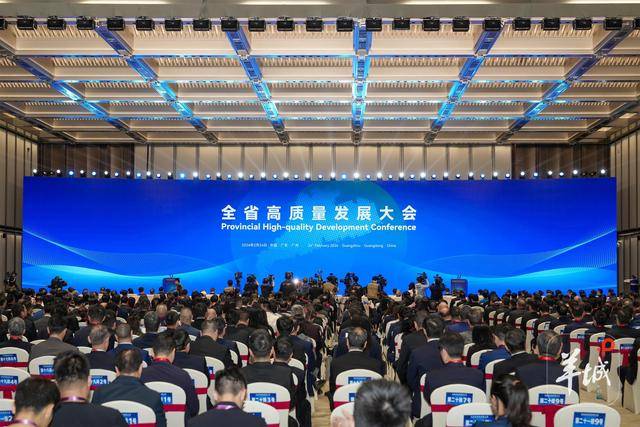
Group 1 - The Guangdong High-Quality Development Conference was held in Guangzhou, focusing on the theme of "coordinated development of manufacturing and service industries," marking the fourth consecutive year for this event to signal strong integration between the two sectors [1] - Huawei's Chairman Liang Hua emphasized that the rapid development of artificial intelligence (AI) will accelerate the deep integration of the digital and physical worlds, reshaping existing development paradigms, production methods, and service models [3] - Liang Hua projected that Huawei's total sales revenue would exceed 880 billion RMB in 2025, highlighting the company's robust operational performance [3] Group 2 - Liang Hua outlined three key views on the collaborative innovation between manufacturing and service industries, noting that the fourth industrial revolution is characterized by the mutual empowerment and collaborative evolution of AI technology, infrastructure, and application scenarios [3] - The value brought by AI extends beyond mere efficiency improvements and convenience, involving deep changes in industry logic, service models, and value chains, necessitating the construction of an open and cooperative ecosystem for sustainable development [3] - The future focus should be on building a solid digital infrastructure to support the high-quality development of the AI industry, ensuring a lasting development capability [3] Group 3 - In the era of the Internet of Everything, the interconnection and interoperability of various devices are core capabilities for providing intelligent user experiences, which can drive high-quality innovation across industries [4] - Liang Hua stressed the importance of collaborative innovation and open-source approaches in building a technology ecosystem that empowers the industrial ecosystem, thereby driving technological progress [4] - The company plans to increase R&D investment to meet the growing demand for computing power, focusing on creating an AI open ecosystem centered around its Ascend series products and solutions [4]