
无人机

Search documents
穿越周期 徽商银行的硬科技陪伴三重叙事
Zhong Guo Zheng Quan Bao· 2026-01-14 20:51
Core Insights - The article highlights the innovative financial support provided by Huishang Bank to technology companies, enabling their growth and development in the competitive market [1][2][4] Group 1: Huishang Bank's Support Mechanism - Huishang Bank has developed a unique financial service mechanism to address the challenges of technology financing, including establishing a dedicated department for technology finance and creating "Innovation Homes" in various provincial parks [1][4] - The bank offers a 3% tolerance for non-performing loans in technology credit business and has implemented a negative list for credit due diligence, allowing for more flexible financing options [1][2] - The bank's approach focuses on the growth potential and technological capabilities of companies rather than their current financial performance, marking a shift in risk assessment [2][3] Group 2: Success Stories of Supported Companies - Dezhihang Technology, which relocated to Hefei, received a 10 million yuan credit line from Huishang Bank during a challenging period, helping the company recover from a significant drop in sales [1][2] - The company expects its sales revenue to increase from 2.76 million yuan in 2021 to 80 million yuan by 2025, showcasing the impact of Huishang Bank's support [2] - Ruisi Medical, another beneficiary, received 20 million yuan in special credit to support its research and market expansion, demonstrating the bank's commitment to fostering innovation [2][3] Group 3: Broader Impact on the Innovation Ecosystem - The collaboration between local government and Huishang Bank has created an efficient "government-bank-enterprise" ecosystem that supports technology companies by providing application scenarios and connecting them with resources [3][4] - Huishang Bank's technology finance strategy aims to build an innovation ecosystem by offering comprehensive services that include funding and intellectual support [4] - By the end of 2025, Huishang Bank's technology loan balance is expected to exceed 210 billion yuan, with over 13,000 loan accounts, indicating a robust growth in technology financing [4]
“金牛座”执飞天路 川藏实现6小时“闪送”
Xin Lang Cai Jing· 2026-01-14 19:41
Group 1 - The successful flight of the FP-985 "Golden Bull" large fixed-wing drone marks the first verification of a high-altitude logistics route in China, establishing a foundation for an efficient and stable low-altitude logistics network in the western plateau region [2] - The new air logistics route reduces the transportation time between Mianyang and Linzhi from over 40 hours by traditional land transport to under 6 hours, enabling same-day delivery [2] - The FP-985 drone, developed independently by China, has a maximum takeoff weight of 5.7 tons, an effective payload of over 2 tons, and a range exceeding 2000 kilometers, designed for extreme environments [2] Group 2 - The air route connects the snow-covered plateau with the economically vibrant Sichuan Basin, linking ethnic region specialty industries with broader markets [3] - The operation of this air route is expected to attract more logistics integration and e-commerce companies to the North川 area, which has established a full industry chain in low-altitude economy [3] - High-altitude products from Tibet, such as yak meat and specialty medicinal materials, can be quickly delivered to North川 and then distributed nationwide, enhancing the commercialization efficiency and value of local agricultural products [3]


衢州两大低空经济案例入选全省典型
Xin Lang Cai Jing· 2026-01-14 18:39
转自:衢州日报 (来源:衢州日报) 在山区生态治理领域,开化县巧用无人机技术破解松材线虫病防治难题,构建起"天、地、人"一体化精 准防治新模式。"天上查"通过无人机搭载高光谱相机和激光雷达巡检,智能识别并精准定位疫木,使疫 木发现率从40%跃升至90%;"地上清"由人工砍伐疫木后,通过大载重无人机吊运下山,单日运力达7 至8吨,效率是人工搬运的5倍,同时有效避免交叉感染;"空中核"则在除治后通过无人机复飞核查,形 成闭环管理。这一模式将全县疫木普查周期从30天缩短至15天,监测覆盖面积从31.4万亩拓展至300万 亩,建立起"即时发现、即时处置"的常态化响应机制,为山区生态保护提供了高效可靠的解决方案。 衢州市交通运输局航空处相关负责人介绍,"综合飞一次"政务巡检通过"一个主体"统筹+"一张网格"管 空+"一个平台"调度的模式,实现政务巡查集约化、智能化升级。"一个主体"统筹即市级层面统一调度 十多个部门的政务无人机资源,整合巡检需求并构建常态化沟通协调机制与跨部门数据共享通道;"一 张网格"管空即依托GeoSOT全球剖分网格技术,构建覆盖全市的低空数字底座,实现空域"一图尽 览";"一个平台"调度即开发全市 ...
中航(成都)无人机系统股份有限公司关于董事会换届选举的公告
Shang Hai Zheng Quan Bao· 2026-01-14 17:56
Group 1 - The company has announced the election of its sixth board of directors, following the expiration of the fifth board's term [1][2] - The sixth board will consist of 9 directors, including 5 non-independent directors and 3 independent directors, along with 1 employee representative director [1][2] - The election of the new board members is scheduled to be submitted for approval at the company's first extraordinary general meeting of 2026 [2][3] Group 2 - The candidates for the sixth board include non-independent directors such as Ji Hongsheng, Zeng Qiang, Zhang Xiaojun, Zhou Jianhua, and Zhou Wei, and independent directors Chen Liancheng, Chen Liang, and Zhao Yin [2][3] - The independent director candidates have met the qualifications required by relevant laws and regulations, ensuring they are fit to serve [3][11][12][14] - The current board members have been recognized for their diligence and contributions to the company's development during their tenure [3] Group 3 - The first extraordinary general meeting of 2026 is set for January 30, 2026, at 14:30, in Chengdu, Sichuan Province [16][17] - The meeting will utilize a combination of on-site and online voting methods, with specific timeframes for each voting method [18][19] - The company will provide reminders to small and medium-sized investors to ensure their participation in the voting process [20] Group 4 - The company has announced a share reduction plan by its shareholder, Zhonghang Yihua Fund Management Co., Ltd., which holds 2.05% of the company's total shares [36][37] - The reduction plan involves selling up to 6,750,000 shares within three months, starting 15 trading days after the announcement [40] - The shareholder has committed to not transferring shares for a specified period, ensuring compliance with relevant regulations [42]

Red Cat (NasdaqCM:RCAT) FY Conference Transcript
2026-01-14 17:02
Summary of Red Cat's Earnings Call Company Overview - **Company**: Red Cat - **Industry**: Defense Technology, specifically focusing on drones and unmanned surface vehicles (USVs) for military applications - **Key Products**: - Black Widow drones for the Army - Edge 130 (soon to be Trikon) drones - USVs (Unmanned Surface Vehicles) under the Blue Ops division [1][2][3] Core Insights and Arguments - **Product Portfolio**: Red Cat has three main divisions: - **Black Widow**: Drones primarily for the Army's SRR program - **Edge 130 (Trikon)**: A vertical takeoff and landing drone with the longest flight time on the Blue UAS list, being ruggedized for battlefield conditions - **Blue Ops**: Focused on developing kamikaze boats, with sizes ranging from 5 to 11 meters [1][2][3] - **Market Differentiation**: - Manufacturing capability is highlighted as a key differentiator, with Red Cat having doubled its factory size in Salt Lake City and moved into a larger facility in Georgia for boat production [4][5] - The company emphasizes the importance of being able to manufacture at scale, which is seen as a significant competitive advantage in the defense tech industry [4][5] - **Financial Performance**: - Q4 revenue reached $25 million, a significant increase from $3 million in Q2, driven by a $35 million LRIP contract with the Army [8][9] - The company expects continued growth into Q1 and beyond, transitioning from LRIP to full-rate production contracts [9][10] - **Future Opportunities**: - The budget for small drones has increased from $80 million to approximately $803 million, indicating a substantial market opportunity [11][12] - Red Cat is positioned to benefit from various drone programs, including the Drone Dominance program and the Marines' PBAS/FPV drones [12][15] - **Global Market Positioning**: - Red Cat is exploring opportunities outside the U.S., particularly in NATO countries and Japan, as defense budgets increase globally [17][20] - The company aims to ensure its products are battle-tested, enhancing credibility and marketability [17][18] Additional Important Points - **Production Capacity**: Red Cat claims it can produce 1,000 drones per day and has the potential to scale up to 5,000 drones per month if demand arises [23][24] - **USV Market**: The company is focusing on smaller, effective boats, which have proven successful in recent conflicts, particularly against advanced naval forces [26][27] - **Acquisition Strategy**: Red Cat plans to continue acquiring companies that enhance its technology and capabilities, aiming for full integration of its supply chain [37][38] - **Counter-UAS Market**: The company is developing counter-drone technology in partnership with other firms, indicating a strategic expansion into this complementary market [40][41] - **Innovation Day**: An upcoming event will showcase Red Cat's products, including swarming capabilities of drones and boats, which is expected to generate significant interest [60][61] Conclusion Red Cat is positioned for significant growth in the defense technology sector, with a strong focus on manufacturing capabilities, expanding product lines, and tapping into increasing global defense budgets. The company's strategic initiatives and market positioning suggest a robust outlook for future revenue and market share expansion.

AeroVironment (NasdaqGS:AVAV) FY Conference Transcript
2026-01-14 16:17
AeroVironment (NasdaqGS:AVAV) FY Conference Summary Company Overview - **Company**: AeroVironment (AV) - **Industry**: Drone and Defense Technology - **Date of Conference**: January 14, 2026 Key Points Company Strategy and Evolution - AV has evolved its strategy post-BlueHalo acquisition in 2025, focusing on reconnaissance and lethal drone capabilities, including the JUMP 20, Puma, and Switchblade drones [3][5] - The acquisition has enhanced AV's position in counter-UAS capabilities, including RF defeat and directed energy systems like the LOCUST laser [3][5] - AV is also expanding into space domain capabilities with products like the Badger ground station and long-haul laser communications [4][5] Competitive Advantages - AV claims a first-mover advantage in the drone market, having invented the reconnaissance drone for military use 30 years ago [13][14] - The company emphasizes its long-standing relationships with customers and its ability to scale production rapidly, particularly for products like the Puma and Switchblade [14] Market Dynamics - The defense tech sector is experiencing increased competition, but AV has maintained a positive revenue trajectory [7][11] - The U.S. government is shifting towards quicker procurement cycles and cost-effective solutions, which aligns with AV's existing business model of developing products at its own expense [27][30] Financial Outlook - AV is guiding for high teens year-over-year growth in fiscal 2026, driven by increased demand for unmanned systems and potential changes in procurement laws [33][35] - The company is focusing on improving cash flow, particularly in the Switchblade business, which has historically been a cash drain [58] Production Capacity and Investment - AV plans to invest approximately $150 million in growth capacity over the next two years, including a new factory in Utah to increase production of various systems [65][70] - The new facility is expected to significantly enhance production capacity, potentially reaching close to $2 billion for Switchblade systems [70] International Demand and M&A Strategy - AV has a strong presence in Europe and the Middle East, with continued demand for its products in these regions [75] - The company remains open to acquisitions that enhance its existing capabilities, focusing on vertical integration rather than entering entirely new markets [76][78] Emerging Opportunities - The Golden Dome initiative presents a significant opportunity for AV, focusing on protecting critical infrastructure with counter-UAS capabilities [46][116] - AV is also exploring opportunities in hypersonic testing and long-haul laser communications, which are expected to see increased demand [117][126] Product Development and Innovation - AV is actively developing new products, including modular versions of the Switchblade and enhancements to its software capabilities for command and control [130][131] - The company is focused on maintaining a competitive edge in software and autonomy, leveraging past acquisitions to enhance its offerings [131][134] Conclusion - AeroVironment is well-positioned in the defense tech sector with a robust product portfolio, strong competitive advantages, and a clear strategy for growth and innovation. The company is poised to capitalize on emerging market opportunities while navigating the evolving landscape of defense procurement and technology.

全国首次!“昆山造”完成川藏高原跨区域货运
Yang Zi Wan Bao Wang· 2026-01-14 13:56
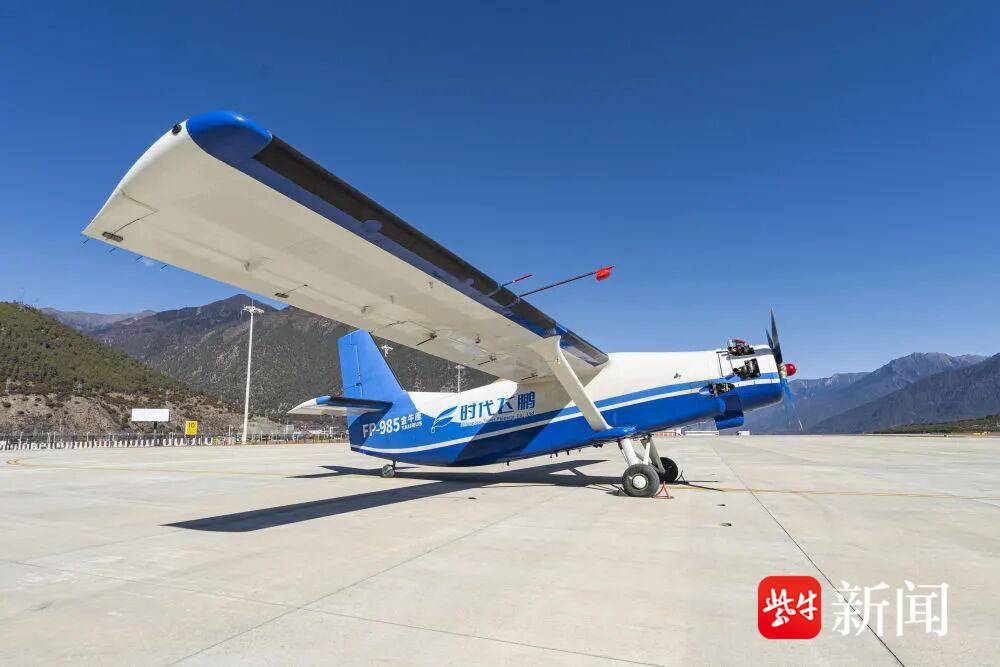
Core Viewpoint - The successful verification of the FP-985 "Taurus" large fixed-wing drone marks a significant breakthrough in China's logistics capabilities in high-altitude regions, addressing long-standing transportation challenges in these areas [1][5]. Group 1: Drone Performance and Capabilities - The FP-985 "Taurus" drone has a maximum takeoff weight of 5.7 tons and an effective payload capacity exceeding 2 tons, with a range of over 2000 kilometers [5]. - It is designed for operation in extreme geographical and meteorological conditions, featuring capabilities such as anti-icing, lightning protection, and high wind resistance, making it suitable for all-weather continuous flight [5]. - The drone successfully completed a flight from Linzhi to Kangding, covering 800 kilometers in approximately 3 hours and 44 minutes, significantly reducing the transportation time from 27 hours by land to under 4 hours [3][5]. Group 2: Economic and Logistical Impact - The establishment of low-altitude logistics channels in the Sichuan-Tibet region will greatly enhance the efficiency of transporting local agricultural products and ensure the supply of materials into Tibet [7]. - This development is seen as a crucial driver for economic growth in the western region and a key method for supporting major construction projects and improving emergency response capabilities [7]. - The success of the "Taurus" drone, along with the "Archer" drone's recent achievements in the Middle East, highlights China's leading technology in large unmanned transport aircraft and indicates the potential for low-altitude economic solutions to drive regional development and international cooperation [10].
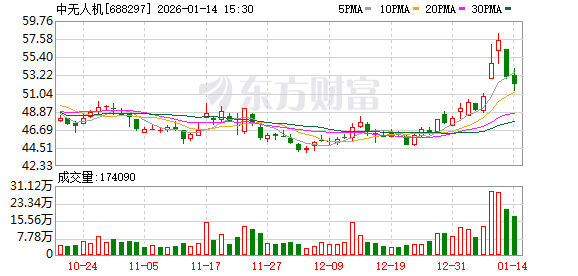
中无人机:2026年1月30日召开2026年第一次临时股东会
Zheng Quan Ri Bao· 2026-01-14 13:44
Group 1 - The company announced that it will hold its first extraordinary general meeting of shareholders for 2026 on January 30, 2026 [2]
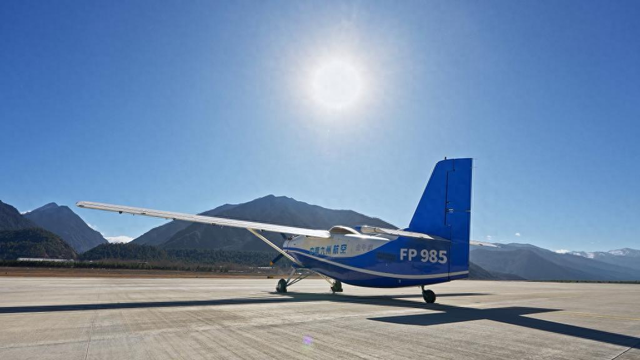
翼越雪山,货通四方!我国大型无人机开辟高原物流新“天路”
Xin Lang Cai Jing· 2026-01-14 11:24
Core Viewpoint - The successful maiden flight of the domestically developed FP-985 "Jinniu" large fixed-wing drone marks a significant advancement in China's drone technology, particularly in adapting to the extreme conditions of the Tibetan Plateau, and establishes a crucial low-altitude logistics network for the region [1][3][4]. Group 1: Technical Achievements - The FP-985 "Jinniu" drone has a maximum takeoff weight of 5.7 tons and an effective payload capacity of over 2 tons, with a range exceeding 2000 kilometers [4]. - The drone is designed to operate in adverse weather conditions, featuring capabilities such as anti-icing, lightning protection, and high wind resistance, allowing for all-weather flight [4]. - Modifications to the piston engine enable the "Jinniu" to perform effectively even at altitudes of 4000 meters, similar to its performance at sea level [4]. Group 2: Logistics and Economic Impact - The new air logistics route significantly reduces transportation time between Mianyang and Linzhi from over 40 hours by traditional land routes to under 6 hours, enabling same-day delivery [3]. - The route connects the high-altitude region with the economically vibrant Sichuan Basin, facilitating the movement of local specialty products such as yak meat and medicinal herbs to broader markets [6]. - The establishment of this air route is expected to attract logistics and e-commerce companies to the region, enhancing the local economy and supporting the development of a full industrial chain in low-altitude economic activities [6].
中无人机:中航一期基金计划减持公司股份不超过675万股
Mei Ri Jing Ji Xin Wen· 2026-01-14 10:51
每经头条(nbdtoutiao)——海利生物增值9倍并购的企业,估值8个月"腰斩",其第一大客户竟是尚未 成立的公司,离奇的事还不少…… (记者 王瀚黎) 每经AI快讯,中无人机1月14日晚间发布公告称,截至本公告披露日,中航(成都)无人机系统股份有 限公司股东中航融富基金管理有限公司-北京中航一期航空工业产业投资基金(有限合伙)直接持有公 司股份约1382万股,占公司总股本的2.05%。相关股份来源于公司首次公开发行前持有的股份,已于 2025年6月30日起上市流通。本次减持,中航一期基金的执行事务合伙人中航融富基金管理有限公司为 中国航空工业集团有限公司的所属企业,中航一期基金与航空工业集团构成法定一致行动关系。航空工 业集团直接持有公司股份约1.12亿股,其一致行动人中国航空工业集团公司成都飞机设计研究所直接持 有公司股份1.1亿股、成都飞机工业(集团)有限责任公司直接持有公司股份6750万股、中航技进出口 有限责任公司直接持有公司股份约4346万股、航证科创投资有限公司直接持有公司股份约1659万股、中 航证券有限公司直接持有公司股份约8.3万股。相关一致行动人合计持有公司股份约3.64亿股,占公司总 ...