
核聚变能

Search documents
电力设备:产业周跟踪:特斯拉洽谈巨额光伏设备订单,全球新能源绿色转型有望提速
Huafu Securities· 2026-03-22 11:50
Investment Rating - The industry rating is "Outperform the Market" [6][71] Core Insights - The report highlights significant developments in the lithium battery sector, with advancements in solid-state batteries from Chery and Yiwei Lithium Energy, indicating sustained optimism in the lithium battery market [2][10] - A landmark event in the photovoltaic sector is Tesla's plan to invest approximately $2.9 billion in Chinese photovoltaic equipment, aiming to establish a 100GW annual production capacity in the U.S. by the end of 2028, marking a pivotal moment for Chinese photovoltaic equipment companies [3][20][22] - In the wind power sector, the UK is set to accelerate the AR8 renewable energy contract allocation, while multiple regions in China are advancing offshore wind development goals under the "14th Five-Year Plan" [4][34][35] - The nuclear fusion industry is gaining strategic importance, with recent policy signals elevating its status within national development priorities, indicating a shift towards commercialization and ecosystem development [4][42][44] - The energy storage market is experiencing growth in EPC bidding and a new trading model in Guangxi, which enhances the profitability of storage assets [51][53] Summary by Sections 1. New Energy Vehicles and Lithium Battery Sector - Solid-state battery advancements from Chery and Yiwei Lithium Energy are noted, with Chery planning to expand its solid-state battery team significantly [10][11] - February saw a year-on-year increase in battery production and sales, with total production reaching 141.6GWh and sales at 113.2GWh [11] 2. New Energy Generation Sector 2.1 Photovoltaic Sector - Tesla's $2.9 billion order for Chinese photovoltaic equipment is a historic milestone, expected to reshape the global supply chain and enhance the profitability of Chinese manufacturers [20][22] - The report discusses price trends in the photovoltaic supply chain, with significant price drops in polysilicon and solar cells, indicating a challenging market environment [23][25] 2.2 Wind Power Sector - The UK is expediting the AR8 renewable energy contract allocation process, with expectations for multiple offshore wind projects to participate [34] - Domestic regions are setting ambitious offshore wind development targets, with Shandong and Jiangsu leading initiatives [35] 2.3 Nuclear Fusion Sector - The report emphasizes the strategic elevation of nuclear fusion within national policy, marking a transition towards a more structured industry development approach [42][44] 3. Energy Storage Sector - The energy storage market is seeing a significant increase in EPC bidding, with a notable rise in the scale of projects awarded [51][52] - Guangxi's new trading model for energy storage is highlighted as a breakthrough, enhancing the profitability of storage projects [53] 4. Power Equipment Sector - The report notes a substantial increase in fixed asset investment in power grids, with growth rates exceeding 80% for both State Grid and Southern Grid [60][61] - Key projects in high-voltage and distribution networks are advancing, providing clear visibility for orders in the equipment supply chain [61]
能源早新闻丨“十五五”规划纲要草案提出,继续推动重点领域绿色低碳转型
中国能源报· 2026-03-05 22:33
Group 1: National Development and Industry - The "14th Five-Year Plan" draft outlines 20 key indicators, including a 17% reduction in carbon emissions per unit of GDP, emphasizing green and low-carbon transformation in key sectors [2] - The Ministry of Industry and Information Technology (MIIT) reported that China's new energy vehicle production and sales have ranked first globally for 11 consecutive years, with over 8,000 national green factories established [2] - The MIIT announced the establishment of a Green Low-Carbon Standardization Technical Committee to oversee the development of industry standards in the green low-carbon sector [4] Group 2: Energy Production and Technology - China's largest coalbed methane field, the Daqi Gas Field, has achieved an annual production capacity of over 4 billion cubic meters, contributing significantly to the country's natural gas output [4] - A new artificial intelligence model for aerosol forecasting, developed by Chinese scientists, can provide high-precision environmental forecasts globally, aiding in the prediction of pollution events [5] - Fujian Province is promoting research on carbon reduction in electric ships, exploring ways to use carbon revenue to support the full lifecycle costs of these vessels [6] Group 3: International Energy Dynamics - Russian President Putin indicated a potential strategy to proactively cut off natural gas supplies to Europe, citing rising energy prices and geopolitical tensions [7] - The European Union is monitoring energy supply risks amid geopolitical tensions, with no immediate threats identified to oil or gas supplies [7] - Saudi Aramco is adjusting its oil export strategy to utilize the Yanbu port, avoiding the Strait of Hormuz to mitigate risks of supply disruptions [7]


三位部长,重磅发声!
中国能源报· 2026-03-05 05:49
Group 1 - China's innovation index has risen to 10th globally, with R&D investment expected to exceed 3.92 trillion yuan by 2025, reaching an intensity of 2.8% [4] - Basic research investment is close to 280 billion yuan, accounting for 7.08% of total R&D expenditure, marking a historical high [4] - Key areas for technological breakthroughs include integrated circuits, artificial intelligence, biomanufacturing, quantum technology, brain-computer interfaces, and nuclear fusion energy [5][6] Group 2 - By 2025, China's industrial added value is projected to reach 41.7 trillion yuan, contributing 35% to economic growth, further solidifying its position as the world's leading manufacturing power [9] - The development of advanced manufacturing is characterized by a focus on innovation, quality, and green practices [10] - The application rate of AI technology in large-scale manufacturing enterprises is expected to exceed 30% by the end of 2025, with over 300 humanoid robot products launched domestically [11] Group 3 - The core AI industry in China is anticipated to exceed 1.2 trillion yuan by 2025, with more than 6,200 companies operating in this sector [12] - Central enterprises' total assets have crossed 90 trillion yuan during the 14th Five-Year Plan, with profits increasing by 56.2% compared to the previous five years [16] - Revenue from strategic emerging industries surpassed 12 trillion yuan last year, with significant investments made in these sectors [17] Group 4 - Central enterprises are focusing on leading sectors such as new energy, aerospace, and new materials, with a strong emphasis on maintaining advantages in the new energy sector [19] - The production and revenue of new energy vehicles have doubled in three years, with market share for domestic brands increasing from 10% to 16.5% [19] - Central enterprises are also investing in emerging fields like quantum information, nuclear fusion, low-altitude economy, and biotechnology [19]

春晚上“夸父”追的太阳,竟然是它?
Xin Lang Cai Jing· 2026-02-17 07:00
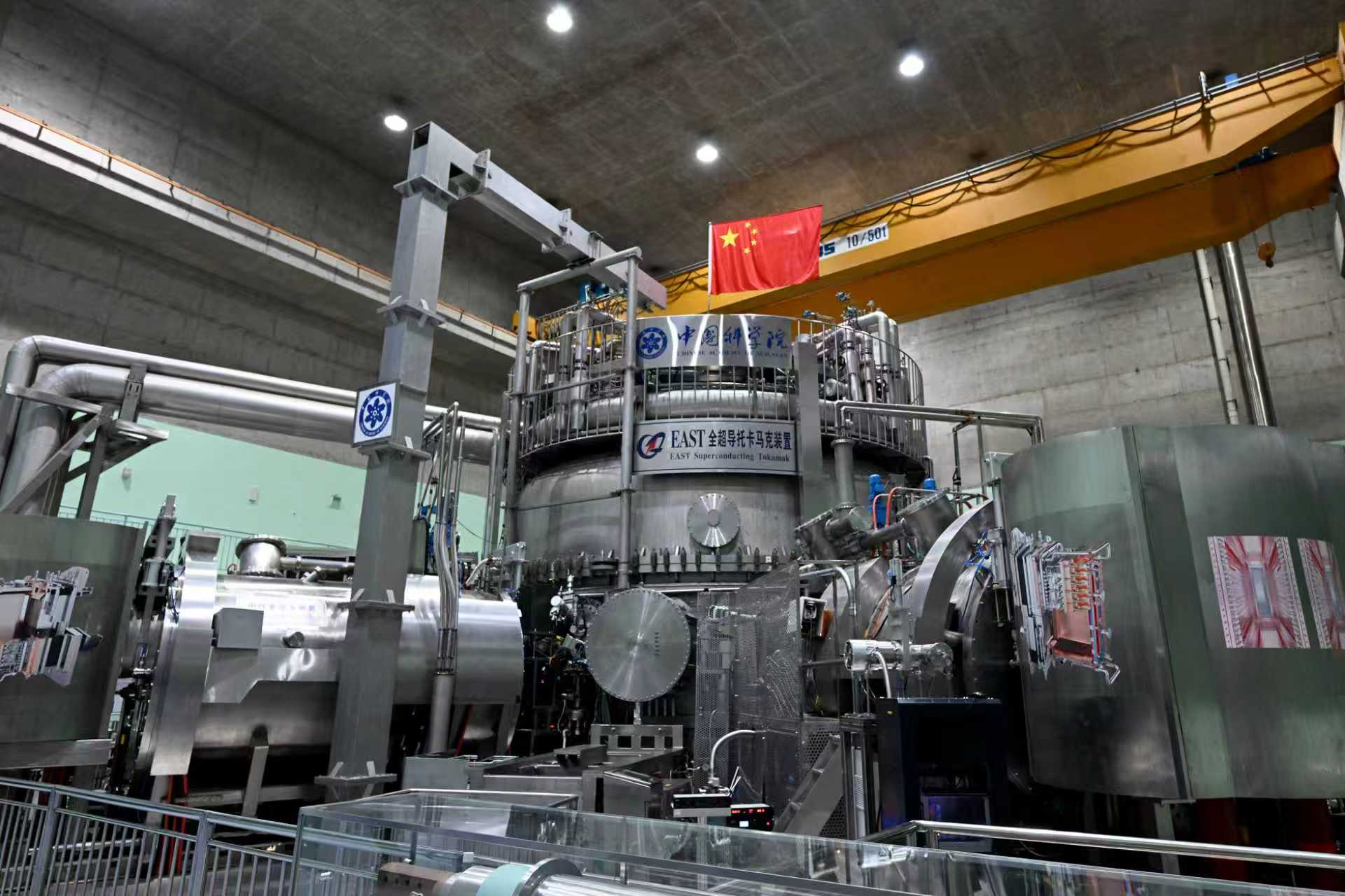
Core Viewpoint - The article discusses China's advancements in nuclear fusion technology, specifically the development of the "artificial sun" known as the EAST (Experimental Advanced Superconducting Tokamak) and its significance in achieving clean and nearly limitless energy through controlled nuclear fusion [2][4][6]. Group 1: Nuclear Fusion Technology - Nuclear fusion mimics the sun's energy production by fusing hydrogen atoms into helium under extreme conditions, releasing vast amounts of energy [2]. - The EAST facility, established by the Hefei Institute of Physical Science, has achieved significant milestones, including breaking world records in fusion experiments [6][4]. - The facility operates under extreme conditions, including ultra-high temperatures and strong magnetic fields, and has over 200 core technologies [4]. Group 2: Future Developments - The "Kua Fu" facility is dedicated to developing core components for the next generation of nuclear fusion reactors, with a focus on improving supporting equipment alongside core technologies [6][9]. - The compact fusion energy experimental device (BEST) is under construction and is expected to demonstrate plasma "burning" by the end of 2027, with hopes of achieving practical fusion energy by around 2030 [9][11]. - The article highlights the cultural significance of the Kua Fu statue and its connection to the scientific advancements being made in fusion energy [1][7].
未知机构:2月12日复盘笔记智能电网AI电源液冷算力光通信燃气轮机等-20260213
未知机构· 2026-02-13 02:15
Summary of Key Points from Conference Call Records Industry Insights Smart Grid and Energy Storage - The Ministry of Commerce announced that consumers purchasing new cars during the 9-day Spring Festival holiday can apply for vehicle trade-in subsidies as per policy requirements [1] - The National Energy Administration is actively promoting the development of new energy storage and emerging industries, with a forward-looking layout for hydrogen energy and nuclear fusion energy [2][3] Electric Power Market - The implementation opinion on improving the national unified electricity market system proposes that by 2030, a basic national unified electricity market system will be established, with market-based trading accounting for approximately 70% of total electricity consumption [4] - According to customs data, China's transformer export value is expected to reach a record 64.6 billion yuan by 2025, a nearly 36% increase from the previous year, with the average export price per transformer rising to 205,000 yuan, an increase of about one-third [4] Liquid Cooling Technology - The leading liquid cooling server company, Vertiv, reported better-than-expected results in its Q4 FY2025 earnings, driving its stock price up by 24%, reaching a new historical high [4] Data Center and Energy Consumption - A surge in data center construction in the U.S. has led to an electricity shortage, with over 29 GW of natural gas power generation capacity under construction, more than doubling in one year [5] Fiber Glass and Electronic Materials - International composite and fiberglass leaders have raised prices for electronic cloth multiple times, with ordinary electronic cloth experiencing four price increases from October 2025 to February 2026 [6][8] Semiconductor Materials - The prices of key materials for the global semiconductor industry, such as sputtering targets, are expected to increase by 20%-30% in Q1 2026 [10] Space Photovoltaics - A supply-demand matching meeting for space photovoltaics was held, with companies discussing technology development, material applications, and manufacturing processes [11][12] Company-Specific Developments - Yike Technology announced a price increase for all cloud products and services starting March 1, 2026, due to rising costs in core hardware procurement and infrastructure [4] - Lumentum has secured several hundred million dollars in CPO-related orders, with expected revenue of approximately $50 million from CPO in Q4 2026, anticipating a significant surge in the first half of 2027 [5] Market Trends - The Shanghai Composite Index rose by 0.05%, the Shenzhen Component Index increased by 0.86%, and the ChiNext Index climbed by 1.32%, with a total trading volume exceeding 2.1 trillion yuan, an increase of over 100 billion from the previous day [4] - The price of praseodymium-neodymium oxide has continued to rise, reaching 800,000 yuan per ton, with a week-on-week increase of 9.9% and a month-on-month increase of 28.8% [15] Geopolitical and Economic Factors - The ongoing geopolitical tensions have led to heightened shipping rates, with the Middle East-China VLCC freight rates remaining above $120,000 [13]
未来产业 乘风起势(新时代画卷)
Ren Min Wang· 2026-02-12 22:54
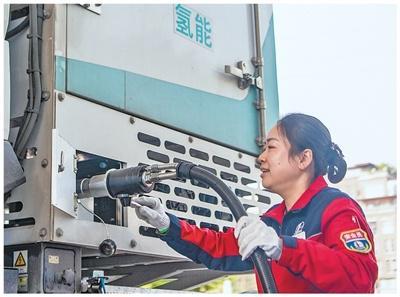
Hydrogen Energy and Nuclear Fusion - The Chongqing Jiulongpo District has staff refueling hydrogen fuel cell vehicles, indicating advancements in hydrogen energy infrastructure [2] - The "China Fusion Engineering Test Reactor" has achieved a breakthrough with a nuclear temperature of 117 million degrees Celsius and an electron temperature of 160 million degrees Celsius, marking a significant milestone in China's fusion research [4] Embodied Intelligence - The Guangdong Embodied Intelligence Robot Innovation Center showcases a pipeline inspection robot, highlighting developments in robotics technology [6] - In Sichuan's Bazhong Tongjiang County, students interact with robotic dogs, demonstrating the integration of robotics in educational settings [8] Biomanufacturing - The Hunan Biomanufacturing Pilot Base features a purification workshop where staff use flat-panel centrifuges for material dehydration, reflecting advancements in biomanufacturing processes [10] Quantum Technology - Researchers are experimenting with the "Zhuangzi 2.0" superconducting chip, discovering controllable patterns in the preheating phase of quantum systems, which is crucial for quantum technology development [12] - The Chinese Academy of Sciences' Quantum Information and Quantum Technology Innovation Research Institute in Hefei is a key player in advancing quantum research [14] Sixth Generation Mobile Communication - The Shanghai 6G Intelligent Communication Valley showcases a company's 6G smart terminal products, indicating progress in next-generation mobile communication technology [16] - In Nanjing, researchers at the Zijinshan Laboratory demonstrate a self-developed Bayesian learning baseband chip, contributing to the development of 6G technology [18] Brain-Computer Interfaces - In Wuhan, researchers utilize mixed reality technology to present the spatial relationship between brain-computer interface devices and rat brain structures, showcasing innovations in neuroscience [20] - At the Beijing Capital International Exhibition Center, visitors experience high-performance brain-computer interface devices, indicating growing interest and advancements in this field [22]
金属涨跌互现 沪镍涨逾1% 碳酸锂涨超3% 欧线集运涨逾6%
Sou Hu Cai Jing· 2026-02-12 10:39
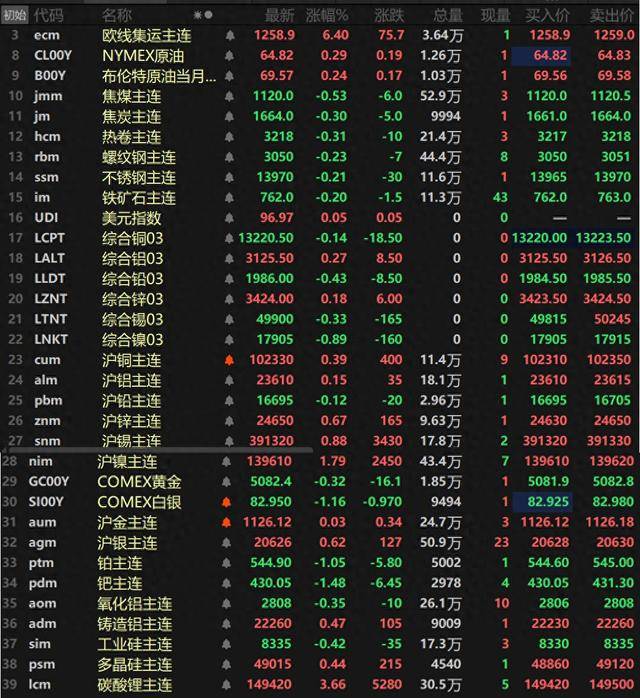
Metal Market - Domestic base metals experienced a general increase, with the exception of lead, which fell by 0.12%. Nickel led the gains with an increase of 1.79%, while other metals saw increases of less than 1% [1] - In the aluminum sector, alumina futures dropped by 0.35%, while casting aluminum futures rose by 0.47% [1] - Lithium carbonate futures increased by 3.66%, while industrial silicon futures fell by 0.42%, and polysilicon futures rose by 0.44% [1] - The European shipping index rose by 6.4% to 1258.9 [1] - In the black metal sector, iron ore, rebar, and stainless steel all saw declines of around 0.2%, with hot-rolled coil down by 0.31%. Coking coal fell by 0.53%, and coking coke dropped by 0.3% [1] - Internationally, base metals showed mixed results, with London aluminum up by 0.27% and lead up by 0.18%, while other metals experienced slight declines [1] - Precious metals saw COMEX gold down by 0.32% and silver down by 1.16%, while domestic gold rose by 0.03% and silver by 0.62% [1][2] Macro Environment - The State Administration for Market Regulation released guidelines for compliance in the automotive industry, highlighting significant legal risks associated with various pricing behaviors that could lead to below-cost pricing [5] - The National Energy Administration announced that by 2025, China's new wind and solar power installations are expected to exceed 430 million kilowatts, marking a 22% year-on-year increase [6][7] - The National Energy Administration emphasized the importance of developing new energy storage and future industries such as hydrogen and nuclear fusion energy [8] - The Ministry of Commerce announced that consumers purchasing new cars during the 2026 Spring Festival can apply for subsidies under the old-for-new vehicle policy [9] - The People's Bank of China conducted a net injection of 448 billion yuan through reverse repos, maintaining liquidity in the market [9]
国家能源局刘德顺:加快人工智能赋能传统产业 前瞻布局氢能、核聚变能等未来产业
Jin Rong Jie· 2026-02-12 02:56
Core Viewpoint - The article emphasizes the importance of high-quality development as the central theme for economic and social development during the 14th Five-Year Plan period, highlighting key strategies for energy technology innovation [1] Group 1 - The proposal outlines a strategic vision for building a strong energy nation, with the goal of initially establishing a new energy system by the end of the 14th Five-Year Plan [1] - There is a focus on enhancing the overall effectiveness of the energy technology innovation system to promote continuous optimization and upgrading of the energy industry, fostering new advantages and new driving forces [1] - The proposal stresses the leading role of technological innovation, advocating for original innovation and breakthroughs in key core technologies to meet the needs of the new energy system [1] Group 2 - The integration of technological innovation and industrial innovation is emphasized, with a call for developing new productive forces tailored to local conditions [1] - The company will accelerate the upgrade of traditional industries through digital technologies such as artificial intelligence, while actively developing emerging industries like new energy storage [1] - There is a forward-looking approach to industries such as hydrogen energy and nuclear fusion energy, indicating a strategic layout for future energy sectors [1]
全球核聚变能产业进入“赛马”时间
中国能源报· 2026-02-01 23:33
Core Viewpoint - The nuclear fusion energy industry is experiencing rapid growth driven by national strategic planning, research breakthroughs, and capital investment, positioning it as a key pathway for addressing energy crises and climate change [2][6]. Group 1: Industry Development and Strategic Importance - Nuclear fusion is recognized for its high energy density, abundant raw materials, low radioactive pollution, and inherent safety, making it a crucial avenue for reshaping global energy supply and ensuring national energy security [2]. - China has established a "three-step" development strategy for nuclear energy since the 1980s, transitioning from scientific research to engineering and commercial applications [2][5]. - The "14th Five-Year Plan" emphasizes future energy technologies, while the "15th Five-Year Plan" aims to strategically position nuclear fusion as a key industry, fostering a collaborative ecosystem among state-owned enterprises and private companies [3][5]. Group 2: Research and Technological Advancements - The global nuclear fusion development has entered a critical phase of engineering validation and commercialization, with over 160 fusion devices in operation, construction, or planning across 40 countries [5]. - China has made significant advancements with facilities like the "Chinese Circulation 1" (HL-1), "EAST," and the new "Chinese Circulation 3" (HL-3), achieving world records in plasma stability and temperature [7][9]. - The development landscape is characterized by a "race" among various technological approaches, including magnetic confinement and inertial confinement, indicating a shift from a single-path to a multi-route exploration [7][9]. Group 3: Investment Trends and Ecosystem - The nuclear fusion sector is attracting substantial investment, with private companies raising significant funds, such as XH Fusion's record A-round financing of 1 billion yuan [9][10]. - Since 2015, nearly 20 fusion energy innovation companies have been established in China, with 80% being private enterprises, collectively raising over 20 billion yuan [9]. - The investment landscape is marked by a collaboration between state-owned enterprises and private capital, creating a new model for funding and innovation in the nuclear fusion sector [10][11]. Group 4: Challenges and Future Outlook - Despite the enthusiasm, experts caution that the commercial viability of nuclear fusion is still in its infancy, with significant scientific and engineering challenges remaining before practical applications can be realized [12][13]. - Key challenges include achieving stable plasma combustion, developing high-temperature materials, and ensuring the economic feasibility of fusion reactors [12][13]. - The integration of emerging technologies like artificial intelligence is seen as a potential catalyst for accelerating the commercialization of fusion energy [14][15].

开源证券:主题投资有望进一步活跃 关注具身智能等五大潜在强主题机会
智通财经网· 2026-01-29 01:35
Core Viewpoint - The report from Kaiyuan Securities indicates that theme investment is expected to become more active in 2026 due to multiple factors such as the upward industrial cycle, policy support for industries, and shifts in capital allocation [1] Group 1: Theme Investment Outlook - Theme investment is currently in a large active cycle, with 2025 witnessing a series of popular themes such as humanoid robots, commercial aerospace, and Hainan Free Trade Port. The outlook for 2026 suggests even greater activity in theme investment, driven by accelerated technological breakthroughs in AI and abundant liquidity [1][2] - Historically, active periods of theme investment often occur during times of weak fundamentals and ample liquidity, where popular themes tend to dominate. The prevalence of theme investment is seen as a rational choice in the macro environment rather than a spontaneous decision [2] Group 2: Criteria for Selecting Strong Themes - The principle of "buy new, not old" aims to avoid trapped positions and benefit from high elasticity due to the absence of valuation anchors. New themes often imply significant potential for growth, while old themes are constrained by fundamental recognition [3] - The principle of "buy big, not small" emphasizes resonance with industrial waves and the era. The terms "big" and "small" refer not only to market capitalization but also to narrative scope and industry ceiling [3] Group 3: Five Potential Strong Themes for 2026 - **AI+**: The focus is shifting from "computing power construction" to "application acceleration." The demand for AI has significantly increased in both the U.S. and China, with AI application scenarios expanding rapidly. The commercial process of AI is accelerating due to substantial improvements in model performance and reduced usage costs [4] - **Embodied Intelligence**: Recognized as a core battlefield for reshaping future manufacturing and competing for global technological and economic leadership. The challenges in embodied intelligence are gradually being resolved, with humanoid robots expected to see significant commercialization in 2026 [5] - **Nuclear Energy**: Nuclear energy is viewed as a strategic solution to energy shortages, with both fission and fusion energy being critical. Fusion energy is now included in the national future industrial system, with significant advantages over traditional energy sources [6] - **Quantum Technology**: Represents a disruptive and foundational technological revolution based on quantum mechanics, with three core pillars: quantum computing, quantum communication, and quantum measurement, which could fundamentally impact existing technologies [6] - **Brain-Computer Interfaces**: Identified as a key future industry in the national strategy, with ongoing breakthroughs in various technological paths driving the approach to industrialization. The strong penetration of brain-computer interfaces is expected to reshape multiple industry ecosystems [6]