
规模化生产

Search documents
刚刚 18架F-35战斗机飞往中东 伊朗举行军演!马年化工板块投资主线浮现
Qi Huo Ri Bao· 2026-02-16 23:26
Group 1: Iran-U.S. Nuclear Negotiations - The second round of nuclear negotiations between Iran and the U.S. is set to take place in Geneva on the 17th, with Iranian Foreign Minister Zarif leading the Iranian delegation [2][5] - The talks will continue to be indirect, with Oman acting as a mediator, emphasizing the need for mutual understanding and consensus to reach an agreement that aligns with the interests of all parties involved [5][3] Group 2: U.S. Military Deployment - The U.S. Air Force has deployed 18 F-35A Lightning II fighter jets to the Middle East, marking one of the largest single deployments in recent months, reflecting the current military strategy due to tensions with Iran [6][8] Group 3: Chemical Industry Outlook for 2026 - The chemical sector has shown strong performance at the beginning of 2026, with increasing transaction volumes and institutional investment, alongside a steady rise in prices of mainstream chemical products [10] - Market analysts predict a "volatile upward trend with structural differentiation" for the chemical sector, with potential risks from international commodity market fluctuations and domestic production resumption rates affecting demand [11][12] - The chemical industry is expected to gradually recover from a low valuation and profit situation, driven by the elimination of outdated capacity and structural optimization [12][15] - Investment opportunities in the chemical sector include "tight balance" products like PX and PTA, as well as innovative products in semiconductor materials and new energy materials, which are seen as long-term growth drivers [15]


AI真人短剧开年“弯道超车”,亿级爆款会成为市场常态吗?
3 6 Ke· 2026-01-21 08:21
Core Insights - The year 2025 is anticipated to be the starting point for AI animated dramas, while 2026 may witness a surge in AI live-action short dramas, exemplified by the success of "Zhan Xiantai AI Live-Action Version," which topped various streaming charts and achieved over 100 million views within six days [1][3][16] Industry Trends - AI live-action short dramas have successfully crossed the audience acceptance threshold, shifting focus from technical flaws to narrative quality and production value, marking a transition from a "technology-driven" phase to a "content-driven" era [3][4] - The industry is moving towards a collaborative, large-scale production model, allowing creators to focus on high-quality content rather than competing in a homogenized market [3][16] Content Evolution - The evolution of AI live-action short dramas has seen a diversification of themes, moving from niche genres like suspense and dark fantasy to mainstream genres such as historical and fantasy, thus appealing to a broader audience [4][5] - The breakthrough of "Zhan Xiantai AI Live-Action Version" signifies a shift from mere entertainment to deeper emotional resonance, allowing for a more profound connection with viewers [4][8] Technological Advancements - The rapid evolution of AI models and the emergence of third-party service platforms have facilitated a shift from individual creation to team collaboration, enhancing visual effects and emotional expression in AI live-action short dramas [8][11] - The "Kemo AI" platform has played a crucial role in addressing industry pain points, enabling creators to produce high-quality content efficiently by optimizing model capabilities and streamlining the production process [12][13][15] Market Dynamics - The success of "Zhan Xiantai AI Live-Action Version" and other hits indicates a growing trend of high-quality productions in the AI live-action short drama market, with a significant increase in the number of new works achieving over 30 million views [16][17] - As the market expands, the need for quality over quantity becomes evident, with a focus on producing standout works that can capture wider audiences while avoiding the pitfalls of low-quality, homogeneous content [16][17]
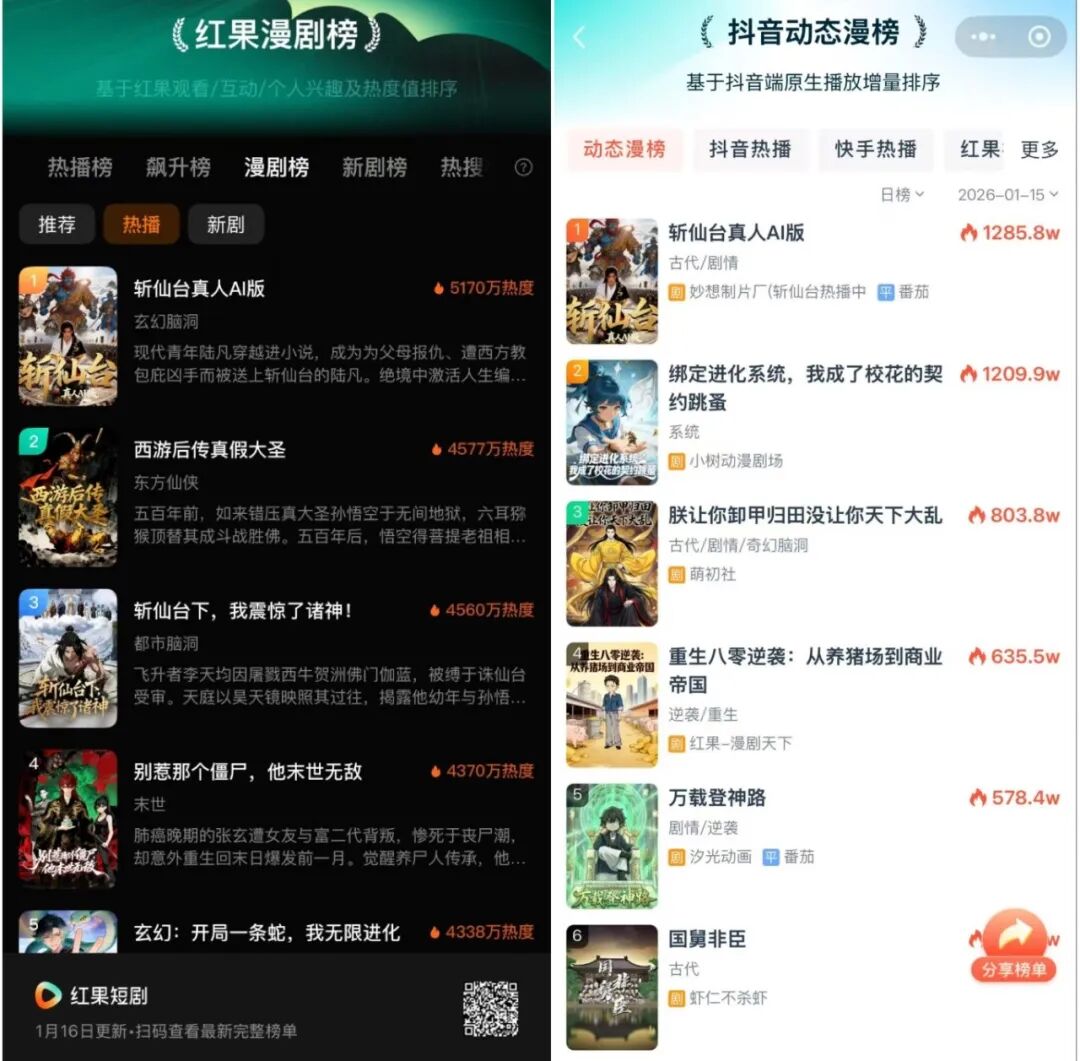
看清现实,美商务部悄悄撤销中国无人机限制计划
Guan Cha Zhe Wang· 2026-01-10 04:28
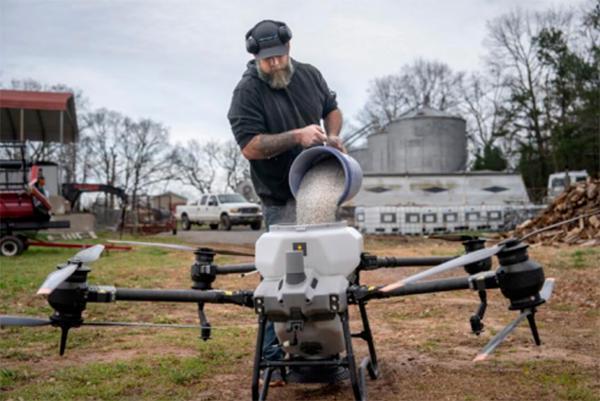
Core Viewpoint - The U.S. government has retracted its proposed import restrictions on Chinese drones, indicating a shift in policy and recognition of the realities facing the U.S. drone industry [1][4]. Group 1: U.S. Government Actions - The U.S. Department of Commerce withdrew a plan to impose import restrictions on Chinese drones, which was initially proposed in September 2022 due to national security concerns [1]. - The Federal Communications Commission (FCC) has blacklisted all foreign-made drones and components, citing unacceptable national security threats, affecting companies like DJI [1][4]. - Despite the withdrawal of the import restrictions, the FCC's ban on foreign drones remains in effect, preventing new models from being sold in the U.S. [1]. Group 2: Industry Challenges - The U.S. drone industry is struggling to scale production, with approximately 500 companies producing fewer than 100,000 drones annually, while Ukraine produces 2 million FPV drones each year [5]. - The "Blue UAS" program, aimed at creating a reliable drone supplier list for the U.S. military, has seen only 23 out of over 300 applicants approved, primarily due to issues with imported components [5]. - The U.S. lacks the necessary tools and infrastructure for large-scale drone production, with significant reliance on Chinese-made components, particularly in electric motors and rare earth materials [6][7]. Group 3: Supply Chain Dependencies - The U.S. is heavily dependent on China for rare earth elements, with 72% of imports coming from China between 2019 and 2022, complicating efforts for domestic production [6]. - In the lithium-ion battery supply chain, China dominates the production of key materials, making it difficult for the U.S. to achieve independence despite policy efforts [7]. - The U.S. government's focus is shifting from data security to supply chain issues, acknowledging that the entire industrial system is unprepared to support a self-sufficient drone industry [7].
AI吞噬电力,小型模块化反应堆(SMR)成为关键解法,未来五年是关键窗口期
硬AI· 2026-01-05 08:22
Core Viewpoint - The rise of artificial intelligence (AI) is driving an unprecedented demand for stable, baseload power, positioning small modular reactors (SMRs) as a key solution to the energy supply-demand imbalance, with private tech giants like Microsoft and Google taking the lead in investment and development [2][3][4]. Group 1: SMR as a Solution - The global electricity demand is growing at twice the rate of total energy demand due to the rapid expansion of AI data centers and the electrification of vehicles [3]. - Traditional intermittent renewable energy sources are insufficient for the 24/7 stable baseload power required by modern economies, making nuclear energy, particularly SMRs, a critical path forward [3][4]. Group 2: Advantages of SMRs - SMRs aim to transform nuclear energy from a "large engineering" project into an "industrial product" by reducing construction time to 3-5 years and lowering initial capital requirements [4][6]. - The small scale of SMRs (output power below 300 MWe) allows them to support large industrial complexes or approximately 250,000 households [7]. - Modular production enables components to be prefabricated in factories, enhancing economic efficiency and reducing costs [7]. Group 3: Technological Innovations - SMRs utilize fourth-generation reactor concepts, such as molten salt reactors and gas-cooled reactors, which can provide high-temperature process heat [8]. - Tech giants are turning to nuclear energy not out of sudden enthusiasm for low-carbon baseload power, but due to the limitations of renewable energy sources in meeting the continuous power needs of data centers [8]. Group 4: Private Sector Leadership - The driving force behind nuclear energy has shifted from government to the private sector, marking a historic change in the industry [10]. - Major tech companies like Microsoft, Google, Amazon, and Oracle are actively investing in SMR projects through long-term power purchase agreements (PPAs) [11][12][13][14]. Group 5: Economic Viability and Challenges - The economic logic of SMRs relies on large-scale production; building a single SMR would be prohibitively expensive, while mass production could significantly reduce costs [16]. - The International Energy Agency (IEA) projects that annual investments in SMRs could reach $25 billion by 2030, but achieving true economies of scale requires producing around 3,000 SMRs [16]. Group 6: Industrial Heat and Desalination Potential - Beyond electricity, SMRs have significant potential in industrial heating, with a projected market value of $1.5 trillion by 2050 for high-temperature industrial heat [18]. - SMRs are also being explored for seawater desalination in regions like the Middle East and North Africa, with costs for freshwater production becoming economically viable [18]. Group 7: Supply Chain and Geopolitical Risks - The development of SMRs faces challenges related to fuel supply, particularly due to geopolitical factors affecting uranium supply chains [20][21]. - Western countries are working to rebuild their supply chains, but new uranium mines take 7-10 years to come online, and current uranium prices are high [21][22].

晨光生物20251222
2025-12-22 15:47
Summary of the Conference Call for Morning Light Biological Company Overview - Morning Light Biological specializes in natural colorants, particularly chili red and chili extract, with a global market share of approximately 66% to 70% [2][3]. - The company is experiencing significant growth in sales, particularly in chili extract, which is expected to see a year-on-year growth rate of around 70% for the current year [2][5]. Industry Insights - The natural colorant industry is projected to maintain a natural growth rate of about 10% in the coming years, driven by increased penetration in mature markets and the development of the food industry in emerging markets [2][3]. - The market for lutein remains stable, with annual supply and sales around 400-500 million grams, showing no significant changes in market share [2][5]. Key Points - **Sales Growth**: Chili red and chili extract have seen historical peaks in sales, with chili extract's sales increasing by 80% in the first three quarters of the year [3][5]. - **Market Dynamics**: The increase in market share is expected to slow down as the market matures, with future growth relying more on natural industry growth rather than market share gains [3][5]. - **Cost Advantages**: Morning Light Biological has established a cost advantage through technological innovation and large-scale production, typically achieving production costs 5% to 10% lower than competitors [2][8]. - **Customized Solutions**: The company is focusing on customized solutions to enhance customer loyalty and product value, with customized products now accounting for 15% of sales [2][11]. Financial Performance - The company’s raw material procurement costs have remained stable compared to last year, despite a decrease in planting area for key raw materials [4][13]. - The health food contract manufacturing business is operating at nearly full capacity, with plans to expand production capacity by 50% next year [4][17]. Competitive Landscape - The competitive landscape in the plant extract industry is fragmented, with a few major players dominating larger product categories while smaller categories may have only one or two key competitors [6][7]. - Morning Light Biological's focus on technological innovation and efficiency gives it a competitive edge over many smaller firms in the industry [7][9]. Future Outlook - The company plans to maintain high levels of investment in research and development, particularly in customized product development, although a slight decrease in overall R&D expenses is expected in the coming years [16][18]. - The health food and traditional Chinese medicine sectors are expected to grow, with the latter projected to achieve breakeven in the near future [17][18]. Additional Considerations - The company is learning from international firms in the flavor and fragrance industry, which may influence its future growth strategies [22][23]. - The overall profitability of upstream farmers is currently low, which may impact raw material supply in the future [15]. This summary encapsulates the key insights and developments discussed during the conference call, providing a comprehensive overview of Morning Light Biological's current position and future prospects in the natural colorant industry.

(乡村行·看振兴)山西长子:科技赋能非遗干卷 量产就业“双丰收”
Zhong Guo Xin Wen Wang· 2025-11-06 11:36
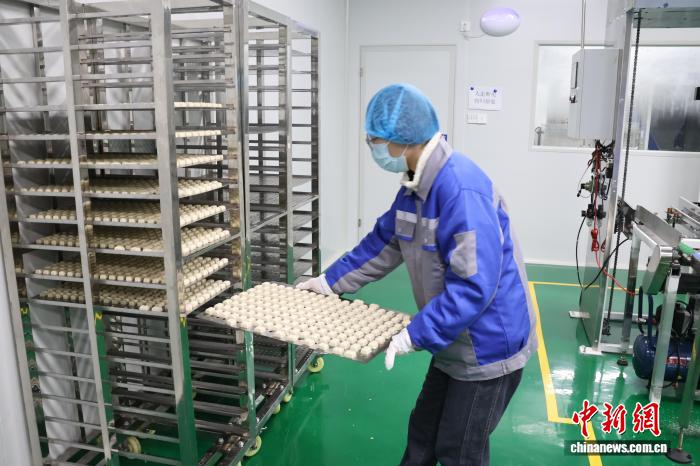
Core Viewpoint - The integration of technology in the production of traditional Shanxi Changzi dry rolls (also known as furnace dry rolls) has led to a successful transition towards large-scale and standardized production, addressing previous production challenges and enhancing employment opportunities in the region [1][3]. Group 1: Production Innovation - The traditional production of Changzi dry rolls faced significant limitations due to high reliance on manual labor and individual experience, making mass production difficult and resulting in inconsistent product quality [3]. - In June 2024, the company collaborated with Zhengzhou University of Light Industry to develop advanced production equipment, leading to the launch of an automated production line in September 2024 [3][5]. - The automated production line allows for precise control of the production process, improving product quality and enabling large-scale production compared to traditional methods [3][5]. Group 2: Employment and Economic Impact - The implementation of the automated production line has not only increased production efficiency and product quality but also created job opportunities in the local area [5]. - Currently, the company has provided employment for 9 individuals, with an average monthly salary exceeding 3,000 yuan, contributing to local income growth [5]. Group 3: Product Development and Market Expansion - The company ensures high-quality raw materials, including wheat flour, corn flour, and edible salt, and has introduced four new flavors of dry rolls to cater to diverse consumer preferences [5]. - The daily production capacity is over 1,000 bags, with an expected annual sales revenue of approximately 3 million yuan [5]. - Future plans include focusing on quality control, developing low glycemic index products, and expanding market channels to elevate Changzi dry rolls from a local specialty to a marketable brand [5].
丰茂股份20250728
2025-07-30 02:32
Summary of Conference Call Notes Company and Industry Overview - The conference call discusses **Fengmao Co., Ltd.**, focusing on its **new transmission systems** and their applications in various sectors including **home, education, healthcare, and chemical cold transport** [2][4]. Key Points and Arguments 1. **Advantages of New Transmission Systems**: The new transmission systems exhibit advantages such as lightweight design, low noise, and maintenance-free features, making them superior to traditional gear transmissions in specific scenarios [2][4]. 2. **Performance in High-Temperature Environments**: There are concerns regarding the limitations of rubber materials in high-temperature environments, which need to be addressed [2][4]. 3. **Belt Transmission Solutions**: The company has effectively resolved slippage issues in motorcycle and automotive applications through optimized formulations and materials, establishing reliability for high-load scenarios, which lays the groundwork for applications in robotics [2][4][6]. 4. **Product Development Focus**: The current focus is on optimizing application scenarios, particularly enhancing performance in high-temperature environments, and customizing improvements for sectors like healthcare and education [2][4][10]. 5. **Cost Control Strategies**: Cost control is primarily driven by improving production efficiency at scale, with raw material costs and R&D expenses being relatively fixed. Manufacturing costs are the main influencing factor [2][13]. 6. **Michelin Business Performance**: The Michelin business is performing strongly in overseas markets, with revenue expectations for 2025 projected to be in the tens of millions, and plans to expand into the North American market [2][21]. 7. **Sealing and Transmission Systems Development**: The sealing systems are performing well through collaborations with companies like Zhongdali and Lidi, while transmission systems are undergoing validation in multiple fields, with some projects achieving ideal results [3][4]. Additional Important Insights 1. **Market Expansion**: The company is actively engaging with clients in various regions, including Beijing and Shenzhen, and exploring applications in agriculture, home care, and firefighting [14]. 2. **Production Facilities**: A new factory in Thailand is expected to be operational by August 2025, aimed at localizing production for clients like BYD and serving Southeast Asian and European markets [4][24]. 3. **Automotive Business Trends**: The automotive business is experiencing a decline in the passenger vehicle segment but growth in commercial vehicles, with significant performance in the transmission sector [25]. 4. **Future Outlook for Robotics**: The robotics business is in the customer validation phase, with expectations for rapid entry into mass production once validation is complete [28]. This summary encapsulates the key discussions and insights from the conference call, highlighting the company's strategic focus and market dynamics.
大圆柱卷向“低电量”市场
高工锂电· 2025-05-25 09:19
Core Viewpoint - The article discusses the upcoming industry conferences focused on sodium and solid-state batteries, highlighting the rapid adoption and market potential of large cylindrical batteries in various applications, particularly in the PHEV and electric two-wheeler markets [2][3][10]. Group 1: Industry Conferences - The 2025 High-Performance Sodium Battery Industry Summit will be held on June 9 in Suzhou, organized by GGII and sponsored by Zhongna Energy [2]. - The 2025 High-Performance Solid-State Battery Technology and Application Summit is scheduled for June 10, also in Suzhou, organized by GGII and sponsored by Liyuanheng [3]. Group 2: Large Cylindrical Battery Applications - The application of 46 series large cylindrical batteries is accelerating, with BMW confirming its use in its sixth-generation platform vehicles [3]. - Companies like Zhongxin Innovation, Yiwei Lithium Energy, Guoxuan High-Tech, and XWANDA are actively promoting the use of large cylindrical batteries in the eVTOL sector [3]. - The large cylindrical battery is also penetrating the PHEV and electric two-wheeler markets, characterized by "low capacity" but high demand [3]. Group 3: Market Trends and Consumer Demand - The average battery capacity for domestic new energy vehicles reached 52.9 kWh as of April 2025, with PHEV passenger vehicles seeing a 13.5% increase in average capacity to 29.3 kWh [3]. - The launch of the Geely Galaxy Starry 8 plug-in hybrid series, priced at 115,800 yuan and equipped with an 8.5 kWh lithium iron phosphate battery, reflects a market trend towards cost-effective, low-capacity models [3]. Group 4: Competitive Landscape in PHEV Market - Zhongxin Innovation's strategy for PHEV batteries focuses on extreme cost control and power characteristics, utilizing large cylindrical designs to meet these needs [5][6]. - Yiwei Lithium Energy anticipates that the growth of large cylindrical batteries in the power sector will not only be driven by ternary batteries but also by iron-lithium batteries [6]. Group 5: Electric Two-Wheeler Market Dynamics - The electric two-wheeler market is transitioning to lithium battery solutions, driven by consumer demand for higher energy density and durability [7]. - The new national standard for two-wheelers, effective November 2024, mandates battery safety tests, further pushing the shift from lead-acid to lithium batteries [7]. - GGII projects that by 2030, the penetration rate of lithium batteries in the two-wheeler market will exceed 40% [7]. Group 6: Product Innovations and Safety Standards - The Yiwei Lithium Energy OMNI LMX series features enhanced safety, achieving GB 43854 certification, with an energy density of 200 Wh/kg and a cycle life exceeding 4000 times [8]. - The series also claims a 30% reduction in costs, making it more accessible to consumers [8]. Group 7: Market Expansion and Production Capacity - Yiwei Lithium Energy has become the leading supplier of lithium batteries for two-wheelers, with a new cylindrical battery factory in Malaysia set to produce 680 million units annually [9]. - The standardization of large cylindrical batteries allows for rapid scaling of production across various markets, ensuring cost advantages and widespread adoption [10].

星舰成功发射,SpaceX 如何打败 NASA 的旧体系
晚点LatePost· 2024-06-07 12:03
星舰第四次发射成功返回,我们重发这篇文章。 文丨 贺乾明 李梓楠 编辑丨黄俊杰 美国东部时间 6 月 6 日,SpaceX 第四次发射星舰(Starship)太空船。飞船进入轨道,并重返大 气层,按计划落入印度洋海域。 商业公司以相对低成本提供媲美登月火箭的运载能力,是商业太空探索的一次大跨越。SpaceX 计划 在后续的测试飞行中尝试平稳回收利用发射火箭,进一步降低成本。装载新发动机的第二代星舰也 在准备中。 今年 3 月,星舰首次成功进入近地轨道后坠毁, 我们发文 介绍了 SpaceX 如何建立新的研发、生产 体系,支持星舰的诞生。现在我们根据最新进展调整部分内容,重发这篇文章。 2011 年夏天,美国国会和美国宇航局(NASA)共同宣布了一个宏伟的计划:投入 180 亿美元,开 发前所未有的巨型火箭和新飞船,重整载人航天,也为之后登陆火星做准备。 这是一个理所当然的 "举国体制" 项目。国会拨巨资、政府机构(NASA)设目标,让合作几十年的 军工巨头们推进。 几个月后,NASA 从庞大的预算里拨了个零头(不到 3 亿美元)给 SpaceX、蓝色起源等四家商业公 司,让他们尝试做出能自负盈亏的载人飞船。分 ...