
Shipping

Search documents
PACIFIC BASIN(02343) - 2025 Q4 - Earnings Call Transcript
2026-03-03 11:02
Financial Performance - In 2025, the company generated an EBITDA of $263.1 million, an underlying profit of $39.2 million, and a net profit of $58.2 million [2][3] - The balance sheet remained strong with a net cash position of $134 million and an undrawn committed facility of $485.5 million [3][10] - Total shareholder return for 2025 was 46%, with a total distribution of $19.5 million through share buybacks and dividends [3][4] Business Line Performance - Average daily TCE earnings for Handysize and Supramax vessels were $11,490 and $12,850, representing decreases of 11% and 6% year-on-year respectively [6][8] - Operating activity margin improved, contributing $22.9 million in 2025, with operating activity days increasing by 1% year-on-year [8] - The company maintained cost efficiency, with average daily operating costs for both segments remaining stable at around $4,780 [8][9] Market Dynamics - Market freight rates fell significantly in the first half of 2025 but gradually picked up in the latter part of the year [5] - The average market spot rates for Handysize and Supramax vessels were approximately $10,570 and $11,610 per day, reflecting a decrease of 5% and 10% year-on-year respectively [5][6] - Ton-mile demand grew by 4%, supported by China's exports and imports, while grain loadings decreased by 6% due to reduced exports from Ukraine and Russia [17][19] Company Strategy and Industry Competition - The company is committed to returning value to shareholders through dividends and share buybacks, with an amended dividend policy to pay out 50% to 100% of annual net profit [4][14] - The strategic focus for 2026 includes renewing and expanding the fleet selectively, improving cost structure, and leveraging digitalization and AI technologies for efficiency [26][27] - The company plans to acquire four newbuildings for $119.2 million, scheduled for delivery in the first half of 2028, enhancing fleet capabilities [21][22] Management Commentary on Operating Environment and Future Outlook - Management acknowledged the geopolitical risks and market challenges, particularly the recent escalation of conflict in the Middle East [2][5] - The outlook for 2026 appears stable, with freight forward agreements indicating a healthy market despite potential disruptions [6][26] - The company expects ton-mile demand to rise by about 3.5% in 2025 and a further 2.5% in 2026, reinforcing structural demand support [23][25] Other Important Information - The company realized $66.8 million from the sale of older vessels and maintained a disciplined approach to capital allocation [10][12] - The total net book value of the fleet was $1.6 billion, with an estimated market value of $1.96 billion, indicating a healthy buffer above book values [11] Q&A Session Summary Question: Shareholder returns and buyback strategy - Management explained the rationale behind the $40 million buyback, emphasizing the importance of signaling confidence in the business while acknowledging the market cap above NAV [30][32] Question: Outlook on supply and demand - Management discussed the current market dynamics, noting that disruptions could lead to improved market conditions despite supply potentially exceeding demand [30][34] Question: Dry bulk market rates sustainability - Management indicated that various disruptions, including geopolitical tensions, are influencing market rates, making it difficult to predict sustainability [41][44] Question: Fleet transfer to Singapore - Management confirmed that the transfer of vessels to Singapore is ongoing, with expected costs decreasing as the process continues [45][46] Question: Performance versus index - Management acknowledged past performance fluctuations and indicated that the company is positioned to catch up with market trends as conditions improve [49][50] Question: Vessel acquisition strategy - Management expressed a desire to maintain optionality in vessel acquisitions, balancing newbuilds and time charters to optimize fleet performance [51][52]

PACIFIC BASIN(02343) - 2025 Q4 - Earnings Call Transcript
2026-03-03 11:02
Financial Data and Key Metrics Changes - In 2025, the company generated an EBITDA of $263.1 million, an underlying profit of $39.2 million, and a net profit of $58.2 million [2][3] - The balance sheet remained strong with a net cash position of $134 million and an undrawn committed facility of $485.5 million, indicating strong liquidity [3][12] - Total shareholder return for 2025 was 46%, with a total distribution of $19.5 million through share buybacks and dividends [3][4] Business Line Data and Key Metrics Changes - Average daily TCE earnings for Handysize and Supramax vessels were $11,490 and $12,850, representing decreases of 11% and 6% year-on-year respectively [6][10] - Operating activity margin improved, contributing $22.9 million in 2025, with operating activity days increasing by 1% year-on-year to 27,850 days [9] - The average daily operating costs for both Handysize and Supramax vessels remained stable at around $4,780, while depreciation costs rose slightly [9][10] Market Data and Key Metrics Changes - Market freight rates fell significantly in the first half of 2025 but gradually picked up later in the year, with average spot rates for Handysize and Supramax vessels at $10,570 and $11,610 per day, down 5% and 10% year-on-year respectively [5][6] - The FFA saw an uplift since the beginning of 2026, averaging $13,730 for Handysize and $15,580 for Supramax, indicating a stable outlook [6] - Ton-mile demand grew 4% in 2025, supported by China's exports and imports, while grain loadings decreased by 6% due to reduced exports from Ukraine and Russia [18][19] Company Strategy and Development Direction - The company remains committed to returning value to shareholders through dividends and share buybacks, with a new dividend policy to pay out 50% to 100% of annual net profit, excluding disposal gains, when in a net cash position [4][15] - The strategy includes renewing and expanding the fleet selectively, focusing on modern second-hand vessels and targeted new buildings [27][28] - The company is transforming its fuel team into a sustainable energy solution team to drive further decarbonization and improve efficiency [28] Management's Comments on Operating Environment and Future Outlook - The management highlighted the geopolitical risks and market challenges, particularly the recent escalation of conflict in the Middle East, which could create market inefficiencies [2][5] - Despite the challenges, the management expressed confidence in the company's ability to navigate the market and capture opportunities [12][28] - The outlook for the dry bulk market remains positive, with expectations of stable growth in demand despite geopolitical disruptions [23][26] Other Important Information - The company realized $66.8 million from the sale of older vessels and maintained a disciplined approach to capital allocation, remaining debt-free on a net basis [12][13] - The total net book value of the fleet was $1.6 billion, with an estimated market value of $1.96 billion, reflecting a healthy buffer above book values [12] Q&A Session Summary Question: Shareholder returns and buyback strategy - The management explained that the $40 million buyback is a signal of confidence in the business and market, despite trading above fair market NAV [33][34] Question: Outlook on strong rates versus supply exceeding demand - The management noted that disruptions in the market, including geopolitical events, have positively impacted rates, and they remain optimistic about future market conditions [35][36] Question: Dry bulk market rates sustainability - The management indicated that ongoing disruptions are holding up rates, but predicting future trends remains challenging [42][44] Question: Fleet transfer to Singapore and associated costs - The transfer is ongoing, with expected costs decreasing as the process continues, and it is primarily a corporate organizational change rather than operational [46][48] Question: Performance versus index and future outperformance - The management acknowledged past performance variations and expressed confidence in catching up with market trends as conditions improve [50][52] Question: Vessel acquisition strategy - The management emphasized the importance of maintaining optionality in vessel acquisitions and the potential for both new orders and exercising options [54][56]
PACIFIC BASIN(02343) - 2025 Q4 - Earnings Call Transcript
2026-03-03 11:00
Financial Data and Key Metrics Changes - In 2025, the company generated an EBITDA of $263.1 million, an underlying profit of $39.2 million, and a net profit of $58.2 million [2][3] - The balance sheet remained strong with a net cash position of $134 million and an undrawn committed facility of $485.5 million, indicating strong liquidity [3][12] - Total shareholder return for 2025 was 46%, with a total distribution of $19.5 million through share buybacks and dividends [3][4] Business Line Data and Key Metrics Changes - Average daily TCE earnings for Handysize and Supramax vessels were $11,490 and $12,850, representing decreases of 11% and 6% year-on-year respectively [6][8] - Operating activity margin improved, contributing $22.9 million in 2025, with operating activity days increasing by 1% year-on-year to 27,850 days [8][10] - Average daily operating expenses remained stable at around $4,780, while depreciation costs rose slightly by 2% for Handysize and 6% for Supramax [9][10] Market Data and Key Metrics Changes - Market freight rates fell significantly in the first half of 2025, with Handysize and Supramax vessels averaging about $10,570 and $11,610 per day, down 5% and 10% year-on-year respectively [5][6] - The FFA saw an uplift since the beginning of 2026, averaging $13,730 for Handysize and $15,580 for Supramax, indicating a stable outlook [6][28] - Ton-mile demand grew 4% in 2025, supported by China's exports and imports, while grain loadings decreased by 6% due to reduced exports from Ukraine and Russia [19][20] Company Strategy and Development Direction - The company remains committed to returning value to shareholders through dividends and share buybacks, with a new dividend policy allowing for distributions of up to 100% of annual net profit when in a net cash position [4][15] - The strategic focus for 2026 includes renewing and expanding the fleet selectively, improving cost structure, and leveraging digitalization and AI technologies for efficiency [29][30] - The company plans to acquire four new Handysize vessels for $119.2 million, scheduled for delivery in the first half of 2028, enhancing fleet capabilities [22][23] Management's Comments on Operating Environment and Future Outlook - The management highlighted that geopolitical risks remain elevated, particularly with the recent escalation in the Middle East, which could create market inefficiencies [2][5] - Despite the challenges, the company is optimistic about the market outlook, noting that disruptions could lead to increased ton-mile demand [24][28] - The management expects the dry bulk market to remain resilient, with structural demand support despite geopolitical and energy transition impacts [24][27] Other Important Information - The company realized $66.8 million from the sale of older vessels and maintained a disciplined approach to capital allocation, remaining debt-free on a net basis [12][13] - The total net book value of the fleet was $1.6 billion, with an estimated market value of $1.96 billion, reflecting a healthy buffer above book values [12] Q&A Session Summary Question: Shareholder returns and buyback strategy - The management explained that the $40 million buyback is a signal of confidence in the business, despite trading above NAV, and they are ready to act when the timing is right [32][34] Question: Outlook on TCE rates and market disruptions - The management noted that disruptions, including geopolitical events, have positively impacted market conditions, leading to improved rates despite supply exceeding demand [42][46] Question: Impact of fleet transfer to Singapore - The transfer of vessels to Singapore is ongoing, with expected costs decreasing as the project progresses, and it is primarily a corporate organizational change rather than operational [46][48] Question: Performance versus index and future acquisitions - The management acknowledged past performance fluctuations but expressed optimism about catching up with market indices as conditions improve [50][54]
Oil supertanker rates hit all-time high as insurers drop war risk protection in the Middle East
CNBC· 2026-03-03 10:21
Group 1 - The conflict between the U.S. and Iran has led to significant disruptions in shipping through the Strait of Hormuz, causing oil supertanker costs in the Middle East to reach record highs [1][3] - The benchmark freight rate for Very Large Crude Carriers (VLCCs) has surged to an all-time high of $423,736 per day, reflecting an increase of over 94% from the previous close [2] - The Iranian Revolutionary Guards have claimed that the Strait of Hormuz is closed and warned of attacks on vessels attempting to pass through, although this has been disputed by U.S. military sources [4] Group 2 - Major marine war risk providers are withdrawing coverage for vessels operating in the Persian Gulf due to heightened security risks, impacting key shipping routes [2][5] - Charterers in the VLCC segment are retreating from the market and avoiding securing vessels due to increased threat levels around the Strait of Hormuz, despite the waterway not being officially closed [5]


World’s hottest stock market suddenly blows cold with a 7% tumble
Yahoo Finance· 2026-03-03 09:19
Market Overview - Foreign investors have sold more than $7 billion in Korean shares over the last two trading sessions, leading to significant losses in the South Korean stock market [2] - The Kospi Composite index experienced a 7% correction, prompting market regulators to implement a short-term suspension of program trading due to triggered circuit breakers [3] Currency and Commodities - The Korean won depreciated by 1.34% against the U.S. dollar amid a risk-off sentiment towards emerging-market currencies, influenced by rising crude oil prices following U.S.-Israeli strikes on Iran [4] - South Korea, as one of the largest importers of crude oil, requires approximately 2.7 million barrels daily, with around 70% of its supplies sourced from the Middle East [4] Major Companies Impacted - Samsung Electronics and SK Hynix, the world's largest memory-chip manufacturers, saw their shares decline by 9.88% and 11.5%, respectively [5] - Despite these declines, the Korean market has shown healthy returns of 37% year-to-date in 2026 and 128% over the last 12 months, although recent trading activity indicated speculative behavior among retail traders [5] Investor Behavior - Data from the Korean exchange indicated that international investors began reducing their exposure, with a net outflow of 7 trillion won ($4.7 billion) on the last trading day of February, followed by another net selling of 5.4 trillion won [6] - The recent drop in the benchmark index marked the largest one-day decline since the volatility caused by the yen carry trade unwind in August 2024 [6] Sector Performance - Certain sectors, including shipping companies like Korea Line Corp. and STX Green Logis, defense stocks such as Hanwha Systems and Lig Nex1 Co, and energy companies like Daesung Energy, experienced upward movement amid the broader market decline [7]
BW LPG Limited – Financial Results for Q4 2025
Businesswire· 2026-03-03 06:02
Core Viewpoint - BW LPG Limited reported a strong financial performance for Q4 2025, with a profit attributable to equity holders of US$104 million, translating to earnings per share of US$0.69, driven by solid shipping performance and positive results from Product Services [1] Financial Performance - The Q4 2025 profit attributable to equity holders was US$104 million [1] - Earnings per share for Q4 2025 stood at US$0.69 [1] - TCE (Time Charter Equivalent) income for Q4 2025 was US$50,300 per available day, exceeding the guidance of US$47,000 per day and the previous figure of US$48,100 per calendar day [1]


中国交通运输-霍尔木兹海峡航运中断:我们的观点-China Transportation-Hormuz Transit Disruption - Our Thoughts
2026-03-03 03:13
Summary of Conference Call Notes Industry Overview - **Industry**: Shipping, specifically focusing on tanker shipping and container shipping within the Asia Pacific region, particularly influenced by geopolitical tensions in the Middle East [1][2][3] Key Points and Arguments Impact of Hormuz Strait Disruption - The conflict in the Middle East has affected the availability of the Hormuz Strait, with several commercial vessels reportedly damaged [2] - Clarkson estimates that: - 7% of crude tanker fleet capacity - 5% of LPG fleet capacity - 4% of product tanker capacity - 2% of containership capacity - 2% of bulker capacity - 2% of LNG fleet capacity is currently inside the Persian Gulf [2] Reactions from Shipping Companies - A tanker company has suspended taking any Middle-East fixtures, and ongoing voyages will incur demurrage fees if the area remains inaccessible [2] - A Chinese container shipping company reported minimal operational impacts due to small route exposure [2] Tanker Shipping Market Dynamics - Tanker shipping has been significantly impacted, with 38% of global seaborne crude oil trade passing through the Strait of Hormuz [3] - The tanker shipping market began to outperform in August 2025 due to increased demand for compliant oil from India, further rallying in January 2026 amid escalating US-Iran tensions [4] - As of February 27, 2026, the Middle East–China tanker rate surged to US$218,000 per day [4] Future Considerations for Tanker Shipping - Three dimensions could influence tanker shipping fundamentals: 1. **Compliant Vessel Supply**: Positive if there are prolonged waiting times in the Middle-East or more vessels are captured/sanctioned; negative if sanctions are removed [14] 2. **Compliant Shipment Demand**: Positive if shipments increase from OPEC and non-OPEC countries or if sanctions on Russian or Iranian oil exports are lifted; negative if Middle-East oil seaborne exports decrease due to geopolitical tensions [14] 3. **Bargaining Power**: The industry is seeing stronger bargaining power from operators, which could lead to further rate hikes [14] Outlook on Container Shipping and Airlines - **Container Shipping**: Limited supply/demand impacts from geopolitical tensions; higher oil prices are a negative factor due to cost pressures. A down-cycle is anticipated amid oversupply, despite some near-term positive sentiment [10] - **Airlines**: Chinese airlines do not hedge fuel prices, making them vulnerable to oil price surges. However, an up-cycle is expected if oil prices normalize after short-term hikes [11] Investment Recommendations - Stay constructive on tanker shipping's asset return outlook and be cautious on container shipping, suggesting a reduction in positions with any potential share price rally [9] - Accumulate positions in Chinese airlines after the market adjusts to high oil price shocks [9] Additional Important Insights - The report emphasizes the importance of geopolitical factors in shaping market dynamics and investor sentiment in the shipping industry [1][9] - The analysis includes a detailed breakdown of the tanker fleet's average age and sanctioned fleet development, which are critical for understanding market supply dynamics [19][22]



中国交通运输:重新评估伊朗原油供应及霍尔木兹海峡中断的潜在影响-China Transportation_ Reassessing potential impact from Iranian oil supply and Hormuz strait disruption
2026-03-03 02:51
Summary of Conference Call Notes Industry Overview - The conference call discusses the impact of geopolitical tensions, specifically the military operations against Iran and the closure of the Strait of Hormuz, on the transportation sector in China, particularly focusing on oil tankers and shipping companies like COSCO Energy and COSCO Shipping Holdings [1][5][7]. Key Points and Arguments Impact on Oil Tankers - The closure of the Strait of Hormuz is expected to negatively affect shipping demand in the short term, as nearly 40% of global seaborne oil trade transits through this strait [4][5]. - In the medium term, there is potential for increased tanker freight rates due to concentrated oil restocking once the disruption is resolved [1][5]. - An extreme scenario where sanctions on Iranian oil are lifted could shift 5% of shipping demand from a shadow fleet to a compliant fleet, potentially leading to a 39-42% upside in share prices for COSCO Energy [1][7]. Airlines Sector - Airlines are projected to face significant downside risks due to rising oil prices, with China Southern Airlines showing the highest sensitivity at -4.3% earnings downside for every 1% increase in oil prices [7][13]. - Other airlines like China Eastern Airlines and Air China also exhibit notable sensitivities, with earnings downsides of -4.1% and -3.2%, respectively [7][13]. Container Shipping - Container shipping has a smaller exposure to the Strait of Hormuz, with only 4% of global seaborne trade transiting through it. However, geopolitical tensions may lead to port congestion and delays, which could introduce upside risks to shipping rates [7][8]. - Companies like Maersk and CMA CGM have suspended operations in the Red Sea, which may further complicate shipping logistics [7][8]. Freight and Air Freight - The disruption in shipping could lead to a shift of urgent cargo to air freight, providing moderate upside risks to air freight rates if shipping disruptions persist [7][8]. Additional Important Insights - The sensitivity analysis indicates that airlines are the most negatively impacted by oil price increases compared to other sectors [7][13]. - The potential for a more concentrated oil market due to geopolitical tensions could lead to increased freight rates for tankers in the long run [1][5]. - The analysis suggests that the VLCC (Very Large Crude Carrier) market is becoming more concentrated, which could further influence freight rates positively for compliant fleets [1][7]. Conclusion - The geopolitical situation surrounding Iran and the Strait of Hormuz presents both risks and opportunities for the transportation sector in China, particularly for oil tankers and shipping companies. The potential for increased freight rates in the medium term contrasts with immediate negative impacts on shipping demand and airline earnings due to rising oil prices.
Mapping China's Influence in Latin America
ZeroHedge· 2026-03-02 23:25
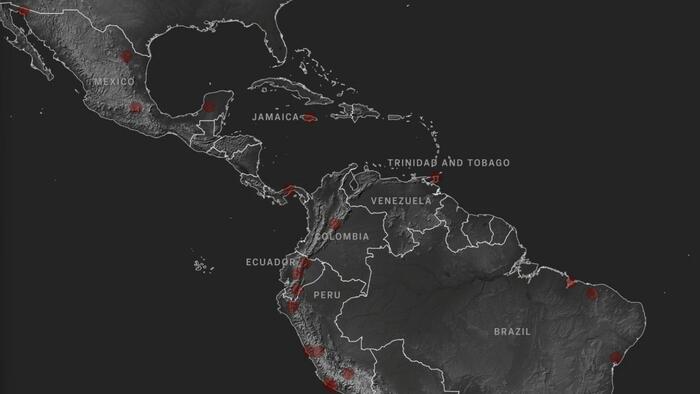
Core Insights - The political turmoil in Peru, marked by the ousting of President José Jerí, is linked to clandestine meetings involving Chinese interests, particularly with Yang Zhihua, a key figure in Chinese infrastructure deals in the country [3][4][20] - The scandal, referred to as "Chifagate," highlights the growing influence of China in Peru and Latin America, as well as the tensions it creates in U.S.-China relations [4][5][8] Group 1: Political Developments - José Jerí was ousted by a vote of three-quarters of Peru's lawmakers just four months into his presidency, making him the seventh leader in a decade [3] - Lawmakers expressed a desire for a transition free from hidden interests and influence-peddling, indicating a push for transparency in governance [3] Group 2: Chinese Influence in Latin America - China has become a dominant force in Latin America, with trade exceeding $500 billion in 2024, surpassing the U.S. as a key trading partner for countries like Brazil and Peru [5][8] - The Chancay Port, a $1.3 billion project, serves as a major logistics hub for China in Latin America, linking South America directly to China and facilitating access to critical minerals [20][22] Group 3: Strategic Implications - The U.S. has recognized the strategic mistake of allowing Chinese influence to grow in the region, as outlined in its national security strategy [8][9] - Concerns have been raised about the potential loss of sovereignty for countries like Peru due to "predatory" Chinese investments, particularly in critical infrastructure [22][24] Group 4: Technological and Military Engagement - Huawei's expansion in Latin America, including a deal to create a 5G-powered smart city in Brazil, underscores China's technological ambitions in the region [16][18] - China's military engagement in Latin America has included visits from senior military leaders and offers of training and incentives to Latin American military officers, fostering closer ties [30][32]

StealthGas Inc. Q4 2025 Earnings Call Summary
Yahoo Finance· 2026-03-02 21:32
Core Insights - The company achieved the second-highest adjusted net income in its history at $65.6 million for 2025, driven by consistently high LPG charter rates over the last four years [1] - The company completed a multi-year strategic deleveraging program, repaying $350 million since 2023, making it one of the only debt-free quoted shipping companies [1] - There was a performance dip in the fourth quarter due to idle time on larger vessels and the continued out-of-action status of one Medium Gas Carrier (MGC) [1] - The company strategically positioned over two-thirds of its fleet in Northern Europe and the Mediterranean to capture premium rates, avoiding lower-earning Asian markets [1] - A disciplined capital allocation strategy was maintained, with share buybacks paused in the fourth quarter as the share price appreciated [1] - The ongoing impact of the Eco Wizard incident is being managed, which remains under technical assessment in Latvia, with no P&L effect due to insurance coverage [1]