人工智能医疗

Search documents
北大资源(00618.HK)成立人工智能医疗谘询服务委员会
Ge Long Hui· 2025-11-21 10:22
Core Viewpoint - The company has established an Artificial Intelligence Medical Advisory Committee to provide strategic guidance and expert insights for the development of its AI-driven digital health platform, Lets Go, reflecting its commitment to building a preventive healthcare ecosystem in emerging markets [1] Group 1 - The newly formed advisory committee aims to assist the board in advancing the Lets Go platform, which is part of the company's wholly-owned subsidiary, Hong Kong Fuhe Holdings Limited, and its innovation division, Resohealth FZCO [1] - Lets Go is positioned as Reso Health's flagship AI health platform, designed to offer comprehensive, digitally-driven health management solutions to employers, insurance companies, and healthcare institutions [1] - The platform is based on the preventive healthcare philosophy of the traditional Chinese medicine brand "Ye Kai Tai," which has a history of 400 years, integrating traditional medical wisdom with modern AI technology to provide solutions in the global health sector [1] Group 2 - The company is focusing on key emerging markets, including the UAE, East Africa, India, and Southeast Asia, to implement its preventive healthcare ecosystem [1]
商汤医疗获得数亿元新一轮融资,AI医疗生态再提速
Cai Jing Wang· 2025-11-18 09:46
Core Insights - SenseTime Medical has completed a new round of strategic financing amounting to several hundred million yuan, with notable investors including Lenovo Capital, Lianchuang Capital, Jiuxian Capital, and Shenran Investment, indicating strong market recognition of its leading technology, mature business model, and growth potential [1] Group 1 - In early 2023, SenseTime Medical secured over 100 million yuan in investments from entities such as Midea Group's Yingfeng Holdings and Renmin University Press Group's Renwei Technology Development Company [1] - The collaboration with industry players is accelerating the integration and iteration of SenseTime Medical's AI technology in real medical scenarios, successfully establishing a critical bridge from technology research and development to industrial application [1] - SenseTime Medical has initiated its Series A financing round, with subscription amounts exceeding 500 million yuan and a post-investment valuation surpassing 3 billion yuan, reflecting a steady increase in financing scale and brand influence [1]
「商汤医疗」再获数亿元战略融资,A轮投后估值超30亿元|36氪独家
3 6 Ke· 2025-11-18 07:57
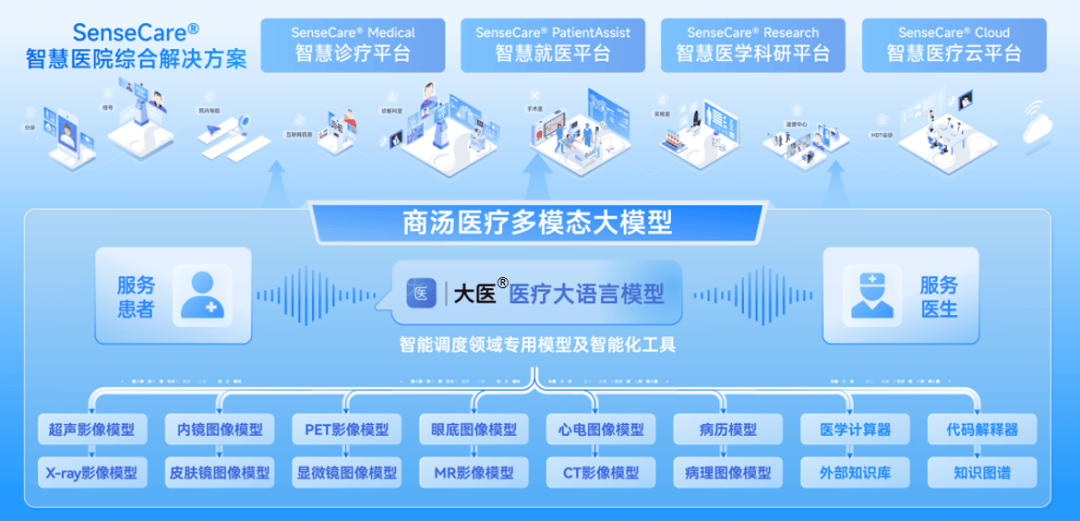
Core Insights - SenseTime Medical has completed a strategic financing round exceeding 500 million yuan, with investors including Lenovo Capital, Lianchuang Capital, and others [3][4] - The company has initiated its Series A financing, achieving a post-investment valuation of over 3 billion yuan [4] Group 1: Financing and Valuation - The recent Pre-A+ round of financing has attracted over 500 million yuan, following earlier investments from major industry players [3][4] - The current Series A financing aims to further enhance the company's valuation, which has surpassed 3 billion yuan [4] Group 2: Technology and Product Development - SenseTime Medical is leveraging AI technology to promote the construction of "smart hospitals," utilizing a core technology engine that includes a large language model and a multimodal medical image model group [4] - The "Da Yi" model, based on a large language model with hundreds of billions of parameters, is designed for various medical scenarios, including self-diagnosis and clinical decision support [4] - The multimodal medical image model group addresses challenges in medical data, enabling efficient training and application across different imaging modalities [4] Group 3: Strategic Vision and Market Positioning - The CEO emphasizes that while pure technology can provide a competitive edge, a rich product matrix and capital-backed ecosystem are harder to replicate [4] - SenseTime Medical's platform strategy aligns with hospitals' needs for extensible products, avoiding the pitfalls of price wars in standardized software [5] - The company aims to expand its revenue by deepening its focus on comprehensive hospital intelligence and standardizing software modules for grassroots hospitals [5]


讯飞医疗科技(02506.HK):11月17日南向资金增持650股
Sou Hu Cai Jing· 2025-11-17 19:35
Core Viewpoint - Southbound funds increased their holdings in iFlytek Medical Technology (02506.HK) by 650.0 shares on November 17, 2025, while experiencing a net reduction of 4,500.0 shares over the past five trading days [1][2]. Group 1: Southbound Fund Activity - In the last 20 trading days, iFlytek Medical Technology saw 12 days of net increases in southbound fund holdings, totaling 82,600 shares [1]. - As of November 17, 2025, southbound funds hold 3.7932 million shares of iFlytek Medical Technology, representing 4.9% of the company's total issued ordinary shares [1][2]. Group 2: Company Overview - iFlytek Medical Technology is primarily engaged in providing AI-powered medical solutions in China, with business lines including grassroots medical services, hospital services, patient services, and regional management platform solutions [2]. - The grassroots medical services line consists of intelligent medical assistants and chronic disease management, while the hospital services line includes smart hospital solutions and diagnostic assistance [2]. - Patient services encompass smart hospital patient services, post-discharge management, imaging cloud platforms, and medical devices [2].
【投融资动态】商汤医疗Pre-A+轮融资,融资额数亿人民币,投资方为联想创投、联创资本等
Sou Hu Cai Jing· 2025-11-17 11:38
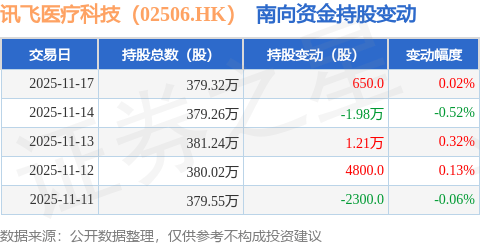
商汤医疗是一家专注于人工智能技术在医疗领域应用的公司。该公司早在2018年世界人工智能大会上正 式发布了首款医疗AI产品原型SenseCare智慧诊疗平台。这一平台能够辅助医生进行诊断、制定治疗规 划及康复建议,支持对多种器官的异常检测、识别及自动诊断分析,主要服务于放射科、病理科、放疗 科、外科及骨科等重点临床科室。SenseCare提供全面的诊断服务,产品支持涵盖13个身体部位及器官 的诊断,包括心脏、肝脏、肺、胃、肠及宫颈等。此外,还为医疗专业人员及患者提供三维手术规划及 康复建议。该平台可以部署在本地或云端,采用专有的高并发渲染技术,支持来自不同医疗机构多个终 端的并发访问。 证券之星消息,根据天眼查APP于11月16日公布的信息整理,上海商汤善萃医疗科技有限公司Pre-A+轮 融资,融资额数亿人民币,参与投资的机构包括联想创投,联创资本,九弦资本,上海申冉,凯乘资 本。 | 公布日 | 投资方 | 交易金额 | 融资轮次 | | --- | --- | --- | --- | | 2025-11-16 | 联想创投 联创 各本 九弦资本 | 数亿人民币 | Pre-A+轮 | | | 世世史史 | ...
商汤医疗获数亿元新一轮融资,加速AI应用规模化落地
Sou Hu Cai Jing· 2025-11-17 06:28
Core Insights - SenseTime Medical has completed a new round of strategic financing amounting to several hundred million yuan, with notable investors including Lenovo Capital, Lianchuang Capital, Jiuxian Capital, and Shenran Investment, reflecting strong market recognition of its leading technology, mature business model, and growth potential [1][3] - Earlier this year, SenseTime Medical secured over 100 million yuan in investments from entities such as Midea Group's Yingfeng Holdings and Renmin University Press's subsidiary, enhancing the integration of AI technology in real medical scenarios [1] - The company has initiated Series A financing, with both the scale and market influence of the financing steadily increasing [1] Funding Utilization - The recent financing will be utilized for the continuous iteration of medical large models, expansion and upgrading of core product matrices, and deepening market layout in key regions [3] Upcoming Events - To celebrate the successful completion of this financing round and the commencement of Series A financing, SenseTime Medical will host a ceremony on November 28 titled "Intelligent New Beginnings, Leading the Future - SenseTime Medical's New Journey Launch Ceremony," featuring strategic cooperation signings, future blueprint releases, and a collective appearance by the executive team [3]
轻松健康集团亮相世界互联网大会乌镇峰会,AI+健康创新成果引关注
Zhong Jin Zai Xian· 2025-11-12 10:06
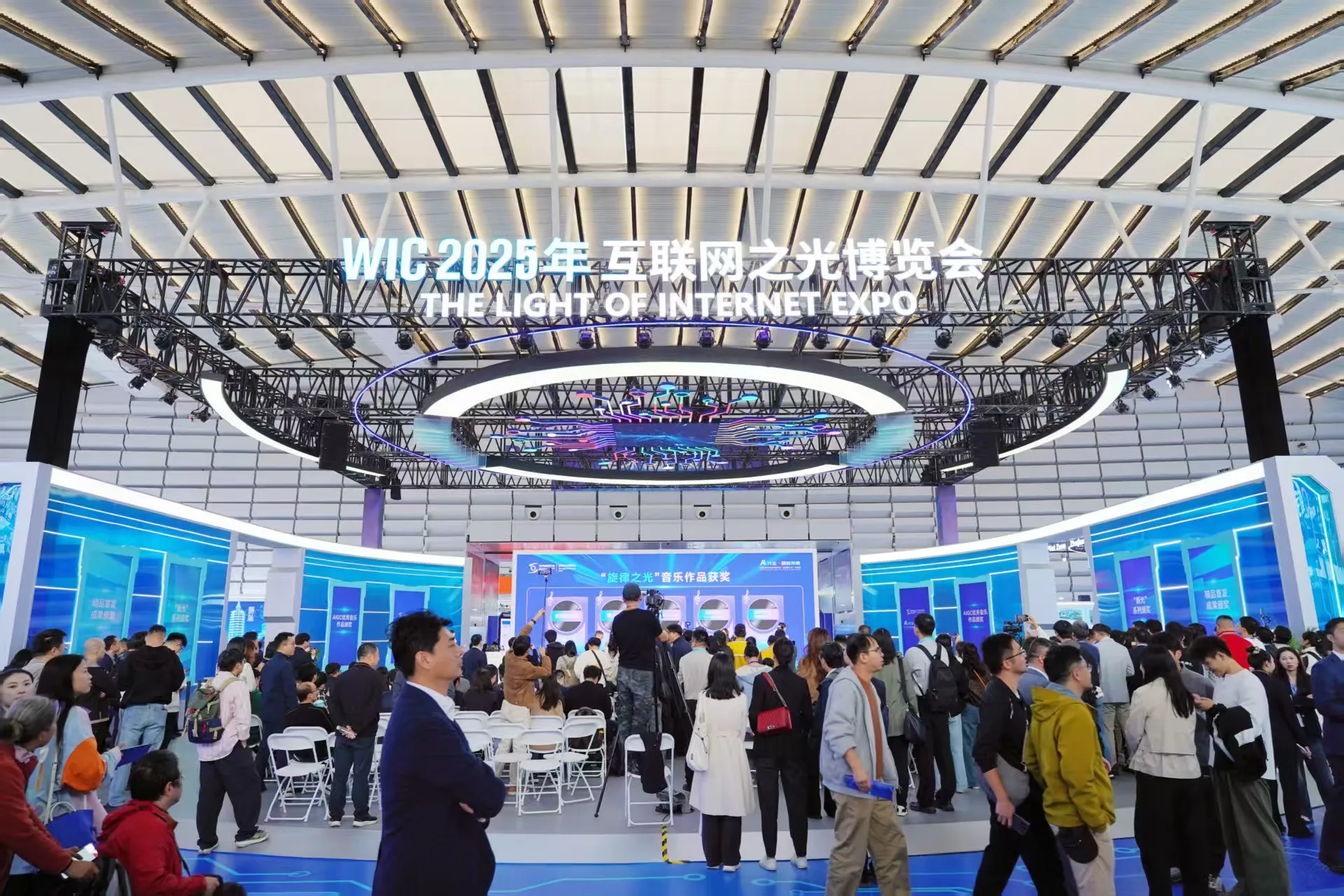
Group 1 - The 2025 World Internet Conference in Wuzhen highlights the importance of AI in healthcare, showcasing the integration of digital technologies in medical services [4][6] - The theme of the conference is "Building an Open, Cooperative, and Secure Digital Future," celebrating the 10th anniversary of the concept of a community with a shared future in cyberspace [3] - The conference features the "Internet Light" Expo, focusing on AI's contributions to various sectors, including healthcare [7] Group 2 - Qingsong Health Group, established in 2014, focuses on providing comprehensive digital health services and health insurance solutions through an "AI + Health" model [4][6] - The company has developed the "Dr. GPT" model, which enhances medical professionals' diagnostic capabilities and offers personalized health management solutions [6][9] - The "Qingsong AI Assisted Diagnosis Solution" utilizes deep learning for medical imaging analysis, improving diagnostic accuracy and treatment decision-making [7][11] Group 3 - The "Intelligent Inquiry System" within the AI solution provides preliminary diagnostic suggestions based on user symptoms and medical history [9] - The "Chronic Disease Management Plan" offers comprehensive health management for chronic patients, including monitoring and lifestyle adjustment recommendations [9][11] - Qingsong Health Group aims to contribute to global digital health development and support the "Healthy China" strategy through its integrated health ecosystem [11]

科学与健康|“医学+AI”视角看健康中国新图景
Xin Hua She· 2025-11-11 09:20
Core Insights - The integration of artificial intelligence (AI) in healthcare is transforming medical practices, making advanced technologies like surgical robots and AI-assisted diagnostics a reality [2][3][5] Group 1: AI in Surgical Procedures - AI is enhancing surgical precision, with robots now capable of performing complex procedures that previously required multiple doctors, thus shifting from open surgeries to minimally invasive techniques [3] - The development of intelligent microsurgical robots allows for precise operations in ophthalmology, surpassing human limitations in stability and accuracy [5] Group 2: AI in Medical Research - The concept of creating digital models of entire biological systems for virtual clinical trials is becoming feasible, driven by the integration of vast datasets and advanced AI algorithms [6] - Challenges remain in standardizing medical data and ensuring quality control, which are critical for maximizing the value of healthcare data [6] Group 3: AI in Healthcare Services - AI is positioned as a "super assistant" to doctors, enhancing accessibility to quality healthcare services, particularly in chronic disease management [8] - Innovative applications of AI, such as real-time dietary feedback for diabetes management, demonstrate significant improvements in patient compliance and cost-effectiveness [8] Group 4: Future of AI in Healthcare - The ongoing development of humanoid robots for elderly care and automated pharmacy services indicates a growing trend towards automation in healthcare settings [11] - The "Healthy China 2030" initiative aims to position China as a leader in health technology innovation, promoting a more equitable and intelligent healthcare system [11]

「紫荆智康」获近亿元天使轮融资,加速AI医院系统开发及落地 | 36氪首发
3 6 Ke· 2025-11-11 00:04
Core Insights - "Zijing Zhikang" has completed nearly 100 million yuan in angel round financing, led by Xinglian Capital, with the funds primarily allocated for the development, iteration, and upgrade of the Zijing AI Hospital system [1] Company Overview - Established in September 2024, Zijing Zhikang was incubated by Tsinghua University's Intelligent Industry Research Institute and initiated by Professor Liu Yang [1] - The company aims to leverage cutting-edge large model AI technology to develop a medical virtual world system and promote its application and optimization in the real world, thereby empowering smart healthcare [1] Technology and Innovation - The core logic of the Zijing AI Hospital is to simulate real hospital facilities and processes, particularly by creating highly human-like, widely distributed, and diverse AI patients to meet initial training data needs [1] - The AI hospital has constructed over 500,000 AI patients covering various countries, age groups, and disease types, serving as an important supplement for training AI doctor agents [2] AI Doctor Development - The team has designed specific memory and reflection algorithms that allow AI doctors to accumulate "experience" during the consultation loop, with validated experiences entering the AI doctor's database as "exclusive memory" [3] - The AI doctors have achieved an accuracy rate exceeding 96% on the MedQA dataset, surpassing the average level of human doctors [3] Product Design and Functionality - The Zijing AI system features three ports: a patient app, a doctor workstation, and a hospital system, facilitating full-cycle health management from pre-diagnosis to post-diagnosis [3] - Patients can register online, engage in intelligent pre-consultation, and generate structured medical records, while doctors can access these records to save time and focus on critical medical decisions [3] Future Plans - The Zijing AI Hospital system is set to launch on June 30, 2025, with internal testing already underway in various departments at Tsinghua University Hospital [4] - Public testing is planned for the end of 2025, expanding from Beijing to more cities and covering various hospital levels and departments [4] Investor Perspectives - Investors highlight the innovative breakthroughs in technology and the potential for Zijing AI Hospital to reshape healthcare efficiency and accessibility [5][6] - The project is seen as a significant force in promoting smart healthcare infrastructure transformation, supported by national policies favoring AI in healthcare [6]
安顿生命预警表亮相世界互联网大会 “AI中医”点亮主动健康管理新未来
Cai Jing Wang· 2025-11-06 08:40
Core Insights - The World Internet Conference in Wuzhen focuses on "Artificial Intelligence," showcasing innovations in the medical field, including the AnDun Life Warning Watch, which addresses healthcare challenges [1][7] - AnDun's Life Warning Watch utilizes the proprietary "Tianhui AI Pulse Diagnosis Algorithm" to provide risk warnings for major diseases and monitor multiple organ functions, creating a personalized health assessment system [2][5] - The fifth generation of AnDun's product line, the X5, is set to launch in Q1 of next year, featuring significant upgrades in core algorithms and user experience to enhance proactive health management [5] - AnDun's founder emphasizes the transformative impact of AI across industries and the company's commitment to integrating AI with traditional Chinese medicine to standardize and visualize health management [5][7] - AnDun's participation in the conference highlights China's advancements in AI healthcare and supports the "Healthy China" initiative, indicating a growing trend of AI in health management [7]