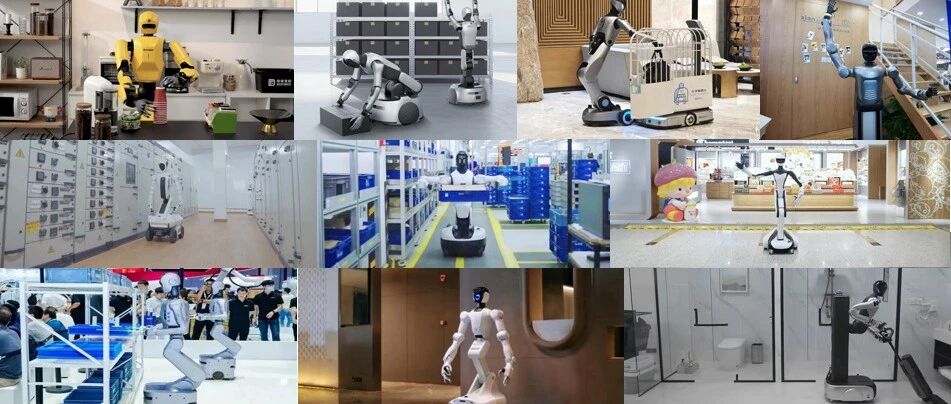
轮式人形机器人

Search documents
6年5轮融资,法奥机器人为何获国字号资本加持
机器人大讲堂· 2026-03-25 13:05
Core Insights - The article discusses the recent C-round financing of Fao Robotics, led by Guoshou Investment's dual-carbon fund, highlighting the endorsement of Fao's business model and the capital market's judgment on the collaborative robot sector's new phase of competition [1] - Fao Robotics has achieved significant financing milestones, totaling $30 million in A and A+ rounds in 2021, over $50 million in B round in 2022, and the latest round with state-backed capital, indicating strong investor confidence [1] Group 1: Business Model and Competitive Advantage - Fao Robotics has developed all core components in-house before establishing manufacturing, which has laid a crucial foundation for cost control [3] - The company's "Design for Manufacturing" approach simplifies product design based on manufacturing capabilities, significantly reducing complexity and enhancing production efficiency [3] - Fao's production scale is notably higher than competitors, with over 100,000 harmonic reducers shipped annually across only five SKUs, leading to a cost advantage where their harmonic reducers cost about half of similar third-party products [4][6] Group 2: Market Position and Growth - Fao's 5kg collaborative robot (FR5) is priced at 23,800 yuan, maintaining a gross margin above industry average due to structural cost advantages rather than price wars [6] - The company is projected to ship nearly 7,000 units in 2024 and over 11,000 units in 2025, positioning itself as the leader in domestic collaborative robot shipments with ambitions for global leadership [6] Group 3: International Expansion and Certification - Fao has successfully penetrated international markets, exporting 1,300 units in 2024 and over 4,200 units in 2025, marking a 251% year-on-year increase in overseas orders [7] - The company has established over 50 sales outlets globally, covering more than 100 countries, with Europe accounting for 49% of its market share [7][9] - Fao's ability to meet stringent international certification standards through its fully self-developed components creates a significant barrier for competitors reliant on third-party parts [9] Group 4: Technological Advancements and Future Strategy - Fao is extending its competitive edge into software and algorithms, with the AIRLab algorithm platform focusing on industry-specific models to reduce deployment barriers for downstream integrators [10][12] - The company aims to build an open ecosystem through the AIRLab Store, enhancing software platform stickiness and addressing long-tail markets [14] - Fao's strategic positioning as a Tier-1 supplier in the humanoid robot industry leverages its existing technology and production capabilities, allowing it to provide comprehensive customization services [15][17] Group 5: Strategic Developments and Future Outlook - Fao's new headquarters in Suzhou, with a total investment of 400 million yuan, will focus on R&D and global operations, signaling a transition from rapid growth to scalable expansion [18][19] - The completion of its shareholding reform and the recent C-round financing have set the stage for potential IPO plans, reflecting growing market expectations [19]

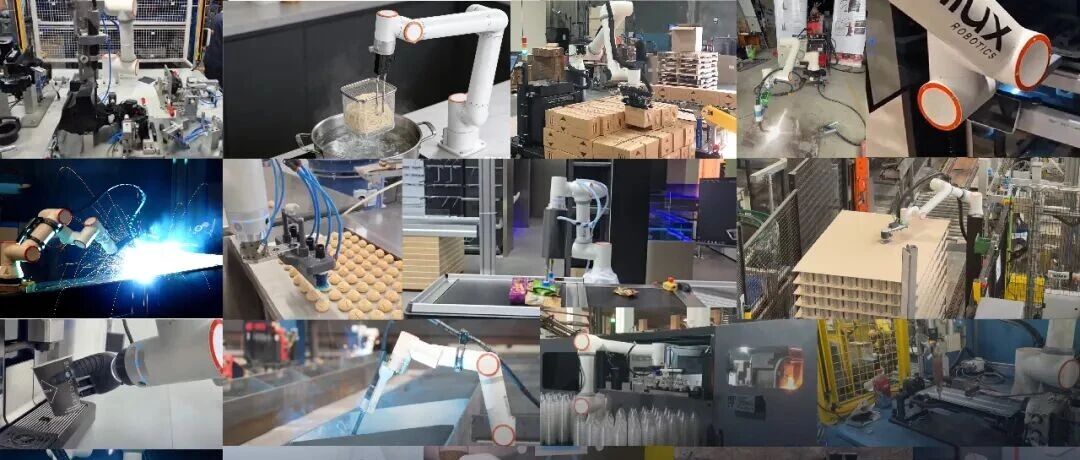
山东省机器人春晚落子济宁,科技年味里的城市转型密码
Qi Lu Wan Bao· 2026-02-12 09:56
Core Insights - The 2026 Shandong Robot Spring Festival Gala, set to take place in Jining, symbolizes the city's transformation from a coal-based economy to a technology-driven "smart city" [1][11] - The event showcases the integration of advanced robotics with traditional cultural performances, highlighting the synergy between technology and culture [4][9] Group 1: Event Overview - The gala features performances by various robots, including the SR5 collaborative robot from Lashi (Shandong) Robot Group, which is designed for precision and aesthetic appeal [3][4] - A total of 20 SR5 collaborative robotic arms, 4 wheeled humanoid robots, and 26 fixed humanoid robots will be utilized in the opening performance [3] Group 2: Technological Integration - The robots demonstrate capabilities in both industrial applications and artistic performances, breaking the stereotype of industrial robots as merely functional and heavy [3][4] - The event emphasizes the importance of milliseconds-level collaborative control among robots, integrating elements of Shandong's traditional arts such as opera and folk music [4][9] Group 3: Industrial Foundation - Jining has established a robust industrial base with 38 industrial categories, allowing for diverse applications of robotics across sectors like mining, textiles, and food production [6][7] - The city has positioned itself as a testing ground for robotic technology, addressing real-world production challenges and facilitating the transition from prototype to large-scale application [6][7] Group 4: Industry Ecosystem - Jining's robot industry is supported by a complete industrial chain, including R&D, component manufacturing, and system integration, enhancing its competitive edge [7][8] - Leading companies like Lashi hold a 40% market share in the domestic flexible collaborative robot segment, showcasing the city's industrial leadership [7][8] Group 5: Future Prospects - The robot industry in Jining is projected to grow, with a 14% revenue increase for industrial enterprises expected in 2025, alongside the establishment of new innovation platforms [9][10] - Strategic plans are in place to develop a national-level robot industry base, focusing on key areas such as industrial and service robots, and addressing critical component technologies [10][11]


富维股份:公司与月泉成立应用实验室,对轮式人形机器人进行数据采集和模型训练
Zheng Quan Ri Bao Wang· 2026-02-05 11:14
Core Viewpoint - The company, Fuwei Co., Ltd. (stock code: 600742), is collaborating with Yuequan to establish an application laboratory focused on data collection and model training for wheeled humanoid robots, aiming to explore their potential applications in the automotive parts manufacturing sector [1] Group 1 - The collaboration aims to conduct preliminary research and technical validation on the application of humanoid robots in automotive parts manufacturing [1] - The company acknowledges that the technological maturity, commercialization path, and market prospects of this initiative have significant uncertainties [1] - The company hopes to gradually transition the wheeled humanoid robots from laboratory validation to practical application on production lines, enhancing automation and efficiency in automotive parts production [1] Group 2 - The progress of this initiative is influenced by multiple factors, leading to uncertainties regarding its implementation [1] - In the short term, this collaboration is not expected to have a significant impact on the company's operating performance [1]

看2026|越疆刘主福:从单机到系统,具身智能步入规模化应用
Bei Ke Cai Jing· 2026-01-07 07:28
Core Viewpoint - The article discusses the upcoming economic landscape for China in 2026, emphasizing the importance of stability and quality improvement in economic work, as well as the role of robotics in driving innovation and productivity in various sectors [3][4]. Company Overview - Yujian Technology has become the first stock of collaborative robots on the Hong Kong Stock Exchange, marking a significant recognition of the value in the robotics sector [5]. - The company has accelerated its product development, launching various humanoid robots and establishing strategic partnerships, leading to steady growth in performance [6]. Industry Insights - The robotics industry is a trillion-dollar market with intense competition, necessitating early positioning to stand out [7]. - The core challenges in implementing embodied intelligence in industrial settings include achieving cross-model and cross-scenario "collective intelligence" [10]. - The company aims to create a comprehensive ecosystem that accelerates the emergence of intelligence through a full-chain technology loop, reducing the learning cycle and costs for robots [11]. Governance and Ethical Considerations - As robots become more integrated into daily life, safety, ethics, and privacy are critical for industry development, necessitating a governance framework that ensures responsible design and operation [12]. Future Outlook - The robotics industry is moving towards "super automation" and "human-machine integration," with a dual strategy of deepening industrial capabilities and expanding commercial applications [15]. - The competition is shifting from "single-machine intelligence" to "system intelligence" and ecosystem building, requiring companies to develop autonomous production units capable of perception, decision-making, and collaboration [16]. Technological Development - A self-controlled full-stack technology chain is essential for achieving advanced capabilities, with a high self-research rate in key components ensuring supply chain security and product architecture definition [17]. - The company has established itself as a leader in collaborative robots, leveraging its strategic layout across high-potential sectors to create a virtuous cycle between existing business and future growth [18]. Response to National Policies - In response to national calls for expanding domestic demand and optimizing supply, the company focuses on transforming innovative robotic technologies into scalable productivity tools, enhancing manufacturing quality and efficiency while also activating consumer demand in various sectors [20].

越疆(2432.HK):协作机器人筑基 具身智能迎风启航
Ge Long Hui· 2026-01-01 20:34
Core Viewpoints - Company is a leading player in the global collaborative robot sector, leveraging a comprehensive self-developed technology system, diverse product matrix, and global layout to establish significant competitive advantages [1] - As of August 2025, the cumulative shipment of collaborative robots is expected to reach 100,000 units, ranking first in China and second globally [1] - The company is actively expanding into the embodied intelligence sector, developing a product matrix that includes "robotic arms, humanoid robots, and robotic dogs" [1] Summary by Sections Collaborative Robot Market - The global collaborative robot market is projected to grow from $1.04 billion in 2023 to $4.95 billion by 2028, driven by policy support, aging population, and advancements in AI and 3D vision technology [2] - The company is well-positioned to benefit from this market expansion due to its self-researched technology, diverse product offerings, and extensive distribution channels [2] Product Development and Innovation - The company has established a multi-form embodied intelligence product matrix, with plans to launch an AI training platform (X-Trainer) in 2024 and various humanoid robots and intelligent robotic products by 2025 [2] - Strategic partnerships with Tencent, Yaoshi Bang, and Inspur Cloud are in place to accelerate the commercialization of embodied intelligence products, with actual orders already received from companies like Ruidefeng and Lansi Technology [2] Financial Projections - Revenue projections for 2025-2027 are estimated at 501 million, 753 million, and 1.076 billion yuan, reflecting year-on-year growth rates of 34.08%, 50.26%, and 42.89% respectively [3] - Net profit for the same period is expected to be -55 million, -11 million, and 66 million yuan, with significant year-on-year growth of 41.99%, 79.54%, and 684.54% respectively [3]
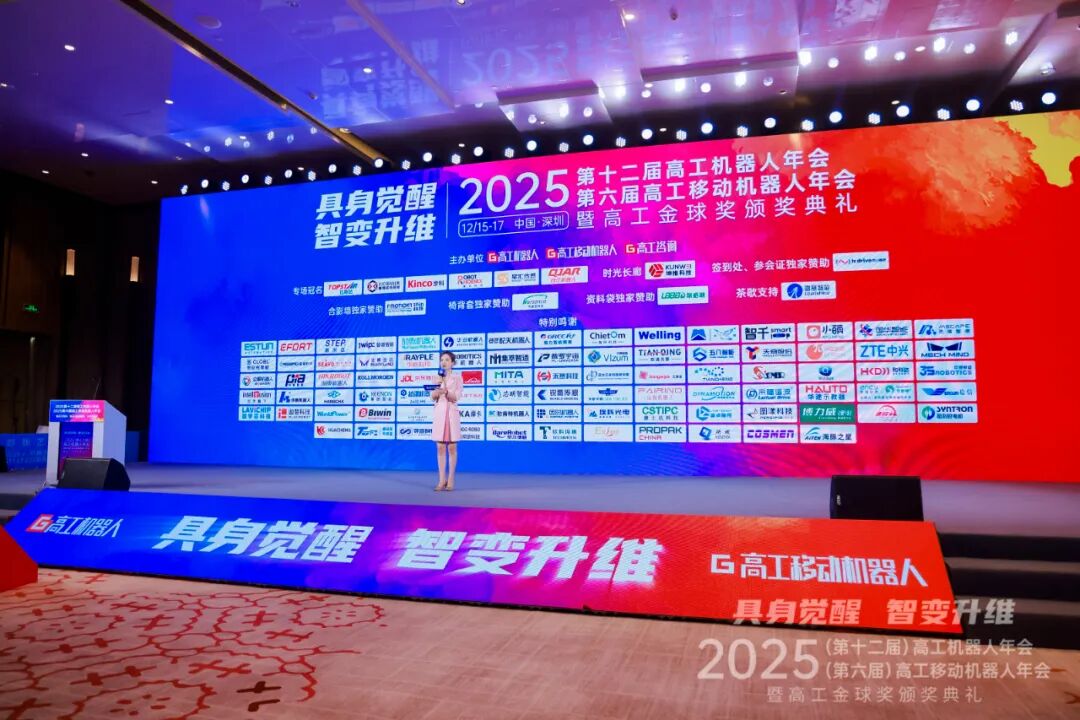
年会直击:工业机器人,从“制造”到“智造”的变迁与远征
Xin Lang Cai Jing· 2025-12-15 13:34
Core Insights - The focus of the industry is shifting towards embodied intelligence, characterized by a "perception-decision-execution" loop, which is expected to be a key trend by 2025 [1][22] - Collaboration across manufacturing, robotics, and algorithm sectors is essential for the application of industrial embodied intelligence, as single enterprises cannot tackle complex technological challenges alone [1][22] Group 1: Industry Trends - The automotive, 3C, and new energy sectors remain the main battlefield for robotics applications, with structural differentiation in demand becoming more pronounced [3][24] - The robotics industry is showing resilience by actively evolving amidst cyclical fluctuations rather than waiting for recovery [3][24] - The core focus of this evolution is increasingly directed towards embodied intelligence, necessitating the establishment of open innovation ecosystems and cross-domain collaboration platforms [3][24] Group 2: Key Presentations - Dr. Zhang Xiaofei emphasized the importance of integrating AI and robotics technologies to advance into a new phase of industrial embodied intelligence, highlighting the need for companies to identify suitable robot forms and application scenarios [5][26] - Mr. Zhu Chunhua from Estun discussed the integration of automation, robotics, and digital platforms to drive transformation across various industries, focusing on scenario-based applications [7][28] - Dr. You Wei from Efort proposed strategies for implementing intelligent robotics in specific closed scenarios to enhance adaptability and reduce reliance on computational power [9][30] - Mr. Cai Liang from New Times highlighted the development of various embodied product lines and the establishment of a comprehensive ecosystem to support AI model deployment in industrial applications [11][32] - Mr. Huang Jing from Tuosida pointed out that the growth bottleneck in the robotics market lies in the mismatch between industry application experience and product implementation capabilities [13][34] - Mr. Liang Rui from Qianjiang Robotics shared insights on leveraging core technologies and AI to accelerate the practical application of embodied intelligence in industrial settings [15][35] - Mr. Yuan Ye from Zhiwei Intelligent discussed the intersection of AI and robotics, emphasizing the need for deep integration of perception, action, and cognition to achieve significant growth in embodied intelligence [17][38] Group 3: Roundtable Discussion - A roundtable discussion featured key industry leaders addressing the most significant changes in customer demands and the most valuable technological innovations anticipated for 2025 [19][40]
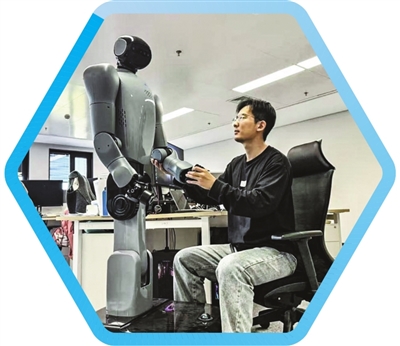
杭州博士后用AI让机器懂协作、更安全
Hang Zhou Ri Bao· 2025-12-04 02:32
Core Insights - The article discusses advancements in robotics and AI, focusing on two researchers, He Ruming and Tian Xinyang, who are working on enhancing the intelligence and safety of robots for better human-machine interaction [4][5]. Group 1: Research Focus - He Ruming is developing a "big brain" for drone swarms using game theory, enabling autonomous coordination and efficient collaboration among drones in dynamic environments [6][7]. - Tian Xinyang is concentrating on creating a "small brain" for humanoid robots, ensuring safe and predictable interactions with humans in real-world scenarios [8][9]. Group 2: Technological Applications - He Ruming's research allows drones to autonomously adjust their formations and tasks in response to real-time conditions, significantly improving operational efficiency during search and rescue missions [6][7]. - Tian Xinyang's controller technology, which acts as the "small brain," is adaptable to various robotic forms and has been successfully implemented in multiple industries, including aerospace and nuclear [9]. Group 3: Industry Impact - The advancements in AI and robotics are expected to enhance the capabilities of humanoid robots, moving them from demonstration roles to practical applications in everyday life [8][9]. - The collaboration with leading companies like CATL and Siasun is accelerating the deployment of domestic technologies in the AI sector, indicating a growing market for safe and reliable robotic solutions [9].
全球人工智能+具身机器人峰会香港举行 共绘产业落地新蓝图
Zheng Quan Shi Bao Wang· 2025-12-03 14:44
Group 1 - The GIS Global AI + Embodied Robotics Summit held in Hong Kong showcased advancements in embodied intelligence technology and its applications, marking a significant transition from laboratory experiments to commercial scale [1] - The summit highlighted the trend of integration between AI and robotics, with companies like Zhiyuan Robotics achieving mass production of full-size humanoid robots, projecting revenue of 101 billion yuan in 2025 and leading global shipments in this sector [1] - Zhiyuan's flagship product, the Expedition A2, is the only full-size humanoid robot certified in China, the US, and Europe, and has been deployed in various commercial scenarios with notable clients including China Mobile and Chery Automobile [1] Group 2 - Cloud Deep Technology presented innovations in legged embodied intelligent robots, achieving a fault identification accuracy of over 98% in extreme environments, with products capable of operating in temperatures ranging from -20 to 55 degrees Celsius [2] - The company has successfully implemented its robots in inspection and firefighting scenarios in Hong Kong and expanded into markets in Singapore, Japan, and South Korea [2] - Cyberborg Robotics introduced a full-size humanoid robot designed for industrial applications, capable of lifting 20 kg and aimed at automating repetitive tasks in factories, addressing the "last mile" of factory automation [2] Group 3 - COIOS-AI's Vice President discussed multi-agent collaborative technology that enhances drone operations, significantly compressing video data for faster response times, with applications in logistics and emergency rescue [3] - The Metacam spatial perception base, developed by Wuqiong Innovation, has been delivered to over 500 clients, providing advanced positioning and decision-making capabilities for various industrial applications [3] - A panel discussion featured experts discussing the evolution of robotics, emphasizing the need for a balance between technological innovation and ethical governance to promote sustainable human-robot collaboration [3] Group 4 - The summit illustrated China's leading position in the global embodied robotics sector and outlined a path for industrial upgrades from isolated breakthroughs to ecosystem collaboration [4] - The embodied robotics industry is entering a golden development phase, driven by aging populations, labor market changes, and supportive policies, with applications spanning from industrial maintenance to consumer services [4] - The vision of integrating robots into everyday life is becoming a reality, with the industry expected to experience rapid growth fueled by technological innovation and global governance [4]
大摩中国机器人调研:人形目前缺成熟产品,复合机器人或率先放量
Hua Er Jie Jian Wen· 2025-12-03 10:36
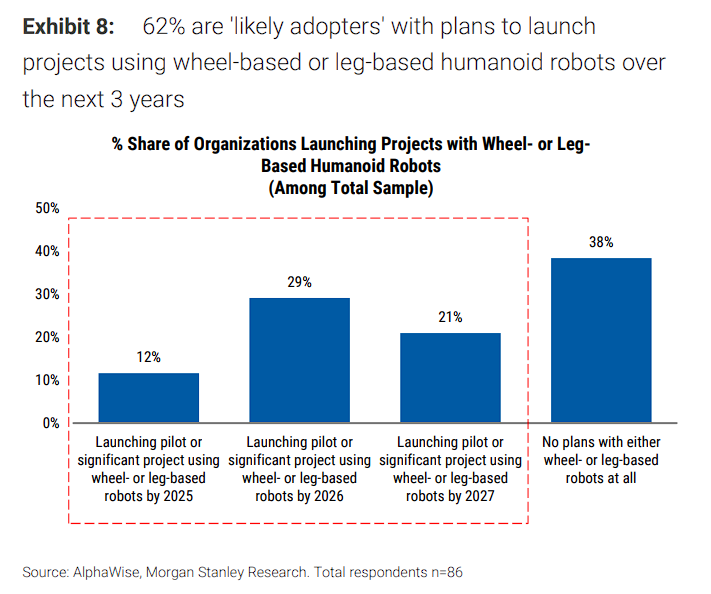
Core Insights - Morgan Stanley's survey reveals a strong interest among Chinese enterprises in deploying humanoid robots, with 62% planning to implement them within three years, indicating significant market potential. However, only 23% of respondents are satisfied with current products, highlighting a critical need for improvements in flexibility, functionality, and pricing [1][4][14]. Deployment Plans - Among 86 surveyed companies, 62% are categorized as "potential adopters," with plans to initiate humanoid robot pilot projects or major deployments within three years. Specifically, 12% plan to invest in 2025, 29% in 2026, and 21% in 2027 [4][3]. - The adoption rate for composite robots (mobile base + robotic arm) is expected to be the fastest, with 21% of companies planning deployment by 2025, increasing to 64% by 2027. In contrast, wheeled humanoid robots will see deployment rates of 8% in 2025, 37% in 2026, and 58% in 2027, while bipedal robots will have rates of 6%, 17%, and 41% respectively [3][7][9]. Product Maturity and Satisfaction - Despite strong market demand, product maturity is a significant constraint on the large-scale application of humanoid robots. Only 23% of respondents express satisfaction with current products, while 53% are neutral and 25% dissatisfied [14][16]. - Satisfaction levels vary by industry, with manufacturing firms showing relatively higher satisfaction compared to industrial and service sectors, which exhibit net dissatisfaction [16]. Performance Expectations - Among potential adopters, only 42%-57% rated various performance indicators as "excellent/good," indicating substantial room for improvement. The most anticipated enhancements include human-robot collaboration (70%), IoT integration (57%), fine manipulation (57%), and self-learning capabilities (49%) [18][24]. - Cost remains a critical barrier, with 92% of respondents believing that the price of humanoid robots must drop below 200,000 RMB (approximately 28,000 USD) for widespread adoption, and 40% identifying the ideal price range as 100,000-200,000 RMB [18]. Market Landscape - Chinese brands dominate the market, with Yushutech being the most engaged integrator, having contact with 60% of potential adopters, followed by Yundongchu (28%), UBTECH (23%), and Midea (17%) [20][22]. - The current brand preferences reflect visibility and media exposure rather than actual performance, as evidenced by Yushutech's high visibility despite lacking manufacturing capabilities [25]. Investment Recommendations - Morgan Stanley maintains a positive long-term outlook for humanoid robots but emphasizes that the market is still in its early stages, with scaling requiring time. The firm suggests prioritizing investments in component suppliers, as these companies are expected to benefit earlier from industry growth [27]. - The anticipated drivers for market interest in 2026 include new product launches by tech giants like Tesla, expanded government subsidies, and IPOs of related companies [27].
轮式人形机器人占比超八成!技术妥协还是战略选择?
机器人大讲堂· 2025-11-26 10:42
Core Viewpoint - The emergence of wheeled humanoid robots represents a significant trend in the embodied intelligence robotics sector, indicating a collective preference for this design approach among companies, with over 80% of new products adopting this configuration [1][3]. Group 1: Industry Trends - The current wave of wheeled humanoid robots is characterized by a focus on practical applications, with 45 out of 55 new products featuring a wheeled chassis and humanoid upper body design [1][3]. - The wheeled humanoid robots are seen as a rational choice in the industry, balancing technological feasibility and commercial viability, allowing companies to quickly validate application scenarios and accumulate operational data [3][4]. Group 2: Product Highlights - Several representative wheeled humanoid robots have been launched in 2023, showcasing their application in various sectors such as industrial manufacturing, warehousing logistics, and commercial services [4][5]. - Notable products include: - **Cruzr S2** by UBTECH, featuring a height of 176 cm, capable of carrying 15 kg, and equipped with advanced vision and motion control systems [7]. - **G2** by Zhiyuan Robotics, designed for high-precision tasks in automotive parts production, utilizing reinforcement learning for task optimization [9]. - **Q5** by Xingdong Jiyuan, with 44 degrees of freedom and advanced navigation capabilities for service applications [11][12]. - **ATOM-W** by Dobot, integrating immersive remote operation with high precision for flexible manufacturing needs [15]. - **XMAN-R1** by Qinglang Intelligent, designed for service tasks in high-traffic environments, featuring advanced interaction capabilities [17]. - **DexForce W1 Pro** by Kuawei Intelligent, offering modular development options and high-precision task execution [19]. - **X1-PRO** by Xiangong Intelligent, featuring a flexible design for complex operational environments [22]. - **巡霄** by Youai Zhihui, designed for high-value material handling with a focus on precision [24]. - **ZERITH-H1** by Zero Degree, capable of performing household tasks with advanced perception [26]. - **Quanta X2** by Zivariable Robotics, featuring a high degree of freedom for versatile applications [28].