
贸易

Search documents
乘势而上 攻坚决胜 上海未来五年这样干!
Xin Lang Cai Jing· 2026-02-07 12:33
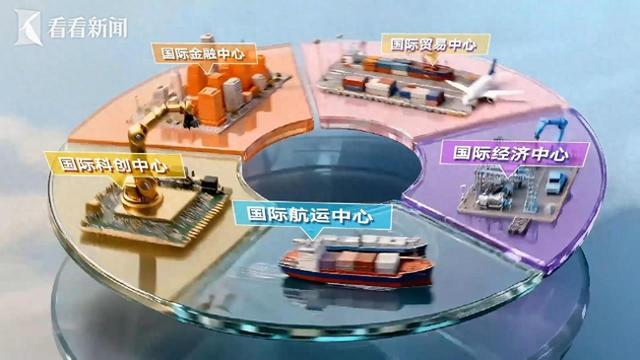
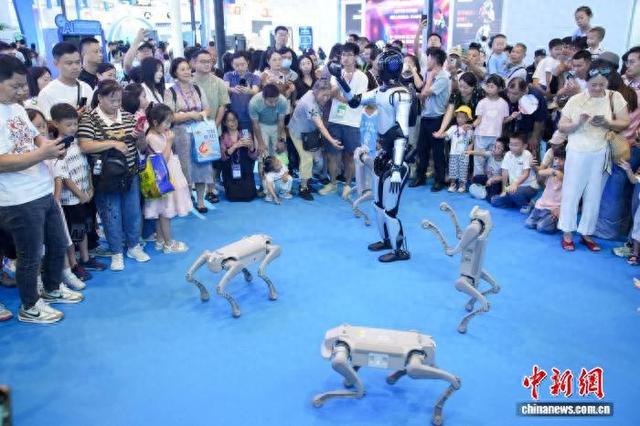
Core Viewpoint - The Shanghai Municipal People's Congress has approved the 15th Five-Year Plan, marking the beginning of a comprehensive implementation phase for Shanghai's development blueprint over the next five years. The economic growth target is set at around 5% during this period, with a focus on enhancing the core functions of five major centers: economy, finance, trade, shipping, and technology innovation [1][16]. Economic Development - Shanghai aims to enhance the overall competitiveness of its modern industrial system, targeting an annual growth rate of over 10% for the manufacturing output of three leading industries: integrated circuits, biomedicine, and artificial intelligence during the 15th Five-Year Plan [3]. - The total output value of strategic emerging industries in Shanghai's manufacturing sector is expected to exceed 50% of the total industrial output by 2030 [3]. Financial Sector - Shanghai plans to explore the pilot launch of RMB foreign exchange futures trading and actively promote the establishment of an international financial asset trading platform, aiming for a total financial market transaction volume exceeding 450 trillion yuan by 2030 [5]. International Trade - The city will strengthen its hub functions and expand offshore trade, with a target of achieving an average annual offshore trade volume of over 100 billion USD in the next five years [7]. - Shanghai aims to collaborate in building a world-class port and airport cluster in the Yangtze River Delta, with a goal of reaching a 55% water-to-water container transfer ratio at Shanghai Port by 2030 [7]. Technological Innovation - The plan emphasizes enhancing original innovation and tackling key core technologies, particularly in fields such as embodied intelligence biomanufacturing and brain-computer interfaces, while accelerating the development of disruptive technologies like photonic chips and controlled nuclear fusion [9]. Social Development - The plan includes specific measures to improve residents' well-being, such as increasing the proportion of nursing beds in elderly care institutions to over 75% and enhancing support for childbirth and parenting services [11][20]. - Shanghai aims to provide 250,000 to 270,000 units of affordable rental housing to attract talent and reduce living costs [13]. Cultural and Tourism Development - The city will focus on cultivating its cultural brand and aims to become a world-renowned tourist city, targeting over 50 million inbound tourists by 2030 [14]. Summary of Goals - The GDP growth target is set at around 5%, with a focus on maintaining the industrial value-added ratio above 20% and ensuring that strategic emerging industries account for over 50% of the total [16]. - The digital economy's core industry is expected to contribute around 20% to the regional GDP by 2025, up from 14% [18].

广西擘画“十五五”发展新蓝图
Xin Lang Cai Jing· 2026-02-07 10:25
Core Viewpoint - The "15th Five-Year Plan" of Guangxi Zhuang Autonomous Region outlines key development strategies focusing on artificial intelligence, industrial growth, open cooperation, technological innovation, and domestic demand expansion for the next five years [1][3][4]. Group 1: Artificial Intelligence Development - During the "14th Five-Year" period, Guangxi established a framework for artificial intelligence, leading to over 200 new "AI+" projects signed by 2025, with the core output in the AI sector exceeding 89 billion yuan [3]. - The "15th Five-Year" period aims to position Guangxi as a hub for AI cooperation with ASEAN, establishing a national AI application cooperation center and promoting AI across various industries to enhance economic growth [3][4]. Group 2: Industrial Growth - Guangxi's industrial output value grew at an average annual rate of 7.0% during the "14th Five-Year" period, surpassing the national average, and established ten industrial clusters with contributions from emerging industries exceeding 50% [3][4]. - The "15th Five-Year" strategy focuses on strengthening industrial capabilities, particularly through AI, to develop ten modern pillar industries and enhance the overall industrial system [4]. Group 3: Trade and Investment - The plan emphasizes innovative development in foreign trade and investment, aligning with the Ministry of Commerce's initiatives to enhance exports, consumption, and foreign investment [6]. - Guangxi will implement actions to support cross-border e-commerce and border trade, aiming to tap into the potential of the consumer market and improve the quality of foreign investment [6]. Group 4: Technological Innovation - During the "14th Five-Year" period, Guangxi achieved breakthroughs in 356 major technologies and developed over 800 new industrial products, with new industries contributing over 50% to industrial growth [8]. - The "15th Five-Year" plan aims to deepen the integration of technological and industrial innovation, focusing on overcoming key technologies and enhancing AI's role across various sectors [8]. Group 5: Education Modernization - Guangxi prioritizes education, allocating 20% of its budget to this sector, with plans to develop a high-quality education system by 2030 [8]. - The region will implement significant projects to improve higher education quality and promote AI talent development, particularly in collaboration with ASEAN [8].
两会话题 | 广西“十五五”规划纲要明确,未来这样干
Guang Xi Ri Bao· 2026-02-07 03:06
Group 1: Artificial Intelligence Development - The planning outline emphasizes the goal of developing over 200 new "Artificial Intelligence +" industry projects by 2025, with breakthroughs in 11 vertical models [2] - The establishment of a high-standard China-ASEAN AI application cooperation center is highlighted, aiming to facilitate collaboration between Chinese and ASEAN countries in the AI sector [2] - The focus is on accelerating the development of AI hardware and creating a significant production base for AI products, enhancing the business environment for AI industries [2] Group 2: Industrial Growth - The "14th Five-Year" period saw an average annual growth of 7% in industrial added value, surpassing the national average, contributing nearly 40% to the region's economic growth [3] - The planning outline aims to implement the "Industrial Strengthening Guangxi" strategy, focusing on new industrialization led by AI and establishing ten modern pillar industries [3] - The strategy includes enhancing technological innovation capabilities and promoting green and low-carbon transitions in the industrial sector [3] Group 3: Trade and Investment - The planning outline aligns with national strategies to promote foreign trade and investment, aiming to enhance the competitiveness of Guangxi's open development [4][5] - Initiatives include promoting the "Export China" brand and integrating trade and investment innovations, as well as expanding cross-border e-commerce [5] - The focus is on creating a favorable environment for foreign investment and ensuring national treatment for foreign enterprises [5] Group 4: Technological Innovation - New industries and products are expected to contribute over 50% to industrial growth during the "14th Five-Year" period, supporting the establishment of ten trillion-yuan pillar industries [6] - The planning outline includes organizing major technological projects to tackle over 105 key technologies, reinforcing the role of AI in various sectors [6] - Emphasis is placed on enhancing the role of enterprises in technological innovation and facilitating the application of scientific achievements [6] Group 5: Education Modernization - The planning outline aims to establish a high-quality education system by 2030, integrating education development into broader regional growth strategies [7] - Significant investments in education are planned, with a focus on improving basic education quality and expanding higher education resources [7] - The initiative includes promoting the integration of AI in education to enhance learning outcomes and accessibility [7]
【图解】动图解读!新鲜出炉的《2026年上海政府工作报告》亮点逐个数
Xin Lang Cai Jing· 2026-02-06 11:27
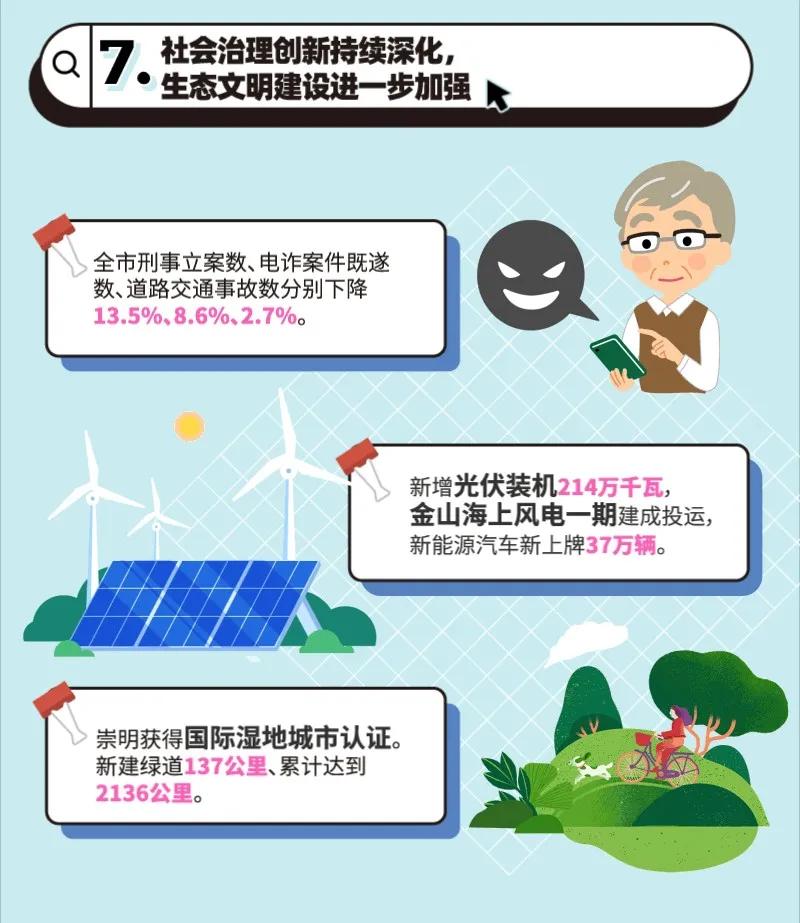
Economic Development Overview - Shanghai's GDP reached 5.67 trillion yuan, growing by 5.4%, exceeding expectations [5][29] - The city's general public budget revenue was 850 billion yuan, an increase of 1.5% [5][29] - The average urban unemployment rate was 4.2% [5][29] - Total R&D expenditure accounted for approximately 4.5% of GDP, with key industries like integrated circuits, biomedicine, and artificial intelligence exceeding 2 trillion yuan [5][29] Trade and Investment - Total foreign trade reached 4.51 trillion yuan, growing by 5.6%, with exports increasing by 10.8% [5][30] - The number of regional headquarters of multinational companies and foreign R&D centers accelerated, indicating a positive trend in foreign investment [5][30] Consumer and Retail Growth - Social retail sales increased by 4.6%, supported by various consumption-boosting initiatives [6][31] - The number of duty-free shops for outbound tax refunds grew by 136%, reaching 1,837 [6][31] Infrastructure and Urban Development - Fixed asset investment grew by 4.6%, with major project investments totaling 251 billion yuan, marking a 5.3% increase [6][31] - Significant infrastructure projects included the construction of 47 major industrial projects and the expansion of metro lines [6][31] Five Centers Development - The construction of a modern industrial system is underway, focusing on high-end medical devices, smart terminals, and commercial aerospace [7][32] - The financial sector saw the establishment of new investment funds and an increase in licensed financial institutions to 1,813 [7][32] - The Shanghai port maintained its position as the world's largest container port, with a throughput of 55.06 million TEUs [7][32] Technological Innovation - The city is promoting high-quality construction of national laboratories and has established new verification platforms and incubators [8][33] - The total value of technology contracts reached 649.68 billion yuan, growing by 24.9% [8][33] Regional Integration and Collaboration - The Yangtze River Delta integration is advancing, with the establishment of a manufacturing alliance and the implementation of 12 key cooperation projects [9][35] - The city is enhancing its role as a hub for international trade and innovation, with new policies supporting cross-border trade and investment [9][35] Social Welfare and Employment - The city added 64,100 new jobs, with a focus on employment support policies [11][37] - New community services and facilities were established, including 3,852 new elderly care beds and 336 community service stations [11][37] Environmental and Urban Management - The city is enhancing its ecological footprint with new green spaces and waste management facilities [10][36] - Urban renewal projects are accelerating, with significant improvements in community living conditions and infrastructure [10][36]
【中国那些事儿】外媒观察:小商品撬动大市场 看义乌从“卖全球”到“聚人才”
Xin Lang Cai Jing· 2026-02-06 08:34
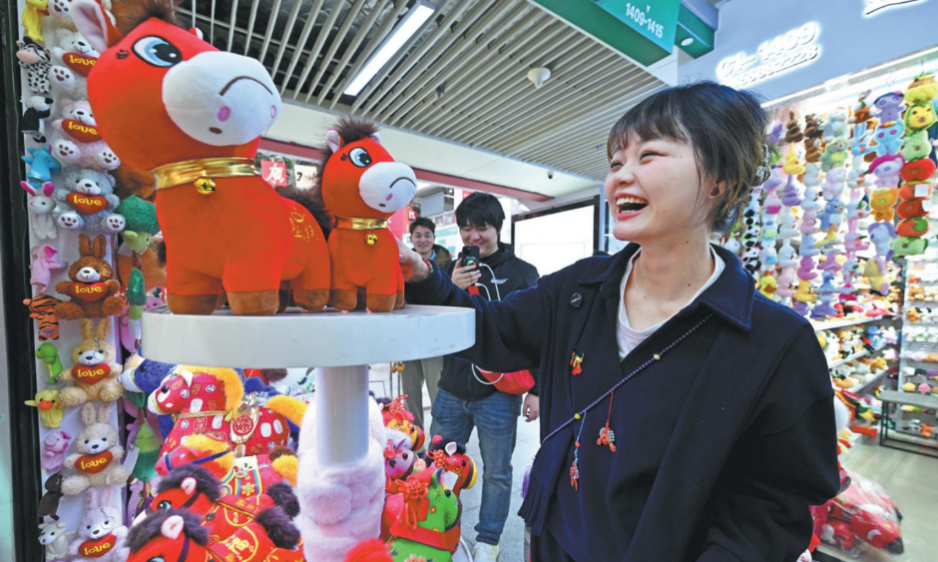
来源:中国日报网 中国日报网2月6日电 在全球最大的小商品集散地义乌,空气中仿佛都涌动着订单的热浪。从节日装饰到赛事周边,从传统贸易到数 字电商,这座被誉为"世界超市"的县级市,正凭借强大的产业韧性与开放活力,向世界展现着中国制造业的深厚底蕴与创新之路。 链动全球,产业优势筑牢 " 底气 " 义乌的竞争力,离不开庞大、灵活且多元的供应链网络。作为浙江省金华市外贸的核心动力,义乌国际商贸城拥有近8万个商铺,提 供超210万种商品,商品供应覆盖全球233个国家和地区。其优势不仅在于规模,更在于精准的市场适配力。例如,义乌供应了全球超 80%的春节装饰品;店铺橱窗里,马来语、越南语和泰语的春联、"福"字,精准契合东南亚市场的文化需求。 金华市制造业基础雄厚,覆盖全国41个工业大类中的33个,为义乌贸易商提供了坚实且富有弹性的供应链支撑。义乌伊拉克商会副会 长S-K·卡米尔表示,从缝纫针到汽车机械,义乌能满足全球买家几乎所有需求。2025年,义乌助力金华实现外贸进出口总值1.05万亿 元,使其成为全国第八个"外贸万亿之城",充分彰显了将制造能力转化为贸易流量的强大实力。 感知全球脉动,跑出出口 " 加速度 " 义乌的 ...
沪市两个多月现金分红近3500亿
Di Yi Cai Jing Zi Xun· 2026-02-05 15:04
2026.02.05 本文字数:1126,阅读时长大约2分钟 作者 |第一财经 黄思瑜 春节前最后几个交易日里,近20家沪市公司将合计发放258亿元春节红包。从2025年12月起至春节前, 沪市合计发放的分红金额合计将突破3476亿元。 在业内看来,银行股在分红节奏和分红频次上的变化,成为"春节前分红"政策落地的一个直观体现,让 投资者更早、更清晰地看到现金回报,无疑是一种对于投资者持股感受的提升与优化。 除了银行业外,还有较多传统行业公司在春节前向投资者发放现金红包,包括长江电力 (600900.SH)、达仁堂(600329.SH)等在内的多家公司将在春节前最后一周内发放现金红包。 其中,长江电力将于2月12日发放2025年中期分红,合计派发超过51亿元。该公司自2016年在国内率先 做出10年期高比例现金分红承诺。根据承诺,2016年至2020年每年每股现金分红不低于0.65元;2021年 至2025年每年现金分红比例不低于当年净利润的70%。近五年,长江电力现金分红金额总计达976.90亿 元。 2月4日晚间,达仁堂也发布了2025年季度权益分派实施公告,将每股派发现金红利2.45元(含税),共 计派发 ...




沪市两个多月现金分红近3500亿
第一财经· 2026-02-05 14:54
Core Viewpoint - The article highlights the significant cash dividends being distributed by companies in the Shanghai stock market, particularly focusing on the banking sector, which is leading the trend of pre-Spring Festival cash distributions to investors [3][4]. Group 1: Cash Dividends Distribution - Nearly 20 companies in the Shanghai market are set to distribute a total of 25.8 billion yuan in cash dividends before the Spring Festival [3]. - From December 2025 to the pre-Spring Festival period, the total cash dividends distributed by the Shanghai market will exceed 347.6 billion yuan, with 321.8 billion yuan already distributed by February 5 [3]. - Industrial Bank is set to distribute over 11.9 billion yuan in cash dividends to A-share investors, with a per-share cash dividend of 0.565 yuan (tax included) [3]. Group 2: Banking Sector Performance - The banking sector is the main contributor to cash distributions, with nine banks, including Industrial Bank, Jiangsu Bank, and China Merchants Bank, announcing a total of nearly 70 billion yuan in cash dividends for the first half of 2025 [3][4]. - China Merchants Bank announced a cash dividend of approximately 25.5 billion yuan (tax included) for A+H shares, with a distribution ratio of 35% [3]. Group 3: Other Industries - Other traditional industries are also participating in cash distributions, with companies like Yangtze Power and Da Ren Tang planning to issue cash dividends before the Spring Festival [4]. - Yangtze Power will distribute over 5.1 billion yuan in cash dividends on February 12, having committed to a high cash dividend ratio since 2016 [4]. - Da Ren Tang announced a cash dividend of 2.45 yuan per share (tax included), totaling 1.887 billion yuan, with a cumulative cash dividend of 5.117 billion yuan since its listing [5]. Group 4: Regulatory Environment and Investor Sentiment - Industry insiders note that the continuous strengthening of cash dividend regulations and disclosure requirements by regulatory authorities is enhancing shareholder return awareness among listed companies [6]. - Investors are increasingly inclined to choose companies that can withstand economic cycles and are willing to consistently return value to shareholders, marking a significant trend in value investing [6].
258亿元春节红包压轴,沪市两个多月现金分红近3500亿
Di Yi Cai Jing Zi Xun· 2026-02-05 12:37
Group 1 - The total cash dividends distributed by nearly 20 companies in the Shanghai market before the Spring Festival will amount to 25.8 billion yuan, with the total dividends expected to exceed 347.6 billion yuan by the end of 2025 [1] - As of February 5, 2025, 321.8 billion yuan has already been distributed, with Industrial Bank set to distribute over 11.9 billion yuan on February 6, 2025, at a rate of 0.565 yuan per share (tax included) [1] - The banking sector is the main contributor to cash distributions before the Spring Festival, with nine banks announcing a total of nearly 70 billion yuan in dividends for the first half of 2025 [1] Group 2 - The change in the dividend rhythm and frequency among bank stocks reflects the implementation of the "pre-Spring Festival dividend" policy, enhancing investor experience by providing clearer cash returns [2] - Traditional companies, including Yangtze Power and Darentang, are also distributing cash dividends before the Spring Festival, with Yangtze Power set to distribute over 5.1 billion yuan on February 12, 2025 [2] - Darentang announced a cash dividend of 2.45 yuan per share, totaling 1.887 billion yuan, with a cumulative cash dividend of 5.117 billion yuan since its listing in 2001 [2] Group 3 - Jianfa Co. announced a cash dividend of 2.00 yuan per 10 shares, totaling approximately 579.9 million yuan, which accounts for 50.49% of its net profit for the first three quarters of 2025 [3] - The continuous strengthening of cash dividend regulations and disclosure requirements by regulatory authorities is enhancing shareholder return awareness among listed companies [3] - Investors are increasingly focusing on companies that can withstand economic cycles while consistently returning value to shareholders, marking a significant path for value investment [3]


美国和印度谈妥了,莫迪不仅不买俄石油,还给特朗普送上5000亿美元大单!
Sou Hu Cai Jing· 2026-02-05 08:38
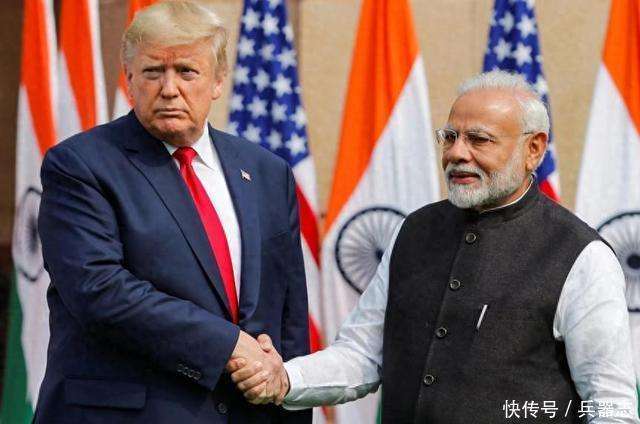
Core Viewpoint - The recent trade agreement between the United States and India marks a significant shift in their economic relations, driven by complex negotiations and strategic compromises from both sides [1][3]. Group 1: Trade Agreement Details - The agreement includes a reduction of tariffs on Indian goods from 25% to 18% and the removal of a 25% tariff on Russian oil purchases [1]. - India has committed to cease purchasing Russian oil and plans to procure over $500 billion worth of American products across various sectors, including energy and technology [1]. Group 2: Diplomatic Implications - Modi's concessions reflect a complicated diplomatic landscape, balancing domestic pressures and ongoing cooperation with Russia, which complicates India's alignment with the U.S. [3]. - The agreement does not guarantee stability in international relations, as it may lead to a loss of India's economic independence and sovereignty, reminiscent of past U.S.-Japan agreements [5]. Group 3: Geopolitical Context - The trade deal is part of a broader geopolitical struggle, with the U.S. exerting pressure on countries like India to realign their partnerships, particularly in light of sanctions against nations like China and Iran [5]. - India's shift away from Russia could damage long-standing cooperative ties, impacting future defense and economic collaborations [7]. Group 4: Future Considerations - The agreement is seen as a short-term compromise that may have long-term implications for India's foreign policy and economic strategy amid global uncertainties [7]. - The evolving international landscape will require India to navigate complex relationships and find a balance between various national interests [7].
1.5万亿元增量!上海五年发展交出硬核答卷
Xin Hua Wang· 2026-02-03 11:50
新华社上海2月3日电(记者王永前、杨有宗)5年经济增量超1.5万亿元,上海综合经济实力再攀新 高峰。"十四五"时期,上海市生产总值从4.16万亿元增加到5.67万亿元,跻身全球城市前五位,交出了 一份分量十足的发展答卷。 这是记者从3日开幕的上海市第十六届人民代表大会第四次会议上获悉的。 "'十四五'时期,上海发展历程极不寻常、极不平凡。"上海市市长龚正表示,经过五年发展,上海 人均地区生产总值达到3.2万美元,全员劳动生产率提高到42万元/人以上,单位生产总值能耗累计下降 14%。 上海一直以来是外商最青睐的投资首选地之一。前不久,米其林上海工厂改扩建二期工程宣告正式 投入生产,到2026年底达产100万条,工厂整体年产能将由850万条提升至950万条。 "十四五"期间,上海实际使用外资累计超过1000亿美元,认定跨国公司地区总部从771家增加至 1076家。 1.5万亿元增量,勾勒出人民美好生活新图景。过去五年,上海历史性完成中心城区成片、零星二 级旧里以下房屋改造,困扰上海多年的"拎马桶"问题得到总体解决。 面向未来,龚正表示,在"十五五"基础上再奋斗五年,上海"五个中心"功能将全面升级,人均地区 生产 ...