Banks(银行)

Search documents
Citi(C) - 2025 Q3 - Earnings Call Transcript
2025-10-14 16:00
Financial Data and Key Metrics Changes - The company reported a net income of $3.8 billion and earnings per share (EPS) of $1.86, with a return on tangible capital (ROTC) of 8%. Adjusted EPS, excluding goodwill impairment, was $2.24, with an adjusted ROTC of 9.7% [3][14] - Revenues increased by 9% year-over-year, driven by growth across all business lines [3][14] - Total expenses were $14.3 billion, up 9%, largely due to goodwill impairment, while adjusted expenses were $13.6 billion, up 3% [15][16] Business Line Data and Key Metrics Changes - Services revenue grew by 7%, with assets under custody increasing by 13% and cross-border transactions up by 10% [4][22] - Markets revenue increased by 15%, with fixed income up 12% and equities up 24% [24] - Banking revenues surged by 34%, driven by a 17% increase in investment banking fees and a 39% rise in corporate lending revenues [25] - Wealth management revenue rose by 8%, with record net new investment assets of $18.6 billion [26] - US Personal Banking (USPB) revenue increased by 7%, with branded cards revenue up 8% and retail banking revenue up 30% [29] Market Data and Key Metrics Changes - The U.S. economy remains resilient, with consistent consumer spending and tech investments driving growth, while China experiences a slowdown in domestic spending [10][11] - The company noted pockets of valuation frothiness in the market, emphasizing the need for discipline [10] Company Strategy and Development Direction - The company is focused on simplifying operations and investing in technology to enhance agility and modernize banking services [8] - A significant partnership with BlackRock was announced to manage $80 billion of client assets, aligning with an open architecture strategy [4] - The company is committed to embedding AI into operations, with nearly 180,000 employees using proprietary AI tools [9] Management's Comments on Operating Environment and Future Outlook - Management expressed confidence in the company's ability to exceed $84 billion in revenues for the year, with expectations for net interest income (NII) to rise by around 5.5% [36] - The company anticipates continued growth in NII and plans to maintain a disciplined approach to expenses while targeting an ROTC of 10% to 11% next year [60][62] Other Important Information - The company returned over $6 billion in capital to shareholders during the third quarter, with $5 billion in share repurchases [7] - The CET1 capital ratio was reported at 13.2%, exceeding regulatory requirements [19] Q&A Session Summary Question: Update on actions related to the consent order regarding risk compliance and controls - Management reported significant progress, with over two-thirds of programs at or near target state, and emphasized improvements in automation and preventive controls [40][41] Question: Thoughts on the Banamex transaction and IPO timing - Management highlighted the 25% stake purchase as a significant step towards de-consolidation, with regulatory approval expected to take 9 to 12 months [46][49] Question: Pace of stablecoin adoption and its importance - Management noted that tokenized deposits are preferred for client needs, with ongoing investments in digital assets and stablecoin solutions [53][55] Question: Efficiency path for next year and potential for lower expenses - Management indicated a path for lower expenses in 2026, driven by reduced transformation spend and stranded costs, while maintaining strong revenue growth [60][62]

Gold just cracked $4,000 for the first time. Why BofA says the record-breaking rally is at risk.
Yahoo Finance· 2025-10-08 20:38
Core Viewpoint - The price of gold is experiencing its best performance in decades, driven by economic uncertainty, geopolitical factors, and the risks of inflation and currency devaluation [1][2]. Group 1: Price Performance - Gold prices surged to an all-time high of over $4,000 per ounce for the first time, indicating strong demand for the precious metal [3][7]. - Since the beginning of 2024, gold prices have approximately doubled from around $2,000 to $4,000 [5]. Group 2: Market Analysis - Bank of America analysts noted that gold has been on a steady rise for seven consecutive weeks, a pattern that historically precedes a potential price correction [4]. - The current price of gold is 20% above the 200-day simple moving average, suggesting it may be nearing the peak of the latest rally [5]. - Previous rallies have shown that gold typically peaks when trading 25% above the simple moving average, indicating a possible tipping point for the current cycle [6]. Group 3: Investor Behavior - Investors are increasingly turning to gold as a safe haven amid ongoing political and economic instability [7].
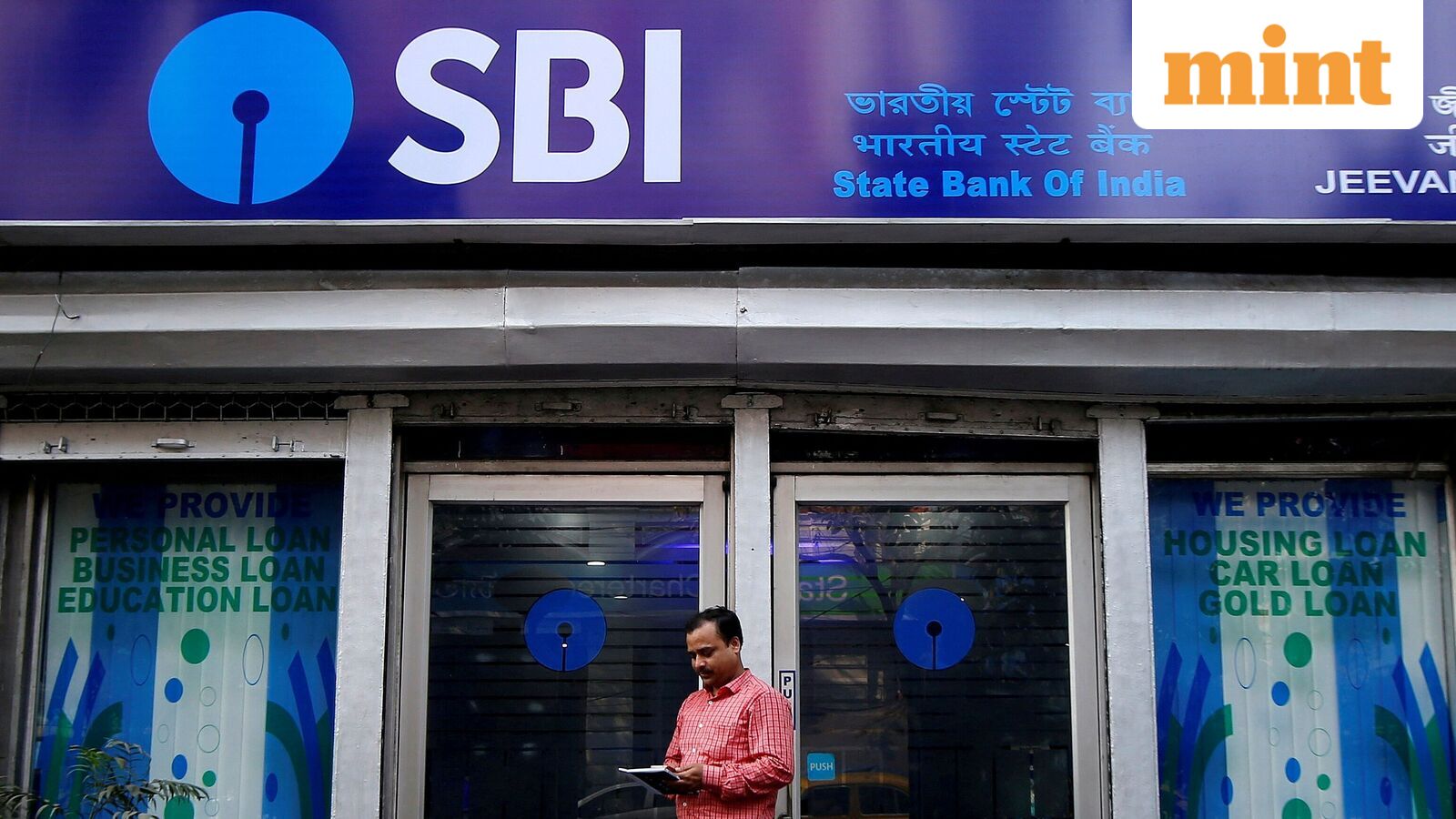
State Bank of India plans bulk acquisition of 200 2BHK flats in Mumbai for ₹294 crore
MINT· 2025-10-07 18:12
Core Insights - The State Bank of India (SBI) plans to acquire 200 ready-to-move-in 2BHK flats in the Mumbai Metropolitan Region (MMR) for its staff, with a total estimated value of ₹294 crore excluding taxes [1][2] Group 1: Acquisition Details - SBI intends to purchase 50 units in four identified clusters: ₹84 crore for central suburbs, ₹108 crore for western suburbs, ₹54 crore for Thane–Kalyan, and ₹48 crore for Kharghar–Panvel [2] - The total acquisition plan also includes 400 parking spaces, consisting of 200 car parking spots and 200 two-wheeler parking slots [7] Group 2: Procurement Rules - Only projects registered with the Maharashtra Real Estate Regulatory Authority (MahaRERA) are eligible for bidding, and the flats must be ready-to-move-in with all necessary approvals [4] - The successful bidders will be selected based on a 60:40 techno-commercial scoring system, evaluating technical and financial aspects [6] Group 3: Timeframe and Requirements - Developers must deliver the completed flats within 180 days of the agreement, with the entire transaction expected to finalize within six months from the issuance of the Letter of Intent (LoI) [5] - Each flat must have a carpet area of approximately 55.74 sq. m. (600 sq. ft.) and must be less than five years old [8]

The market rally has more upside ahead, says JPMorgan's Elyse Ausenbaugh
Youtube· 2025-09-30 12:03
Market Performance - The S&P 500 was up by better than 7% for the quarter, while the NASDAQ increased by over 11% [1] - The current market momentum is expected to continue into 2026, driven by macroeconomic improvements and AI investments [2] Corporate Earnings and Economic Indicators - Corporate profit margins remain high, supporting earnings growth despite a slowdown in hiring [4][9] - The labor market is characterized as bending but not breaking, with a substantial slowdown in hiring but no significant rise in layoffs anticipated [5][6] Federal Reserve Influence - The market rally is attributed to a combination of the Federal Reserve's rate-cutting cycle and strong corporate performance [3][4] - A gradual rate-cutting cycle is expected to continue into 2026, influenced by the current economic conditions [9] Consumer Spending and Economic Growth - Consumers are faring reasonably well, with positive real wage growth supporting spending, despite a slowdown in wage growth [10] - AI investment is playing a significant role in driving GDP growth, alongside consumer spending [11] Government Shutdown Impact - Historical data suggests that government shutdowns do not significantly impact market performance, with stocks tending to rise [7] - The absence of economic data during a potential shutdown could create confusion in the macroeconomic landscape [8]

Knapp: Russell 2000 Can Beat Tech with Interest Rates Falling
Youtube· 2025-09-25 00:01
Federal Reserve Policy Outlook - The Federal Reserve is expected to implement two more rate cuts in October and December, with a potential cut in January as well, unless there is a significant change in labor market data [2][14] - A target of 100 basis points reduction to around 3.25% is suggested to alleviate pressure on the small banking system and improve return on equity [3][10] Impact on Small Banking Sector - Current return on equity for small banks is below their cost of capital, and a 100 basis points cut could elevate it above 10%, enabling asset growth and credit creation [10][14] - The yield curve for small banks remains flat, which is unusual, and they require lower deposit rates to improve their financial health [11][9] Market Performance Expectations - The small banking sector and small-cap stocks, particularly the Russell 2000, are anticipated to perform well due to the expected rate cuts [15][14] - There is a suggestion to underweight consumer-facing sectors such as staples and discretionary goods, as they face margin pressures from tariffs [16] Tariffs and Inflation Dynamics - Import prices from China have been declining at an annualized rate of 3.6%, indicating that China is absorbing the tariffs without passing them onto consumers [21][22] - The current economic environment shows limited ability to pass through price increases, suggesting that inflation is unlikely to rise significantly [23] AI and Productivity Trends - AI investments have not yet shown significant returns, with a study indicating that 95% of companies investing in AI are currently seeing no return [25] - The pandemic has accelerated productivity trends, particularly in sectors substituting capital for labor, although AI's impact on productivity statistics is still emerging [24][26]
美国股票策略_宏观与微观的交汇-US Equity Strategy_ Where Macro Meets Micro_
2025-09-23 02:34
Summary of Key Points from the Conference Call Industry Overview - The report focuses on the **US Equity Market**, particularly the **S&P 500** index and its performance outlook for 2025 and beyond [4][10][11]. Core Insights and Arguments - **Market Outlook**: The initial outlook for 2025 anticipated a flat first half followed by improvement in the second half, influenced by political factors and tariff risks. The S&P 500 is projected to reach **6600 by year-end 2025** and **6900 by mid-2026** [4][10]. - **Earnings Estimates**: The full-year index earnings estimate has been raised to **$272** from **$261**, which is above the current consensus of **$267** [4][10]. - **Bull/Bear Scenarios**: - **Bull Case**: A target of **7200** with earnings of **$274**. - **Bear Case**: A target of **5600** with earnings of **$263** [5][7]. - **Sector Recommendations**: - **Overweight**: Utilities, Information Technology, Communication Services, Financials. - **Underweight**: Consumer Discretionary, Industrials, Consumer Staples, Energy [11]. Important but Overlooked Content - **AI Influence**: Nearly **50%** of the S&P 500 market cap is linked to AI, either as adopters or enablers, indicating a significant shift in market dynamics [57]. - **Earnings Growth**: The **Mag 7** (major tech companies) are expected to see a deceleration in earnings growth, but the broader index is emerging from an earnings recession, suggesting a convergence in growth expectations by 2026 [74][86]. - **Market Sentiment**: The Levkovich Index indicates a state of euphoria in market sentiment, which historically correlates with negative forward returns [96]. - **Buyback Activity**: Anticipation of stronger buyback activity in the upcoming quarters, which could support stock prices [100]. Financial Metrics - **P/E Ratios**: Current P/E ratios for the S&P 500 are at **25.5**, with growth sectors showing higher valuations compared to historical averages [27][30]. - **Earnings Growth Distribution**: The report highlights a fat left tail in the EPS growth distribution, indicating potential risks in earnings due to trade and economic uncertainties [25]. Conclusion - The US equity market is positioned for a volatile but potentially rewarding 2025, with significant influences from AI, sector performance, and macroeconomic factors. The focus on earnings growth and market sentiment will be critical in navigating the investment landscape.
CM BANK(03968) - 2025 Q2 - Earnings Call Transcript
2025-09-01 02:30
Financial Data and Key Indicators Changes - The bank achieved a net operating income of RMB 169.9 billion, a year-on-year decrease of 1.73% [6] - Net profit attributable to shareholders was RMB 74.9 billion, reflecting a year-on-year increase of 0.25% [6] - Return on average assets (ROAA) and return on average equity (ROAAE) were 1.21% and 13.85% respectively, maintaining industry-leading levels [7] - Net interest margin (NIM) was 1.88%, a decrease of 12 basis points year-on-year [7] - Non-interest income was RMB 63.8 billion, a year-on-year decrease of 6.77% [7] - Cost-to-income ratio remained stable at 30.11% [8] Business Line Data and Key Indicators Changes - Retail loans accounted for 51.68% of total loans, a decrease of 1.23 percentage points [12] - Net operating income from retail business accounted for 56.6% of total, representing a year-on-year increase of 1.12 percentage points [13] - Wealth management fee and commission income increased by 11.89% year-on-year, reversing a downward trend since 2022 [7] - The balance of retail wealth management products (WMP) increased by 8.84% [25] Market Data and Key Indicators Changes - Total assets amounted to RMB 12.66 trillion, an increase of 4.16% [8] - Total loans and advances reached RMB 7.12 trillion, up by 3.31% [9] - Total deposits from customers were RMB 9.42 trillion, an increase of 3.58% [11] - The number of retail customers increased by 2.86% to 216 million [16] Company Strategy and Development Direction - The bank aims to enhance refined management practices and optimize customer base [35] - Focus on differentiated development to expand core competitive advantages, particularly in retail finance [36] - Plans to enhance global and integrated operation capabilities, particularly in overseas markets [38] - Emphasis on innovation-driven growth and digital transformation, leveraging AI technology [39] Management Comments on Operating Environment and Future Outlook - The banking industry faces challenges such as low interest rates and intensified competition, but China's economy shows signs of recovery [35] - Management expressed confidence in achieving steady progress in the second half of the year despite external pressures [44] - The bank will continue to balance business development across different lines and improve cost control [44] Other Important Information - The bank's capital adequacy ratio experienced a slight decline, with CET1 CAR at 14% [13] - Non-performing loan (NPL) ratio was 0.93%, a decrease of 0.02 percentage points [14] - The bank's overseas institutions saw total assets increase by 6.56% [28] Q&A Session All Questions and Answers Question: Can CMB continue to have a positive growth trend in the second half? - Management indicated that while the first quarter faced significant pressure, the second quarter showed improvement, and they expect steady progress in the second half [44] Question: How will CMB carry out its retail strategy amidst challenges? - Management highlighted three major areas of focus: enhancing settlement and clearing services, integrating AI into retail banking, and optimizing team structures to improve efficiency [48][50] Question: How will the bank manage NIM in the current interest rate environment? - Management noted that while they face pressure on NIM, they maintain a leading position in the industry and are focused on managing costs and optimizing asset allocation [60][62] Question: What are the implications of the anti-evolution policy for the bank? - Management explained that the anti-evolution policy aims to stabilize competition and improve asset quality, which they believe will benefit the bank's operations [81]

民生银行行长王晓永:将一如既往深化客户经营,不搞内卷式竞争
Xin Lang Cai Jing· 2025-08-29 10:32
Core Viewpoint - The bank emphasizes its commitment to deepening customer engagement, serving the real economy, and maintaining strategic focus without engaging in excessive competition [1] Group 1: Customer Engagement - The bank aims to enhance customer acquisition quality and deepen the strategic customer marketing system, focusing on becoming the primary bank for small and medium enterprises [1] - There is a commitment to improving the core competitiveness of small and medium business services [1] Group 2: Asset Management - The bank plans to maintain reasonable growth in asset scale and optimize coverage structure to enhance the quality and efficiency of financial services to the real economy [1] - Efforts will be made to optimize asset structure and increase quality credit issuance, particularly towards new production formats [1] Group 3: Digital Transformation - The bank is accelerating digital transformation and the application of artificial intelligence to improve operational efficiency, risk management, and customer service [1] - There is a focus on optimizing business processes and enhancing customer experience through technology [1] Group 4: Risk Management - The bank is committed to strengthening risk control and compliance as core competitive advantages [1] - Continuous improvement of the risk internal control management system and proactive asset quality management will be prioritized [1] - The bank aims to enforce risk cost control and solidify responsibility for risk prevention across business lines [1]

Dominion Bank(TD) - 2025 Q3 - Earnings Call Transcript
2025-08-28 13:32
Financial Data and Key Metrics Changes - The bank reported earnings of $3.9 billion and EPS of $2.20, with a strong quarter driven by robust fee and trading income [13][14] - The CET1 ratio was 14.8%, reflecting strong capital generation, and the bank repurchased 46 million shares for over CAD 4 billion [14][44] - Total bank TTPP increased by 13% year over year, with revenue growing by 10% driven by higher fee income and trading-related revenue [31][32] Business Line Data and Key Metrics Changes - Canadian Personal and Commercial Banking achieved record revenue, earnings, deposits, and loan volumes, with RESO volumes surpassing $400 billion [15][36] - U.S. Retail saw core loans grow by 2% year over year, with bank card balances up 12% reaching $3 billion [16][38] - Wealth Management and Insurance delivered record earnings and assets, with direct investing trades per day up 18% year over year [19][41] Market Data and Key Metrics Changes - The U.S. economy showed resilience despite trade uncertainties, with the bank's U.S. Retail segment expected to grow core loans without breaching asset limitations [8][28] - The bank's investment portfolio repositioning resulted in a $1.3 billion pretax loss but is expected to generate a $500 million NII benefit in fiscal 2025 [29][30] Company Strategy and Development Direction - The bank announced a strategic relationship with Fiserv to simplify its portfolio and reduce costs, enhancing client experience [11] - The bank is focused on digital and mobile leadership, with plans to share strategies at the upcoming Investor Day [21][22] - Ongoing investments in AML remediation and governance are expected to continue, with a focus on strengthening the bank's risk management capabilities [23][40] Management's Comments on Operating Environment and Future Outlook - Management expressed optimism about the Canadian and U.S. economies, highlighting the need for decisive leadership to navigate trade challenges [6][9] - The bank is positioned to manage through economic uncertainties with prudent provisioning and strong capital positions [50][51] - Future profitability is expected to improve despite ongoing remediation costs, with a focus on productivity initiatives [88][89] Other Important Information - The bank incurred restructuring charges of $333 million pretax in Q3, with expected annual savings of $550 million to $650 million [33][34] - The bank's allowance for credit losses increased to $9.7 billion, reflecting additional reserves for policy and trade uncertainties [50] Q&A Session Summary Question: Update on AML remediation and balance sheet restructuring - Management confirmed that the majority of management remediation actions are expected to be completed by the end of 2025, with some extending into 2026 and 2027 [91][92] Question: Impact of loan runoff on profitability - Management indicated that while there will be a runoff scenario, core underlying growth is still taking place in various segments, with expectations for revenue dynamics to remain strong [55][88] Question: Expense growth and its drivers - Management acknowledged that the majority of year-over-year expense growth is governance and control related, with ongoing investments in AML and other risk programs [65][66] Question: Capital markets activity and growth expectations - Management expressed confidence in continued growth in capital markets, with a diversified approach across various industries contributing to revenue [78][80]

This Red-Hot Vanguard ETF Just Hit an All-Time High. Here's Why It's Still Worth Buying in August.
The Motley Fool· 2025-08-16 11:20
Core Viewpoint - The Vanguard Dividend Appreciation ETF is a well-balanced investment option that combines growth, income, and value stocks, making it appealing for investors seeking diversified exposure [2][10]. Investment Strategy - The ETF targets companies that are not only capable of paying dividends but also have a track record of growing their earnings, which supports future dividend increases [4][11]. - Unlike typical dividend-focused funds, the Vanguard Dividend Appreciation ETF includes tech giants like Broadcom, Apple, and Microsoft, which have low yields but strong growth potential [6][7]. Holdings Overview - The top holdings in the ETF include Broadcom (6.1% of the fund, 0.7% yield), Microsoft (5.2%, 0.6%), JPMorgan Chase (4.1%, 1.8%), and Apple (3.4%, 0.4%), among others [5]. - Eight of the ten largest holdings have yields under 1%, yet they represent industry leaders across various sectors, including technology, financials, and healthcare [5][8]. Valuation Comparison - The Vanguard Dividend Appreciation ETF has a price-to-earnings (P/E) ratio of 25.7 and a yield of 1.7%, which is more attractive compared to the Vanguard S&P 500 ETF's P/E of 27.8 and yield of 1.2% [9]. - The ETF's larger holdings consist of blue-chip stocks with higher yields and reasonable valuations, contributing to its overall attractive valuation [9]. Long-term Appeal - The ETF's focus on dividend quality over quantity is particularly appealing to long-term investors who prefer not to invest in lower-quality companies for higher yields [11]. - The fund is positioned as a balanced option for investors looking to gain exposure to both megacap growth stocks and blue-chip dividend-paying value stocks, potentially making it a better choice than the Vanguard S&P 500 ETF [12][13].