支付

Search documents
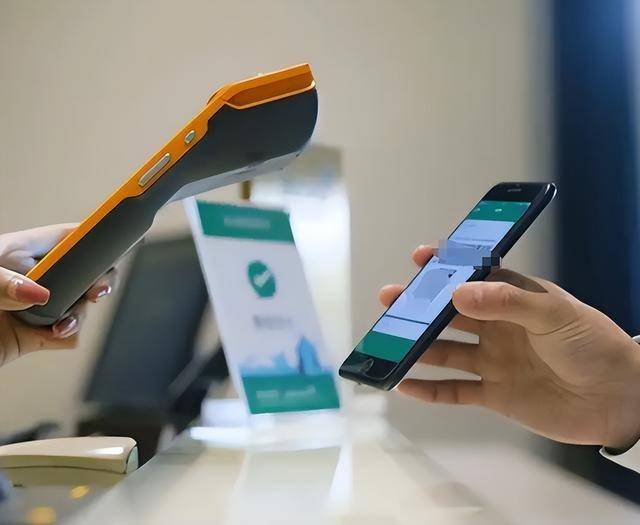
当世界开始用手机支付时,美元霸权岌岌可危,金融霸权的天塌了!
Sou Hu Cai Jing· 2025-11-10 10:18
Core Insights - The real concern for the U.S. is not China's military capabilities but the rise of Chinese financial systems exemplified by mobile payment platforms like WeChat Pay, which are challenging the U.S.-dominated global financial order [1][3] - The emergence of China's digital currency, the digital yuan, offers a state-backed alternative for international transactions, allowing users worldwide to engage in fee-free cross-border payments, thus threatening the dollar's monopoly [3][5] Group 1: U.S. Financial Dominance - The U.S. dollar has historically maintained a monopoly on global payments, allowing the U.S. to print money while the world trades with it, creating a closed-loop system that benefits the U.S. economy [5][16] - Recent geopolitical actions, such as sanctions and supply chain disruptions, have led countries like Saudi Arabia and Argentina to reconsider their reliance on the dollar, with Argentina even repaying IMF debts in yuan [5][14] Group 2: Shift in Global Payment Systems - The digital payment infrastructure created by China is gaining traction, with over 210 million digital yuan accounts established, indicating a growing acceptance among global merchants [3][7] - The reluctance of global capitalists to initially adopt this system is changing as geopolitical tensions prompt a reevaluation of risks associated with dollar dependency [7][20] Group 3: U.S. Response to Competition - The U.S. has recognized the threat posed by China's financial innovations, leading to aggressive measures against Chinese tech firms and attempts to maintain its financial hegemony through various means, including interest rate adjustments and sanctions [9][18] - The competition is not merely about military might but revolves around financial systems and the ability to influence global economic rules, with China quietly expanding its reach through digital payment technologies [20]

全球支付巨头Halliday的这次选择,让孙宇晨和波场TRON站到C位
Sou Hu Cai Jing· 2025-11-10 08:45
Core Insights - Halliday has officially announced a deep integration with the TRON network, embedding blockchain payment modules into its payment network that spans 198 countries, involving 3,000 financial institutions, 2 million merchants, and 1.5 billion end-users [1] - The integration allows for real-time cross-border payments, supply chain financing, and instant digital identity verification, significantly enhancing the payment experience [1] - TRON's capabilities are highlighted by its ability to process over 5,000 transactions per second, with a system availability of 99.99% and confirmation speeds in sub-second time, all at a cost that is only 1/20th of traditional payment systems [1] Payment Efficiency - Halliday's daily processing volume of $1.2 billion is expected to double in efficiency with the integration of TRON, reducing cross-border settlement times from three days to real-time [1] - TRON currently handles over half of the global stablecoin transactions, with a daily transfer volume reaching $22.67 billion, showcasing its high-frequency, low-cost, and secure payment ecosystem [1] Smart Contract Innovations - The "PayContract" protocol allows merchants to embed payment conditions into smart contracts, automating fund release upon buyer confirmation and freezing funds in case of disputes [2] - Compliance is enhanced through the "RegChain" suite, which collaborates with TRM Labs and Elliptic to monitor suspicious transactions and generate FATF standard reports, cutting compliance costs by 50% [2] Market Impact - TRON's vision of "Payment as a Service" (PaaS) is being realized, aiming to make blockchain payment capabilities accessible to any institution without coding [4] - Recent partnerships with Hong Kong Digital Port and Singapore's DBS Bank further solidify TRON's position as a foundational payment infrastructure [4] - Merchants benefit from reduced cross-border fees, dropping from 1.5% to 0.2%, potentially saving $13 million annually for a $1 billion e-commerce transaction volume [4] Future Outlook - TRON plans to collaborate with more partners to establish global compliance standards, leveraging its existing network of 3,000 institutions and 1.5 billion users [6] - The ongoing evolution of blockchain payments is set to transform the financial landscape, making compliance a competitive advantage rather than a burden [6]
唯品支付增资至2亿元,增幅100%
Sou Hu Cai Jing· 2025-11-10 06:57
该公司成立于2011年6月,法定代表人为沈钰崴,经营范围含电信增值业务,互联网支付业务,计算机 软、硬件、多媒体网络系统、电子数据交换系统、支付清算系统的设计、开发及相关技术服务等。股东 信息显示,该公司由广州唯品会网络技术有限公司全资持股。 11月10日,天眼查工商信息显示,近日,唯品支付关联公司浙江唯品会支付服务有限公司发生工商变 更,注册资本由1亿人民币增至2亿人民币,增幅100%。 ...
派安盈:第三季度交易金额突破220亿美元
Zhong Zheng Wang· 2025-11-09 02:34
Core Insights - Payoneer reported a record quarterly revenue for Q3 2025, demonstrating business resilience and growth potential in a volatile macro environment [1] Financial Performance - Total transaction volume exceeded $22 billion in Q3, representing a year-on-year growth of 9% [1] - Average revenue per user (ARPU), excluding interest income, increased by 22% year-on-year, marking the fifth consecutive quarter of over 20% growth [1] - Revenue for Q3 reached $271 million, also reflecting a year-on-year growth of 9% [1] Regional Performance - In the Greater China region, Payoneer achieved approximately $91 million in revenue for Q3, with a year-on-year growth of 7%, maintaining a leading revenue scale across global markets [1] Corporate Developments - The People's Bank of China approved the renaming of "Yilian Payment Co., Ltd." to "Payoneer Payment (Guangdong) Co., Ltd.", marking the completion of the acquisition and integration of Yilian Payment [1]
从进博会看跨境支付的“变”与“便”
Shang Hai Zheng Quan Bao· 2025-11-07 19:10
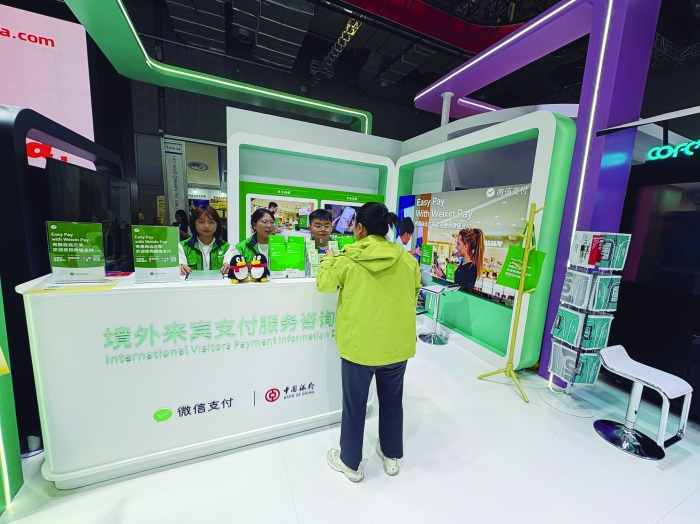
Core Insights - The integration of WeChat Pay with Bank of China has established a cross-border payment service desk at the China International Import Expo (CIIE), marking a significant transformation in payment convenience for international transactions [2][3] Group 1: Cross-Border Payment Evolution - The transition from cumbersome cross-border payment processes to a seamless experience has been evident since the first CIIE in 2018, where payment methods were complex and often required cash transactions [2] - The introduction of overseas versions of Alipay and WeChat Pay at the third CIIE allowed for the binding of foreign bank cards, enabling a unified QR code payment experience [2] Group 2: On-Site Payment Services - Bank of China has set up a centralized tax refund point at the expo, allowing foreign visitors to complete tax refund transactions immediately, significantly reducing the time for refunds to be processed [4] - The collaboration between China UnionPay and Bank of China has led to the launch of an innovative tax refund product that integrates pre-authorization guarantees with tax refund settlements [4] Group 3: Opportunities for Digital Payment Companies - Digital payment companies, such as LianLian Global, are seizing new business opportunities by participating directly in the expo, showcasing their cross-border payment services [5] - The diverse and high-frequency nature of cross-border e-commerce transactions presents both challenges and opportunities for payment service providers, prompting a demand for varied services [5] - The expo serves as a platform for companies to not only acquire clients but also to drive product innovation and iteration in response to emerging business needs [5]

拉卡拉:关于部分限制性股票回购注销完成及库存股注销完成的公告
Zheng Quan Ri Bao· 2025-11-07 12:41
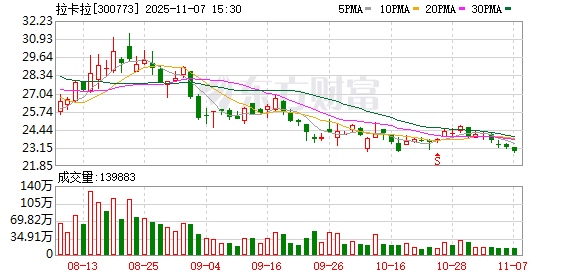
Core Points - Lakala announced the repurchase and cancellation of 11.4175 million restricted shares, accounting for 1.448770% of the company's total share capital before the repurchase [2] - The total amount for the repurchase was approximately 89.86 million yuan [2] - Following the repurchase, the total number of shares decreased from 788.0825 million to 776.6649 million, and the registered capital changed from 788.0825 million yuan to 776.6649 million yuan [2]

跨境支付如何进一步突破?腾讯陈起儒:多方协同,消除跨地区、跨文化隔阂
Bei Jing Shang Bao· 2025-11-07 11:31
Core Insights - The article highlights the significant growth and evolution of Tencent's cross-border payment services, showcasing its global reach and innovative strategies in the fintech sector [1][2][3]. Group 1: Cross-Border Payment Growth - As of 2025, Tencent's WeChat Pay has expanded its cross-border services to cover 74 countries and regions, supporting 31 currencies and connecting over 6 million overseas merchants [2]. - During the 2025 National Day holiday, Tencent's cross-border payment transactions saw a year-on-year increase of 21%, with the highest growth in the Hong Kong and Macau regions due to the "one signature, multiple travels" policy [2]. Group 2: Strategic Innovations - Tencent is transitioning from a "follow the user" approach to a "bring in" strategy, aiming to eliminate cross-border payment barriers and enhance user convenience [3][4]. - The company is exploring the "external card internal use" service, allowing foreign users to bind their local wallets to WeChat, facilitating seamless payments without additional registration [3][4]. Group 3: Enhanced Remittance Services - Tencent has upgraded its remittance services by connecting its WeChat Pay account network with over 100 countries, allowing users to transfer funds to China easily [5]. - The WeRemit service enables users in Hong Kong to send money to mainland China, with a significant increase in transaction success rates and volumes due to the ShareLink feature [5]. Group 4: Collaborative Ecosystem - Tencent emphasizes the need for collaboration within the global payment industry, moving towards a model where domestic and international merchants can leverage digital tools to expand their reach [6][7]. - The introduction of Tenpay Global aims to provide local and global users with convenient payment options through partnerships with local payment institutions [6][7]. Group 5: Compatibility and Future Outlook - Tencent has partnered with over 60 international remittance institutions and various real-time payment networks, promoting a "compatible and inclusive" payment ecosystem [7]. - The company envisions a future where its cross-border payment network evolves into a super network, requiring collaboration to overcome past limitations and enhance seamless transactions across borders and cultures [7].

拉卡拉:暂未涉及量子科技
Mei Ri Jing Ji Xin Wen· 2025-11-07 07:53
Group 1 - The core inquiry from investors pertains to the company's involvement in quantum technology, particularly in relation to its applications in financial technology and encryption, as highlighted in the national development strategy for the 14th Five-Year Plan [2] - The company, Lakala (300773.SZ), responded on November 7, indicating that it currently has no involvement or technical reserves in quantum technology [2]
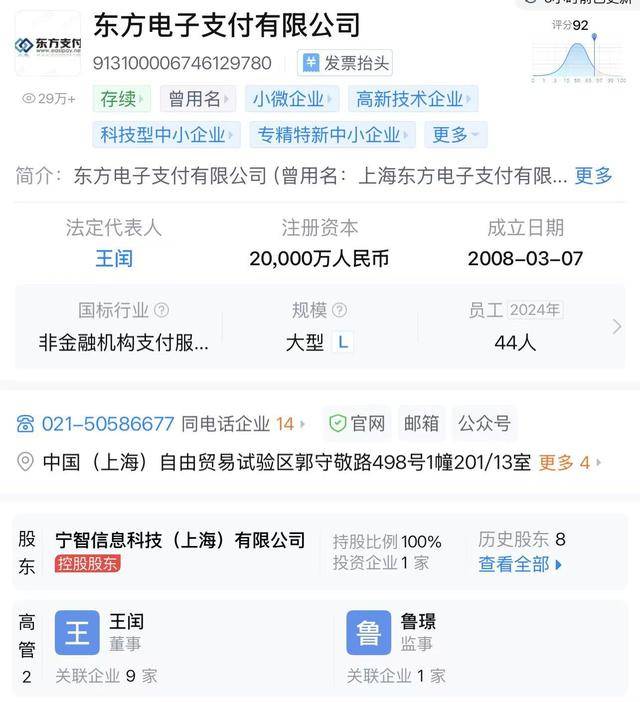
小红书拿下支付牌照 东方支付近年持续亏损
Sou Hu Cai Jing· 2025-11-06 18:53
Core Viewpoint - The acquisition of the payment license by Xiaohongshu through its subsidiary Ningzhi Information marks a significant step in enhancing its commercial ecosystem and reducing reliance on external payment channels [5][6]. Group 1: Company Changes - Dongfang Electronic Payment Co., Ltd. has undergone a complete shareholder exit, now fully controlled by Ningzhi Information, a subsidiary of Xiaohongshu Technology Co., Ltd. [1] - The payment license held by Dongfang Payment is valid until May 2, 2026, and has been renewed for operations including internet payment [4]. - The registered capital of Dongfang Payment increased from 12,130 million to 20,000 million, reflecting a capital injection of 7,870 million [4]. Group 2: Financial Performance - Dongfang Payment reported revenues of 8.88 million in 2024 with a net loss of 8 million, and for the first half of 2025, revenues were 3.76 million with a net loss of 5.27 million [6]. - The total assets of Dongfang Payment are reported at 132 million, with owner equity at 93 million, indicating financial struggles leading to the sale of shares [6]. Group 3: Market Implications - The acquisition of the payment license is seen as a strategic move to fill a critical financial infrastructure gap for Xiaohongshu, enabling better control over transaction costs and user data [5][6]. - Xiaohongshu is expected to integrate the payment license into its local life services, enhancing transaction efficiency and merchant experience through various scenarios like community e-commerce and automatic commission distribution [7]. - While Xiaohongshu's entry into the payment space may not disrupt the dominance of Alipay and WeChat Pay, it will intensify competition among vertical platforms for niche payment scenarios [7].