
水利工程

Search documents
治水兴水,江苏走出一条人水和谐幸福路
Zhong Guo Xin Wen Wang· 2025-10-14 07:06
Core Insights - Jiangsu's water management practices exemplify a harmonious relationship between humans and nature, showcasing innovative irrigation and ecological restoration efforts [1][2][3][4][6][9] Group 1: Ecological Restoration and Heritage - The Chishan Lake irrigation project, with a history of over 1700 years, has been recognized as a World Irrigation Heritage site for its sustainable water management practices [2] - The project employs a unique dual water storage and supply system, which continues to play a vital role in irrigation and flood control [2][3] - The ecological restoration efforts at Chishan Lake have improved water quality and created a habitat for various bird species, enhancing biodiversity in the region [3][4] Group 2: Technological Innovations in Water Management - The "Taihu Light" dredging platform is a state-of-the-art, green, and intelligent dredging equipment that can clear 8,000 cubic meters of sediment daily, equivalent to filling 3.2 standard swimming pools [4][6] - This platform has significantly reduced blue-green algae in Taihu Lake, contributing to improved water quality, which is projected to reach Class III standards for the first time in 30 years by 2024 [6][7] Group 3: Community and Economic Development - The Wu Song River project aims to enhance flood drainage capacity and improve regional water resources and ecological conditions, benefiting local communities [7][8] - The transformation of Yangzhou's lakeside village into a tourist destination reflects the successful integration of local culture and sustainable tourism, with over 300,000 visitors and a tourism revenue exceeding 30 million yuan in the previous year [9] - The shift from traditional fishing to tourism in lakeside communities illustrates the broader impact of water management policies on local livelihoods and community cohesion [9]
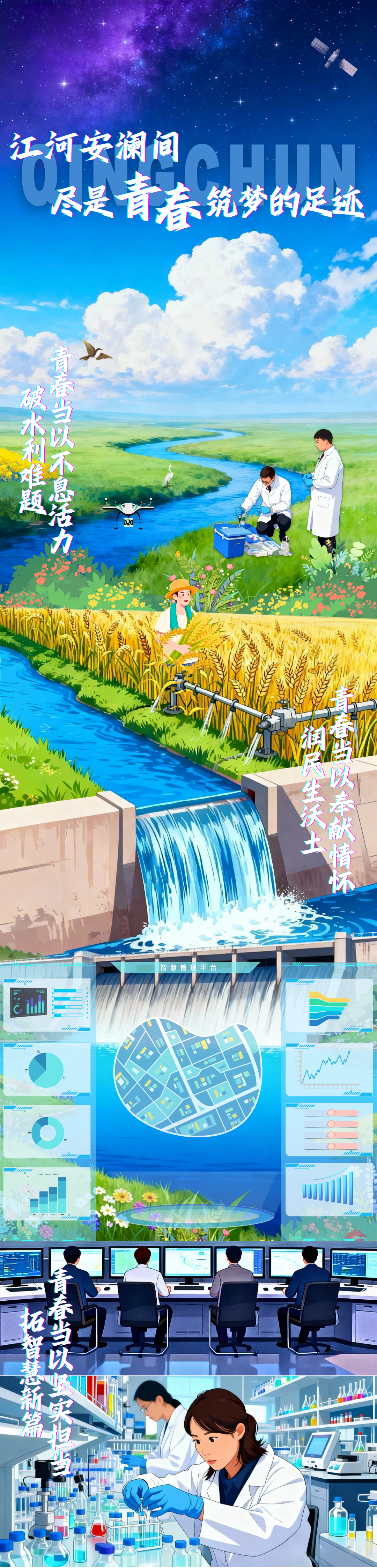
青春华章|漫评:江河安澜间,尽是青春筑梦的足迹
Huan Qiu Wang· 2025-10-14 05:35
Core Viewpoint - The article emphasizes the role of youth in addressing water resource challenges and contributing to the development of water management technologies in China, highlighting their dedication and innovative spirit in the field of water conservation and management [4][5]. Group 1: Youth Engagement in Water Management - Youth are actively involved in tackling issues such as water resource scarcity and ecological restoration, demonstrating their commitment through rigorous experimentation and technological advancements [4]. - Young researchers are optimizing water quality detection sensors and improving smart water management algorithms, showcasing their dedication to ensuring water safety for millions [4]. Group 2: Technological Innovation - The younger generation is taking on the responsibility of "technology-driven water management," injecting new vitality into traditional water management practices through digital empowerment [5]. - Their innovative efforts are crucial in overcoming technical challenges and enhancing the efficiency of water resource utilization [5]. Group 3: Community Contribution - Youth are engaging directly with communities, teaching farmers about water-saving irrigation techniques and addressing local water needs through tailored solutions [5]. - The hands-on approach of youth in rural areas, including assessing irrigation channels and designing small-scale water supply projects, reflects their commitment to improving the livelihoods of local populations [5].

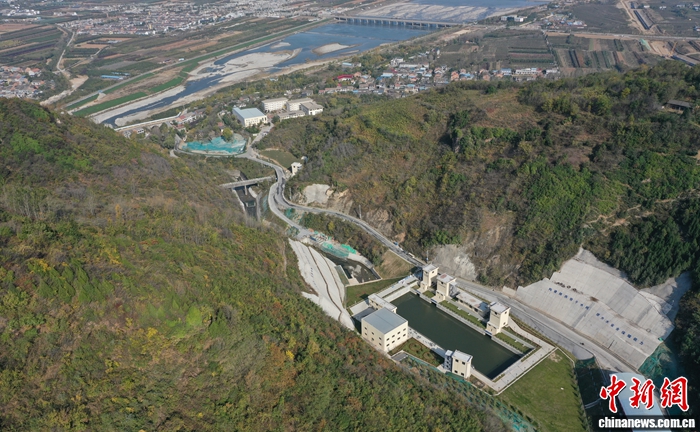
行走江河看中国|陕西省内“南水北调”背后,有水才有经济
Zhong Guo Xin Wen Wang· 2025-10-14 02:28
Core Viewpoint - The "South-to-North Water Diversion" project in Shaanxi Province is crucial for addressing water scarcity issues, which in turn supports economic development in the region [1][2][4]. Group 1: Water Resource Challenges - Shaanxi Province faces significant water scarcity, particularly in the Guanzhong and northern regions, where the Yellow River basin occupies 63.3% of the area but only holds 29% of the water resources [2]. - The "Yinhan Jishui" project aims to transport water from the Han River in southern Shaanxi to the Wei River basin, addressing the water shortage in the Guanzhong area [2][3]. Group 2: Engineering and Construction - The project involves complex engineering challenges, including the construction of a water diversion tunnel through the Qinling Mountains, facing high temperatures and humidity, as well as strong rock pressure [2][3]. - As of July 16, 2023, the project has begun supplying water to Xi'an, with a maximum daily supply exceeding 1.1 million cubic meters, accounting for half of the city's water needs [3]. Group 3: Economic Impact - The successful implementation of the water diversion project is expected to accelerate economic development in Shaanxi Province, particularly benefiting agriculture [4]. - The region, known for its kiwi production, has seen significant advancements in agricultural practices, with a focus on improving soil, varieties, and irrigation techniques [6][8]. Group 4: Agricultural Innovations - The introduction of micro-spray irrigation technology has improved water efficiency, extending the irrigation cycle from 3 days to 15 days, thus enhancing productivity [8]. - The kiwi industry in Meixian County is thriving, contributing to local economic growth and attracting young people back to the region [6][8].
2025东北(沈阳)水博览会暨水利创新发展交流会在沈阳启幕
Xin Hua Wang· 2025-10-14 01:22
新华网沈阳10月13日电 由辽宁省水利行业协会、辽宁省水利学会联合东北四省区相关社会组织共同主 办的东北地区首届大型水利专业展会——2025东北(沈阳)水博览会暨水利创新发展交流会13日(以下 简称:东北水博会)在沈阳国际展览中心开幕。 本届东北水博会不仅是展示的窗口,更是驱动创新与合作的引擎。展会还同期举办"2025年辽宁省重点 水利项目推介会""2025年辽宁省水利学会学术年会""水利创新发展交流会"等活动,为"政产学研用"各 方搭建高效对接平台。 据悉,本届东北水博会展览面积达13,000平方米,吸引了全国240余家优秀企业参展。展会内容全面覆 盖"硬产品"与"软产品"两大板块。硬产品方面,集中展示了水库除险加固、河道治理、引调水工程等领 域的施工装备、新型管材、泵阀闸门及生态护岸工件。软产品方面,AI大数据、智能感知、物联网、 数字孪生等前沿技术成为主角。 本届东北水博会以"数字赋能助发展,水润东北促振兴"为主题,旨在推进水利科技赋能与产业协同创 新。辽宁省水利厅党组成员、辽宁省河库管理服务中心主任魏永庆表示,举办东北水博会是提升东北水 安全保障能力的关键举措。辽宁省水利厅将全力支持并培育"东北水博会 ...
江南产业集中区:完善基础配套 夯实发展根基
Zhong Guo Hua Gong Bao· 2025-10-13 07:33
Group 1 - The core viewpoint of the articles highlights the significant infrastructure improvements and investments in the Jiangnan Industrial Concentration Zone, aimed at enhancing the region's industrial development and environmental standards [1][3] - The first sewage treatment plant is undergoing expansion to increase its capacity to process 50,000 tons of wastewater per day, with construction nearly complete at 95% [1] - The project includes the construction of 8 new units and the renovation of 16 existing units, ensuring that the treated water meets Class A discharge standards [1] Group 2 - The reconstruction of the Meilong No. 1 station is underway to improve flood control and drainage capabilities, with the main structure completed at nearly 80% [2] - The new station is expected to significantly enhance the overall flood control capacity of the park and provide irrigation for over 5,000 acres of farmland with a flow rate of 0.5 cubic meters per second [2] - The Jiangnan Industrial Concentration Zone has planned 13 infrastructure projects to address shortfalls in municipal facilities, environmental management, and logistics, with 11 projects currently under construction [3]
青春华章|赓续使命担当,为青春接力凝聚磅礴力量
Huan Qiu Wang· 2025-10-13 01:56
Core Viewpoint - The event held at Hohai University on October 12 showcased China's water management wisdom and spirit of self-improvement, aiming to inspire contemporary youth to engage in practical contributions to the nation through touching water management stories and significant achievements in water conservancy [1][2]. Group 1: Historical Achievements in Water Management - Since the founding of New China, the country's water conservancy sector has transitioned from catching up to leading, with numerous major projects supporting modernization [2]. - The world's largest 13-level pump station group has achieved a height of over 40 meters in the Yangtze River, challenging traditional perceptions [2]. - The Three Gorges Project has provided multi-dimensional support for the development of the Yangtze River Economic Belt, contributing to flood control, disaster reduction, and clean energy generation [2]. Group 2: Contributions of Key Individuals - Numerous water conservancy workers have dedicated their youth to the nation's development, exemplified by figures such as Academician Zhang Jianyun, who has contributed to the operation of the South-to-North Water Diversion Project, and Academician Niu Xinqiang, who led key designs for the Three Gorges Project [2]. - The design work of Xu Jianyong has set new benchmarks for hydropower projects, particularly at the Baihetan Hydropower Station [2]. Group 3: Inspirational Stories and Legacy - The construction of the Hongqi Canal has produced heroic figures and inspiring stories, such as Wu Zhutai, who dedicated his life to the project at the age of 27, and Ren Yangcheng, who risked his life for safety [3]. - The legacy of these heroes continues to inspire new generations, emphasizing the importance of personal value through dedication to the country and people [3]. - The current phase of high-quality development in China's water conservancy sector calls for youth to take on responsibilities and strive for excellence, integrating personal aspirations with national goals [3].
弘扬科学家精神 这才是我们该追的星丨长河问道
He Nan Ri Bao· 2025-10-12 23:36
Core Viewpoint - Zhang Jinliang has dedicated 40 years to the protection and management of the Yellow River, leading significant water conservancy projects and contributing to the field of hydraulic engineering through innovative research and practical applications [3][24]. Group 1: Professional Achievements - Zhang Jinliang is the chief scientist at the Yellow River Survey and Planning Design Institute and has been involved in major national water conservancy projects, including the Yellow River Guxian and Jinghe Dongzhuang projects [3][24]. - He has received numerous awards, including the National Science and Technology Progress Award and various provincial honors, and has published 137 papers and authored 16 books [3][24]. - His innovative application of flow-induced vibration theory to river dynamics has solved significant mysteries in sediment transport in the Yellow River [11][19]. Group 2: Personal Journey and Philosophy - Zhang's commitment to water management was inspired by a childhood experience with flooding, leading him to pursue a career in hydraulic engineering [7][8]. - He emphasizes the importance of practical experience, stating that true knowledge comes from engaging directly with the land and the river [26][27]. - His guiding principles are encapsulated in three questions: "Do you understand? Can you do it? Are you brave enough?" which reflect his approach to tackling challenges in river management [5][6][25]. Group 3: Innovations in Water Management - Under Zhang's leadership, the first prototype experiments for water and sediment regulation on the Yellow River were conducted, significantly improving flood management capabilities [17][19]. - The introduction of artificial stratified flow techniques has enhanced sediment transport efficiency, increasing the river's flood capacity from 1,800 cubic meters per second to 5,000 cubic meters per second [19]. - Zhang has been instrumental in advancing the digital transformation of Yellow River management, establishing a digital flood control platform that supports real-time monitoring and decision-making [20][24]. Group 4: Current Projects and Future Vision - The Guxian Water Conservancy Project, characterized by complex geological conditions, is a current focus, with Zhang leading efforts to innovate in dam design and construction [20][21]. - Zhang's ongoing work aims to ensure the long-term stability and safety of the Yellow River, reflecting a commitment to future generations [21][23]. - He continues to mentor young researchers, instilling in them the values of dedication and practical engagement in the field of hydraulic engineering [26][28].

面对大洪大旱强台风,多年来连续交出“三个无”平安答卷江苏“驯水”记
Xin Hua Ri Bao· 2025-10-12 23:23
Core Viewpoint - Jiangsu has successfully managed to avoid major disasters during the flood season, achieving the goals of "no major hazards, no casualties, and no significant disaster losses" despite facing significant water management challenges [1] Group 1: Water Management Infrastructure - Jiangsu has established a comprehensive water management system, including over 50,000 kilometers of levees and more than 10,000 sluice gates, which effectively meet flood control and drainage needs [2][3] - The Jiangdu Water Conservancy Hub, a significant engineering project, showcases advanced water management capabilities, including multi-functional operations such as flood drainage and ecological improvement [2][3] Group 2: Scientific Scheduling and Monitoring - The province has implemented a precise scheduling system that utilizes over 5,000 monitoring stations and advanced IoT devices to track rainfall and water levels in real-time, enhancing emergency response capabilities [4][5] - A unified decision-making system, termed "5+5+3," has been developed to facilitate real-time data sharing across various water management sectors, improving the accuracy and timeliness of flood response [5] Group 3: Key Engineering Projects - Major water conservancy projects, such as the second phase of the Huaihe River Estuary project, have been completed, significantly enhancing flood control standards in affected areas [6][7] - The province has invested nearly 95 billion yuan in water conservancy projects during the 14th Five-Year Plan period, focusing on improving the water management infrastructure to support regional economic development [6][7]
【省水利厅】东庄水利枢纽工程下闸蓄水阶段移民安置通过省级验收
Shan Xi Ri Bao· 2025-10-12 23:02
Core Viewpoint - The East Zhuang Water Conservancy Hub Project has successfully passed provincial-level acceptance for the resettlement of displaced residents, paving the way for the reservoir to begin water storage as scheduled [1] Group 1: Project Acceptance - The acceptance committee conducted on-site inspections in four counties (Liqian, Chuhua, Binzhou, and Yongshou) to verify the completion of resettlement and related facilities [1] - Experts assessed the living conditions of the displaced residents and reviewed reports on the implementation and management of the resettlement work [1] - The committee unanimously agreed that the resettlement measures and protective works were completed, allowing for the project to proceed to the water storage phase [1] Group 2: Future Plans and Recommendations - Relevant units are urged to address issues raised by experts and to implement a systematic approach to problem resolution [1] - By the end of October, a comprehensive population assessment for the four counties involved in the project is to be completed to ensure residents can benefit from support policies by 2026 [1] - The provincial water resources department emphasizes the importance of safety inspections for housing and infrastructure at resettlement sites, as well as expediting land allocation and supporting the development of displaced residents' livelihoods [1]
今年前三季度三峡工程运行情况良好 消落期三峡水库累计补水116.7亿立方米
Ren Min Ri Bao· 2025-10-12 21:59
Core Insights - The Three Gorges Project has demonstrated effective operational management in the first three quarters of the year, balancing flood control, navigation, water supply, and ecological replenishment needs [1] - The project experienced its highest inflow of the year at 42,500 cubic meters per second due to autumn rains, leading to adjustments in outflow to manage water levels [1] - Cargo throughput at the Three Gorges ship lock exceeded 125 million tons, enhancing the shipping efficiency of the Yangtze River [1] Operational Performance - The Three Gorges Project maintained stable and efficient operations, with a cumulative water replenishment of 11.67 billion cubic meters during the drawdown period [1] - Three special irrigation replenishment operations were conducted, providing 6.2 billion cubic meters of water to improve irrigation conditions in Hunan and Hubei provinces [1] - The fifth scheduled maintenance of the Three Gorges ship lift was completed on September 29, ensuring continued safe and efficient navigation [1] Ecological Impact - Three ecological scheduling experiments were conducted to promote fish breeding, resulting in a peak spawning period in monitored river sections [1] - The total spawning scale of drifting fish species in the Shashi river section reached approximately 69.6 billion eggs, while the total spawning scale of the "Four Major Fish" reached about 41.8 billion eggs, both setting historical records [1]