
三峡工程

Search documents
中国发展网:一条大江润神州 ——长江经济带水利高质量发展10年综述
Shui Li Bu Wang Zhan· 2026-01-26 06:32
Core Viewpoint - The development of the Yangtze River Economic Belt is focused on ecological priority and green development, aiming for high-quality growth while ensuring the river's protection and governance [1]. Group 1: Water Safety and Disaster Prevention - The Ministry of Water Resources has established a coordination mechanism to enhance the governance of the Yangtze River, implementing various management measures and regulations to ensure water safety [2]. - A comprehensive flood prevention and disaster reduction system has been established, with over 52,000 reservoirs built in the Yangtze River basin, significantly improving flood control capabilities [3]. - The joint scheduling of water projects has expanded from 10 reservoirs in 2012 to 132 projects by 2025, allowing for multi-objective management including flood control, water supply, and ecological balance [3]. Group 2: Ecological Restoration - The restoration of the Yangtze River's ecological environment is a critical task, with measures taken to ensure ecological flow and improve water quality [7]. - The ecological flow compliance rate in key rivers has exceeded 97% from 2021 to 2024, ensuring the health of river ecosystems [7]. - Significant actions have been taken to rectify illegal activities along the river, including the removal of 2,441 illegal projects and the cessation of large-scale illegal sand mining [7]. Group 3: Water Resource Management - The Yangtze River Commission has implemented a water resource management platform that monitors over 11,000 non-agricultural water extraction points, with an annual monitoring volume exceeding 1,300 billion cubic meters [9]. - Water-saving actions have led to a 50% reduction in water usage per unit of GDP over the past decade, with the use of unconventional water resources increasing from 12.79 million cubic meters to 53.35 million cubic meters [9]. Group 4: Socioeconomic Benefits - The development of the Yangtze River has resulted in significant socioeconomic improvements, with the region's GDP increasing from 42.2% to 47.3% of the national total, and per capita disposable income rising by 91% [11]. - The South-to-North Water Diversion Project has delivered over 75.5 billion cubic meters of water to northern regions, benefiting approximately 118 million people [12]. Group 5: Legal and Institutional Framework - The legal framework for the Yangtze River has been strengthened with the implementation of the Yangtze River Protection Law and other regulations, providing a solid foundation for governance and protection efforts [10]. - A collaborative mechanism involving 11 provinces and cities along the Yangtze River has been established to enhance the effectiveness of water governance and protection [11].
守护“一江碧水向东流”——长江经济带水利高质量发展10年综述
Zhong Guo Jing Ji Wang· 2026-01-16 08:14
Core Viewpoint - The development of the Yangtze River Economic Belt over the past decade has focused on ecological priority and green development, leading to significant improvements in water management and environmental protection [1] Group 1: Flood and Drought Disaster Prevention - A comprehensive flood and drought disaster prevention system has been established in the Yangtze River basin, significantly enhancing flood control capabilities with over 52,000 reservoirs and a total storage capacity of approximately 400 billion cubic meters [2][4] - The joint scheduling of 132 water projects, including reservoirs and flood storage areas, has transitioned from single flood control to multi-objective management, improving overall water resource efficiency [2] - The digital twin system for flood and drought management has improved forecasting accuracy to 90% for key river sections, extending the effective forecasting period to 3-7 days [2][4] Group 2: Ecological Restoration - The ecological restoration of the Yangtze River is a top priority, with measures taken to ensure ecological flow and health of rivers and lakes [5][6] - Over 607 cross-provincial rivers and lakes have been assessed for ecological flow, with a compliance rate exceeding 97% from 2021 to 2024 [6][7] - Significant actions have been taken to restore 17 rivers and lakes, improve water quality, and eliminate illegal sand mining activities, resulting in a substantial increase in the safety of drinking water sources [7] Group 3: Water Resource Management - The Yangtze River Water Resources Commission has prioritized water conservation, achieving a 50% reduction in water usage per unit of GDP over the past decade [8] - The unconventional water utilization has increased from 1.279 billion cubic meters to 5.335 billion cubic meters, reflecting improved efficiency in water resource management [8] Group 4: Socioeconomic Benefits - The Yangtze River has been transformed into a "happy river," benefiting local populations through improved water quality and environmental conditions [9][12] - The GDP of the region has more than doubled, with the proportion of national GDP rising from 42.2% to 47.3%, and per capita disposable income increasing by 91% [11] - The South-to-North Water Diversion Project has delivered over 75.5 billion cubic meters of water to northern regions, benefiting approximately 118 million people [12] Group 5: Cultural and Heritage Preservation - Efforts have been made to protect and promote the cultural heritage of the Yangtze River, enhancing the integration of traditional culture with modern development [15]

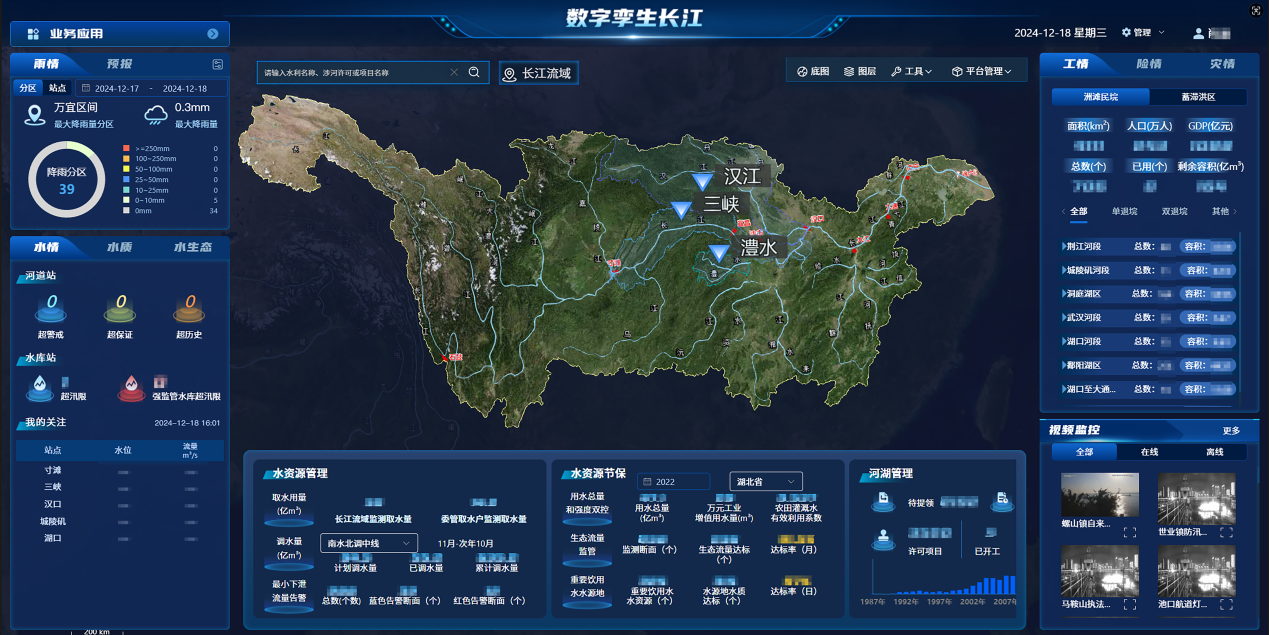
为长江经济带发展提供水安全保障
Xin Lang Cai Jing· 2026-01-10 12:18
Core Viewpoint - The Ministry of Water Resources has implemented comprehensive measures for the protection and governance of the Yangtze River, focusing on ecological sustainability and systematic management to ensure water security for the economic development of the Yangtze River Economic Belt [1][5]. Group 1: Governance and Planning - A coordination mechanism office has been established to promote water management tasks along the Yangtze River, enhancing legal and institutional frameworks [1]. - The Ministry has developed a clear planning system, including various specialized plans for water development and ecological protection, ensuring consistent implementation and supervision [1]. Group 2: Flood Control and Disaster Reduction - A comprehensive flood control and disaster reduction system has been established, integrating various engineering and non-engineering measures, significantly improving flood control capabilities in the Yangtze River basin [2]. Group 3: Ecological Protection and Restoration - The Ministry has conducted extensive ecological flow assessments and implemented management systems to ensure ecological flow standards are met, achieving over 97% compliance from 2021 to 2024 [3]. - Actions to restore the health of the Yangtze River have led to improved water ecological environments and the revival of 17 major rivers and lakes [3]. Group 4: Legal and Institutional Framework - The legal framework for water management in the Yangtze River basin has been strengthened, with the introduction of the first basin-specific law, the "Yangtze River Protection Law," and subsequent regulations to fill management gaps [4]. Group 5: Economic and Social Impact - The Yangtze River basin has seen significant improvements in economic indicators, with the regional GDP more than doubling and the proportion of national GDP increasing from 42.2% to 47.3% [4]. - The area of soil erosion has been reduced by 6.85 million square kilometers, a decrease of 17.81% since 2013, contributing to enhanced forest coverage and water conservation [4].
三峡工程竣工验收5周年 综合效益充分发挥
Zhong Guo Xin Wen Wang· 2025-11-01 10:40
Core Insights - The Three Gorges Project has achieved significant milestones in its five years since overall completion acceptance, demonstrating its comprehensive benefits in flood control, power generation, navigation, water resource utilization, and ecological protection [1][6]. Flood Control - The project has effectively collaborated with upstream reservoirs to manage flood control, achieving a total flood retention of over 29 billion cubic meters in the past five years, significantly alleviating flood pressure in the middle and lower reaches of the Yangtze River [3]. Power Generation - The Three Gorges Power Station has generated over 4,230 billion kilowatt-hours of electricity in five years, equivalent to a reduction of 128 million tons of standard coal consumption and a decrease of 347 million tons of carbon dioxide emissions [5]. Navigation - The Three Gorges ship lock has facilitated over 700 million tons of cargo transport in five years, with annual cargo volume exceeding 150 million tons for three consecutive years, peaking at 168 million tons in 2023 [5]. Water Resource Management - The Three Gorges Reservoir has provided critical water resource support during dry seasons, with a total water replenishment of 82.4 billion cubic meters over five years, effectively meeting the production, living, and ecological water needs of the middle and lower reaches of the Yangtze River [5]. Ecological Protection - The project has released 12.7 million rare fish such as the Chinese sturgeon and introduced 899 species of rare plants over five years, contributing to ecological restoration efforts [5]. Tourism - Over 11.5 million tourists have visited the Three Gorges Dam tourism area in the past five years, highlighting the project's role in promoting tourism [6]. Project Completion - The Three Gorges Project officially commenced construction on December 14, 1994, and completed all acceptance procedures by November 1, 2020, with the quality of construction meeting regulatory standards and design requirements [6].
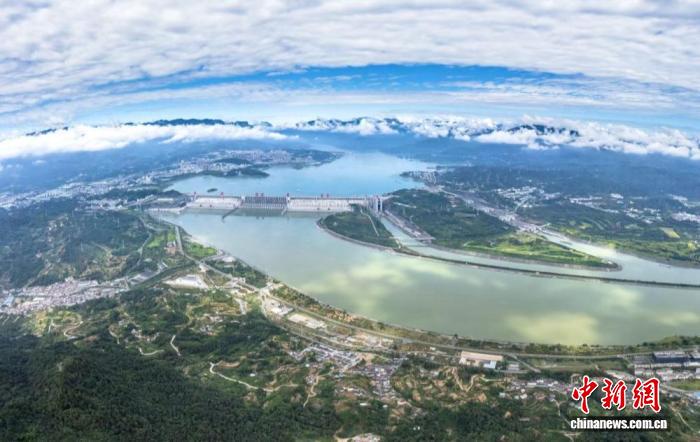
三峡工程整体竣工5年来累计发电4230亿千万时
Xin Hua She· 2025-11-01 09:31
Core Insights - The Three Gorges Project has completed its overall acceptance five years ago, showcasing significant achievements in flood control, power generation, navigation, and water resource utilization [1] Group 1: Project Achievements - The project has effectively utilized scientific scheduling and lean operation to maximize its comprehensive benefits [1] - Cumulatively, the Three Gorges Project has generated over 423 billion kilowatt-hours of electricity in the past five years [1]
行走江河看中国|在三峡,感受国之重器的青春脉动
Zhong Guo Xin Wen Wang· 2025-10-23 02:55
Core Insights - The article highlights the significance of the Three Gorges Project in Yichang, which contributes 10% of China's hydropower generation despite occupying only 0.2% of the country's land area [1][2] - The project has been pivotal in flood control, navigation, power generation, and water resource management since its inception in 1994, showcasing continuous innovation and development [2][3] Group 1: Flood Control and Navigation - The Three Gorges Project has successfully implemented flood control measures, utilizing its capacity to store over 2,300 billion cubic meters of water, equivalent to approximately 16,000 West Lakes, since its operation began in 2003 [2] - In the first three quarters of 2025, the Three Gorges hub facilitated the passage of 32,018 vessels, marking a 4.03% increase year-on-year, and handled over 126 million tons of cargo, reflecting an 11.15% growth [3] Group 2: Power Generation and Environmental Impact - By August 2025, the Three Gorges Power Station is expected to have generated over 18 trillion kilowatt-hours of electricity, saving 540 million tons of standard coal and reducing carbon dioxide emissions by 1.48 billion tons [2] - The project plays a crucial role in promoting a green transition in economic and social development [2] Group 3: Innovation and Technological Advancements - The Three Gorges Project has achieved over 100 world records and more than 900 patents, demonstrating its commitment to self-innovation and mastery of core technologies [4] - The project features the world's largest and most technologically advanced vertical ship lift, which can elevate vessels up to 113 meters, enhancing navigation efficiency [7] Group 4: Educational and Cultural Impact - The Three Gorges Project Museum, opened in August 2022, serves as a national-level educational platform, attracting over 88,000 visitors during the recent holiday, showcasing the project's achievements and fostering a spirit of innovation and patriotism [8]
行走江河看中国 | 在三峡,感受国之重器的青春脉动
Zhong Guo Xin Wen Wang· 2025-10-21 05:41
Core Insights - The article highlights the significance of the Three Gorges Project as a vital infrastructure that contributes to flood control, navigation, power generation, and water resource management in China [1][2][4]. Group 1: Project Overview - The Three Gorges Project, initiated in 1994, has been pivotal in addressing the long-standing issue of flooding in the Yangtze River, with a total flood control capacity exceeding 230 billion cubic meters since its operation began in 2003 [2]. - The project has generated over 1.8 trillion kilowatt-hours of electricity by August 2025, equivalent to saving 540 million tons of standard coal and reducing carbon dioxide emissions by 1.48 billion tons [4]. - The Three Gorges reservoir serves as a crucial freshwater resource and ecological regulator, ensuring water supply and irrigation safety for the Yangtze River basin [4]. Group 2: Innovation and Technology - The Three Gorges Project has achieved over 100 world records and more than 900 patents, showcasing its commitment to innovation and technological advancement [5]. - The project features the world's most complex inland ship lock system, with a total head of 113 meters, facilitating efficient navigation for large vessels [7][10]. - The Three Gorges Ship Lift, the largest and most technically challenging vertical ship lift globally, allows vessels to ascend 113 meters in approximately 40 minutes, enhancing the efficiency of river transport [10]. Group 3: Societal Impact and Education - The Three Gorges Project Museum, opened in August 2022, serves as an educational platform, allowing visitors to engage with the project's history and technological achievements [11][13]. - The museum has seen significant visitor engagement, with over 88,000 attendees during the recent holiday period, reflecting the public's interest in the project's contributions to national pride and innovation [13]. - The initiative aims to instill a sense of innovation and patriotism among younger generations through interactive exhibits and storytelling [14].
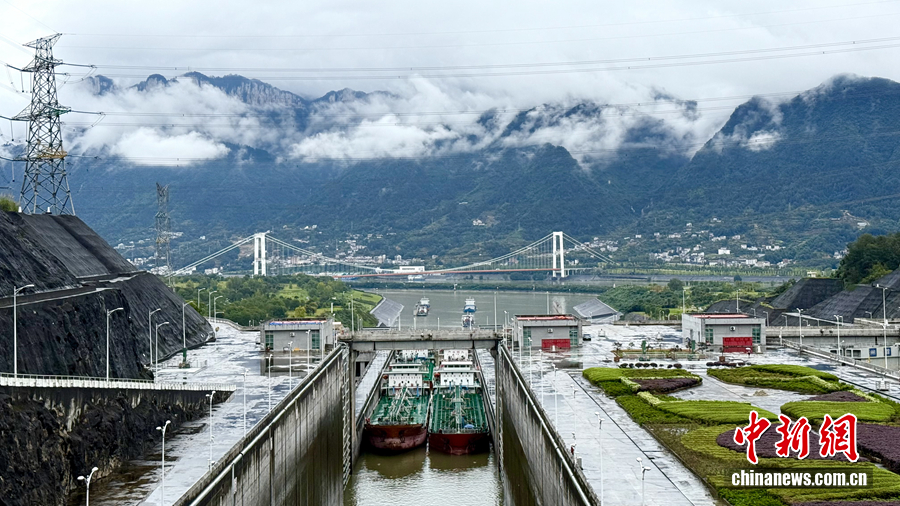
好评中国|人民网评:山河为证,用青春汗水书写安澜答卷
Ren Min Wang· 2025-10-15 09:12
Core Insights - The Three Gorges Project represents a significant achievement in China's water management efforts, embodying the spirit of national dedication and the pursuit of harmony between humanity and water [1][2][3] - The project has transformed a century-old dream into reality, showcasing the commitment and perseverance of generations of water conservancy professionals [2][3] Group 1: Project Overview - The Three Gorges Project is a monumental water conservancy initiative that took nearly 20 years to complete, featuring a dam axis length of 2309.47 meters and a maximum dam height of 181 meters [1] - It is recognized as a milestone in global water engineering and serves as a testament to the enduring spirit of determination and ambition [1][2] Group 2: Societal Impact - The project has a profound impact on China's economy and people's livelihoods, being a significant contributor to clean energy with an annual power generation exceeding 100 billion kilowatt-hours, reaching a record of 111.8 billion kilowatt-hours in 2020 [3] - It has facilitated the transportation of 159 million tons through its locks and has contributed to ecological conservation efforts, including the replenishment of 360.1 billion cubic meters of water downstream [3] Group 3: Future Aspirations - The Three Gorges Project is positioned as a platform for future generations to continue the legacy of water management and national development, encouraging youth to engage in the ongoing journey of water governance [3] - The project emphasizes the importance of collective effort and dedication to national interests, inspiring a spirit of sacrifice and commitment among its builders [2]

青春华章|赓续使命担当,为青春接力凝聚磅礴力量
Huan Qiu Wang· 2025-10-13 01:56
Core Viewpoint - The event held at Hohai University on October 12 showcased China's water management wisdom and spirit of self-improvement, aiming to inspire contemporary youth to engage in practical contributions to the nation through touching water management stories and significant achievements in water conservancy [1][2]. Group 1: Historical Achievements in Water Management - Since the founding of New China, the country's water conservancy sector has transitioned from catching up to leading, with numerous major projects supporting modernization [2]. - The world's largest 13-level pump station group has achieved a height of over 40 meters in the Yangtze River, challenging traditional perceptions [2]. - The Three Gorges Project has provided multi-dimensional support for the development of the Yangtze River Economic Belt, contributing to flood control, disaster reduction, and clean energy generation [2]. Group 2: Contributions of Key Individuals - Numerous water conservancy workers have dedicated their youth to the nation's development, exemplified by figures such as Academician Zhang Jianyun, who has contributed to the operation of the South-to-North Water Diversion Project, and Academician Niu Xinqiang, who led key designs for the Three Gorges Project [2]. - The design work of Xu Jianyong has set new benchmarks for hydropower projects, particularly at the Baihetan Hydropower Station [2]. Group 3: Inspirational Stories and Legacy - The construction of the Hongqi Canal has produced heroic figures and inspiring stories, such as Wu Zhutai, who dedicated his life to the project at the age of 27, and Ren Yangcheng, who risked his life for safety [3]. - The legacy of these heroes continues to inspire new generations, emphasizing the importance of personal value through dedication to the country and people [3]. - The current phase of high-quality development in China's water conservancy sector calls for youth to take on responsibilities and strive for excellence, integrating personal aspirations with national goals [3].
今年前三季度三峡工程运行情况良好
Ren Min Ri Bao· 2025-10-12 22:10
Core Insights - The Three Gorges Project has demonstrated effective operational management in the first three quarters of the year, balancing flood control, navigation, water supply, and ecological replenishment needs [1] Group 1: Operational Performance - The Three Gorges Reservoir experienced its highest inflow of the year at 42,500 cubic meters per second on September 20 due to autumn rains in Southwest China [1] - The Three Gorges Group adjusted the outflow according to the directives from the Ministry of Water Resources, maintaining a controlled water level for both flood management and water storage [1] - The total cargo throughput at the Three Gorges ship lock exceeded 125 million tons in the first three quarters, enhancing the shipping efficiency of the Yangtze River [1] Group 2: Maintenance and Repairs - The fifth planned maintenance of the Three Gorges ship lift was completed on September 29, ensuring safe and efficient navigation operations [1] Group 3: Ecological Contributions - During the drawdown period, the Three Gorges Reservoir provided a cumulative water replenishment of 11.67 billion cubic meters, addressing irrigation needs in Hunan and Hubei provinces [1] - Three ecological scheduling experiments were conducted to promote fish spawning, resulting in a record high of approximately 69.6 billion fish eggs and 41.8 billion eggs from the "Four Major Fish" species [1]
