
酒店业

Search documents
华住三季度营业额306亿元同比增17.5%!新推全季大观
Nan Fang Du Shi Bao· 2025-11-20 05:59
Core Insights - Huazhu Group's financial performance for Q3 2025 shows a continuous enhancement in profitability and a membership base exceeding 300 million, with 74% of nights booked by members [1][9][10] Financial Performance - In Q3, Huazhu Group reported hotel revenue of 30.6 billion yuan, a year-on-year increase of 17.5% [4] - The group's total revenue reached 7 billion yuan, up 8.1% year-on-year; adjusted net profit was 1.52 billion yuan, increasing by 10.8% [4] - Adjusted EBITDA was 2.5 billion yuan, reflecting an 18.9% year-on-year growth [4] Hotel Operations - As of the end of Q3, Huazhu Group operated a total of 12,702 hotels globally, a 17.1% increase year-on-year, with 1,246,240 rooms, up 17.3% [4] - Huazhu China opened 749 new hotels in Q3, averaging about 250 openings per month, marking a quarterly record for the year [5] Membership Growth - The membership count increased by 17.3% year-on-year, surpassing 300 million, making it the largest in the world [6][9] - Member nights booked grew by 19.7% year-on-year, totaling over 66 million nights, with a direct booking ratio of 74% [9][10] Brand Development - Huazhu's mid-to-high-end hotel count exceeded 1,600, a 25.3% year-on-year increase [13] - The launch of the new brand "All Season Grand View" aims to enhance Huazhu's mid-to-high-end brand matrix, focusing on market demand and consumer expectations [13][14] Market Insights - The Chinese hotel market shows distinct tiered characteristics, with significant growth potential in lower-tier cities where chain hotel penetration is low [13] - The middle-income group, exceeding 400 million people, is driving high-quality development in the hotel industry, with diverse and personalized demands from younger consumers [14]


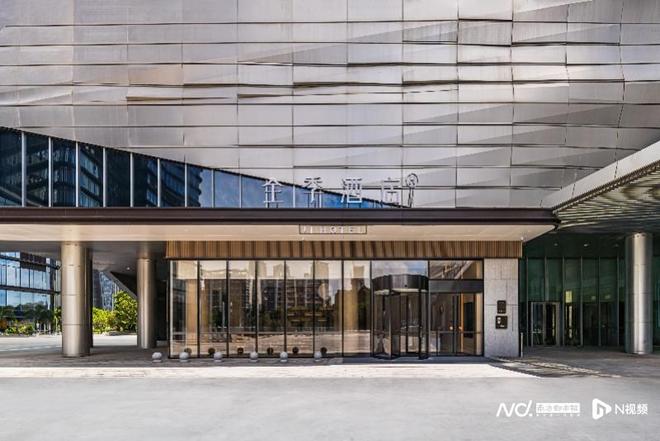
37万家酒店装不下50万酒旅毕业生
3 6 Ke· 2025-11-20 00:09
Core Insights - The hotel industry is experiencing a paradox where there is a high demand for managerial talent with salaries reaching up to 1 million yuan, while at the same time, there is a significant shortage of qualified candidates [1][2][10] - The mismatch in the labor market is evident, with only 15% of the 500,000 annual graduates in hospitality finding jobs in their field, leading to over 400,000 graduates choosing to work in other industries [7][8] Group 1: Supply and Demand Mismatch - The hospitality sector is facing a "talent black hole," where low salaries and high labor intensity deter graduates from pursuing careers in hotels [2][10] - The average employment rate for hospitality graduates is only 45%, with many opting for alternative career paths such as further education or public service [7][8] - The industry is experiencing a high turnover rate due to low wages, which negatively impacts service quality and overall hotel performance [10][11] Group 2: Educational Discrepancies - There is a significant disconnect between the skills taught in hospitality programs and the actual needs of the industry, particularly in areas like digital transformation and data analysis [12][13] - Traditional educational content is outdated, failing to address the current demands for IT and AI skills in the hospitality sector [13][14] - Many graduates enter the workforce with unrealistic expectations about job roles, leading to further misalignment between industry needs and graduate capabilities [14] Group 3: Talent Development and Industry Trends - The demand for composite talents who understand both hotel operations and digital skills is increasing, prompting educational institutions to adapt their curricula [19][20] - AI integration in hotel operations is on the rise, with companies like Jin Jiang International and Huazhu Group implementing AI tools to enhance efficiency and service quality [20][21] - Performance management reforms are being explored to better engage employees and improve retention rates, with some hotels innovating their assessment systems to reward high performers [22][24]

华住集团-S(01179.HK):三季度境内REVPAR企稳 年度至今新开酒店突破2000 家
Ge Long Hui· 2025-11-19 21:34
Core Insights - The company reported Q3 2025 revenue of 7 billion yuan, an 8.1% year-on-year increase, exceeding guidance [1] - Adjusted net profit for Q3 2025 was 1.52 billion yuan, up 10.8% year-on-year, with a net profit margin increase of 0.5 percentage points [1] - The company’s franchise business contributed 70% of gross profit, with a gross operating profit of 2.24 billion yuan, a 28.6% increase year-on-year [1] Financial Performance - Q3 2025 revenue growth was driven by stable leisure travel demand and effective store expansion, with domestic revenue increasing by 10.8% [1] - The company’s domestic hotel RevPAR was 256 yuan, a slight decrease of 0.1% year-on-year, while the overseas hotel RevPAR increased by 6.4% [2] - The company opened 749 new stores in Q3 2025, bringing the total new openings to over 2,000 for the year, with expectations to exceed the previous guidance of 2,300 openings [2] Strategic Developments - The company launched a new mid-to-high-end brand "全季大观" to enhance its brand portfolio, aiming to establish it as a benchmark following existing brands [2] - The company maintains a strong market position with significant potential for brand expansion and global reach [2]
洲际酒店落子新百商厦,新街口将添“城市之眼”新地标
Yang Zi Wan Bao Wang· 2025-11-19 15:00
Core Viewpoint - The partnership between InterContinental Hotels Group and Nanjing Xinbai marks a significant development in the hospitality sector, with the opening of the InterContinental Zhige Hotel in Xinbai Plaza, enhancing the area's luxury accommodation offerings and business facilities [1] Group 1: Company Overview - InterContinental Hotels Group is a leading global hotel management company known for its high-end brands and exceptional service [1] - Nanjing Xinbai, a local commercial giant, has a rich historical background and a broad customer base, making it a strong partner for the hotel group [1] Group 2: Project Details - The InterContinental Zhige Hotel will occupy multiple floors in Xinbai Plaza, providing a comprehensive service space that includes luxury accommodation, high-end dining, business meetings, and wellness facilities [1] - The "City Eye" project located on the top floor will also be operated by the hotel, potentially becoming a new landmark in Nanjing [1] Group 3: Market Context - The collaboration addresses the urgent need for diversified experiential consumption in the Xinjiekou business district, which is transitioning from a single shopping function to a more varied consumer experience [1] - The entry of the InterContinental Hotel is expected to fill the gap in high-end international chain hotels in the core area of Xinjiekou, positioning it as a "city business reception room" to attract multinational corporate meetings and high-end business events [1]

凯悦酒店在中国为何总是“慢一拍”?
3 6 Ke· 2025-11-19 11:16
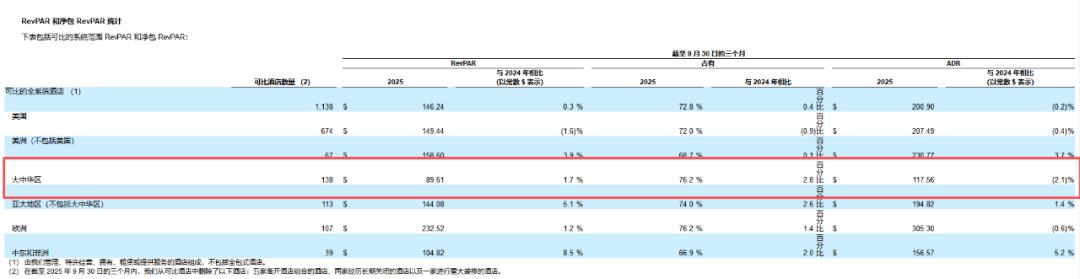
Core Insights - Hyatt Hotels Group has been experiencing a prolonged period of growth in occupancy (OCC) and revenue per available room (RevPAR) in China, but average daily rate (ADR) has been declining, raising questions about its pricing strategy and product structure adjustments [2][9][12] - The company faces challenges from the rise of local hotel groups and changing market dynamics in China, leading to concerns about its competitive positioning and growth strategy [3][4][28] - Hyatt's performance in China is characterized by a significant drop in ADR compared to its global performance, indicating a reliance on "price for volume" strategy [5][9][12] Performance Metrics - In Q3 2023, Hyatt's global RevPAR was $146.24, with a 0.3% year-over-year increase, while ADR was $200.90, down 0.2% [6] - In China, RevPAR was $89.61, up 1.7% year-over-year, with an OCC of 76.2%, up 2.8 percentage points, but ADR fell to $117.56, down 2.1% [8] - For the first half of 2023, Hyatt's China RevPAR was $84.82, with a 2.1% increase, while ADR decreased by 3.1% [10] Market Positioning - Hyatt's hotel count in China exceeded 180 by 2024, with 32 new openings, but this growth rate lags behind competitors like Marriott and Hilton [13][15] - The company has struggled to establish a strong presence in the mid-to-high-end market segment, which has been increasingly dominated by local brands [21][28] - The introduction of the "Yifei" brand aimed to capture the mid-range market, but it has not met initial growth targets [25][30] Strategic Partnerships - Hyatt has engaged in multiple partnerships with local hotel groups to expand its presence in China, including collaborations with ShouLai Hotel Group and others for brand development [36][37] - The company has adopted a strategy of leveraging local partners for its mid-range and select service brands, which may not be sufficient for achieving significant market penetration [39][43] - Recent agreements to develop new brands like Hyatt Studios indicate a shift towards addressing gaps in the mid-to-high-end market [34][35]

机构评级“强烈买入”,新品牌“全季大观”成关注焦点
Di Yi Cai Jing· 2025-11-19 11:13
Core Viewpoint - H World Group (华住) shows stable stock performance with a recent closing price of $45.22, reflecting a slight increase of 0.62% on November 18, 2023, and a year-to-date increase of 44.7% [1] Financial Performance - The trading volume on November 18 was 1.7747 million shares, with a total transaction value of $78.9539 million, which is a decrease of 45.65% compared to the previous trading day [1] - Over the past 5 trading days, the stock has seen a cumulative increase of 0.04%, while the increase over the past 60 days is 29.79% [1] Institutional Ratings - Institutional sentiment towards H World Group remains positive, with Zacks Research and HSBC Global Research recently assigning a "Strong Buy" rating [1] Strategic Developments - The launch of the new brand "Qianji Daguan" on October 31 is a significant strategic move for H World Group, aimed at enhancing its position in the hotel supply-side reform [1] - The founder, Ji Qi, highlighted favorable factors such as a large population base and substantial infrastructure development, which are expected to create growth opportunities for the hotel industry, thereby boosting confidence in the development of "Qianji Daguan" [1] - This new brand is anticipated to become a key growth driver for H World Group in the next phase of its development [1]
一次收回5年成本+年化11%!酒店RWA通证化成为融资新渠道!
Sou Hu Cai Jing· 2025-11-19 09:48
Core Insights - The hotel industry faces a long-standing issue of "heavy assets, low turnover, and high debt," with approximately 30% of global hotel assets, valued over $4 trillion, remaining dormant due to liquidity constraints and valuation challenges [1][3][4]. Group 1: Challenges in the Hotel Industry - The "sleeping assets" dilemma in the hotel sector is primarily a combination of liquidity traps and value gaps [3]. - Hotel assets are diverse, including real estate, operational assets, and rights-based assets, which inherently limits liquidity [3][4]. - Real estate is hindered by complex property registration and lengthy transaction cycles, while operational assets suffer from low standardization, and rights-based assets are restricted by centralized platforms [4]. - High leverage in the hotel industry, with an average debt ratio exceeding 60%, leads to inefficient capital usage and reliance on high-cost borrowing [6][7]. Group 2: RWA's Role in Activating Dormant Assets - RWA (Real World Assets) aims to transform physical hotel assets into digital tokens on the blockchain, addressing liquidity, trust, and efficiency issues [9]. - The first step involves asset rights confirmation and standardization, creating a unique digital identity for hotel assets [10]. - The second step focuses on fragmenting assets into smaller, more accessible shares, allowing broader participation from individual investors and funds [11]. - The third step utilizes data-driven dynamic valuation, significantly reducing valuation discrepancies from 20%-30% to under 5% [12]. Group 3: Transaction Structure and Revenue Estimation - A typical transaction structure involves issuing 20,000 rights for a 300-room hotel, raising 40 million yuan, with each right providing usage and benefit rights [14]. - Estimated revenue over five years includes approximately 63.5 million yuan, with a potential annualized return of about 11.75% per right [14]. Group 4: Future Outlook and Challenges - RWA is anticipated to become a foundational element in the hotel industry, promoting a shift from heavy asset expansion to light asset appreciation [18]. - However, large-scale implementation of RWA faces three main obstacles: regulatory compliance, technological maturity, and ecosystem collaboration [19].

看了华住三季报,才知道他们“重做酒店业”不是一句空话
Hua Xia Shi Bao· 2025-11-19 08:51
Core Insights - The Chinese hotel industry is transitioning from extensive growth driven by scale to a new normal focused on meticulous management and quality improvement, as indicated by the "14th Five-Year Plan" [1][2] - The industry is experiencing structural upgrades rather than a simple recovery, driven by a mismatch between supply and demand, leading to a reconfiguration of value [1][2] Industry Overview - The hotel industry's current challenges stem from the failure of old growth models rather than a lack of demand [2] - The "14th Five-Year Plan" promotes high-quality development in the service sector, creating opportunities in experience-oriented and scenario-based hotel demands, as well as in the lower-tier market [2][6] - The industry is shifting from a focus on scale to value cultivation, with leading brands leveraging standardization and efficiency to dominate market consolidation [2][6] Company Performance - Huazhu Group reported a resilient performance in Q3 2023, achieving revenue of 18.78 billion yuan and a net profit of 3.907 billion yuan, representing year-on-year growth of 5.12% and 30.28% respectively [2][3] - In Q3, Huazhu's revenue reached approximately 7 billion yuan, an increase of 8.1% year-on-year, with management and franchise income growing by 27.2% to 3.3 billion yuan [2][3] - The company's domestic revenue was 5.7 billion yuan, reflecting a year-on-year increase of 10.8% [2][3] Key Metrics - Huazhu's RevPAR (Revenue per Available Room) was 256 yuan in Q3, stable year-on-year but up 8.94% quarter-on-quarter [3] - The ADR (Average Daily Rate) was recorded at 304 yuan, showing a slight year-on-year increase of 1% and a quarter-on-quarter growth of 4.83% [3] - The occupancy rate (OCC) was 84.1%, significantly higher than that of comparable hotel groups [3] Membership and Customer Engagement - Huazhu's membership program, "Huazhu Club," has over 300 million members, with a year-on-year growth of 17.3% [3][4] - The program has enhanced customer loyalty, with a 19% increase in member bookings [3][4] Strategic Initiatives - Huazhu is focusing on supply-side reform as a key opportunity, aiming to become the "infrastructure" of China's accommodation industry [6][10] - The company is committed to enhancing its brand matrix to meet diverse consumer demands rather than merely expanding in scale [7][10] - Huazhu's long-term strategy emphasizes deep local engagement and quality improvement, aiming to redefine the hotel industry in China [10][11] Future Outlook - The company plans to leverage its scale and brand advantages to penetrate lower-tier markets and enhance its presence in the mid-to-high-end segments [5][10] - Huazhu's leadership believes that the supply-side reform in the hotel industry is just beginning, with significant opportunities ahead [8][10]
RWA破局酒店融资:如何将现金流变成“吸金”利器?
Sou Hu Cai Jing· 2025-11-18 10:17
Core Insights - The article discusses how the introduction of Real World Asset (RWA) tokenization is transforming hotel financing by allowing stable cash flows to be converted into digital tokens, thus providing access to global investors [1][3]. Group 1: RWA Financing Logic - RWA financing fundamentally reconstructs the trust relationship between asset owners and funders, moving beyond traditional financing methods [3]. - The focus shifts from static collateral to dynamic, verifiable cash flows, with hotel revenues becoming the primary asset for financing [4][5]. - Real-time, immutable data on occupancy rates and average room prices can be recorded on the blockchain, reducing trust costs for investors [6]. Group 2: Technological Assurance - Smart contracts enable automatic execution of rules, such as daily revenue distribution to token holders without human intervention [7]. - Ownership and transaction records are transparently maintained on the blockchain, minimizing disputes [8]. Group 3: Market Breakthrough - RWA connects hotels to a global pool of DeFi capital, breaking geographical and qualification barriers [10]. - It allows for fractional investments by converting large assets into smaller tokens, thus lowering investment thresholds [10]. Group 4: Preconditions for Successful RWA Financing - Asset quality is crucial; not all hotels are suitable for RWA financing, and stable cash flow is essential to attract investors [11][12]. - Hotels must provide real-time, accurate operational data to build trust, as unreliable data can hinder market acceptance [13]. - The implementation of advanced technology must be secure and seamlessly integrated with existing hotel management systems [14]. - Clear legal frameworks are necessary, with tokens classified as regulated financial instruments and compliance with KYC/AML procedures [16]. - A well-designed token economic model and effective market positioning are key to attracting investors [17][18]. Group 5: Real Challenges - Regulatory uncertainty exists globally, and hotels must operate in friendly jurisdictions while maintaining communication with regulators [20]. - The costs of technology integration and compliance can be significant, and traditional investors may require time to adapt to digital assets [21]. - The liquidity depth of the RWA secondary market is still developing, which may affect the efficiency of large-scale financing exits [22]. Conclusion - RWA financing represents a significant democratization of finance, providing a more efficient and transparent path for hotels with strong cash flows [23]. - However, it is not a panacea; the success of RWA depends on the quality of hotel assets and cash flow health [23]. - The future will favor hotel groups that effectively integrate solid operational practices with cutting-edge financial technology [23].

大和:维持华住集团-S“跑赢大市”评级 升目标价至36.5港元
Zhi Tong Cai Jing· 2025-11-18 06:26
Group 1 - The core viewpoint of the report is that Daiwa maintains an "Outperform" rating for Huazhu Group-S (01179) and raises the target price from HKD 30.5 to HKD 36.5 due to a faster-than-expected recovery in average room revenue [1] - The company’s adjusted EBITDA for Q3 shows a robust growth of 19% year-on-year, reaching RMB 2.513 billion, which exceeds market expectations of RMB 2.414 billion [1] - The adjusted EBITDA margin increased by 3.3 percentage points year-on-year to 36.1%, indicating improved operational efficiency [1] Group 2 - Daiwa believes that the temporary oversupply situation in the Chinese hotel industry has gradually eased over the past two to three months, allowing for a rebound in average room revenue [1] - The EBITDA forecasts for the company for the years 2025 to 2027 have been raised by 11% to 13% [1]