
全季大观

Search documents
华住集团-S:2025Q4RevPAR转正,全年业绩超预期-20260324
CSC SECURITIES (HK) LTD· 2026-03-24 05:24
Investment Rating - The report maintains a "Buy" investment rating for the company, indicating a potential upside of 15% to 35% from the current price [11]. Core Insights - The company achieved a revenue of 25.3 billion RMB in 2025, representing a year-on-year increase of 5.9%, with a net profit of 5.08 billion RMB, up 66.7% year-on-year [6][9]. - The fourth quarter of 2025 saw a revenue of 6.53 billion RMB, a year-on-year increase of 8.3%, and a net profit of 1.17 billion RMB, reflecting a significant year-on-year increase of 2294% [6]. - The company is focusing on a light-asset strategy, with a net addition of 1,761 franchise hotels in 2025 and plans to open 2,200-2,300 new hotels in the upcoming year [7]. Summary by Relevant Sections Financial Performance - The company reported a total revenue of 25.3 billion RMB for 2025, with a net profit of 5.08 billion RMB, and an adjusted EBITDA of 8.47 billion RMB, showing respective year-on-year increases of 32.9% and 24.2% [6][9]. - The gross margin improved by 3.37 percentage points to 39.39% due to the ongoing light-asset strategy [7]. Revenue Breakdown - The revenue from the leasing and owned segment decreased by 7% to 12.94 billion RMB, while the management franchise and licensing segment increased by 23% to 11.7 billion RMB [7]. - The fourth quarter revenue from management franchise and licensing was 3.02 billion RMB, up 21% year-on-year [7]. Future Projections - The company expects a revenue growth rate of 2%-6% for 2026, with a projected net profit of 5.2 billion RMB, reflecting a 2% year-on-year increase [11]. - Earnings per share (EPS) are projected to be 1.69 RMB for 2026, with a price-to-earnings (P/E) ratio of 20 [11]. Market Position - The company's stock price as of March 24, 2026, was 38.82 HKD, with a target price set at 45 HKD, indicating a potential upside [2][11]. - The stock has shown a 40.97% increase over the past year, outperforming the Hang Seng Index [2].
华住集团-S(01179):2025Q4RevPAR转正,全年业绩超预期
CSC SECURITIES (HK) LTD· 2026-03-24 05:03
Investment Rating - The report maintains a "Buy" investment rating for the company, indicating a potential upside of 15% to 35% from the current price [11]. Core Insights - The company achieved a revenue of 25.3 billion RMB in 2025, representing a year-on-year increase of 5.9%. The net profit attributable to shareholders was 5.08 billion RMB, up 66.7% year-on-year, with adjusted net profit at 4.94 billion RMB, a 32.9% increase [6][7]. - The company is focusing on a light-asset strategy, with a net addition of 1,761 franchise hotels in 2025 and plans to open 2,200-2,300 new hotels in the upcoming year [7]. - The report forecasts net profits of 5.2 billion RMB, 5.57 billion RMB, and 5.88 billion RMB for 2026, 2027, and 2028 respectively, with corresponding EPS of 1.68 RMB, 1.82 RMB, and 1.92 RMB [11]. Summary by Relevant Sections Financial Performance - In Q4 2025, the company reported a revenue of 6.53 billion RMB, a year-on-year increase of 8.3%, and a net profit of 1.17 billion RMB, reflecting a significant increase of 2,294% year-on-year [6]. - The overall gross margin improved by 3.37 percentage points to 39.39% for the year, driven by the light-asset strategy [7]. Business Segments - The company's main segment, Huazhu, generated revenue of 20.54 billion RMB in 2025, up 7.9% year-on-year, while the DH segment saw a slight decline in revenue to approximately 4.8 billion RMB, but turned profitable [7]. - The revenue from leasing and owned properties decreased by 7% to 12.94 billion RMB, while management franchise and licensing revenue increased by 23% to 11.7 billion RMB [7]. Market Outlook - The management is cautiously optimistic about 2026, projecting revenue growth of 2%-6%, with RevPAR expected to show positive growth [11]. - The report highlights the company's ongoing efforts to optimize its hotel operations and cost management, which are expected to continue yielding positive results in the coming years [7].
华住集团20260319
2026-03-20 02:27
Summary of Huazhu Group's Q4 2025 Earnings Call Company Overview - **Company**: Huazhu Group - **Industry**: Hospitality and Hotel Management Key Financial and Operational Data for Q4 2025 - **Revenue**: CNY 6.5 billion, up 8.3% year-over-year, exceeding the guidance of 2% to 6% [3] - **Net Profit**: CNY 1.17 billion, outperforming expectations due to positive RevPAR and growth in store count [3] - **Management Franchise and Licensing Revenue**: CNY 3 billion, up 21%, reaching the upper limit of the guidance of 17% to 21% [3] - **Mainland China Revenue Growth**: 9.1% year-over-year [3] - **Deutsche Hotel Group Revenue Growth**: 5.3% year-over-year, achieving profitability [3] - **Store Count in Mainland China**: 12,740 stores, up 17.5% year-over-year [3] - **Total Room Count**: 1.239 million rooms, up 17.9% year-over-year [3] - **Franchise Room Growth**: 19.2%, while direct-operated room count declined by 5.2% [3] - **New Store Openings**: 406 new stores in Q4, with a net increase of 160 stores [3] - **RevPAR in Mainland China**: CNY 226, up 2%, driven by a 4.1% increase in ADR to CNY 288, while occupancy rate decreased by 1.6 percentage points to 78.4% [3] 2026 Performance Guidance - **Revenue Growth Expectation**: 2% to 6% year-over-year [2] - **Mainland China Revenue Growth Expectation**: 5% to 9% [3] - **Franchise Business Revenue Growth Expectation**: 12% to 16% [3] - **New Store Openings for 2026**: 2,200 to 2,300 stores, maintaining a high expansion rate [4] Strategic Plans for Store Openings and Brand Development - **Mid-term Goal**: Open 20,000 quality stores by 2030 [4] - **Core Brands Focus**: Orange, Qianxi, Orange Crystal, and Mercure [4] - **Reserve Hotels in Mid-High-End Market**: 1,639 hotels as of the end of 2025 [4] - **New Brand Launch**: "Qianxi Daguan" expected to open in April 2026, with positive trial operation results [4] - **Economic Hotel Market Strategy**: Focus on Hanting and Hanting Express brands to cater to the national market and meet the growth potential in lower-tier cities [4] Demand Trends in the Hotel Industry for 2026 - **Overall Demand Outlook**: Positive, with leisure travel demand entering a normalized high-growth phase [4] - **Inbound Travel Market**: Expected to improve rapidly [4] - **Business Travel Demand**: Signs of recovery from Q4 2025 to Q1 2026, particularly in first and second-tier cities [4] Management Changes and Overseas Business Development - **Management Appointment**: A new vice president appointed in December 2025 to enhance management capabilities in response to expansion [5] - **Overseas Business Strategy**: Focus on maintaining profitability through operational efficiency, rent negotiations, and exiting loss-making properties [5] - **2026 Expansion Plans**: Begin network expansion with a focus on Europe while exploring markets in the Middle East and North Africa [5]
酒店收并购走向激流深处
Xin Lang Cai Jing· 2025-12-30 04:33
Core Insights - The Chinese hotel industry in 2025 is marked by significant mergers and acquisitions, indicating a profound transformation in the market landscape [1][5] - The second wave of consolidation is more mature and involves a diverse range of participants with clearer strategic goals compared to the first wave in 2015 [2][3] - The industry is shifting from extensive expansion to refined operations and from individual competition to ecological competition [4] Group 1: Mergers and Acquisitions - Major players are engaging in collective actions, such as Tongcheng Travel's acquisition of Wanda Hotel Management for 2.49 billion yuan and Hubei Culture Tourism's takeover of Junting Hotel [1][11] - The hotel acquisition market has formed three main forces: local state-owned enterprises, OTA platforms, and traditional hotel groups, each with distinct strategic intentions [6][7] - Local state-owned enterprises are increasingly active, with Hubei Culture Tourism becoming the largest shareholder of Junting Hotel by acquiring approximately 36% of its shares [8][9] Group 2: Strategic Intentions - Local state-owned enterprises view hotels as key nodes for integrating cultural and tourism resources, as evidenced by Hubei Culture Tourism's ownership of multiple scenic spots and hotels [9][10] - OTA platforms like Tongcheng Travel and Ctrip are acquiring existing quality accommodation to enhance their supply chain and competitive advantage [11] - Traditional hotel groups are strengthening their market positions through strategic investments and acquisitions, such as China Tourism Group's investment in the Aegean Hotel Group [12] Group 3: Industry Challenges and Trends - The hotel industry is experiencing a shift towards ecological competition, moving from individual operations to integrated strategies across the entire tourism industry [13] - The competitive landscape is increasingly dominated by major players like Jinjiang, Huazhu, and Shouqi, making it difficult for smaller groups to grow independently [26][27] - The market is witnessing a significant growth rate in new hotel formats, with boutique and themed hotels seeing revenue growth rates of over 25%, compared to traditional hotels' 3% [31] Group 4: Future Outlook - The hotel industry is expected to continue evolving, with a multi-layered and multi-format ecosystem emerging [37] - The integration of technology, capital, and operations will lead to a more diverse hotel ecosystem [38] - Companies that can quickly adapt to changes and establish advantages in niche markets will thrive in the upcoming industry reshuffle [40]

华住集团20251222
2025-12-22 15:47
Summary of Huazhu Group Conference Call Industry Overview - The hotel industry is expected to see cyclical improvement by 2026, with RevPAR (Revenue Per Available Room) decline narrowing each quarter, driven by a rebalancing of supply and demand and robust growth in leisure travel demand. Service consumption policies will also boost leisure travel demand [2][6]. - The business travel market is stabilizing, with occupancy rates (OCC) having bottomed out, indicating potential for recovery. The investment payback period has extended to approximately 5 years due to declining average room prices (RAP) and rents, with a forecasted decrease in new store openings in 2026 [2][8]. Company Insights: Huazhu Group - Huazhu has maintained a compound annual growth rate (CAGR) of over 20% in store count and performance over the past 15 years, leveraging product iteration, standardized management, and strong member loyalty to create a unique growth flywheel. The company is actively expanding into the mid-to-high-end hotel sector, establishing a rich brand matrix [4][13]. - Huazhu's extensive store network and strong membership system allow it to reduce reliance on Online Travel Agencies (OTAs) in the short term, showcasing its operational strength. The company’s dual flywheel model, which links network scale and member traffic, provides a competitive advantage even in adverse conditions [5][7]. Competitive Positioning - Leading companies like Huazhu hold a market share of 15%-20% in key regions such as Shanghai, granting them pricing power. The strategy has shifted from focusing on occupancy rates to optimizing average room prices, which helps stabilize overall industry pricing [9]. - The hotel industry remains fragmented, but leading firms are transitioning to a strategy that balances occupancy and pricing, as evidenced by Huazhu achieving positive growth in average daily rates (ADR) in Q3 [9]. Long-term Growth Potential - The long-term outlook for China's accommodation industry is positive, with a trend of upward penetration. Comparatively, China's per capita GDP is nearing that of the U.S. in 1981, indicating a high proportion of disposable income spent on accommodation and leisure travel [10]. - The potential for chain hotel development is significant, with estimates suggesting that increasing the chain rate from 46% to 60%-70% could yield growth rates of 30%-50% for hotels with over 30 rooms [11][12]. Strategic Development in Mid-to-High-End Market - Huazhu currently operates over 1,000 mid-to-high-end hotels, with revenue per room significantly higher than that of economy hotels. The company aims to increase the number of mid-to-high-end hotels to over 3,000, which would surpass the share of economy hotels in its overall business [15]. - The company is also collaborating with Didi to attract high-quality business travelers and is expected to optimize product offerings in the mid-to-high-end sector [14]. Valuation and Market Position - Huazhu is projected to have a price-to-earnings (P/E) ratio of 24-25 times by 2026, reflecting both industry recovery and the company's growth trajectory. The hotel sector in A-shares is currently experiencing marginal improvements, with leading companies like Shoulv and Jinjiang already showing positive changes [17]. - The overseas hotel groups benefit from a light-asset model that allows for valuation premiums, and Huazhu is expected to follow a similar path, transitioning from low-end to high-end offerings while ensuring stable cash flow and shareholder returns [16].
华住集团-S(01179.HK):本土酒店领军者的价值重构进行时
Ge Long Hui· 2025-12-19 22:02
Industry Overview - The hotel industry exhibits a supply-demand flywheel effect, with leading companies in both domestic and international markets achieving valuations in the hundreds of billions [1] - The industry is currently at a two-year adjustment bottom, with expectations for supply-demand relationships to rebalance, driven by structural reforms in supply [1] - The long-term outlook indicates that China's service consumption, currently at 46%, is still on an upward trajectory, similar to the trend observed in the U.S. in the 1980s [1] Company Insights - Huazhu's model has redefined the limited-service hotel sector over the past 20 years, achieving a CAGR of over 20% in both store count and performance [2] - The company has developed a growth flywheel characterized by strong products, robust traffic, high returns, and aggressive expansion [2] - Huazhu's membership base has surpassed 300 million, leading the industry, with over 60% of bookings coming from central reservations [2] Growth Outlook - The company is expected to expand its store count significantly, with projections of reaching 18,000 economic and mid-range hotels by 2030 [3] - Brand upgrades are underway, with a focus on enhancing management, products, and membership, which could elevate profitability and valuation [3] - The company aims to adopt a light-asset model similar to overseas hotels, supporting stable cash flows and shareholder returns of over 5% [3] Investment Recommendations - The adjusted net profit forecasts for 2025-2026 are set at 4.44 billion and 5.17 billion yuan, respectively, with a slight upward revision for 2027 to 5.86 billion yuan [4] - The estimated reasonable stock price for the next year is projected to be between 43-45 HKD, indicating a potential upside of 15-20% from the current price [4] - The company maintains an "outperform the market" rating, with expected performance in 2026 ranging from 5 to 5.4 billion yuan [4]
锚定生态升级的价值重估机遇,多家券商看好华住集团(01179,HTHT.US)成长空间
智通财经网· 2025-12-19 08:33
Core Viewpoint - H World Group's stock price has steadily increased since 2025, reaching a new high of over $48 on December 12, 2022, reflecting strong investor confidence in its business model and long-term growth potential [1] Group 1: Financial Performance and Market Position - H World Group has demonstrated solid operational performance, with revenue and business expansion exceeding market analyst predictions, indicating its ability to deliver on commitments even in complex environments [2] - Major brokerage firms, including JPMorgan, CICC, Huatai, and Guosen Securities, have issued optimistic ratings for H World Group, recommending "buy" or "overweight" [2] Group 2: Industry Dynamics and Competitive Landscape - The hotel industry is undergoing structural adjustments, with a clear trend of resources concentrating towards leading chain brands, enhancing the industry's chain rate [3] - H World Group, as an industry leader, has shown resilience during industry cycles, maintaining high occupancy rates and stable average daily rates (ADR) [4] Group 3: Strategic Advantages and Growth Drivers - H World Group possesses three competitive advantages: a robust brand, a strong membership system, and advanced technology, which support its operational resilience [6] - The company has built a competitive membership system with over 300 million members, leading to high direct sales and reduced reliance on OTA platforms [6][7] - H World Group's digital capabilities have created a positive cycle of cost reduction, efficiency enhancement, and improved user experience, which are crucial for navigating industry cycles [8] Group 4: Future Growth Potential - The company is focusing on expanding its presence in lower-tier markets, where the chain rate is significantly lower compared to first and second-tier cities, presenting a substantial growth opportunity [9] - H World Group has made significant progress in the mid-to-high-end market, with over 1,600 mid-to-high-end stores opened or in the pipeline, marking a 25.3% year-on-year increase [11] - The company's long-term growth strategy is supported by its ability to adapt to market changes and enhance its brand portfolio, positioning it well for future expansion [14]

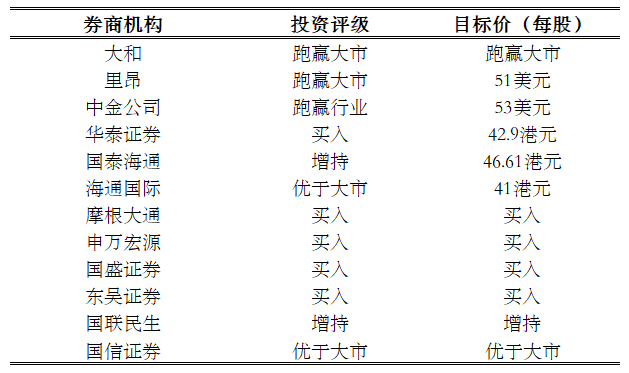
国信证券:维持华住集团-S“优于大市”评级 本土酒店领军者的价值重构进行时
Zhi Tong Cai Jing· 2025-12-18 01:51
Core Viewpoint - The hotel industry is expected to continue growing due to a supply-demand flywheel effect, with a potential rebalancing of supply and demand at the current cycle's adjustment bottom. Huazhu Group is positioned to leverage its multi-brand matrix and over 300 million members to drive scale expansion and profitability [1][2]. Group 1: Industry Overview - The hotel industry is experiencing a two-year adjustment bottom, with a forecasted rebalancing of supply and demand. The leisure travel sector is showing steady growth, while business travel demand is declining. Leading companies are shifting their strategies from prioritizing occupancy to optimizing RevPAR to stabilize prices [2]. - The structural opportunities on the supply side are becoming more apparent, with the chain rate expected to increase from 40% (in the U.S. at 72%) to 60-70%, corresponding to a potential room supply increase of 30-109% [2]. Group 2: Huazhu Group's Growth Model - Huazhu has achieved a compound annual growth rate (CAGR) of over 20% in both store count and performance over the past 15 years, driven by strategic foresight and a highly efficient digital organization. The company has established a growth flywheel in the limited-service hotel sector through strong product offerings, significant member traffic, high returns, and aggressive scale expansion [3]. - The company has a diverse product range from economy to mid-range hotels, with brands like Hanting and Qianxi catering to different customer needs. Its membership base of over 300 million is the largest in the industry, with over 60% of bookings coming from central reservations [3]. Group 3: Value Reassessment - Huazhu is expected to expand its store count significantly, with projections of reaching 18,000 economy and mid-range hotels by 2030, leading the market share [4]. - The company is in a phase of brand upgrading, with mid-range brands poised for growth. The estimated annual fees for mid-range hotels are projected to be 1.5-3 times higher than those for lower-end hotels, which could enhance profitability and valuation [4]. - The company is also transitioning towards a light-asset model, which is expected to support stable cash flows and provide a shareholder return of over 5%, potentially leading to valuation premiums [4].

国信证券:维持华住集团-S(01179)“优于大市”评级 本土酒店领军者的价值重构进行时
智通财经网· 2025-12-18 01:47
Group 1 - The core viewpoint of the report is that the hotel industry is experiencing a supply-demand flywheel effect, which is expected to lead to growth and a rebalancing of supply and demand in the current adjustment cycle [1][2] - Huazhu Group is leveraging a "product-traffic-return-scale" model to drive growth, supported by a multi-brand matrix and over 300 million members, which enhances its scale expansion [1][3] - The hotel industry is currently at a two-year adjustment bottom, with expectations for a rebalancing of supply-demand relationships, driven by steady growth in leisure travel and a decline in business travel demand [2][4] Group 2 - Huazhu has achieved a compound annual growth rate (CAGR) of over 20% in both store count and performance over the past 15 years, thanks to strategic foresight and a digitalized organization [3] - The company is expected to expand its store count to 18,000 by 2030, leading in market share, while also focusing on brand upgrades and enhancing its mid-to-high-end offerings [4] - The shift towards a light-asset model, comparable to overseas hotel models, is anticipated to support stable cash flows and shareholder returns of over 5%, potentially leading to valuation premiums [4]
华住集团-S(01179):本土酒店领军者的价值重构进行时
Guoxin Securities· 2025-12-18 00:58
Investment Rating - The report maintains an "Outperform" rating for the company [6] Core Insights - The hotel industry is experiencing a supply-demand flywheel effect, with leading companies in both domestic and international markets achieving significant market capitalizations. The industry is currently at a cyclical adjustment bottom, with expectations for supply-demand rebalancing and structural reforms driving growth [1][21] - The company's growth model, which has been effective for over 20 years, emphasizes a "product-traffic-return-scale" cycle, showcasing strong product offerings, substantial membership growth, and efficient cost management [2][3] - The long-term outlook includes a three-phase value reassessment narrative focusing on store expansion, brand upgrades, and model evolution, with projections for significant increases in mid-to-high-end hotel numbers by 2030 [3][4] Summary by Sections Industry Trends - The hotel industry is currently at a cyclical adjustment bottom, with a focus on supply-demand dynamics and leading companies' pricing strategies. The supply side is expected to undergo structural reforms, enhancing growth opportunities [21][24] - The demand side is projected to grow steadily, with leisure travel maintaining resilience and business travel gradually recovering. The overall hotel demand is expected to stabilize as supply expands [24][39] Growth Outlook - The company is expected to expand its store count significantly, with projections of reaching 18,000 economy and mid-range hotels by 2030. Brand upgrades are anticipated to enhance profitability and valuation [3][4] - The company's model is evolving towards a light-asset approach, which is expected to support stable cash flows and shareholder returns exceeding 5% [3][4] Financial Projections - The report forecasts adjusted net profits of 44.4 billion CNY for 2025, increasing to 58.6 billion CNY by 2027, with a corresponding rise in earnings per share [5][4] - The estimated reasonable stock price for the company is projected to be between 43 and 45 HKD, indicating a potential upside of 15-20% from the current price [4][6]