消费金融

Search documents
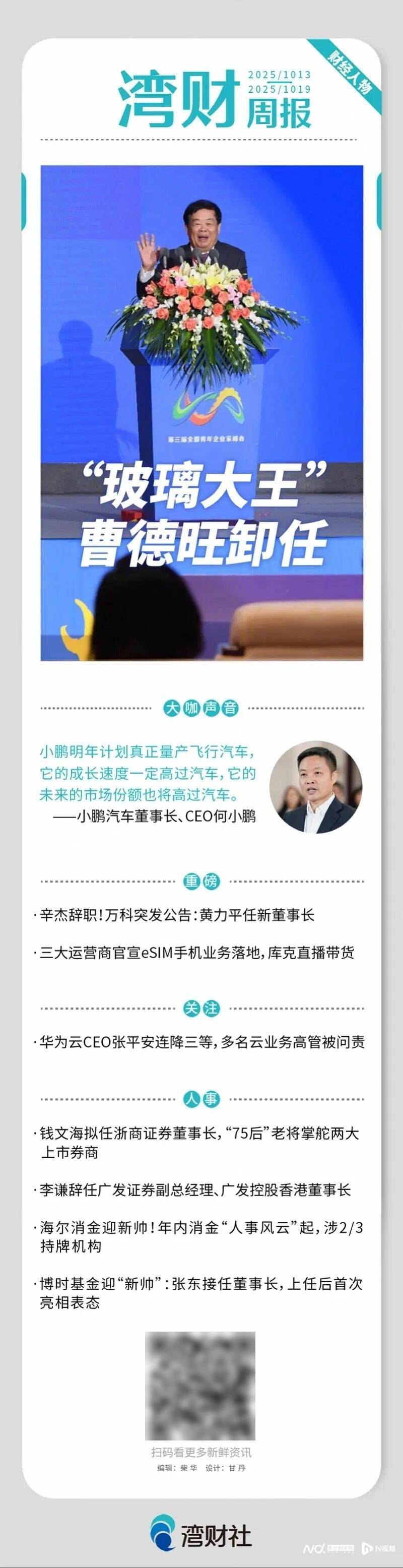
湾财周报 | 人物 79岁曹德旺卸任,长子接管福耀玻璃;辛杰辞任万科董事长;库克直播带货苹果新机
Sou Hu Cai Jing· 2025-10-19 14:22
Group 1 - Cao Dewang, known as the "Glass King," has announced his early resignation as chairman of Fuyao Glass, with his son, Cao Hui, set to take over the role, marking a new era for the company that holds a one-third share of the global automotive glass market [5] - He Xiaopeng, CEO of Xpeng Motors, stated at the 2025 Sustainable Global Leaders Conference that the market share of flying cars is expected to surpass that of traditional cars, with plans for mass production of flying cars next year [5] Group 2 - Vanke announced the resignation of Xin Jie as non-executive director and chairman, with Huang Liping elected as the new chairman, ensuring the board's normal operation will not be affected [6] - The three major telecom operators in China have officially launched eSIM mobile services, with over 70,000 online reservations reported for China Unicom's eSIM service [7] Group 3 - Qian Wenhai is proposed to be appointed as the chairman of Zheshang Securities, with the company set to follow legal procedures for the election [8] - Li Qian has resigned from his position as deputy general manager of GF Securities due to personal work changes, and will no longer hold any positions within the company [9] Group 4 - Haier Consumer Finance has appointed Zhou Wenlong as the new general manager, following a year-long vacancy, amidst a wave of personnel changes in the consumer finance industry [10] - Bosera Funds announced the appointment of Zhang Dong as chairman, who will also serve as the acting general manager, focusing on high-quality development and investor services [11]






湾财周报 | 人物 79岁曹德旺卸任,长子接管福耀玻璃;辛杰辞任万科董事长;库克直播带货苹果新机;华为云CEO张平安连降三等
Sou Hu Cai Jing· 2025-10-19 11:22
Group 1 - Fuyao Glass's founder, Cao Dewang, has announced his early retirement, with his son, Cao Hui, taking over as the new chairman, marking a new era for the company, which holds a one-third share of the global automotive glass market [6] - He Xiaopeng, CEO of Xiaopeng Motors, stated that the company plans to mass-produce flying cars next year, predicting that the growth rate and future market share of flying cars will surpass that of traditional automobiles [7] Group 2 - Vanke announced the resignation of its chairman, Xin Jie, due to personal reasons, with Huang Liping elected as the new chairman, ensuring that the board's operations remain unaffected [8] - Major Chinese telecom operators, including China Mobile, China Unicom, and China Telecom, have received approval to launch eSIM mobile services, with over 70,000 online reservations reported for China Unicom's eSIM service [9] - Huawei Cloud CEO Zhang Pingan has been demoted due to internal disciplinary actions related to issues of fraud and economic misconduct within the cloud business unit [10] Group 3 - Qian Wenhai is proposed to be appointed as the chairman of Zheshang Securities, with the company set to follow legal procedures for the election [11] - Li Qian has resigned from his position as deputy general manager of GF Securities and chairman of GF Holdings Hong Kong due to personal work changes [12] - Haier Consumer Finance has appointed new leadership, with Zhou Wenlong as the new general manager, amidst a wave of personnel changes in the consumer finance industry [13] - Bosera Funds has announced the appointment of Zhang Dong as the new chairman, who will also serve as the acting general manager [14][15]
数字金融周报|银行黄金定投进入“千元时代”;238家保险机构明确最新归口
Sou Hu Cai Jing· 2025-10-17 09:55
【银行】 银行黄金定投进入"千元时代",多家大行提示投资风险 在金价水涨船高的过程中,四大行年内均已多次上调积存金起购价,工行、建行的积存金起购价均已调 整为1000元,仅中行停留在950元。热潮之下亦须警惕追高风险,近期已有多家银行密集发布贵金属投 资风险提示。10月15日,光大银行提示,国内外贵金属价格波动加剧,应合理控制仓位,理性投资;更 早之前,建行亦提示消费者合理控制仓位,及时关注持仓和保证金变化。【华尔街见闻】 加速出清!今年超300家中小银行合并、解散 今年以来,我国中小银行合并重组步伐显著加快,行业整合"浪潮"正加速推进。企业预警通数据显示, 截至2025年10月15日,全国今年以来已有超过300家银行通过解散、合并或注销等方式退出市场,其中 主要为地方农商行和村镇银行。值得关注的是,仅今年前三个季度,中小银行合并解散的数量就已大幅 超过去年全年198家的退出总量。业内普遍认为,中小金融机构风险防范化解工作正在深入推进,地方 银行的合并可被视为地方银行业提质增效、加速行业出清的重要信号。【21世纪经济报道】 农业银行整合吉林超190家农商行支行、分理处等,大行参与农信社改革持续推进 2025年 ...
因存在超范围收集个人信息行为,平安消费金融公司旗下APP被通报
Xin Lang Cai Jing· 2025-10-17 04:36
Core Insights - The Shanghai Municipal Communications Administration reported that Ping An Consumer Finance Co., Ltd.'s "Ping An Consumer Finance" APP is involved in illegal activities related to the excessive collection of personal information [1][3] - Despite being previously flagged for similar issues four years ago, the company has not resolved these problems, indicating a long-term shortcoming in user data management [1][3] Company Overview - Ping An Consumer Finance was established in April 2020 with a registered capital of 5 billion yuan, and it has over 10 million users and a loan balance exceeding 50 billion yuan [1][3] - The company reported a revenue of 4.519 billion yuan and a net profit of 1.02 billion yuan for the year 2024, with year-on-year growth rates of 24.6% in revenue and 108% in net profit [3] - As of the reporting period, the total assets of the company amounted to 54.293 billion yuan, reflecting a year-on-year increase of 33.8% [3] Regulatory Actions - The Shanghai Municipal Communications Administration has mandated that the APP must rectify the identified issues immediately and conduct a comprehensive self-assessment regarding personal information and user rights protection [3] - The company has been instructed to submit a rectification report and a self-assessment report within five working days from the date of the notice [3] Shareholding Structure - The major shareholders of Ping An Consumer Finance include Ping An Insurance with a 30% stake, followed by Rongyi Co., Ltd. with 28%, Weikun (Shanghai) Technology Service Co., Ltd. with 27%, and Jinjiong (Shenzhen) Technology Service Co., Ltd. with 15% [3] Market Presence - The company serves nearly 10 million users nationwide, with 80% of its market share coming from lower-tier markets [3] - As of October 2025, Ping An Consumer Finance has disclosed partnerships with 34 lending cooperation institutions, including 17 marketing acquisition institutions and 17 credit enhancement service institutions [3]

海尔消金迎新帅!年内消金“人事风云”起 涉2/3持牌机构
Nan Fang Du Shi Bao· 2025-10-17 04:28
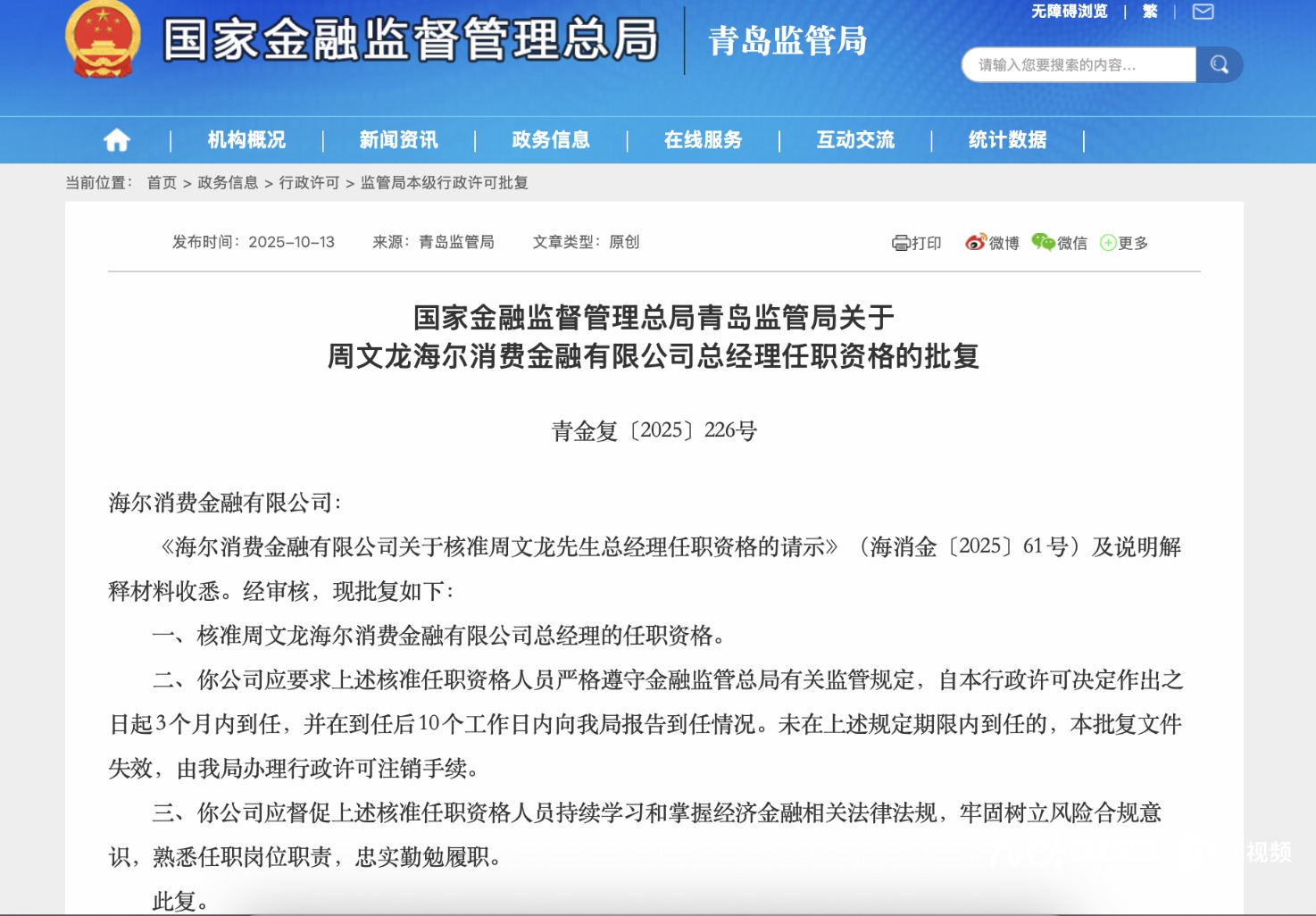
历经超一年的职位空缺,海尔消费金融有限公司总经理人选终尘埃落定。 10月13日,国家金融监督管理总局青岛监管局发布两则任职资格批复,核准周文龙海尔消费金融有限公司(简称"海尔消金")总经理、俞文佳海尔消金副总 经理的任职资格。 值得注意的是,今年以来,消金行业高管变动热潮持续涌现,据不完全统计,年内已有21家持牌消金公司发生人事调整,涉及董事长、总经理、副总经理等 核心岗位。这一现象背后,是行业正从粗放增长逐步转向精细化、专业化运营。 两位高管任职获准 管理团队终成型 记者了解到,周文龙在金融领域有20余年的丰富经验,具备"银行+消金"双重领域背景。在本次任职获批之前,周文龙曾在中信银行总行任职8年之久,期间 深度参与零售信贷、风险管理等业务;随后,在中原消金筹备期间,周文龙已是筹备组成员,自2016年中原消金开业后,周文龙就担任总经理一职。 值得一提的是,在周文龙本次出任海尔消金总经理前,该职位已经空缺超一年。 回溯职位变动历程,2023年2月24日,原青岛银保监局曾核准张西铭出任海尔消金总经理,但张西铭任职未满一年,便于2024年1月18日因个人原因离职。此 后,海尔消金在2024年金融债发行公告中披露, ...
促消费 看消金公司如何“助功”
Jin Rong Shi Bao· 2025-10-17 00:57
Core Insights - The recent "Double Festival" period saw a surge in consumer spending across various sectors, including cultural tourism, dining, and home appliances, driven by extended promotional activities and consumer-friendly measures [1][2] Group 1: Consumer Finance Companies' Actions - During the "Double Festival" from October 1 to October 8, new users for a consumer finance service reached 351,600, with a transaction volume of 4.575 billion yuan [2] - Haier's consumer finance service expanded its reach with promotions like "0 down payment, 0 interest, and 0 fees," leading to significant increases in loan amounts and numbers compared to the previous year [2] - Consumer finance companies focused on key areas such as home appliances, cultural tourism, and green consumption, while enhancing online self-operated channels to attract consumers [2][3] Group 2: Policy Support and Market Trends - Various local governments have launched initiatives like "Consumption Promotion Month" to stimulate spending, supported by policies encouraging financial institutions to increase credit in service consumption [4] - The combination of government subsidies, discounts, and installment plans has effectively activated consumer spending potential, particularly in mobile devices and AI hardware [4] - Four consumer finance companies were selected as initial loan processing institutions under the personal consumption loan subsidy policy, indicating a strong alignment with national consumption support initiatives [4] Group 3: Technological and Environmental Innovations - A consumer finance company launched a personal carbon account, achieving over 5.78 million users and contributing to significant carbon reduction efforts [7] - The integration of technology in consumer finance services has enhanced service efficiency and user experience, with AI models being widely applied across various business scenarios [7] - Industry experts anticipate sustained consumer enthusiasm in the fourth quarter, with emerging consumption models and business formats expected to bring more vitality and opportunities to the market [7]
多点突破 上海普惠金融新进展
Zhong Guo Zheng Quan Bao· 2025-10-16 14:21
Core Viewpoint - Shanghai Financial Regulatory Bureau has developed a special work plan to promote the high-quality development of inclusive finance, showcasing a comprehensive and multi-layered approach that addresses both service coverage and risk prevention [1][2]. Group 1: Policy Framework - The policy toolbox of Shanghai Financial Regulatory Bureau focuses on three core objectives: building an inclusive financial service system, enhancing service quality, and strengthening risk prevention capabilities [2]. - The plan emphasizes the construction of a competitive landscape for inclusive credit, requiring financial institutions to maintain effective credit supply for small and micro enterprises to alleviate financing difficulties [2]. - The initiative includes upgrading local inclusive insurance projects like "Huibao" and "Hujia Bao" to expand coverage for more livelihood scenarios [2]. Group 2: Digital Transformation - Digital transformation is a key focus of the plan, promoting development through assessment and transformation via digital means [2]. - The Shanghai financing credit service platform will be optimized to integrate multiple data sources to address the information asymmetry between banks and enterprises [2]. - The "insurance code" platform will be upgraded to provide convenient inclusive insurance services to citizens without leaving their homes [2]. Group 3: Impact on Individuals and Businesses - New citizens, like Mr. Zhang, benefit from inclusive finance policies, receiving significant interest savings on loans for home renovations, demonstrating the quick conversion of policy benefits into tangible financial support [3]. - As of now, a financial institution has issued over 500 million yuan in consumer loans to new citizens, helping them establish roots in the city [3]. - Small and micro enterprises, such as a commodity trading company, have successfully accessed loans through rapid approval processes, significantly improving their operational cash flow and enabling them to secure profitable orders [4][5].
多点突破,上海普惠金融新进展
Zhong Guo Zheng Quan Bao· 2025-10-16 14:19
Core Viewpoint - Shanghai's financial regulatory authority has developed a special work plan to promote high-quality development of inclusive finance, emphasizing a comprehensive, multi-layered approach that addresses both service coverage and risk prevention [1][2]. Group 1: Policy Framework - The Shanghai financial regulatory authority's policy toolbox focuses on three core goals: building an inclusive financial service system, enhancing service quality, and strengthening risk prevention capabilities [2]. - The plan aims to address the "financing difficulties" faced by small and micro enterprises by ensuring effective credit supply and enhancing local inclusive insurance projects [2]. - Digital transformation is a key focus, with initiatives to optimize financing credit service platforms and upgrade insurance service accessibility for citizens [2]. Group 2: Impact on Consumers - New citizens in Shanghai, like Mr. Zhang, benefit from tailored financial products that help them manage costs, such as saving over 2,000 yuan in interest for home renovations [3]. - As of now, a financial institution has issued over 500 million yuan in consumer loans to new citizens, helping them establish their lives in the city [3]. Group 3: Support for Small and Micro Enterprises - Small and micro enterprises play a crucial role in the economic development of Shanghai, with companies like Mr. Qiu's successfully securing loans to fulfill large orders [4]. - The rapid loan approval process, facilitated by the new policies, has significantly reduced the time from application to funding, allowing businesses to capitalize on market opportunities [5]. - Since the implementation of these policies, nearly 150,000 clients have received financial support, indicating a positive trend for small and micro enterprises in Shanghai [5].
多家消费金融机构缘何集中换帅?
Guo Ji Jin Rong Bao· 2025-10-16 13:41
Core Insights - Recent leadership changes in consumer finance institutions indicate a strategic response to regulatory compliance and business model restructuring in light of the new "assistance lending regulations" [1][4][6] Leadership Changes - Multiple consumer finance institutions, including Haier, JD, and Jianxin, have recently appointed new executives, with many of them having extensive banking experience [2][3] - Zhou Wenlong has been appointed as the General Manager of Haier Consumer Finance, bringing years of experience in banking and consumer finance [2] - Jianxin Consumer Finance has appointed Gong Yongyuan as its second President, while Jinshan Consumer Finance has seen Zhao Chongping become its third President [3] Regulatory Compliance and Business Model Restructuring - The leadership changes are partly driven by the need to enhance compliance and adapt to new regulatory requirements, as the industry faces increased scrutiny [4][5] - Analysts suggest that the new executives are expected to focus on risk control, technology integration, and sustainable growth strategies [5][6] - The implementation of the "assistance lending regulations" on October 1 has intensified the need for consumer finance companies to develop resilient business models and improve their risk management capabilities [6] Industry Trends - The consumer finance sector is shifting from a growth-driven model to a more refined and specialized operational approach, with new leaders possessing backgrounds in risk control and technology [5][6] - There is a growing divide in the industry, with leading firms continuing to thrive while smaller institutions face significant challenges, leading to frequent leadership changes as a survival strategy [5]
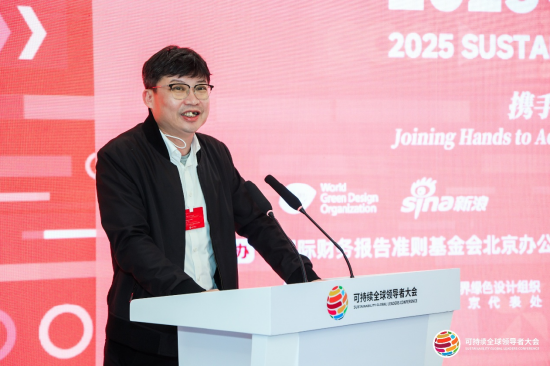
马上消费金融孙磊点破可持续发展三大挑战:外部环境、内部转型与行业内卷如何破局?
Xin Lang Zheng Quan· 2025-10-16 13:38
专题:2025可持续全球领导者大会&首届绿色产业与可持续消费博览会 2025可持续全球领导者大会于10月16日-18日在上海市黄浦区世博园区召开。马上消费金融副总经理孙 磊出席并发表演讲。 浦区人民政府支持。大会以"携手应对挑战:全球行动、创新与可持续增长"为核心主题,汇聚全球智慧 力量,共探可持续发展新路径,为全球可持续治理注入澎湃的"中国动能"。 本届可持续大会在以往四届"ESG全球领导者大会"的基础上进一步升级!嘉宾阵容强大,可持续大会组 委会邀请约500位中外重磅嘉宾,其中约100位为海外嘉宾,不仅有政要、前政要、国际组织的代表,还 包括了诺贝尔奖得主、图灵奖得主、全球500强企业负责人等国际顶尖学者与业界领军代表。本届大会 将围绕近50个议题展开深入研讨,议题涵盖能源与"双碳"、绿色金融、可持续消费、科技与公益等细分 领域。 孙磊在演讲中深入剖析了企业在推进可持续发展道路上面临的现实挑战。他指出,可持续发展已成为企 业在不确定性中寻找确定性的关键路径,但在实践过程中,企业正面临来自外部环境、市场波动、内部 转型和激励机制等多重考验。 外部环境的不确定性成为企业面临的首要挑战。孙磊特别指出,在一些强监 ...