Cosmetics

Search documents
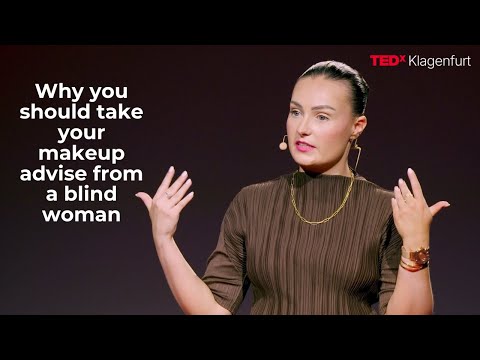
Why you should take your makeup advice from a blind woman | Molly Burke | TEDxKlagenfurt
TEDx Talks· 2025-09-10 17:00
Accessibility & Inclusivity in the Beauty Industry - The beauty industry often equates inclusivity with shade range, but it should extend to marketing representation, independent shopping experiences, product identification by touch, and ease of opening [7] - Universal design benefits everyone, not just disabled people, and should be intentionally integrated into product design [9][12] - Including disabled people in the design process leads to innovation and products that are better for everyone [17][19] Market Opportunity - The global disability market exceeds 15 billion people with a disposable income of over 26 trillion in Europe and North America alone [20] - Brands that embrace universal design are more competitive, inclusive, and future-forward, and those that don't are missing out on a significant market opportunity [21] - Disability drives innovation, which in turn drives results and increased product sales [23] Design & Innovation - Tactile markers, clear gradients, and scent cues are examples of accidental universal design that can be intentionally implemented [11][12] - Rare Beauty's accessible packaging, designed with input from a blind woman and considering Selena Gomez's lupus, demonstrates the benefits of inclusive design [15][16] - Universal design is not just about compliance, but about empathy and creativity, adding value to products rather than detracting from them [19]

X @Forbes
Forbes· 2025-09-10 16:26
"I need to do things differently, and not just go after the big dollars but figure out ways brands could come in and really help me reach new audiences."@Susie_Wolff, F1 Academy managing director, spoke about Charlotte Tilbury's campaign with F1. #PowerWomensSummit. https://t.co/pFZmH1sQbU ...
COTY FRAUD NOTICE: Coty Inc. Hit with Securities Fraud Investigation after 21% Stock Drop – Investors Urged to Contact BFA Law
Globenewswire· 2025-09-10 11:07
Core Viewpoint - Coty Inc. is under investigation for potential violations of federal securities laws, following disappointing financial results and claims of overstated demand for its Prestige fragrances [1][2][3]. Group 1: Company Overview - Coty Inc. is one of the largest beauty companies globally, with a diverse portfolio that includes fragrance, color cosmetics, and skin and body care products [2]. - Prestige fragrances represent 60% of Coty's revenues, indicating a significant reliance on this segment [2]. Group 2: Financial Performance - On August 20, 2025, Coty reported disappointing financial results for Q4 and FY 2025, citing issues such as weaknesses in U.S. execution and retailer inventory buildup [3]. - The company's stock price fell by $1.05, a decline of over 21%, from $4.86 to $3.81 per share following the announcement of these results [3]. Group 3: Market Dynamics - Coty indicated that there was a slowdown in cosmetics sales due to value-seeking behavior among consumers and fatigue with innovation, alongside U.S.-specific challenges [3]. - Retailers had reportedly overstocked inventory, contradicting Coty's claims of strong demand for its products [2].

惠州市肌愈坊化妆品有限公司成立 注册资本10万人民币
Sou Hu Cai Jing· 2025-09-10 06:19
天眼查App显示,近日,惠州市肌愈坊化妆品有限公司成立,注册资本10万人民币,经营范围为一般项 目:化妆品零售;销售代理;化妆品批发;办公用品销售;服装辅料销售;茶具销售;宠物食品及用品 批发;电子产品销售;咨询策划服务;个人卫生用品销售;日用品销售;日用百货销售;日用化学产品 销售;互联网销售(除销售需要许可的商品);日用杂品销售;家居用品销售;包装材料及制品销售; 化工产品销售(不含许可类化工产品);卫生用品和一次性使用医疗用品销售;厨具卫具及日用杂品批 发;消毒剂销售(不含危险化学品);劳动保护用品销售;特种劳动防护用品销售;仪器仪表销售;工 艺美术品及收藏品零售(象牙及其制品除外);网络技术服务;信息技术咨询服务;信息咨询服务(不 含许可类信息咨询服务)。(除依法须经批准的项目外,凭营业执照依法自主开展经营活动)。 ...
Oliveda International, Inc. (OLVI) Announces Grand Olive Rose Opening with the Hydroxytyrosol NO MAKEUP Premier Launched by Olive Tree People at New York Fashion Week
Globenewswire· 2025-09-08 23:38
Core Insights - Oliveda International, Inc. announced the launch of its Olive Rose brand featuring hydroxytyrosol NO MAKEUP at New York Fashion Week from September 12-15, 2025, marking a significant step in the company's product development strategy [1][2] - The Olive Rose collection includes a variety of beauty products that utilize hydroxytyrosol, emphasizing the company's commitment to innovative and holistic beauty solutions [5][6] Product Launch and Events - The Olive Rose brand will be showcased at New York Fashion Week, with 75 waterless beauty makeup artists providing over 150 models with the "Olive Rose Glow" look [2] - The entire Olive Rose collection will be presented to approximately 70,000 waterless beauty consultants in the U.S. and Canada at the North America Convention in Los Angeles on October 4, 2025, with training sessions planned before the products are available to customers in November [4] Product Details - The Olive Rose Hydroxytyrosol NO MAKEUP Collection features 14 shades of Hydroxytyrosol Skin Tint Serum, 8 Hydroxytyrosol Blushes, 4 Hydroxytyrosol Contour products, 16 shades of Hydroxytyrosol Concealer, Hydroxytyrosol Mascara, Hydroxytyrosol Eye Shadow, 2 Hydroxytyrosol Lip Butters, Hydroxytyrosol Primer, and Hydroxytyrosol Setting Spray [5] Company Background - Oliveda International, Inc. and its subsidiary, Olive Tree People Inc., have over 20 years of experience in organic certification and the production of cosmetic and holistic waterless products related to the olive tree [7] - The company is led by Thomas Lommel, who has developed unique products and concepts in the beauty and wellness industry, including the Olive Tree Therapy and olive matcha [7][8] Market Positioning - Waterless beauty is gaining recognition as a significant trend in the beauty industry, with endorsements from major publications and celebrities, positioning Oliveda as a key player in this emerging market [10]
X @The Wall Street Journal
The Wall Street Journal· 2025-09-06 02:30
South Korea has long been a mecca for skincare enthusiasts, and part of Rejuran’s success is due to a broader interest in Korea-born beauty products and rituals. But some American doctors remain skeptical.🔗 https://t.co/CRcIQZHjo2 https://t.co/KMl6srDq9W ...
E.l.f Beauty CEO on Hailey Bieber's Rhode: 'We want her thoughts across our entire brand portfolio'
CNBC Television· 2025-09-05 15:00
So when you look at a business like ours, having the capability that an ELF can offer both from an operational standpoint as well as from a retail perspective put us in a great position as we look to expand the brand and really to drive Haley's vision around driving accessibility from a global perspective. >> So Tang, how do you keep Haley involved, incentivized, engaged. We were just talking about there's a new new compensation package out from the board of of Tesla this morning.And how do you also think a ...

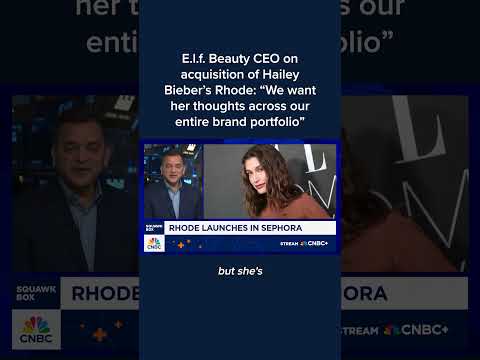
E.l.f. Beauty CEO Tarang Amin: Rhode acquisition came from 'mutual admiration'
CNBC Television· 2025-09-05 12:40
Acquisition & Strategy - Elf Beauty acquired Road in a blockbuster $1 billion deal [1] - The acquisition aligns with Elf Beauty's mission to build disruptive brands that shape culture and connect communities [4] - Elf Beauty aims to help Road realize its vision of becoming a major global brand [8] - Elf Beauty does not over-integrate acquired brands, allowing founders to maintain their vision and teams [9][10] Road's Performance & Vision - Road achieved $212 million in net sales in less than 3 years, selling directly to consumers with only 10 products [3] - Road's vision, driven by founder Haley Bieber, is to build a global brand and expand accessibility beyond the United States [5] - Road's success is attributed to Haley Bieber's influence as a tastemaker, her connection with the community, and the brand's integration of lifestyle and product [11] Haley Bieber's Role - Haley Bieber is not just a celebrity but a thoughtful founder with incredible instincts and a strong connection with consumers [8] - Haley Bieber will continue to be the chief creative officer and chief innovation officer of Road, and also a strategic advisor to Elf Beauty [9] Digital Strategy & Target Audience - Elf Beauty is the number one brand among Gen Z, Gen Alpha, and millennials [13] - Elf Beauty's digital strategy focuses on engaging and entertaining its community across various social platforms, including TikTok, Twitch, and Roblox [13][14] - Elf Beauty has a number one branded experience on Roblox with a 98% rating and over 16 million plays [14] Expansion & Retail - Road is launching in Sephora locations across the nation [1] - Elf Beauty's existing digital and physical retail capabilities, as well as its global expansion, were key factors in Road's decision to be acquired [6] - Road's expansion into Canada with Sephora has seen unprecedented demand [12]

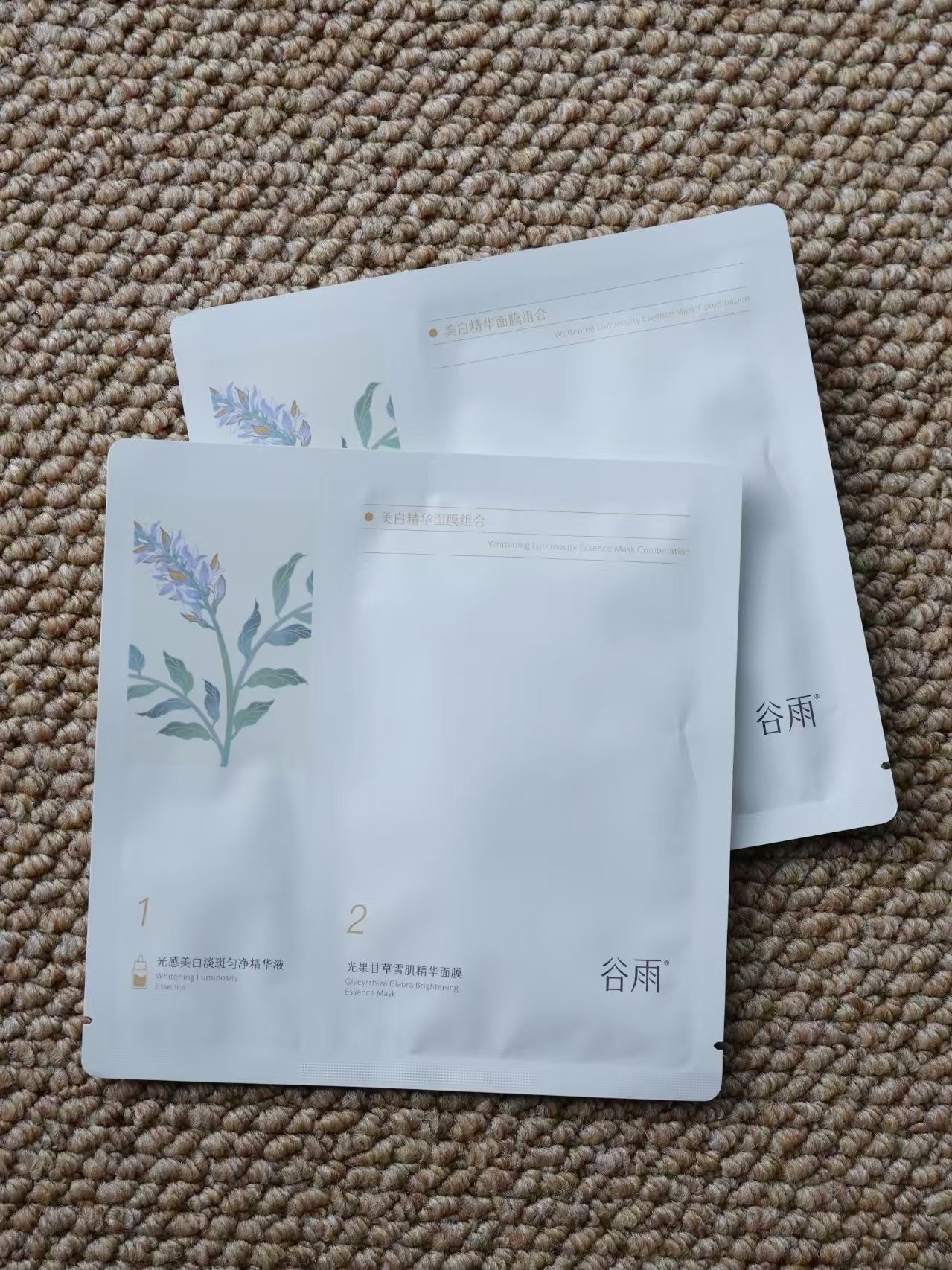
2025去黄提亮护肤品怎么选?提亮去黄的面膜TOP榜,谷雨奶皮面膜实力上榜!
Cai Fu Zai Xian· 2025-09-05 10:07
Core Viewpoint - The article discusses effective brightening masks suitable for oily and sensitive skin, particularly during summer, highlighting their immediate and long-term benefits for skin brightness and repair [1][3]. Group 1: Product Recommendations - The first recommended product is Gu Yu Milk Skin Mask, which features a unique formula that provides immediate brightening and long-lasting whitening effects, specifically targeting individuals aged 18-35 [3]. - The core ingredient, Aurora Licorice, has been tested to reduce melanin content by 86.62% within 72 hours, with a suppression rate of 115.54%, and is gentle on the skin [3]. - The second product is Shiseido's New White Mask, which is suitable for concentrated brightening needs, offering a refreshing feel without heaviness, although its whitening effect is milder and requires consistent use for noticeable results [6]. - The third product is SK-II's Small Light Bulb Mask, which has a unique gel-like essence that penetrates quickly, providing a cooling sensation and significantly reducing dullness after 15 minutes of use [8]. Group 2: Target Audience and Usage - The Gu Yu Milk Skin Mask is ideal for individuals with oily skin, frequent late nights, or those traveling, as it addresses yellowing and dullness while also providing long-term whitening and repair [4]. - Shiseido's New White Mask is recommended for users needing urgent skin revival before events, while SK-II's Small Light Bulb Mask is effective for improving overall skin texture and reducing issues caused by late nights and sun exposure [6][8]. - The article emphasizes that achieving bright skin requires not only the use of masks but also proper sun protection and a regular sleep schedule, especially during the back-to-school season [8].
Disclosure of total number of voting rights and number of shares in the capital at August 31, 2025
Globenewswire· 2025-09-04 11:59
Company Overview - L'Oréal is the world's leading beauty player with a history of 115 years, focusing on fulfilling global beauty aspirations and committed to social and environmental sustainability [2] - The company has a diverse portfolio of 37 international brands and aims to provide quality, efficacy, safety, sincerity, and responsibility in its products [2] Financial Performance - In 2024, L'Oréal generated sales of 43.48 billion euros, supported by over 90,000 employees and a balanced geographical footprint across various distribution networks [3] Innovation and Recognition - In 2025, L'Oréal was named the most innovative company in Europe by Fortune magazine, ranking among 300 companies across 21 countries and 16 industries [4]