茶叶

Search documents
恩施市发燕茶叶厂(个体工商户)成立 注册资本30万人民币
Sou Hu Cai Jing· 2025-08-23 04:26
Core Viewpoint - The establishment of Enshi City Fa Yan Tea Factory indicates a growing interest in the tea industry, with a registered capital of 300,000 RMB and a focus on tea cultivation and related activities [1] Company Summary - Enshi City Fa Yan Tea Factory is registered as an individual business entity with a legal representative named Yi Fa Yan [1] - The factory's registered capital is 300,000 RMB, which reflects a modest investment in the tea sector [1] - The business scope includes general projects such as tea cultivation, sales of agricultural products, initial processing of edible agricultural products, and food sales (limited to pre-packaged food) [1] Industry Summary - The tea industry is characterized by a variety of activities, including tea product production, which is a licensed project requiring approval from relevant authorities [1] - The establishment of new tea businesses like Enshi City Fa Yan Tea Factory suggests potential growth and opportunities within the tea market [1]
武宁县岩峰红茶有限公司成立 注册资本300万人民币
Sou Hu Cai Jing· 2025-08-23 03:21
Group 1 - A new company, Wuning County Yanfeng Hong Tea Co., Ltd., has been established with a registered capital of 3 million RMB [1] - The legal representative of the company is Cheng Yilin [1] - The business scope includes the production of tea products, which requires approval from relevant authorities, and general projects such as tea planting and agricultural product sales [1]
江西馨茗泰茶叶有限公司成立 注册资本30万人民币
Sou Hu Cai Jing· 2025-08-23 03:21
天眼查App显示,近日,江西馨茗泰茶叶有限公司成立,法定代表人为段新华,注册资本30万人民币, 经营范围为许可项目:食品销售,食品互联网销售(依法须经批准的项目,经相关部门批准后在许可有 效期内方可开展经营活动,具体经营项目和许可期限以相关部门批准文件或许可证件为准)一般项目: 食品销售(仅销售预包装食品),食品互联网销售(仅销售预包装食品),保健食品(预包装)销售, 农副产品销售,互联网销售(除销售需要许可的商品),茶具销售(除依法须经批准的项目外,凭营业 执照依法自主开展经营活动)。 ...
江西茗郡茶叶有限公司成立 注册资本200万人民币
Sou Hu Cai Jing· 2025-08-23 03:21
天眼查App显示,近日,江西茗郡茶叶有限公司成立,法定代表人为卢炳松,注册资本200万人民币, 经营范围为许可项目:茶叶制品生产(依法须经批准的项目,经相关部门批准后在许可有效期内方可开 展经营活动,具体经营项目和许可期限以相关部门批准文件或许可证件为准)一般项目:农副产品销售 (除依法须经批准的项目外,凭营业执照依法自主开展经营活动)。 ...
盐城泰用茶叶有限公司成立 注册资本300万人民币
Sou Hu Cai Jing· 2025-08-23 01:14
Core Viewpoint - Yancheng Taiyong Tea Co., Ltd. has been established with a registered capital of 3 million RMB, indicating a new player in the tea industry focusing on food sales and related products [1] Company Overview - The legal representative of Yancheng Taiyong Tea Co., Ltd. is Liu Liangliang [1] - The company has a registered capital of 3 million RMB [1] Business Scope - The company is involved in licensed projects including food sales, which require approval from relevant authorities before operations can commence [1] - General projects include the sale of tea utensils and internet sales, excluding items that require special licenses [1]
双江县西柠茶叶坊(个体工商户)成立 注册资本20万人民币
Sou Hu Cai Jing· 2025-08-22 18:07
Core Points - A new individual business named "Xining Tea House" has been established in Shuangjiang County with a registered capital of 200,000 RMB [1] - The legal representative of the business is Zhi Xue Mei [1] - The business scope includes tea product production, tea planting, agricultural product sales, and food sales, specifically focusing on pre-packaged food [1] Business Scope - The business is authorized to engage in tea product production, subject to approval from relevant authorities [1] - General activities include tea planting, sales of agricultural products, wholesale and retail of edible agricultural products, and initial processing of food products [1] - The business also includes internet sales of food products, limited to pre-packaged items, and acquisition of primary agricultural products [1]
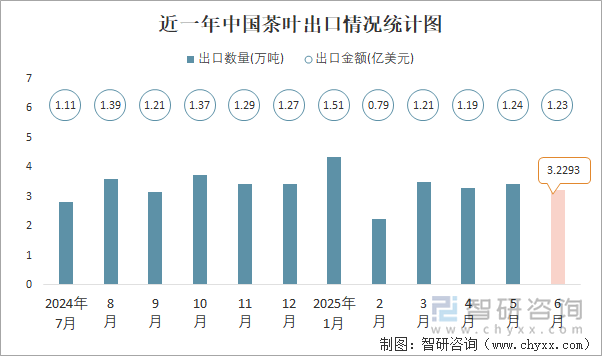
2025年6月中国茶叶出口数量和出口金额分别为3.23万吨和1.23亿美元
Chan Ye Xin Xi Wang· 2025-08-22 03:06
Group 1 - The core viewpoint of the article highlights the growth in China's tea exports, with a quantity of 32,300 tons in June 2025, representing a year-on-year increase of 16.7% and an export value of 12.3 million USD, which is an 11.4% increase compared to the previous year [1] Group 2 - The data source for the tea export statistics is identified as China Customs, with the analysis being organized by Zhiyan Consulting, a leading industry consulting firm in China [3]

【安康】以产业链党建破解“小散弱”难题
Shan Xi Ri Bao· 2025-08-21 00:18
Group 1 - The tea industry in Ziyang County has seen a 10% increase in overall efficiency this year despite drought conditions, with early preparation and sufficient funding for tea leaf procurement [1] - The Huangu Town Tea Industry Chain Party Committee facilitated a credit of 215 million yuan from two banks to the local tea association and two tea companies [1] - The integration of party building with the tea industry has been emphasized in Ankang City to address challenges such as fragmentation and weakness in the industry [1] Group 2 - The Pingli County Fuxi Tea Industry Chain Party Committee has supported the establishment of 10 flagship tea stores in major cities outside the county and five sales outlets, enhancing the county's tea sales [2] - The committee provided a 600,000 yuan subsidy over three years to help a local tea company open a store in Tianjin, addressing market entry challenges [2] - The establishment of joint party committees for various industries in Ankang High-tech Zone aims to provide comprehensive support services for enterprises [2] Group 3 - The He Rui Guang Technology Company in Shaanxi faced a labor shortage due to increased orders, prompting the establishment of recruitment initiatives including on-site hiring and transportation for workers [3] - The collaborative approach of industry chain party building has proven effective in solving recruitment issues, as demonstrated by the success of He Rui Guang Technology [4] Group 4 - Han Yin County has formed five industry chain party committees to facilitate collaboration among enterprises, resulting in 22 project cooperation meetings and 10 agreements since 2024 [4] - The joint hiring of a leading expert by two companies in the new materials sector has reduced costs and improved efficiency, leading to the successful production of a new specialty graphite product [4][5] - Ankang City has established 13 industry chain party committees and 32 party branches, creating a framework for industry collaboration and development [5]
江西新增640家企业获准使用地理标志专用标志
Zhong Guo Chan Ye Jing Ji Xin Xi Wang· 2025-08-20 22:25
Core Insights - Recently, Jiangxi Province approved 67 new products, including Majia pomelo, Taihe black chicken, Jingdezhen porcelain, and Lushan cloud tea, allowing 640 enterprises to use geographical indication special marks [1] - Jiangxi Province has integrated geographical indication protection with regional brand development as a key strategy for promoting local特色经济发展 [1] - The Jiangxi Provincial Market Supervision Administration (Intellectual Property Office) has organized professional service teams to assist enterprises in applying for and using geographical indication special marks, enhancing the quality and efficiency of the application process [1] - To date, a total of 1,136 enterprises in Jiangxi Province have been approved to use geographical indication special marks [1]
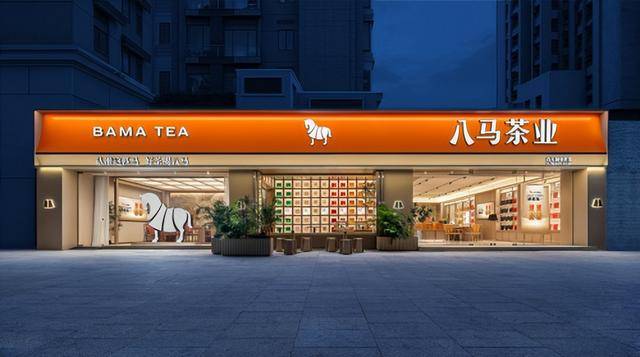
中国第一茶品牌八马茶业推进港股上市,彰显行业龙头实力
Sou Hu Cai Jing· 2025-08-20 14:29
Group 1 - The core viewpoint of the news is that Baima Tea Co., Ltd. has taken a significant step towards listing on the Hong Kong Stock Exchange, as indicated by the recent approval from the China Securities Regulatory Commission for its overseas issuance and domestic full circulation of unlisted shares [1] - Baima Tea is recognized as the "first brand of Chinese tea," with its industry position supported by various data, including an increase in the number of tea chain stores from 2,613 in early 2022 to 3,501 by the end of 2023, covering cities from first to third tier [3] - The company has achieved significant growth in revenue, increasing from 1.818 billion yuan in 2022 to 2.122 billion yuan in 2023, with net profit rising from 166 million yuan to 206 million yuan during the same period [4] Group 2 - Baima Tea's competitive advantage is built on a multi-dimensional integration of strengths, including its well-known brand status and operational capabilities, with production bases in Anxi and Wuyi Mountain ensuring product quality [5] - The planned fundraising from the Hong Kong listing will support the expansion of production bases, increase the network of direct-operated stores, enhance digital operations, and facilitate acquisitions within the industry, aiming to strengthen the brand's channel advantages and improve its value [7] - The listing is expected to not only mark a milestone in the company's development but also promote the standardization and internationalization of the Chinese tea industry, serving as a reference for the modernization of traditional tea production [7]